Living in the city doesn’t mean you have to give up on your green thumb dreams. Your rooftop is basically untapped real estate waiting to become your personal outdoor sanctuary. I’ve seen cramped apartments transform into lush retreats, and honestly? It’s one of the most satisfying home projects you can tackle.
Whether you’re dealing with a tiny balcony or a sprawling terrace, these ideas will help you create a rooftop garden that actually works for your space and lifestyle. No fluff, just practical inspiration that’ll make your neighbors wonder how you pulled it off.
1. Vertical Wall Garden Systems
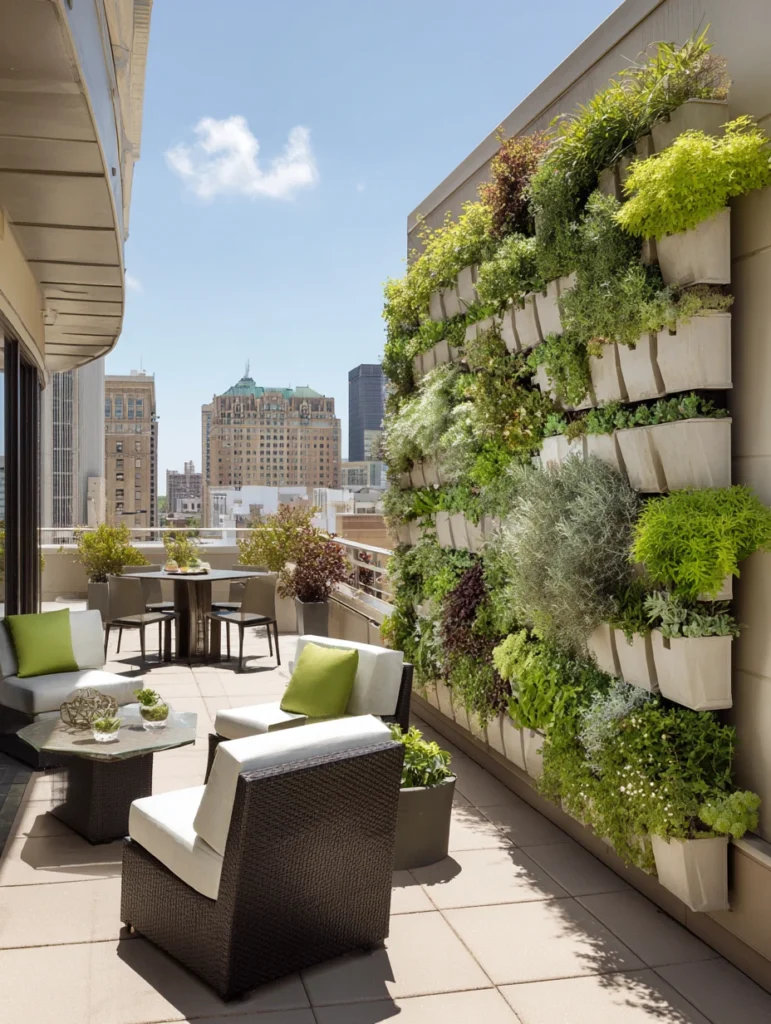
Maximize Your Space: When floor space is limited, think vertical. Wall-mounted planters let you grow herbs, flowers, and even small vegetables without sacrificing precious square footage. You can cover an entire wall with greenery, creating a living backdrop that’s both functional and Instagram-worthy. This approach works exceptionally well for narrow rooftops where traditional container gardens would feel cramped.
Easy Installation: Most vertical systems use modular panels that attach directly to walls or railings. You don’t need to be a DIY expert – many options come ready to hang with simple mounting hardware. The key is choosing a system that can handle outdoor weather conditions and has proper drainage to prevent water damage to your building.
Product Spotlight: The Watex Vertical Garden Planter boasts 36 pockets for diverse plantings and excels at withstanding weather exposure. For smaller spaces, the Mr. Stacky Stacking Planter lets you grow strawberries, herbs, or flowers in a compact footprint that’s easy to move around as needed.
Read More: 21 Inspiring Vegetable Garden Design Ideas
2. Container Garden with Mixed Sizes
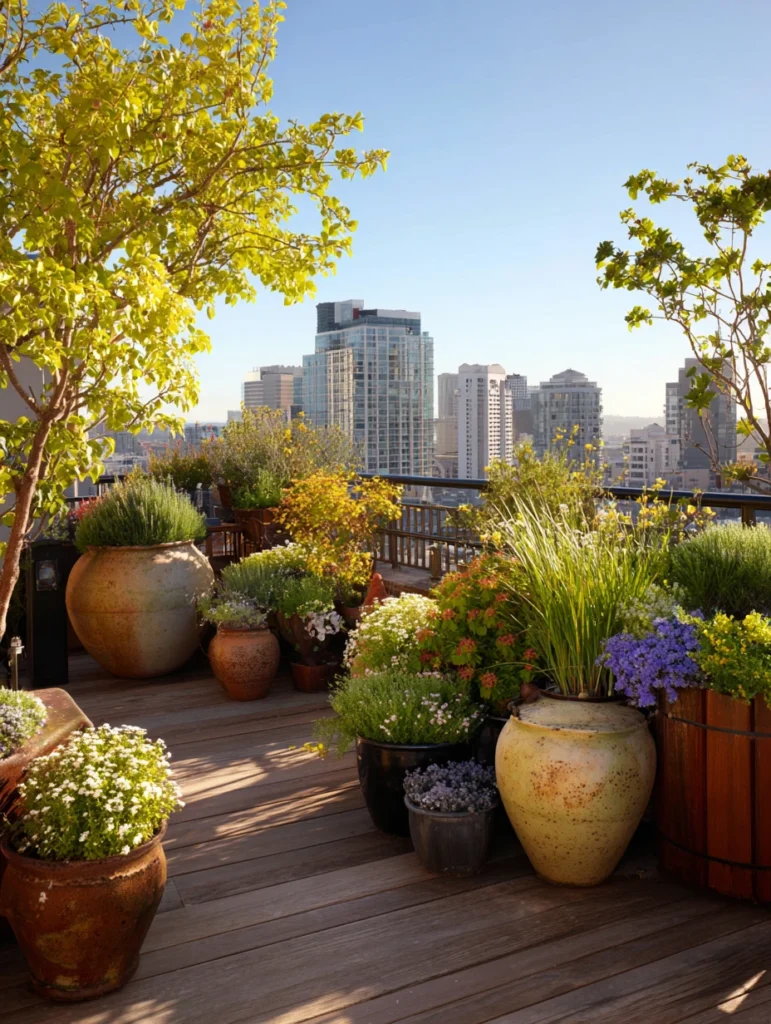
Create Visual Interest: Clustering containers of different heights and widths adds depth to your rooftop garden. Large pots anchor your design while medium and small containers fill in gaps and add texture. This layered approach feels more organic than uniform rows, and it provides the flexibility to rearrange elements as plants grow or seasons change.
Better Growing Conditions: Different plants need different root depths. Tomatoes and peppers thrive in deep containers while lettuce and herbs do fine in shallow ones. By mixing container sizes, you can accommodate various plant types and create microclimates within your rooftop space. Additionally, larger pots retain moisture more effectively, reducing the need for watering on hot summer days.
Product Spotlight: The Classic Home and Garden Honeysuckle Planter is available in multiple sizes, allowing you to create a cohesive look while accommodating different plant needs. Add the Bloem Ariana Self-Watering Planter to reduce maintenance time – it features a water reservoir that keeps plants hydrated for up to 7 days.
Read More: 21 Small Zen Garden Ideas for a Tranquil Home
3. Built-In Raised Bed Gardens
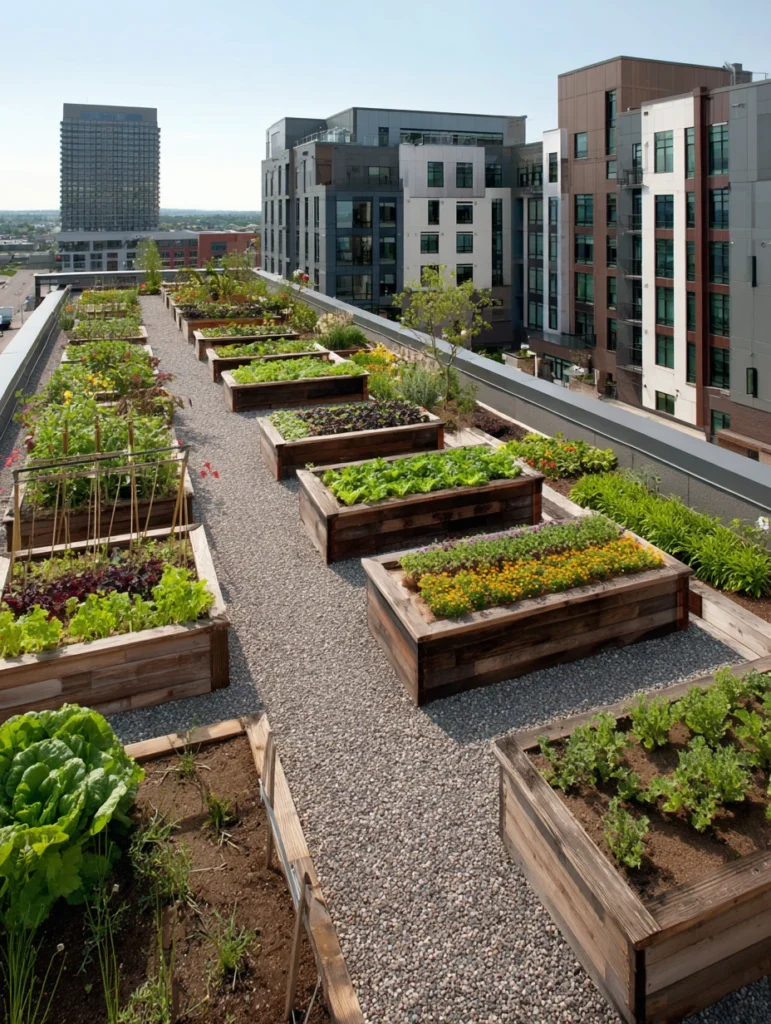
Permanent Solution: If you own your building or have landlord approval, built-in raised beds offer the most planting space. These structures sit directly on your rooftop surface and can accommodate larger plants, small shrubs, or even dwarf fruit trees. The permanence means you can invest in soil quality and really commit to ambitious growing projects.
Drainage Planning: The biggest challenge with raised beds on rooftops is weight and drainage. You need to ensure your rooftop can withstand the load when the soil is wet and that water drains properly without damaging the roof membrane. Working with a structural engineer may sound excessive, but it can prevent costly repairs down the road.
Product Spotlight: The Greenes Fence Cedar Raised Garden Bed offers natural rot resistance and can be configured in various sizes to fit your space. Pair it with the Viagrow Complete Raised Bed Garden Kit, which includes everything you need from soil to fertilizer to get started immediately.
Read More: 21 Cottage Garden Ideas for a Whimsical Space
4. Herb Garden Kitchen Station
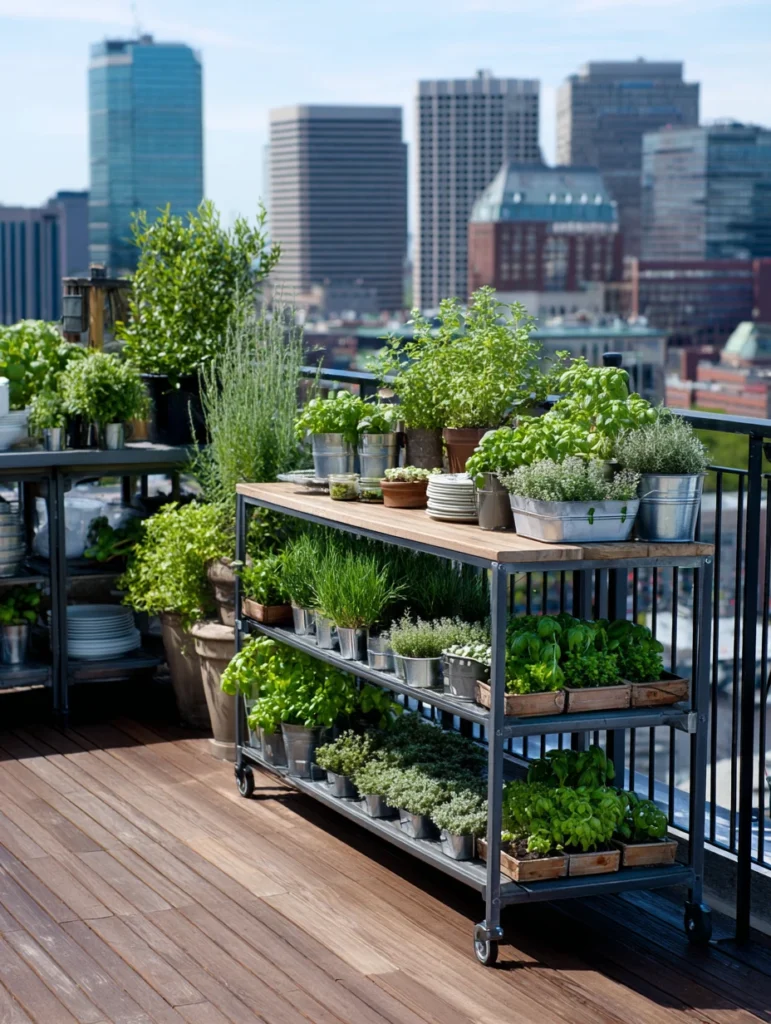
Fresh Ingredients Daily: Growing herbs on your rooftop means you’re steps away from fresh basil, cilantro, mint, and rosemary. Herbs are forgiving for beginner gardeners, and most varieties thrive in full sun exposure, which rooftops often provide. Set up your herb station near your rooftop access door so grabbing ingredients doesn’t feel like a trek.
Succession Planting: Plant new herb seeds every few weeks to ensure a continuous harvest throughout the growing season. This staggered approach means you’ll always have fresh leaves ready, rather than facing a feast-or-famine situation where everything matures at once.
Product Spotlight: The AeroGarden Harvest Indoor Garden is well-suited for covered rooftop areas, allowing for year-round herb growth regardless of the weather. For outdoor growing, the Miracle-Gro Twelve Indoor Growing System offers ample space for multiple herb varieties, featuring efficient water distribution.
Read More: How to Design a Container Garden for Your Flowers
5. Privacy Screen Living Wall
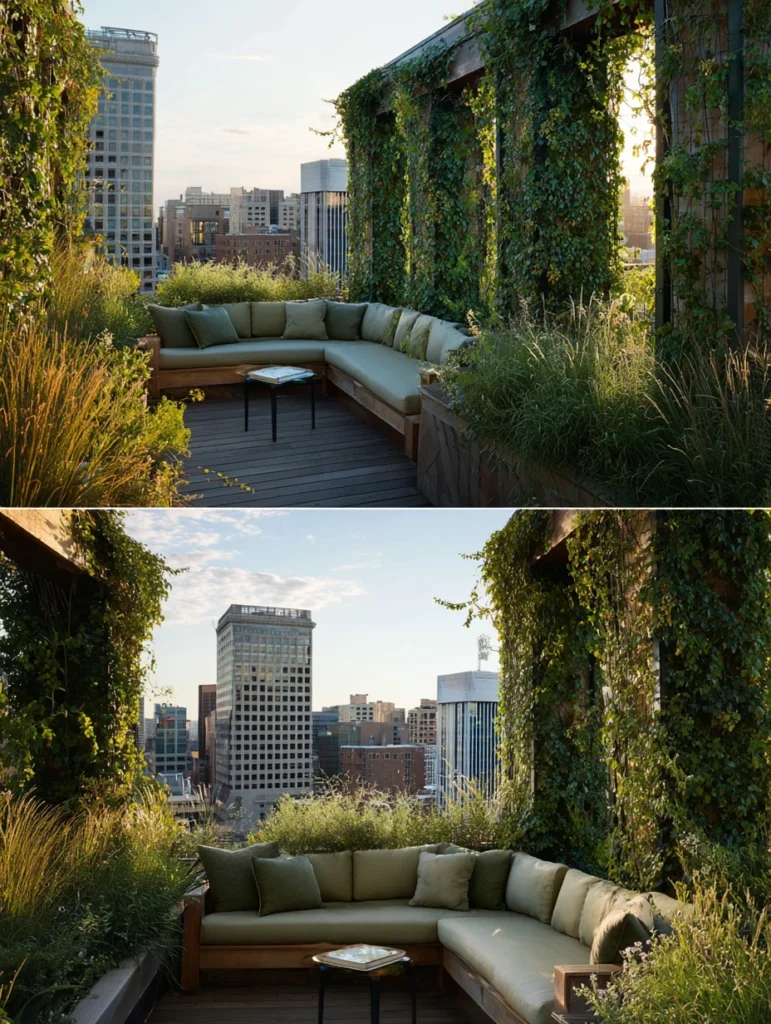
Block Unsightly Views: Nobody wants to stare at neighboring buildings or busy streets while trying to relax. A living wall made from climbing plants or tall ornamental grasses creates natural privacy while adding beauty to your space. This dual-purpose solution feels less aggressive than solid fencing and provides habitat for beneficial insects.
Wind Protection: Rooftop winds can be strong, stressing plants and making lounging uncomfortable. Strategically placing taller plants or trellised climbers breaks wind patterns and creates calmer microclimates within your garden. Just make sure your privacy plants are adequately secured – the last thing you need is a toppled planter in a storm.
Product Spotlight: The Jardin Expandable Faux Ivy Privacy Fence provides instant coverage while your living plants establish themselves. Combine it with the Gardener’s Blue Ribbon Ultomato Tomato Plant Cage, which doubles as excellent support for climbing flowering vines.
Read More: Amazing Herb Garden Ideas for Your Outdoor Oasis
6. Water Feature Focal Point
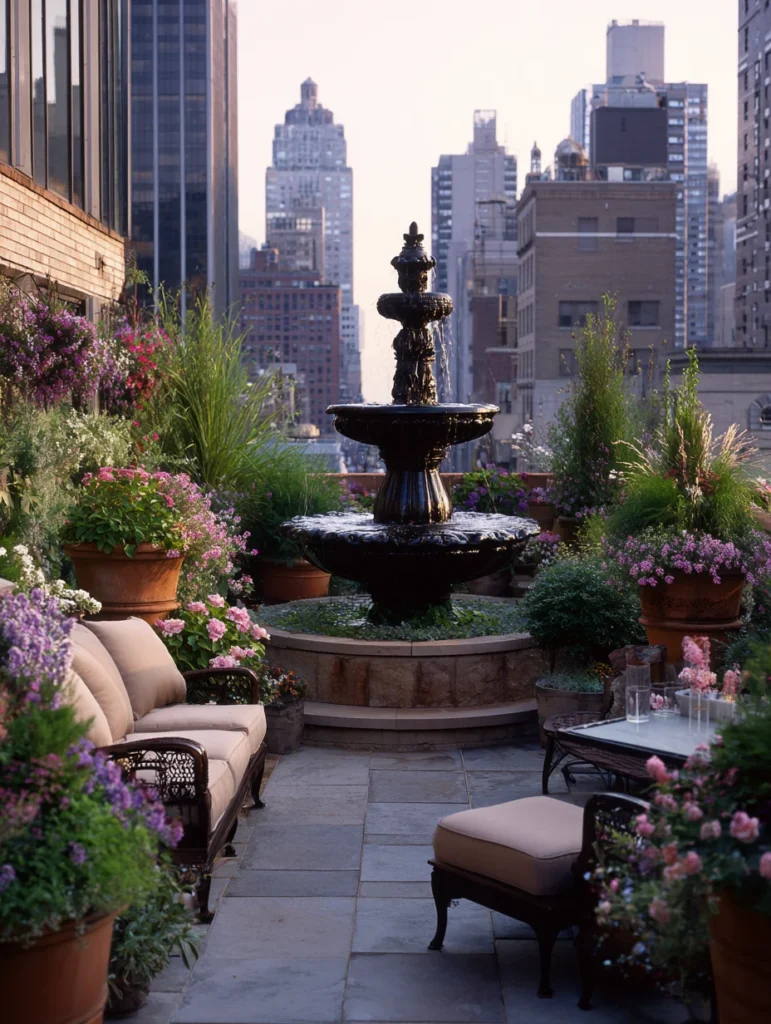
Ambient Sound: The sound of trickling water masks city noise, creating a tranquil atmosphere. Even a small fountain or water feature transforms your rooftop from another urban space into a genuine retreat. Water features also increase humidity around plants, which many species appreciate during dry spells.
Wildlife Attraction: Birds and beneficial insects need water sources, especially in urban areas. Your rooftop water feature becomes an oasis for pollinators and songbirds, adding movement and life to your garden. Just clean the water regularly to prevent mosquito breeding.
Product Spotlight: The Alpine Corporation Cascading Fountains offers a three-tier design that looks elegant without overwhelming smaller spaces. For something more modern, the John Timberland Modern Zen Fountain complements contemporary rooftop aesthetics while providing that soothing water sound.
Read More: 21 Corner Garden Ideas to Transform Your Backyard
7. Succulent and Cactus Display
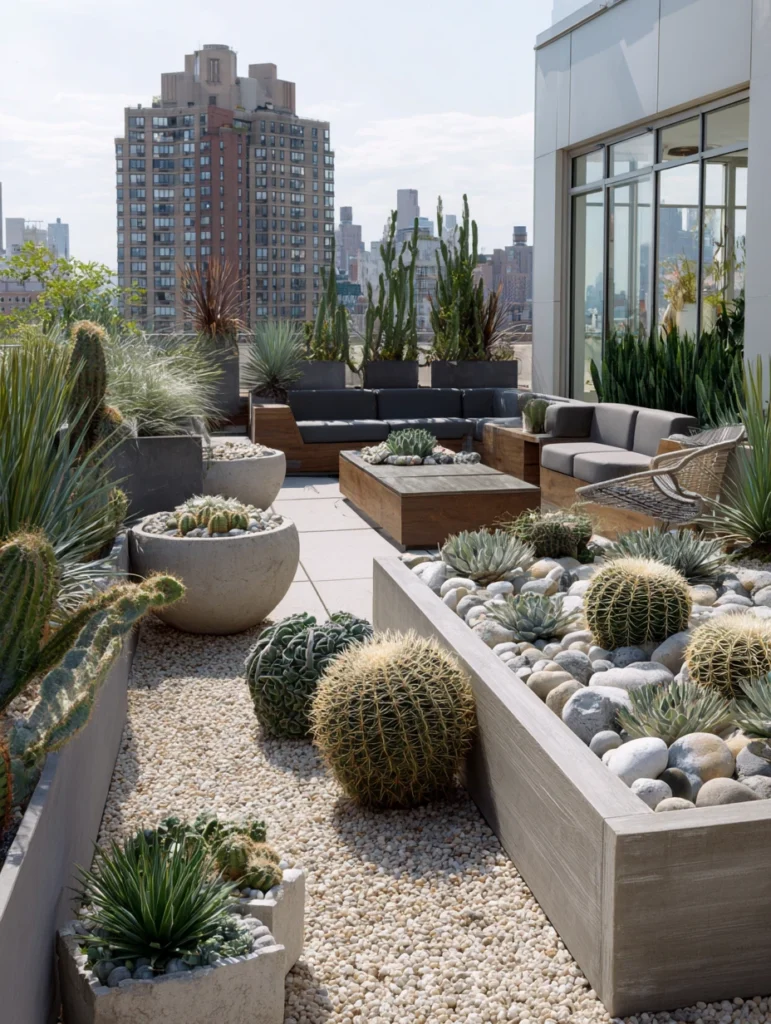
Low-Maintenance Option: If you travel frequently or simply forget to water your plants, succulents are your best friend. These desert plants store water in their leaves and can survive for weeks without attention. Rooftops with intense sun exposure are ideal for succulents, as they thrive in conditions that would stress other plants.
Artistic Arrangements: Succulents come in an incredible variety, from tiny echeverias to dramatic agaves. You can create living art pieces by combining different colors, textures, and growth patterns. Shallow containers work perfectly since succulents have minimal root systems.
Product Spotlight: The Succulent Planter Pots Set features drainage holes and is available in various sizes, perfect for creative arrangements. Add the Hoffman Organic Cactus and Succulent Soil Mix to ensure proper drainage that prevents root rot in these drought-loving plants.
Read More: Stunning Flower Bed Ideas for the Front of the House
8. Pergola with Climbing Vines
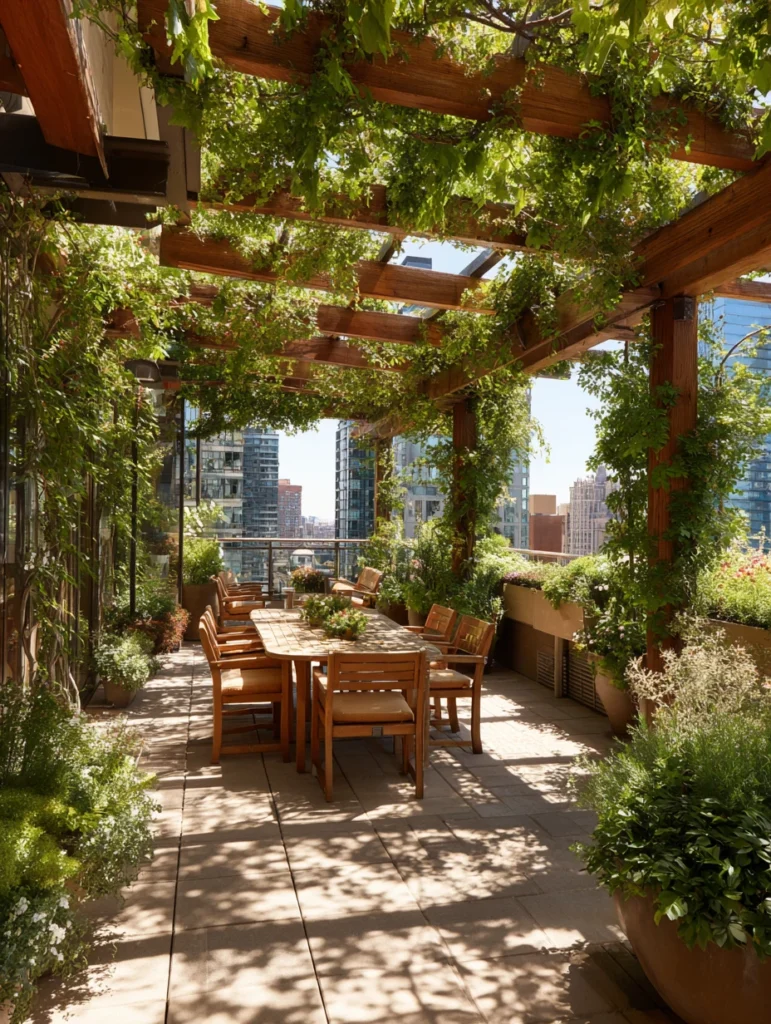
Shade Creation: A pergola structure provides partial shade while maintaining an open, airy feel. Train climbing plants like clematis, wisteria, or climbing roses over the beams to create a living canopy. This approach gives you shade that improves over time as plants mature and fill in.
Extended Living Space: The pergola transforms your rooftop garden into an outdoor room, rather than just a collection of plants. You can hang lights, install outdoor curtains for additional privacy, or add a dining table underneath for al fresco meals. It becomes a destination space rather than just a garden.
Product Spotlight: The Sunnydaze Trellis Netting helps guide climbing plants to grow where you want them to. Pair it with the Gardener’s Supply Company Ultralite Plant Support to give young vines the structure they need before they reach the pergola.
Read More: 17 Garden Ideas for Small Spaces and Maximum Yield
9. Pollinator-Friendly Flower Garden
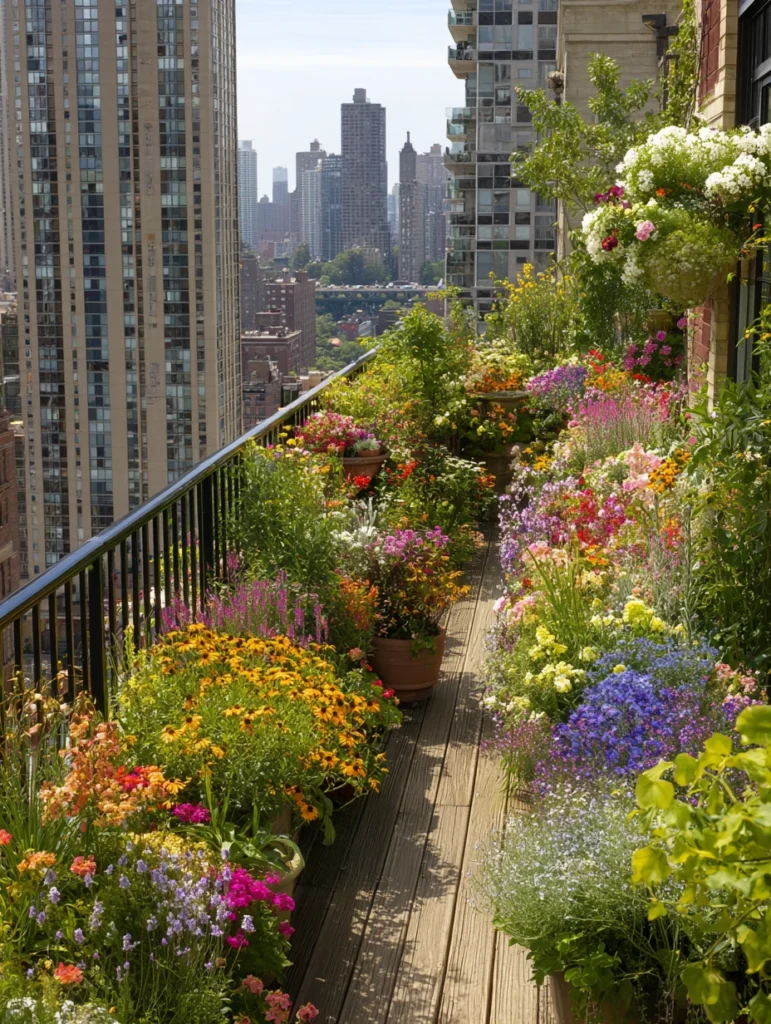
Support Local Ecosystems: Urban areas desperately need pollinator habitat. Your rooftop can become a vital rest stop for bees, butterflies, and hummingbirds as they travel through the city. Select native flowering plants that bloom at various times throughout the season to provide a consistent food source for pollinators.
Low-Maintenance Beauty: Many pollinator plants are actually tough, drought-tolerant perennials that come back year after year. Coneflowers, black-eyed Susans, and lavender require minimal care once established and look beautiful even when not in bloom.
Product Spotlight: The Burpee Seed Packet Assortment for Pollinators contains multiple varieties specifically selected to attract beneficial insects. Add the Jobe’s Organics Fertilizer Spikes to feed your flowering plants without the hassle of mixing liquid fertilizers.
Read More: How To Create a Beautiful Rose Garden To Inspire You
10. Vegetable Garden in Grow Bags
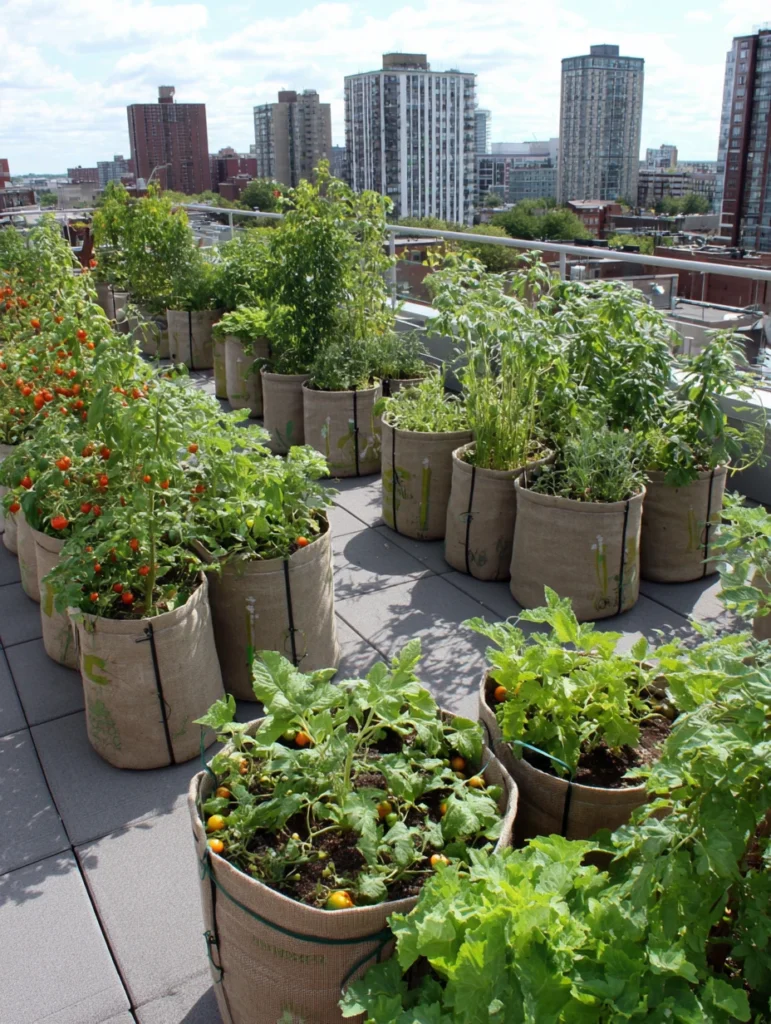
Flexible and Affordable: Grow bags are less expensive than traditional pots and require minimal storage space during the off-season. The fabric promotes root air pruning, leading to healthier plants and higher yields. You can grow tomatoes, peppers, lettuce, and even root vegetables like carrots in appropriately sized bags.
Mobility Advantage: Unlike permanent planters, grow bags can be moved to follow sun patterns or rearranged for better aesthetics. This flexibility is particularly valuable on rooftops, where you may need to access specific areas for maintenance or want to experiment with different layouts.
Product Spotlight: The Heavy-Duty Grow Bags are available in multiple gallon sizes and feature reinforced handles for easy movement. Combine them with the Fox Farm Ocean Forest Potting Soil, which provides excellent nutrition for vegetables and drains well to prevent waterlogging.
Read More: 21 Japanese Garden Ideas for Serene Outdoor Spaces
11. Miniature Fruit Tree Orchard
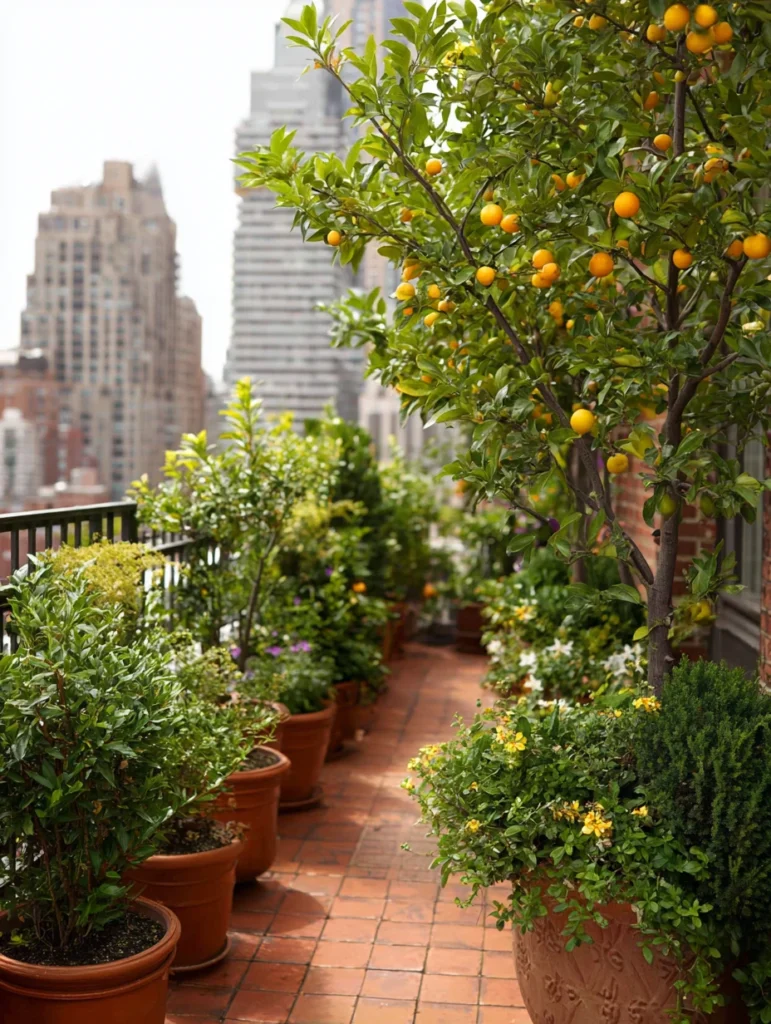
Fresh Fruit in the City: Dwarf varieties of apple, peach, cherry, and citrus trees grow beautifully in large containers on sunny rooftops. These compact versions produce full-size fruit while staying under six feet tall. Imagine picking fresh lemons or apples without leaving your building.
Long-Term Investment: Fruit trees take a few years to reach full production, but they’re worth the wait. With proper care, container fruit trees can live for decades, providing annual harvests and beautiful spring blossoms. They also add structure and height to your rooftop garden design.
Product Spotlight: The Delicious Gala Apple Tree is a popular dwarf variety, perfect for rooftop growing, that produces sweet, crisp apples. Use Jobe’s Fruit & Citrus Fertilizer Spikes to provide consistent nutrients throughout the growing season, eliminating the need for frequent applications.
Read More: 21 Stunning Mediterranean Garden Ideas To Inspire You
12. Seating Area with Built-In Planters
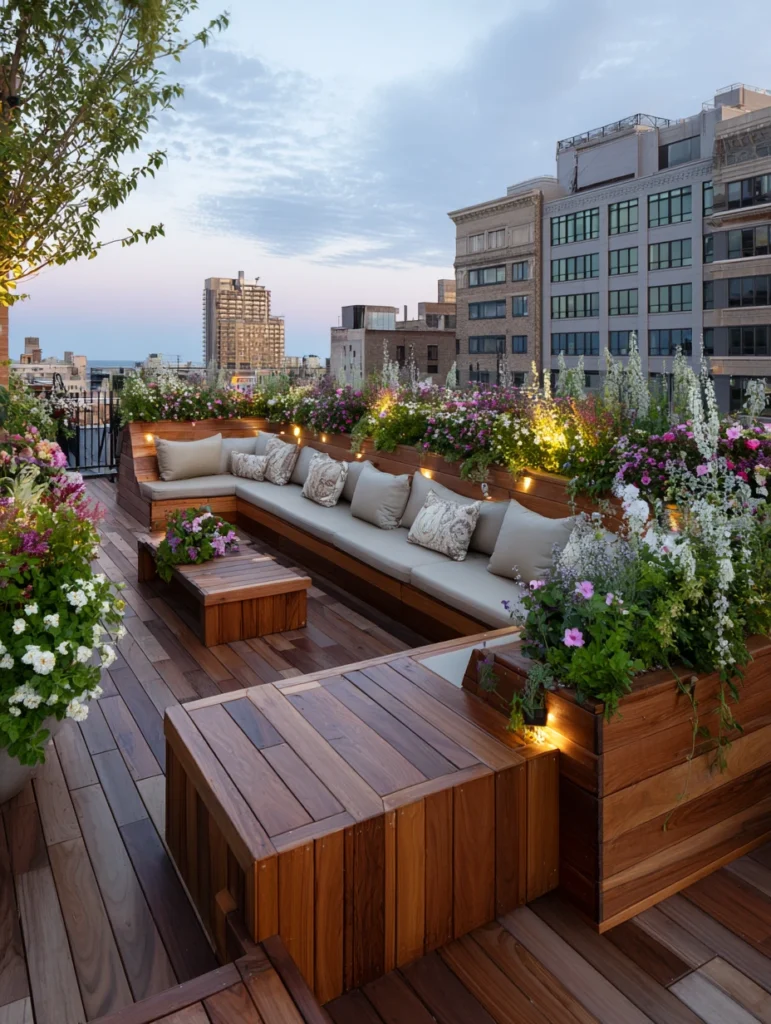
Integrated Design: Why separate your seating from your plants when you can combine them? Built-in planters around benches or along seating walls soften hard edges and surround you with greenery. This approach maximizes limited space while creating a cohesive design that feels intentional and well-planned.
Aromatic Experience: Plant fragrant herbs, roses, or jasmine in the integrated planters to surround yourself with pleasant scents as you relax. The sensory experience elevates your rooftop from a simple garden to a true escape.
Product Spotlight: The Christopher Knight Home Outdoor Acacia Wood Bench offers classic styling that complements any garden aesthetic. Add the Mayne Fairfield Window Box along the back of seating areas to incorporate flowers at eye level.
Read More: How To Create an English Cottage Garden for Your Flowers
13. Edible Flower Garden
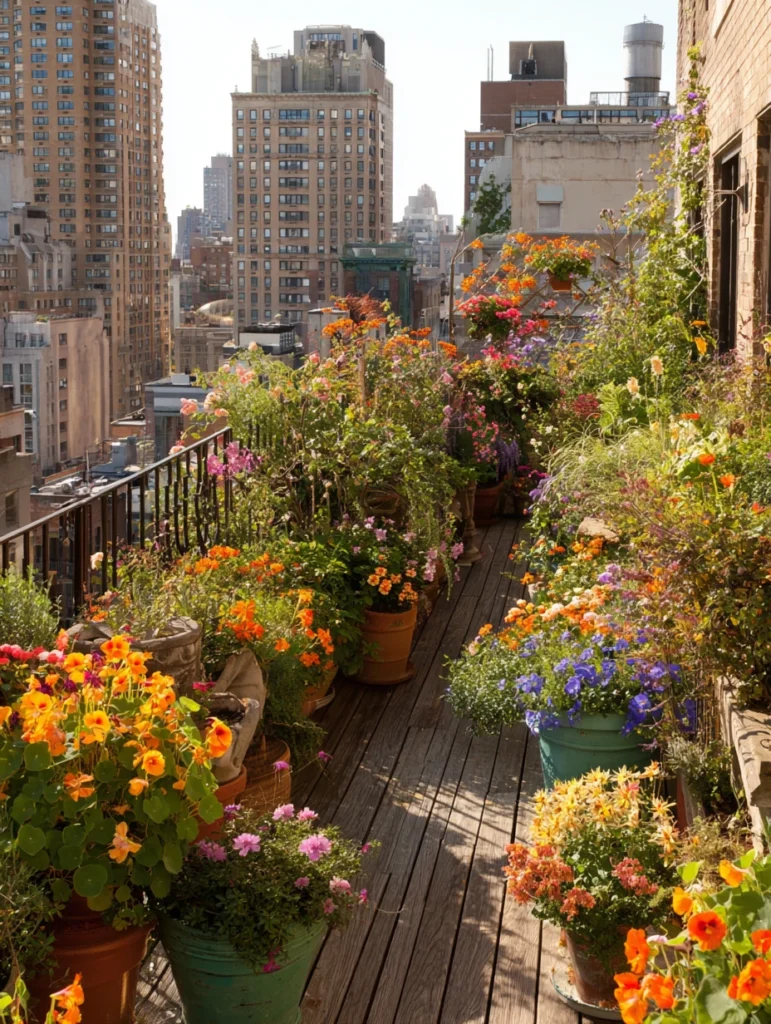
Beauty You Can Eat: Nasturtiums, pansies, calendula, and violets add pops of color and are entirely edible. These flowers dress up salads, desserts, and drinks while attracting pollinators and filling empty spaces in your garden. They’re conversation starters that serve multiple purposes.
Easy to Grow: Most edible flowers are actually easier to grow than traditional vegetables. They tolerate partial shade better, and many varieties self-seed, returning year after year without replanting. It’s the low-effort, high-reward option for busy urban gardeners.
Product Spotlight: The Botanical Interests Edible Flower Seed Collection offers a diverse selection, accompanied by detailed growing instructions. Use Espoma Organic Flower-tone Plant Food to promote abundant blooms without harsh chemicals that could harm edible flowers.
Read More: 21 Aesthetic Garden Ideas to Transform Your Outdoor Space
14. Bamboo Privacy Fence Garden
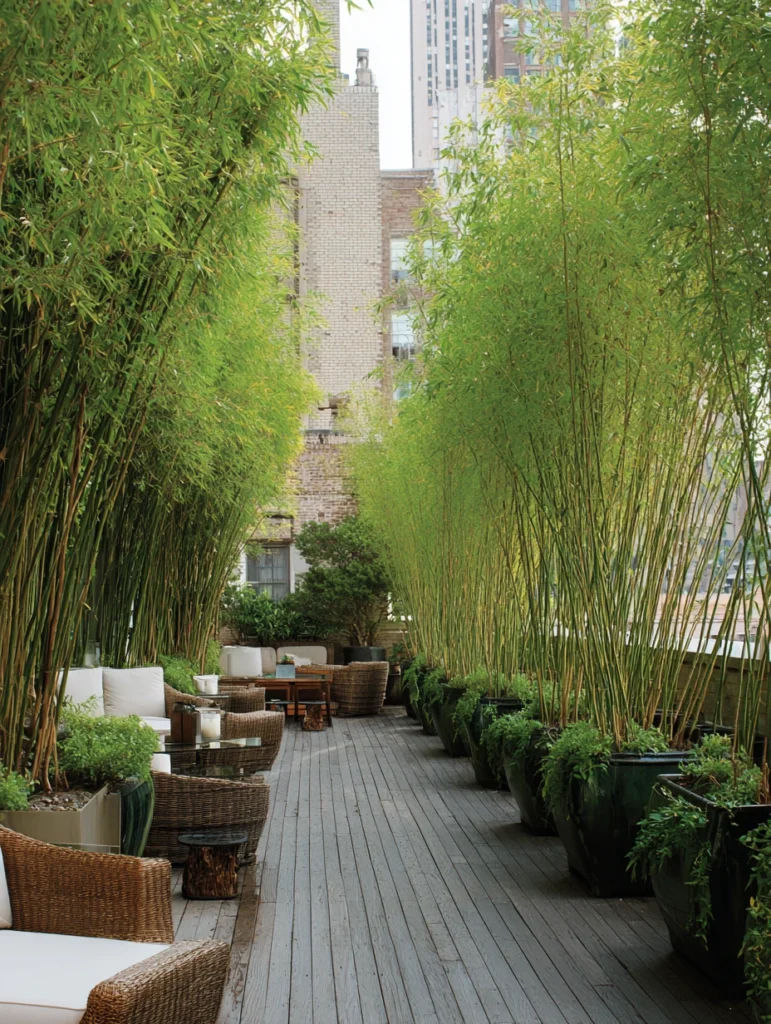
Fast-Growing Screen: Bamboo grows incredibly quickly, creating a dense privacy screen within a single growing season. Choose clumping varieties rather than running bamboo to avoid invasive spreading. The vertical lines of bamboo create a modern, Zen aesthetic that complements contemporary architecture well.
Sound Dampening: The dense bamboo foliage helps absorb city noise, creating a quieter rooftop environment. The rustling leaves in the breeze add a pleasant white noise that masks the sounds of traffic and neighbors.
Product Spotlight: The MGP Premium Bamboo Fence Panel provides instant privacy while your living bamboo fills in. Pair it with the Better-Gro Orchid Plus fertilizer, which also works excellently for bamboo and promotes healthy, vigorous growth.
Read More: How To Create a Magical DIY Fairy Garden for Your Backyard
15. Shade Garden with Hardy Ferns
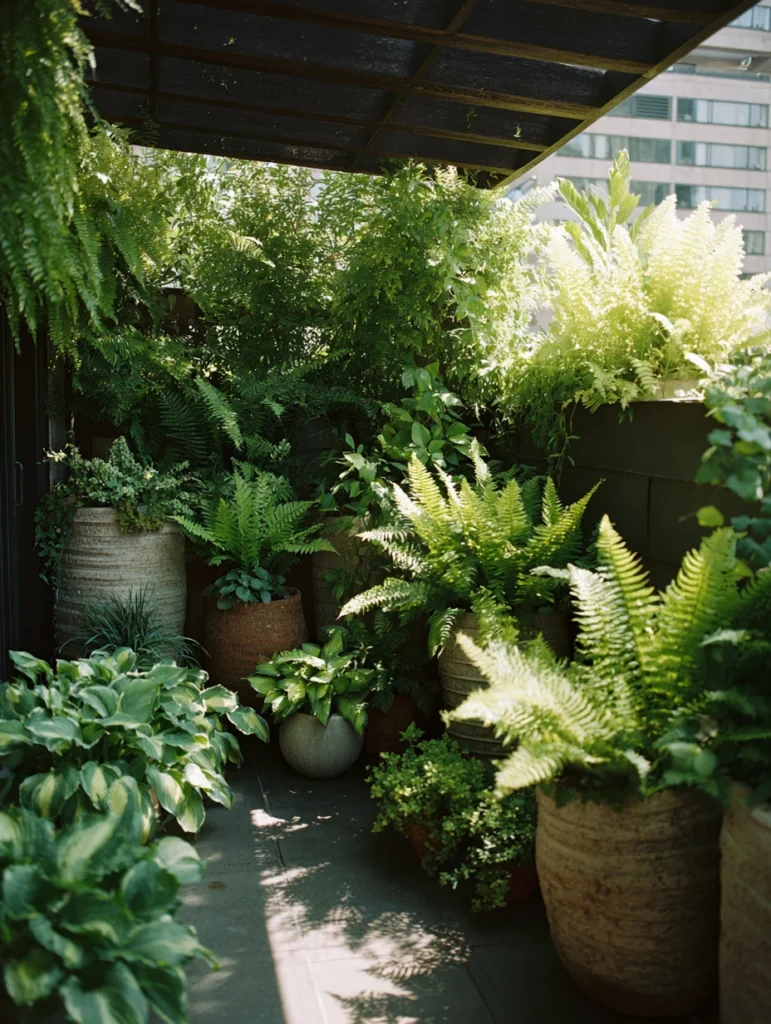
Work with Limited Light: Not all rooftops receive full sun. Buildings, trees, or neighboring structures might create shaded areas that seem problematic. Embrace the shade by planting ferns, hostas, and other shade-loving plants that struggle in typical sun-drenched rooftop conditions.
Lush Texture: Ferns add a tropical, layered look that contrasts beautifully with the harder, more architectural elements. Their delicate fronds move with the slightest breeze, creating movement and interest even in still air. Shade gardens often feel cooler and more refreshing during summer heat.
Product Spotlight: The Hardy Outdoor Fern Collection features varieties selected explicitly for container growing and variable light conditions. Use Miracle-Gro Moisture Control Potting Mix, especially helpful in shaded areas where soil dries out unevenly.
Read More: Urban Gardening Solutions: Creating a Small Patio Veggie Garden
16. Outdoor Kitchen Garden
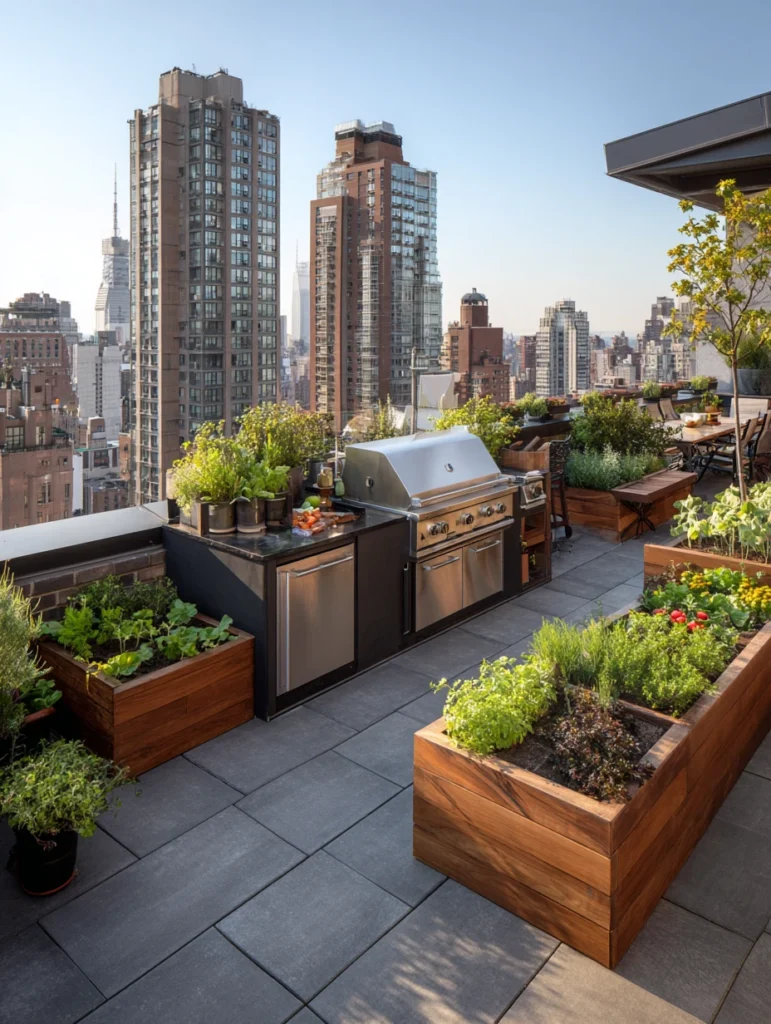
Convenience Factor: Position your vegetable and herb garden adjacent to your outdoor kitchen or grill area for easy access. This setup allows you to harvest ingredients while cooking, ensuring maximum freshness and eliminating the need to make trips between the indoor kitchen and the rooftop. It also encourages you to actually use what you grow.
Year-Round Potential: In milder climates, you can grow greens, herbs, and cold-hardy vegetables even during winter months. Having your kitchen garden close to where you cook makes it more likely you’ll maintain it through cooler seasons rather than abandoning it until spring.
Product Spotlight: The Keter Urban Bloomer Raised Garden Bed includes a convenient shelf for storing tools and supplies right where you need them. Add the Gardener’s Blue Ribbon Tomato Cages to keep productive vegetable plants organized and off the ground.
17. Mediterranean-Inspired Garden
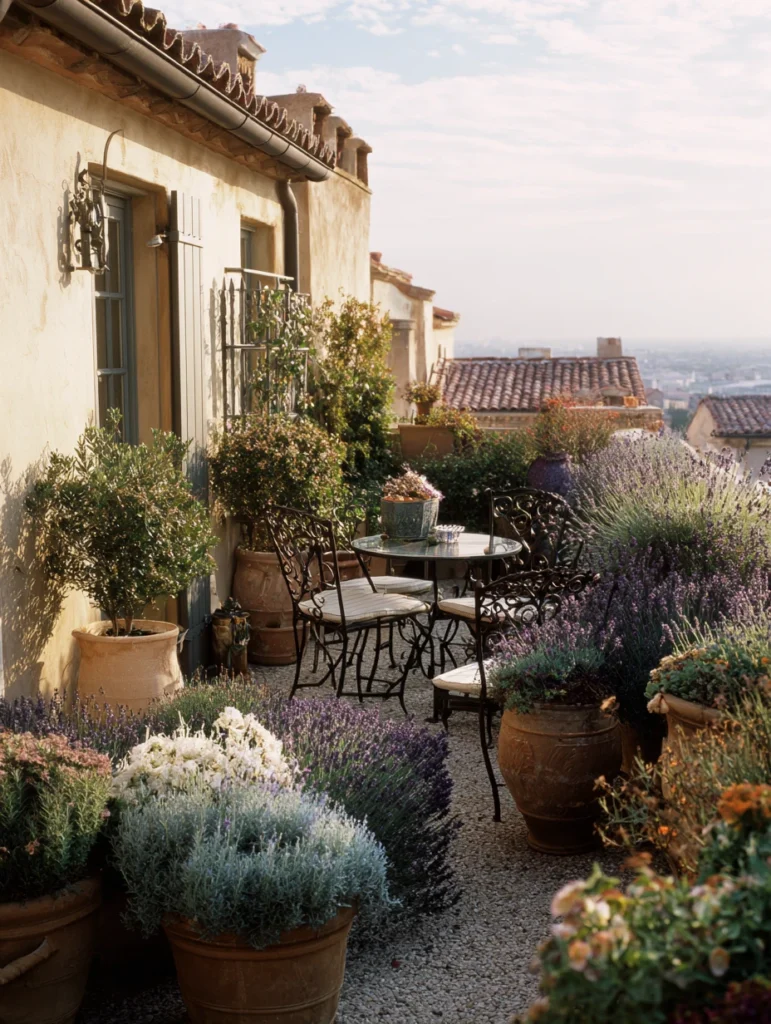
Heat-Loving Plants: Rooftops can get seriously hot, which is perfect for Mediterranean plants like rosemary, lavender, oregano, and santolina. These tough plants actually prefer lean soil and infrequent watering once established. They’re the epitome of low-maintenance, offering beauty, fragrance, and culinary uses.
Drought Tolerance: Mediterranean gardens conserve water naturally since the plants evolved in dry climates. This quality is especially valuable on rooftops where lugging water or dealing with hose connections can be inconvenient. You get a gorgeous garden without the constant need for irrigation.
Product Spotlight: The Burpee Herb Garden Seed Collection includes multiple Mediterranean varieties perfect for rooftop conditions. Pair it with the Dr. Earth Organic Fertilizer, which mimics the mineral-rich soils these plants prefer in their native habitats.
18. Butterfly Garden Station
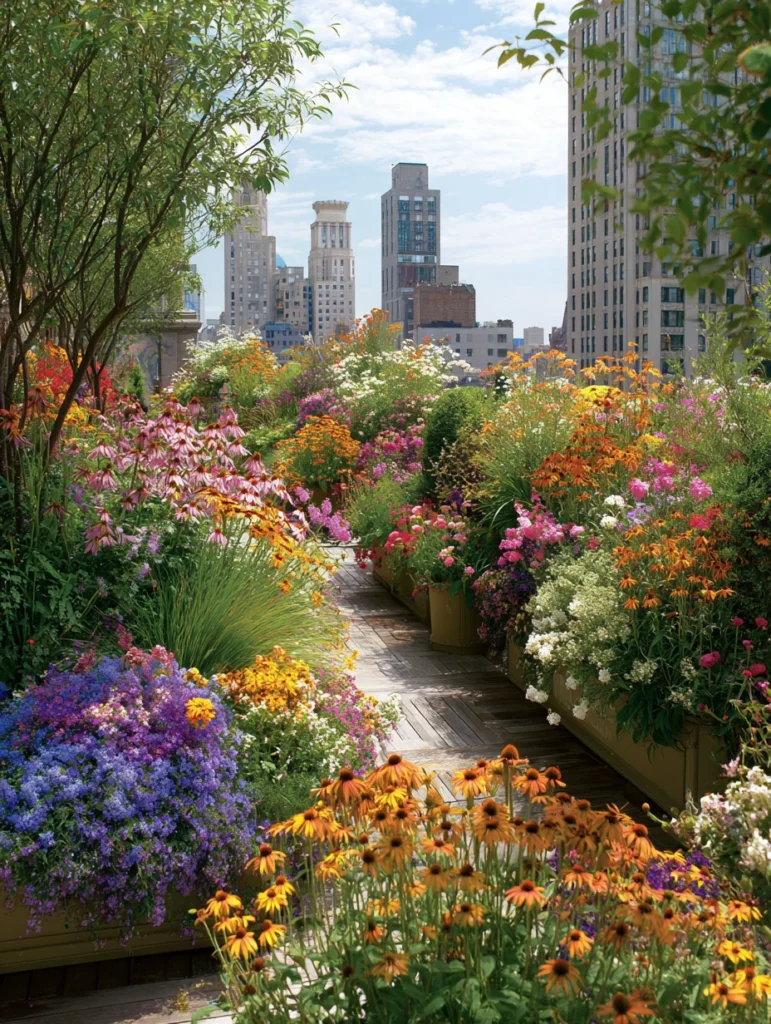
Attract Specific Species: Different butterflies prefer different host plants for laying eggs and nectar plants for feeding—research which butterflies are native to your region and plant accordingly. You’ll create a specialized habitat that supports butterfly populations while enjoying their presence.
Educational Opportunity: If you have kids or simply enjoy observing nature, a butterfly garden offers endless fascination. You can watch the complete lifecycle from egg to caterpillar to chrysalis to butterfly, all on your rooftop.
Product Spotlight: The Burpee Butterfly Garden Wildflower Seed Mix contains species specifically selected to attract and support butterflies. Use Jobe’s Organic All-Purpose Fertilizer to feed these flowering plants naturally without chemicals that could harm butterfly larvae.
19. Evening Garden with Night-Blooming Plants

Extend Usability: City dwellers often have limited opportunities to enjoy their rooftops after work, when natural light is fading. Plant evening-blooming flowers like moonflower, night phlox, and evening primrose that release fragrance and open their blooms after sunset. Your garden becomes magical when most people’s gardens are shutting down.
Ambient Lighting: Combine night-blooming plants with subtle landscape lighting to create an enchanting atmosphere. White and pale-colored flowers seem to glow in moonlight and low artificial light, creating dramatic visual effects.
Product Spotlight: Burpee Moonflower Seeds produce huge, white flowers that open at dusk and have an incredible scent. Add the Solar Pathway Lights to illuminate your evening garden without running electrical wiring across your rooftop.
20. Zen Rock Garden with Succulents
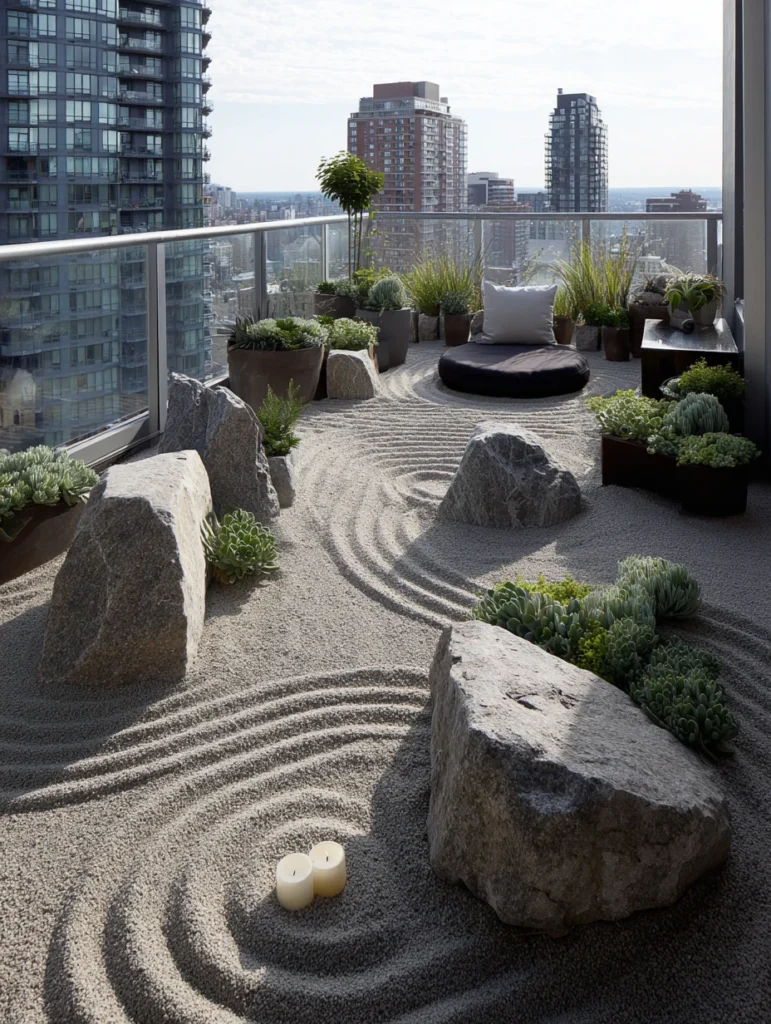
Minimalist Approach: Sometimes, less really is more. A zen-inspired garden features rocks, gravel, and carefully selected succulents or ornamental grasses, creating a calming, low-maintenance space. This style works brilliantly on rooftops where weight is a concern since rocks and gravel weigh less than soil-filled containers.
Meditative Quality: Raking patterns into gravel offers a mindful activity that helps reduce stress. The design’s simplicity creates visual calm in contrast to the busy cityscape surrounding you. It’s a deliberate pause in an overwhelming environment.
Product Spotlight: The Mini Zen Garden Desk Set can inspire your larger rooftop design with different raking patterns and arrangements. Use the Hoffman Horticultural Vermiculite mixed with sand to create well-draining soil for succulents and alpine plants.
21. Year-Round Color Garden
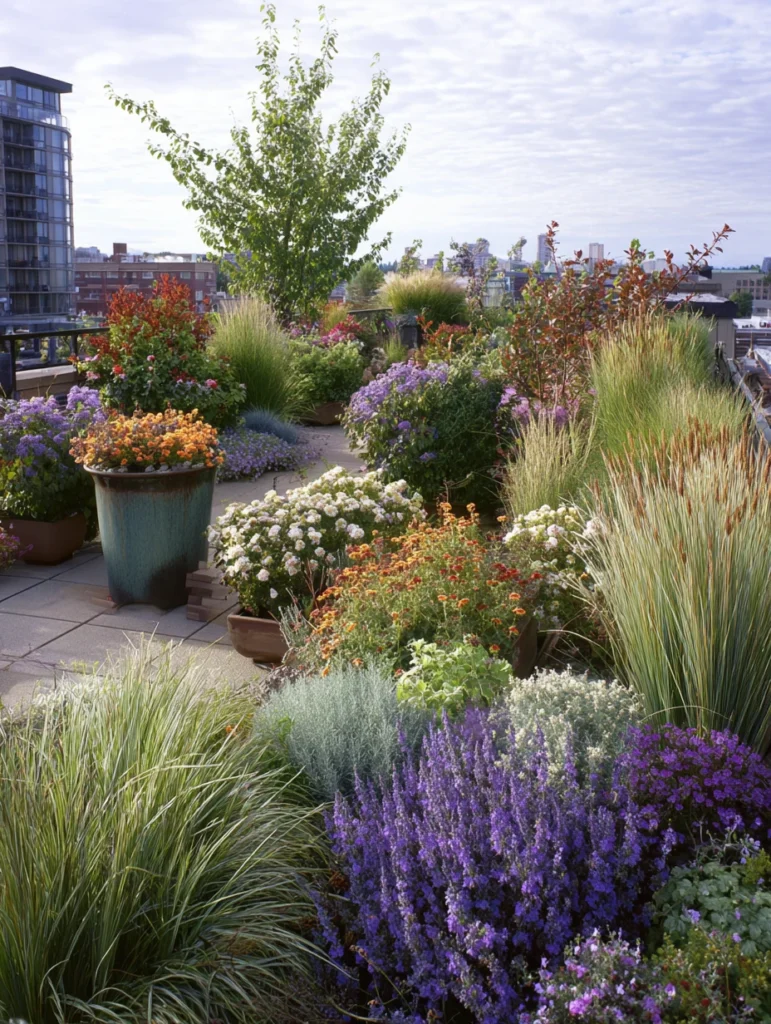
Seasonal Interest: Plan your rooftop garden so something is always blooming or providing visual interest. Spring bulbs give way to summer perennials, which transition to fall mums and ornamental grasses, followed by evergreen shrubs and winter berries. This approach means your rooftop never looks dormant or abandoned.
Strategic Plant Selection: Choose plants with multiple seasons of interest, such as spring flowers, attractive summer foliage, fall color, and interesting winter structure. This maximizes the value of each plant and ensures your rooftop remains an appealing destination year-round.
Product Spotlight: The Burpee Four-Season Flower Garden Collection features varieties carefully selected for their continuous color. Add the Espoma Organic All Season Fertilizer to support plants through their different growth phases and maintain vigor year-round.
Final Thoughts
Your rooftop garden doesn’t need to be complicated or expensive to be successful. Begin with one or two ideas that resonate with your lifestyle and build upon them from there. The beauty of rooftop gardening is that you can experiment, make mistakes, and adjust without significant consequences.
Whether you’re growing food, creating privacy, or simply adding beauty to your urban space, these ideas provide a solid foundation to build upon. Now get out there and transform that unused rooftop into the outdoor sanctuary you’ve been dreaming about. Your future self will thank you every time you step outside.