
You know that feeling when you walk into a room and it just feels like a warm hug? That is exactly what shabby chic does best. It isn’t about having a showroom-perfect space where you are afraid to touch anything; it is about celebrating the worn, the loved, and the slightly messy bits of life. I honestly think this style has stuck around for so long because it forgives you for not ironing your duvet cover. We are going to look at some ways to bring that vintage, cozy vibe into your bedroom without making it look like a chaotic antique store exploded. Grab your coffee, and let’s figure out how to make your sleeping space dreamy.
1. Distressed Wood Headboards
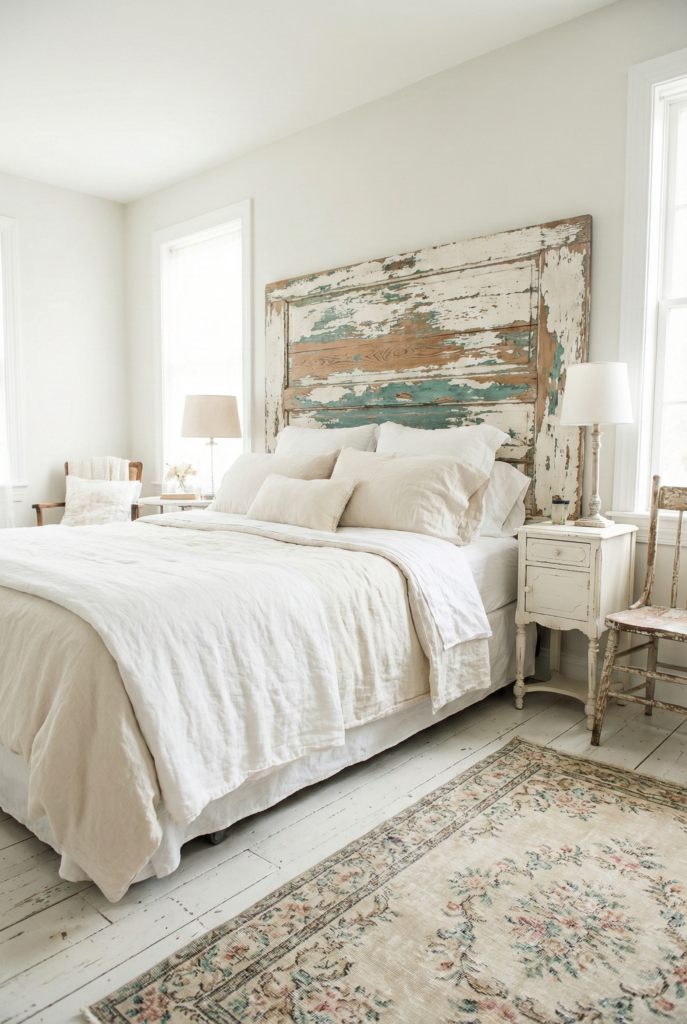
The Appeal of Imperfection:
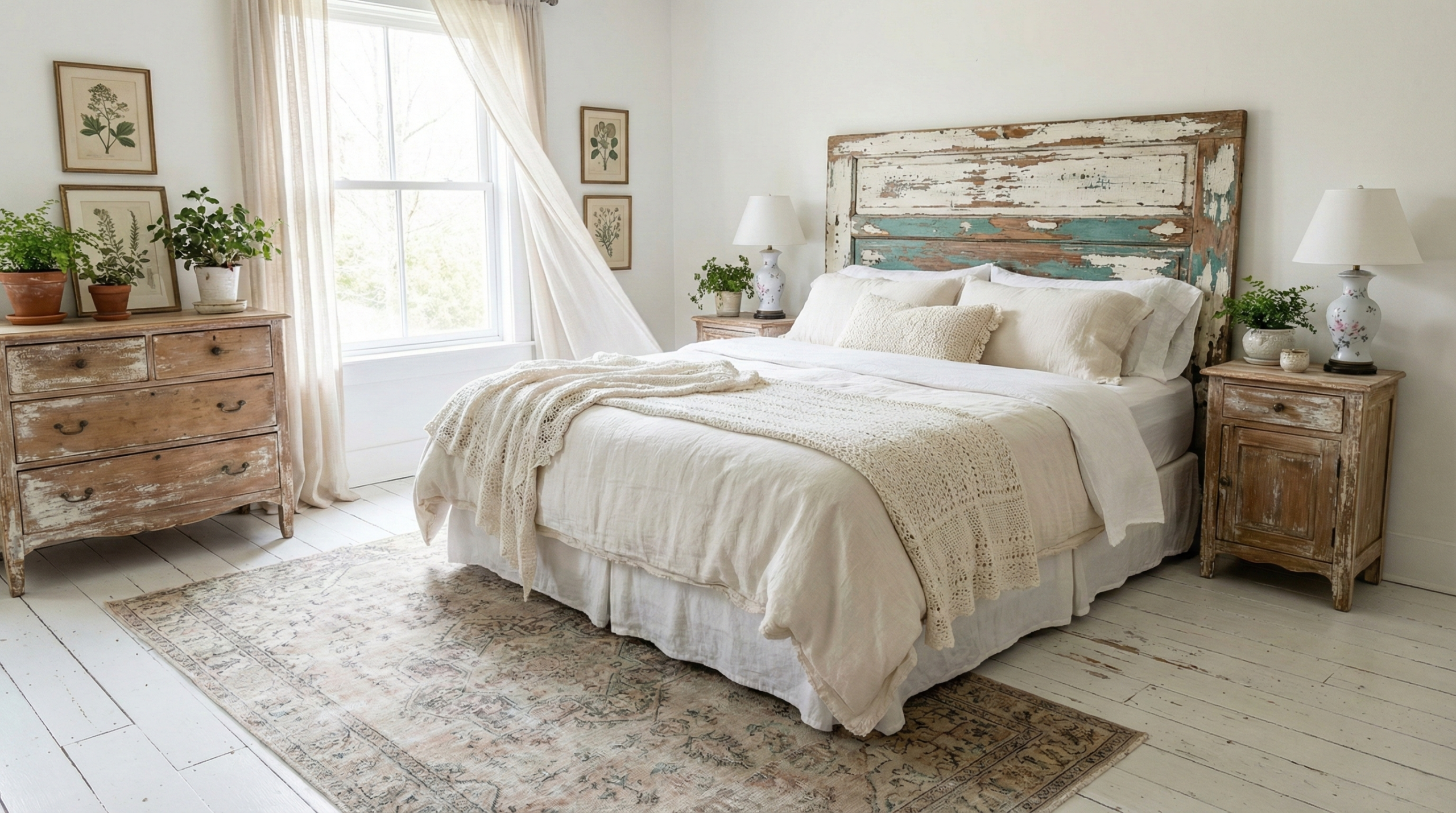
I always tell people to start with the bed because it is the biggest piece in the room. You don’t need a brand new, shiny headboard here; in fact, I’d argue that looks worse. Go for something with chipped paint or visible wood grain that tells a story. When I see a piece of furniture that looks a bit beaten up, I instantly feel more relaxed because I know I don’t have to be precious with it. It sets the tone for the whole room immediately.
DIY Potential:
You can easily do this yourself if you have a free weekend and some sandpaper. I took a basic pine headboard last year, painted it white, and then sanded the edges until the wood peeked through. It cost me maybe twenty bucks in supplies, and it looks authentic. Why pay hundreds for “factory distressed” when you can just beat up a piece of wood yourself? It adds a layer of personal history that store-bought items just cannot replicate.
2. Layers of Vintage Lace
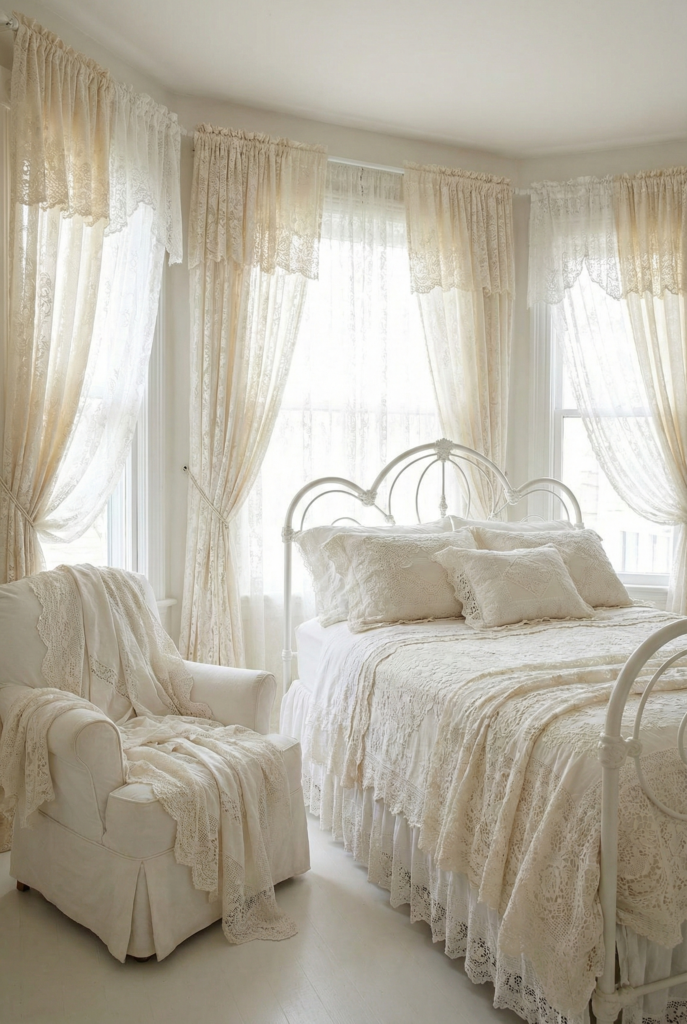
Texture Over Color:
Shabby chic relies heavily on texture since the color palette is usually pretty quiet. Adding lace throws or pillowcases brings in that intricate detail without screaming for attention. I love how light filters through a lace curtain; it creates these beautiful, shifting patterns on the wall that standard blinds just kill. You want to mix different patterns of lace, too, so it feels collected over time rather than purchased in a matching set.
Where to Find It:
Don’t buy the cheap, scratchy polyester stuff from the big box stores. I usually scour thrift shops or estate sales for old tablecloths or curtains that I can repurpose. Real cotton or linen lace has a weight and drape that the synthetic stuff just misses completely. Even if it has a small tear or a stain, you can usually work around it or hide it, which just adds to that “lived-in” charm we are chasing.
3. A Soft Pastel Color Palette
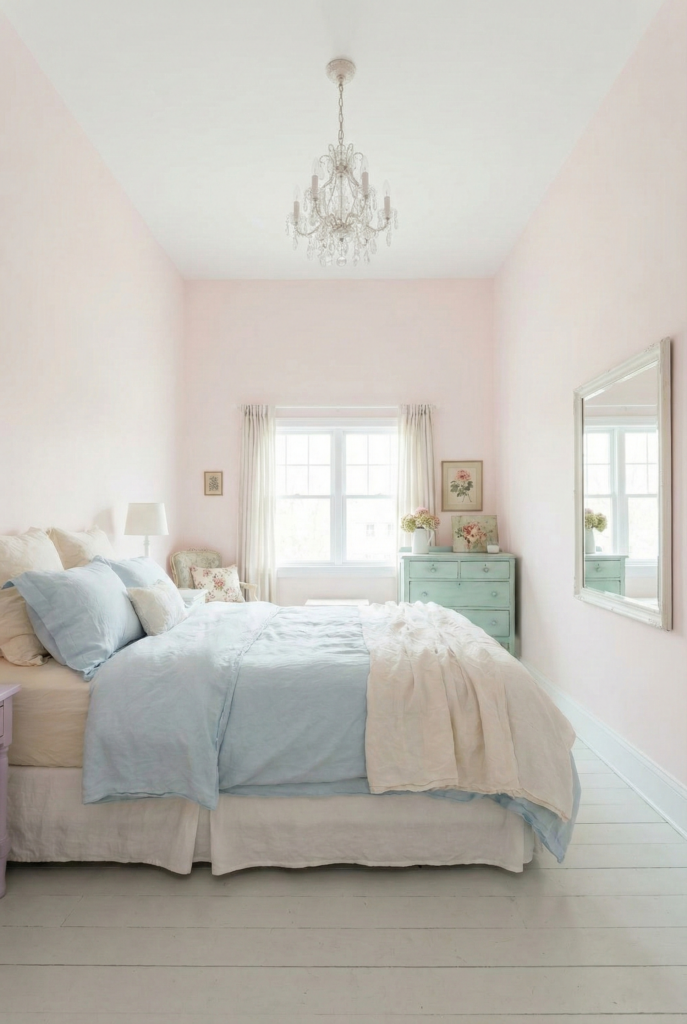
Keeping It Calming:
I stick to whites, creams, soft pinks, and baby blues when I am doing a shabby chic room. These colors reflect light beautifully and make a small bedroom feel twice as big. It is tempting to add a pop of bright red or neon, but trust me, it breaks the spell. The goal is a serene retreat, and keeping the contrast low helps your eyes rest the moment you walk in.
Avoiding the Nursery Look:
The trick is to use “dusty” versions of these colors so your room doesn’t look like a newborn’s nursery. Instead of bright bubblegum pink, I choose a faded rose or a blush tone that looks like it has been sitting in the sun for a few years. It creates a sophisticated, adult version of pastels. Have you ever noticed how much more expensive a “dusty” blue looks compared to a primary blue? It’s all about subtlety.
4. Crystal Chandeliers
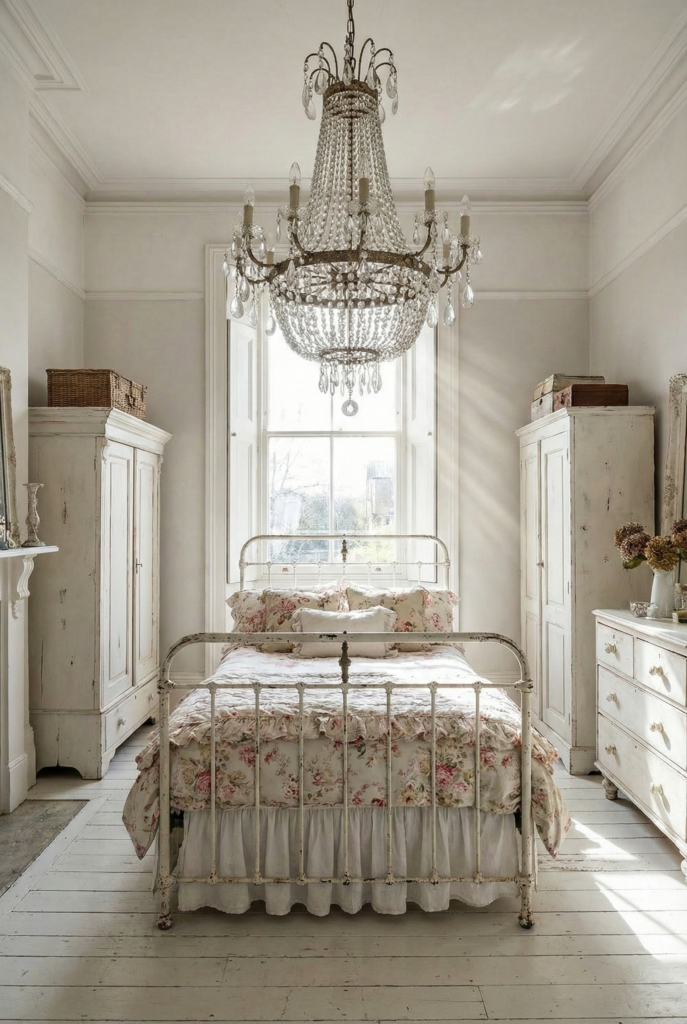
Adding a Touch of Glamour:
You need something to offset all that chipping paint and old wood, or the room feels a little too rustic. A small crystal chandelier adds just the right amount of sparkle and elegance. I love the contrast between rough, peeling furniture and glittering glass crystals. It creates this high-low mix that makes the style so interesting to look at.
Placement Matters:
You don’t need high ceilings to pull this off, either. I hung a mini chandelier in a guest room with standard eight-foot ceilings, and it worked perfectly as a focal point. Just make sure you don’t hang it so low that you bump your head when you make the bed. Even a small fixture catches the natural light during the day and throws rainbows around the room, which makes me smile every single time I see it.
5. Floral Bedding
Choosing the Right Print:
Florals are classic, but you have to be careful not to pick something that looks like your grandmother’s old sofa (unless that’s your vibe). I prefer small, ditsy floral prints over huge, loud botanicals for a bedroom. They feel softer and blend better with other patterns. If the print is too big, it dominates the room and takes away from the peaceful atmosphere we are trying to build.
Mixing and Matching:
I rarely use a full matching set of floral sheets, duvet, and shams. I think it looks much better if you mix a floral duvet with striped sheets or solid white pillowcases. It keeps the look fresh and prevents the “pattern fatigue” that happens when everything matches perfectly. Have you ever tried mixing polka dots with roses? It sounds crazy, but if the colors are similar, it works surprisingly well.
6. Mismatched Nightstands
Breaking the Rules:
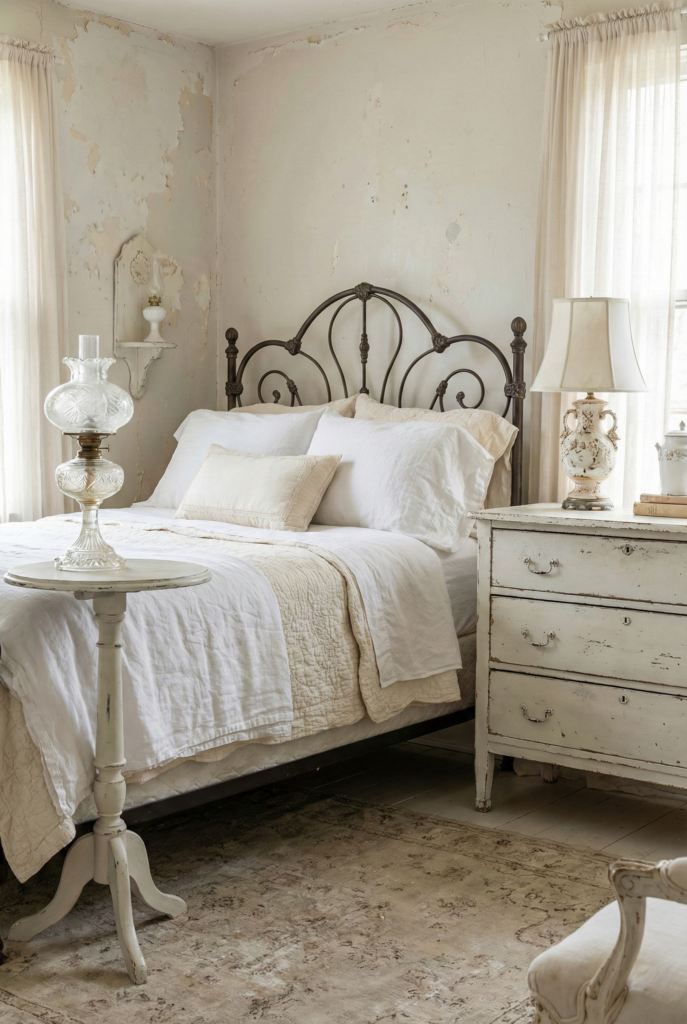
Who said your nightstands have to be twins? I love using two different tables on either side of the bed to create visual interest. Maybe one is a round pedestal table and the other is a small vintage dresser. As long as they are roughly the same height, it works. It reinforces that collected, casual vibe that defines shabby chic.
Unifying with Paint:
If the mismatched look scares you a little, you can paint them both the same shade of creamy white. This ties them together visually while still letting their unique shapes shine. I did this in my own room, and it solved the problem of having one table that was dark wood and one that was metal. Paint is the great equalizer in the world of DIY decor.
7. Wrought Iron Bed Frames
The Vintage Silhouette:
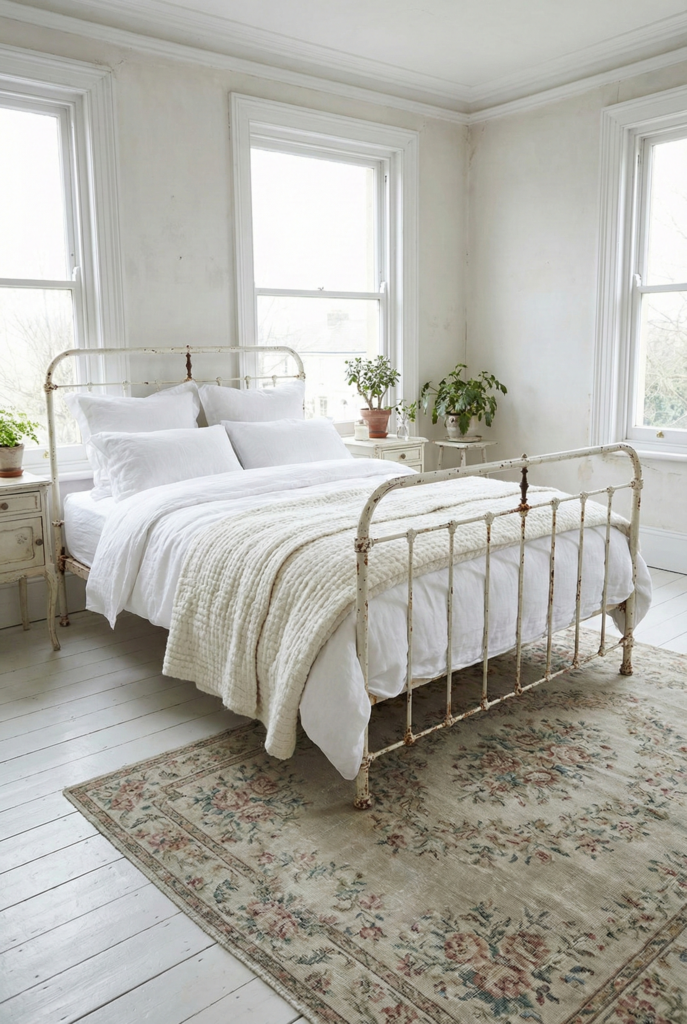
If a wooden headboard feels too heavy for your space, a white wrought iron bed frame is a fantastic alternative. The open metalwork keeps the room feeling airy and spacious. I especially love the ones with peeling paint where a bit of rust shows through—it adds that industrial-meets-romantic edge. It feels very French countryside, even if you are just in the suburbs.
Dressing the Bed:
Iron beds look amazing when you pile them high with fluffy pillows and thick duvets. The hard, cold metal contrasts so well with soft, billowy linens. I usually drape a quilt over the footboard to soften the metal lines even further. It creates a cozy nest that makes it incredibly hard to get up in the morning, but that’s a risk I am willing to take.
8. Painted Floorboards
Lightening the Space:
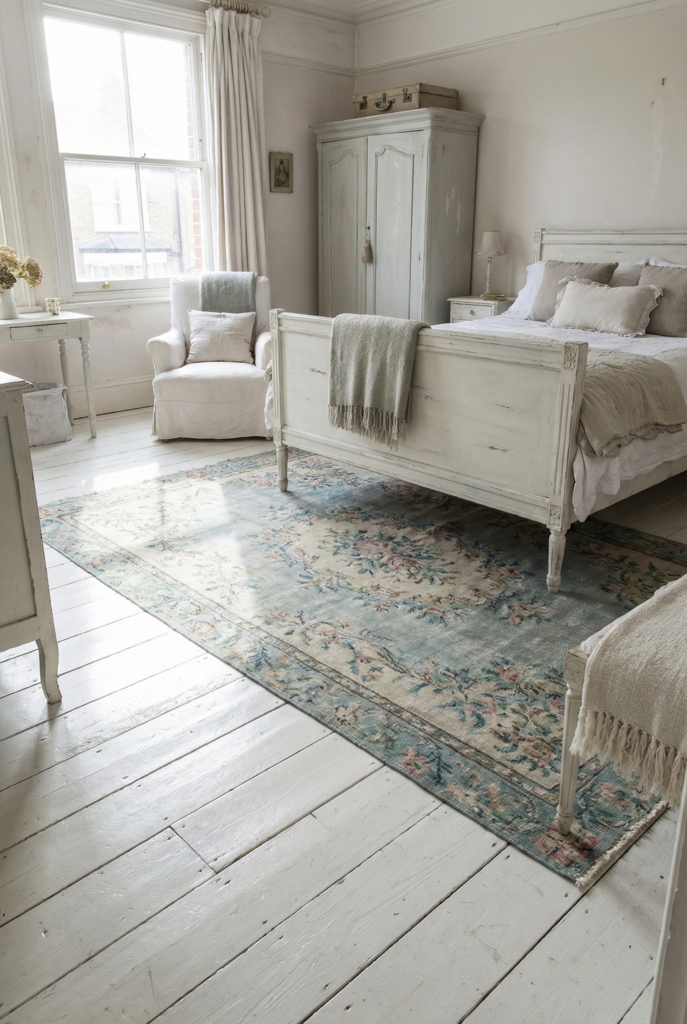
If you have old hardwood floors that are in rough shape, painting them white is a bold move that pays off. It instantly brightens the room and hides a multitude of sins like stains or gouges. I know people get nervous about painting wood, but in this style, scuffs on the floor just add to the character. It reflects so much light that you won’t believe it’s the same room.
Maintenance Reality:
I won’t lie to you; white floors do show dust and hair more than dark wood. But I find that they are actually easier to keep clean because you can see exactly where the dirt is. Plus, as the paint wears down in high-traffic areas, it contributes to the shabby chic aesthetic naturally. Just make sure you use a proper floor paint so it doesn’t peel up in sheets.
9. Vintage Mirrors
Reflecting Light and Style:
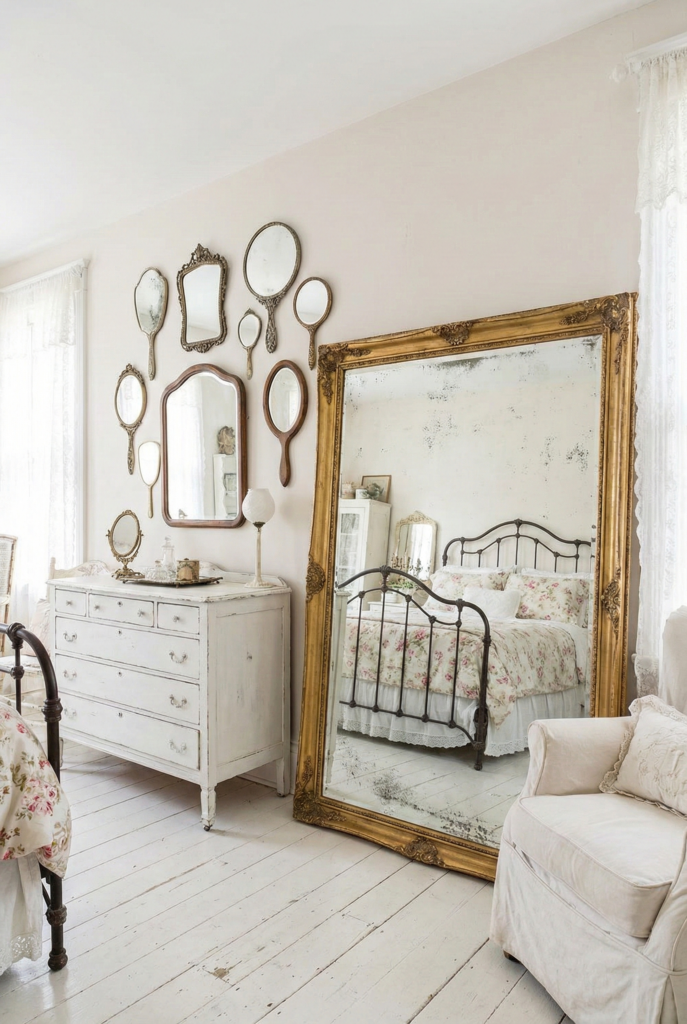
I am obsessed with hunting for old mirrors with ornate, gold, or white frames. The glass doesn’t even have to be perfect; a little “foxing” or desilvering around the edges makes it look authentic. Leaning a large mirror against a wall opens up the space and makes the room feel twice as deep. It is a decorator’s secret weapon for small bedrooms.
Creating a Gallery Wall:
Instead of one big mirror, try grouping a bunch of smaller hand mirrors on one wall. I have a collection of silver-backed hand mirrors that I hung up, and it acts like art. It is a fun way to display a collection rather than keeping them hidden in a drawer. Plus, finding them at flea markets becomes a fun treasure hunt.
10. Slipcovered Chairs
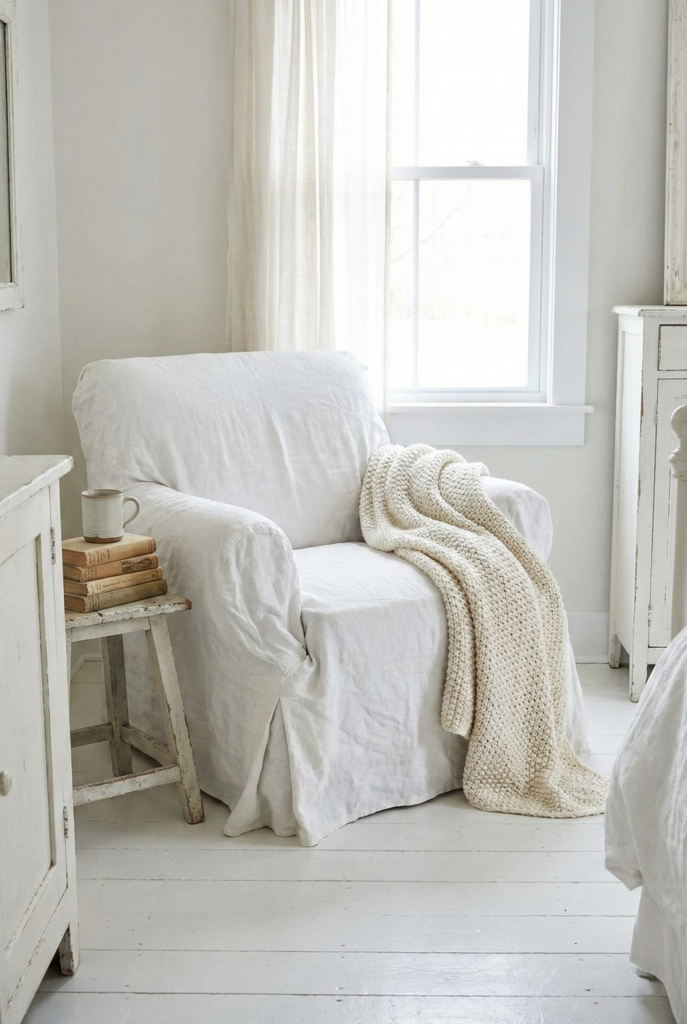
Relaxed Seating:
If you have room for a reading chair, get one with a loose, linen slipcover. The loose fit says, “Sit here, relax, I’m not precious.” Tight upholstery feels too formal for a shabby chic room. I love white denim or linen because you can just take the cover off and bleach it if you spill your coffee. Practicality is key when you are living with white furniture.
Adding Softness:
The skirt of a slipcover adds another layer of softness to the room, hiding the legs of the chair. It reduces the visual clutter of having too many chair and table legs showing. I usually throw a chunky knit blanket over the back to make it even more inviting. It becomes the perfect spot to curl up with a book on a rainy Sunday.
11. Antique Trunks at the Foot of the Bed
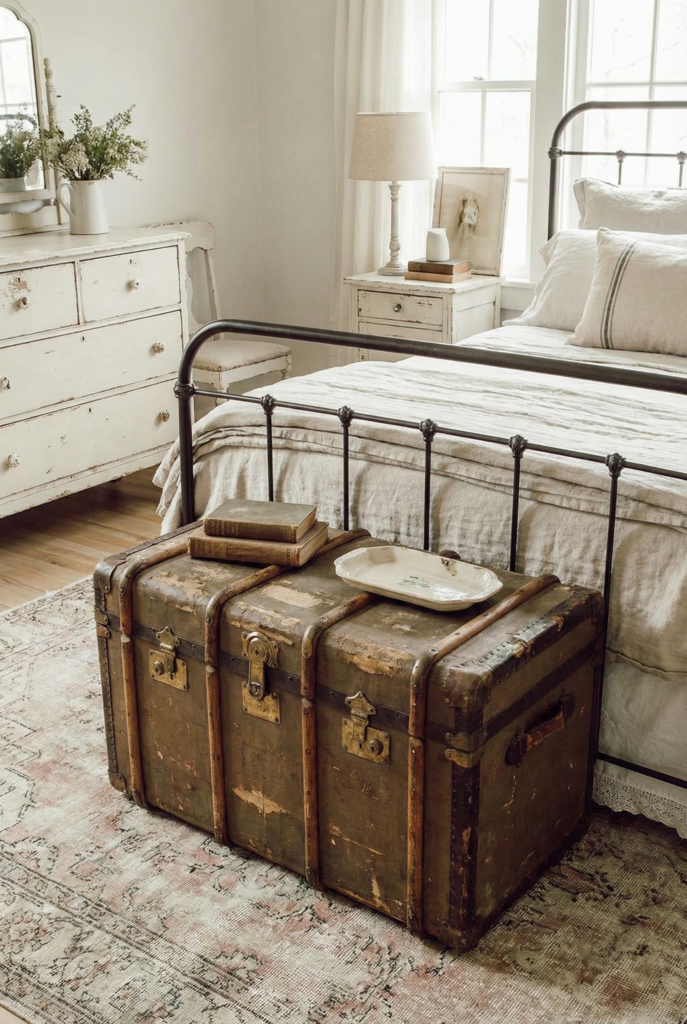
Storage Meets Style:
I love using an old steamer trunk as a bench at the end of the bed. It provides amazing storage for extra blankets or winter sweaters, which we all need. Look for trunks with leather straps, brass hardware, or interesting stickers from past travels. It anchors the bed and adds a heavy, grounding element to a room full of light colors.
Styling the Surface:
You don’t have to leave the top bare. I often stack a few coffee table books or place a tray with a candle on top of the trunk. Just keep it simple so you can still open it easily when you need to grab a duvet. It serves as a great transition piece between your bed and the rest of the room.
12. Shutters as Wall Decor
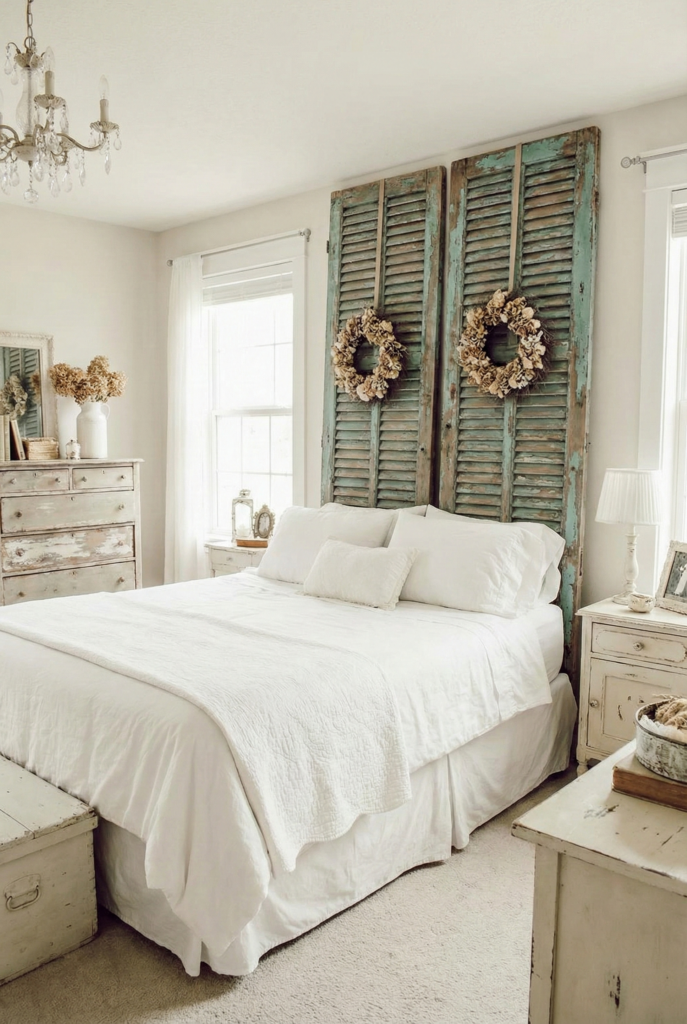
Architectural Interest:
Old window shutters are gold in the shabby chic world. You can lean them against the wall, hang them on either side of a mirror, or even use them as a makeshift headboard. I found a pair of louvered shutters in a dumpster once, painted them a dusty teal, and they completely transformed a blank wall. They add architectural interest where there wasn’t any before.
Functional Uses:
You can also use the slats in the shutters to hold things like photos or holiday cards. I have seen people attach hooks to them to hold jewelry, which is brilliant. It turns a decorative piece into something functional. Why buy a generic bulletin board when you can use a piece of history?
13. Mason Jar Storage
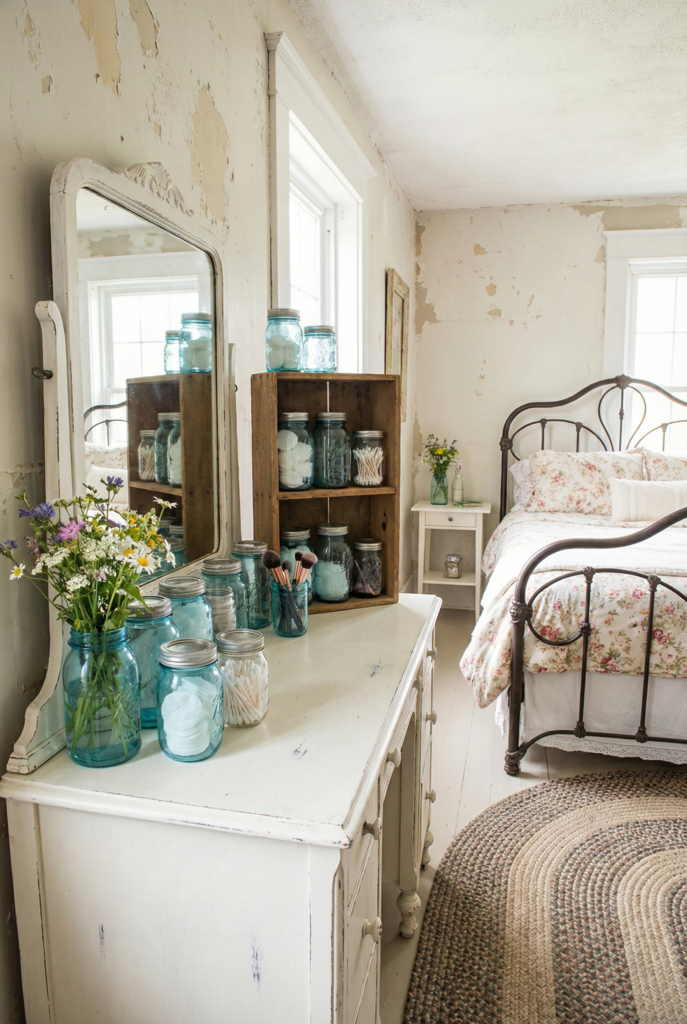
Simple and Effective:
It is a cliché for a reason—mason jars are cheap, durable, and look great. I use them on my vanity to hold makeup brushes, cotton balls, or fresh flowers. The clear glass keeps things looking airy, and the vintage blue jars add a nice pop of color. You don’t need expensive organizers when a dollar jar does the job perfectly.
DIY Lighting:
I have also seen people turn mason jars into pendant lights or sconces. It adds a rustic, farmhouse touch that fits right in with shabby chic decor. I filled one with fairy lights for a nightlight, and it gives off the coziest glow. It is such a simple project that makes a big impact on the mood of the room.
14. Rosette Details
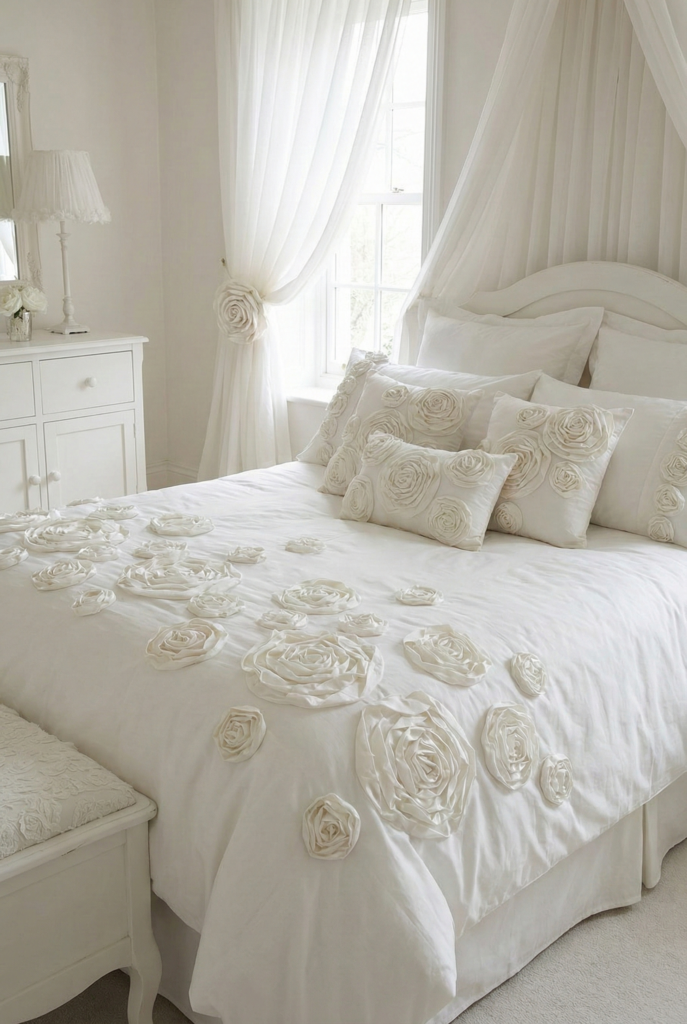
Feminine Flourishes:
Rosettes—those fabric flower details—are a staple of this style. You often see them on bedding, pillows, or even curtain tie-backs. I think they add a sweet, romantic touch without being too loud. A white duvet with white rosette details adds texture without introducing a new color, which keeps the look clean.
Don’t Overdo It:
A little goes a long way here. If you have rosette bedding, rosette curtains, and rosette pillows, it starts to look like a wedding cake. I usually pick one item to feature this detail and keep the rest of the fabrics simple. Balance is the only thing keeping shabby chic from turning into a chaotic mess.
15. Chicken Wire Accents
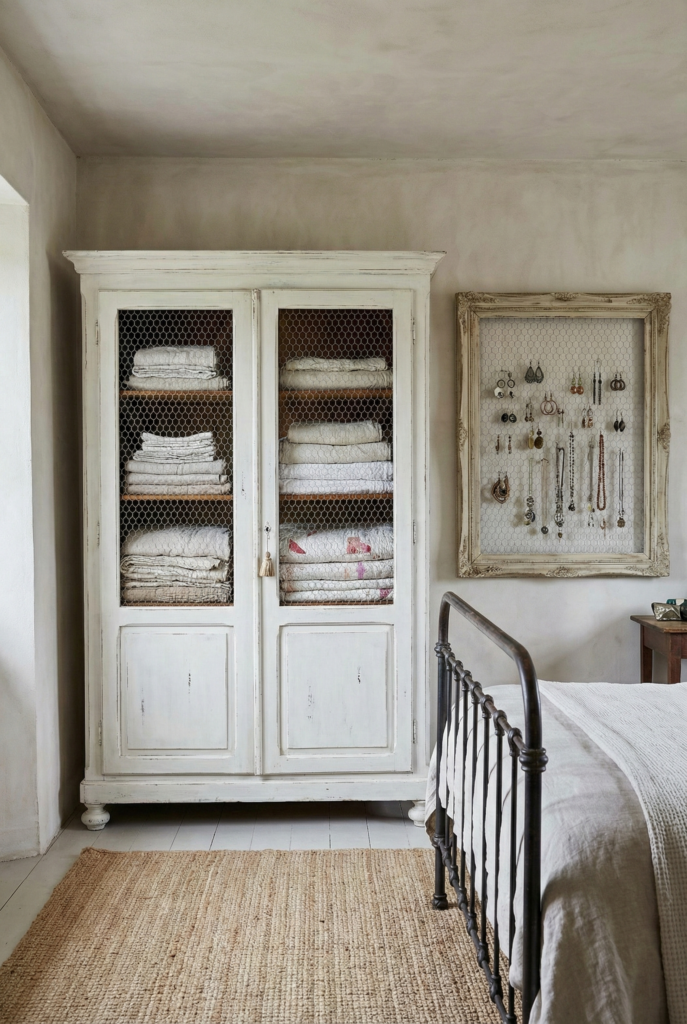
Rustic Texture:
This sounds weird for a bedroom, but chicken wire can look really cool if done right. I have seen cabinet doors where the glass was replaced with chicken wire, and it looks great on an armoire or jewelry cabinet. It adds that farmhouse texture and lets you see what is inside while keeping things contained. It breaks up large solid surfaces.
jewelry Displays:
I framed a piece of chicken wire in an old picture frame and used it to hang earrings. It turns your jewelry into art and keeps everything untangled. It is an easy DIY that costs almost nothing but looks like something you bought at a boutique. It creates a nice contrast between the industrial wire and the sparkly jewelry.
16. Chalk Paint Furniture
The Matte Finish:
Chalk paint is the holy grail for shabby chic enthusiasts because it dries to a beautiful, chalky matte finish. It requires almost no prep work, which is why I love it for lazy DIY weekends. You can paint right over varnished wood, and it sticks. The matte finish looks aged immediately, unlike glossy latex paint which looks too modern.
Easy Distressing:
Because chalk paint is porous, it is incredibly easy to sand back and distress. I usually apply two coats of different colors—like grey under white—and then sand through the top layer so the grey shows through. It gives the furniture depth and history instantly. Seal it with clear wax, and it feels like butter to the touch.
17. Vintage Birdcages
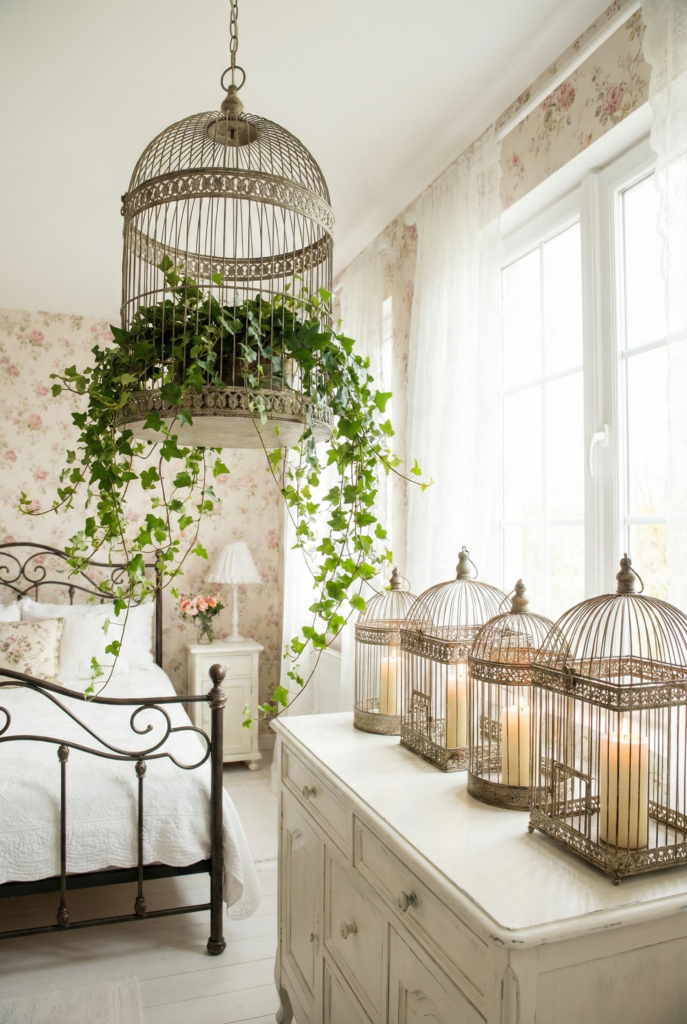
Whimsical Decor:
An antique birdcage is such a fun, sculptural element to add to a room. You don’t need a bird; in fact, please don’t put a bird in those tiny vintage ones! I use them to hold potted plants or pillar candles. The wire structure adds height and interest to a dresser or nightstand without blocking the view.
Hanging From the Ceiling:
I once hung a birdcage from the ceiling in a corner and filled it with trailing ivy. It looked magical, like a secret garden. It draws the eye up and makes use of that awkward empty space in the corner of the room. It’s those unexpected details that make a room feel memorable.
18. Ruffled Bed Skirts
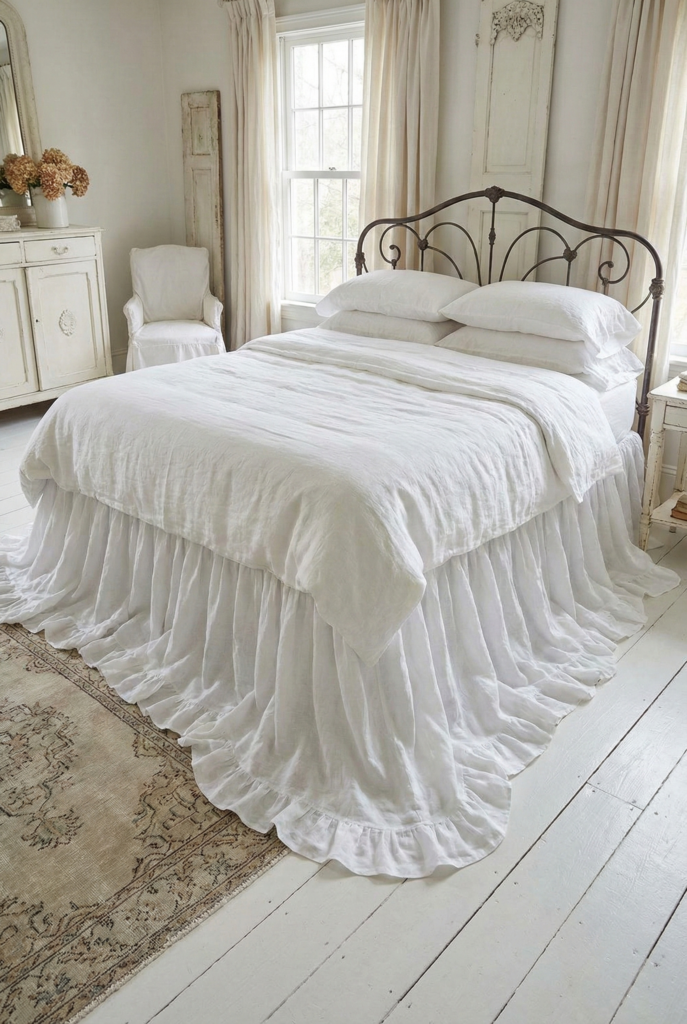
Softening the Edges:
Bed skirts are making a comeback, especially in this aesthetic. A long, ruffled linen bed skirt hides the ugly metal bed frame and any storage boxes you have shoved under there. I like the ones that puddle slightly on the floor; it feels romantic and relaxed. It finishes the bed and makes it look like a grand piece of furniture.
Layering Fabrics:
You can find bed skirts with layers of ruffles or lace trim. I prefer a simple burlap or linen ruffle because it feels more grounded and less “dollhouse.” It creates a soft base for the bed and adds another layer of texture to the room. Plus, it stops dust bunnies from gathering directly under the bed, which is a win in my book.
19. Exposed Brick Walls
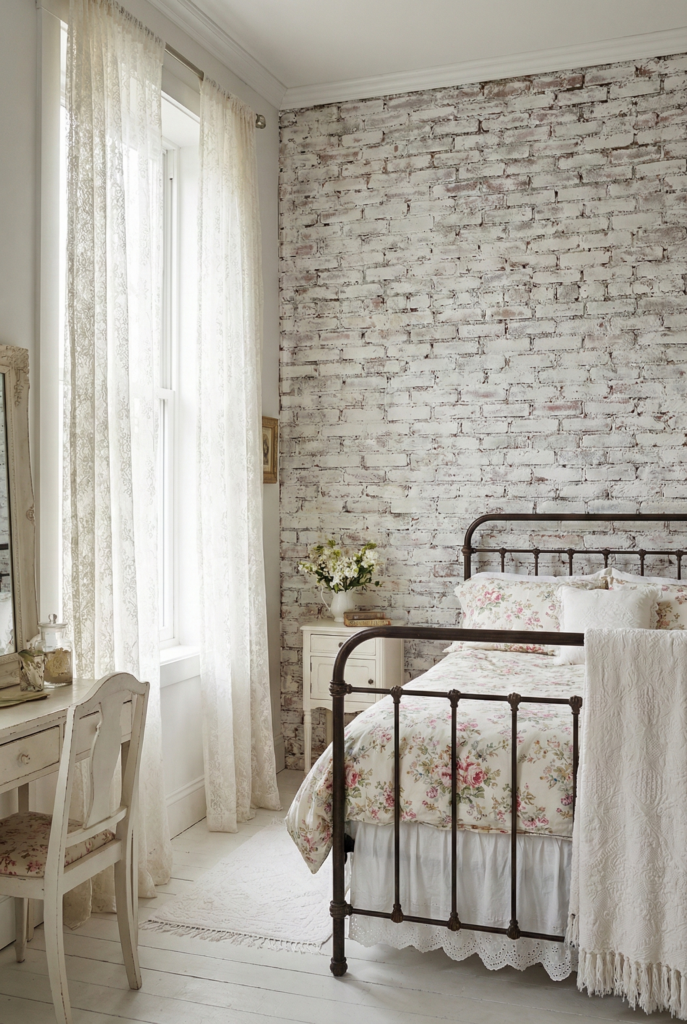
Industrial Contrast:
If you are lucky enough to have brick in your room, do not cover it up. I paint mine white to keep the room bright, but the rough texture of the brick adds so much character. It provides a gritty contrast to the soft lace and floral fabrics. It keeps the room from feeling too precious or fragile.
Faking It:
If you don’t have real brick, you can use high-quality textured wallpaper or brick panels. I have seen some peel-and-stick wallpapers that look surprisingly real once you hang some art over them. It adds that architectural depth without the dust and crumbling mortar of real brick. It anchors the room and gives it a loft-like vibe.
20. Canopy Beds
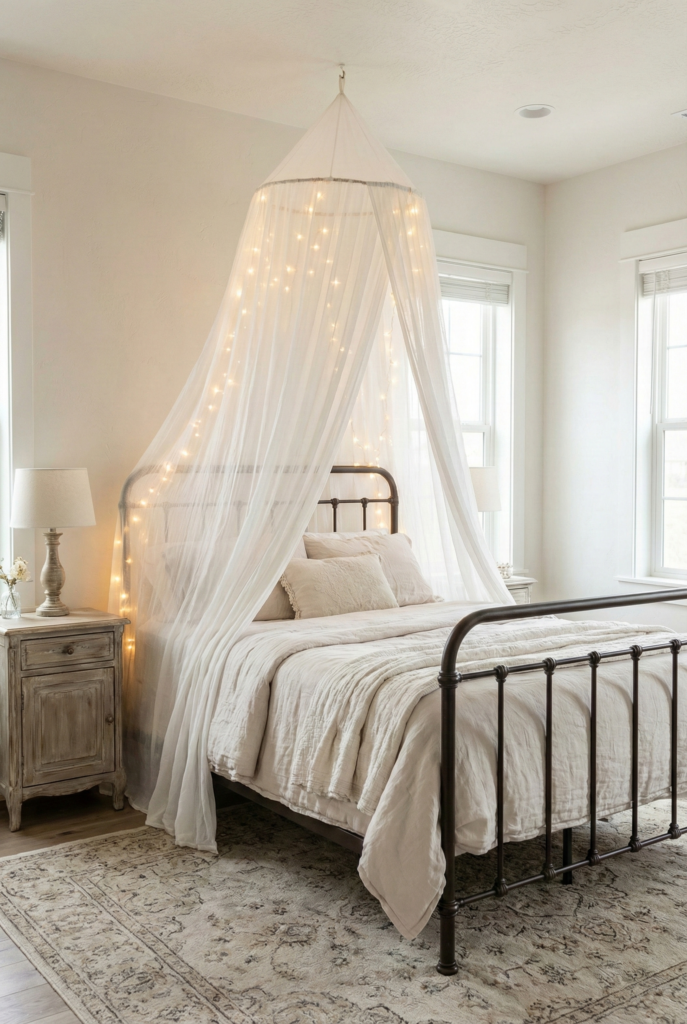
Creating a Sanctuary:
You don’t need a four-poster bed to have a canopy. I have simply draped sheer fabric from a hoop on the ceiling, and it creates a dreamy, tent-like feel over the head of the bed. It makes the sleeping area feel private and enclosed. It is the ultimate way to make your bedroom feel like an escape from the world.
Fabric Choice:
Keep the fabric sheer and light. Heavy velvet drapes can feel suffocating in a small room. I use inexpensive sheer curtains or mosquito netting. It allows air to circulate and keeps the look ethereal. Watching the fabric move gently in the breeze from the window is the most relaxing thing ever.
21. Galvanized Metal Buckets
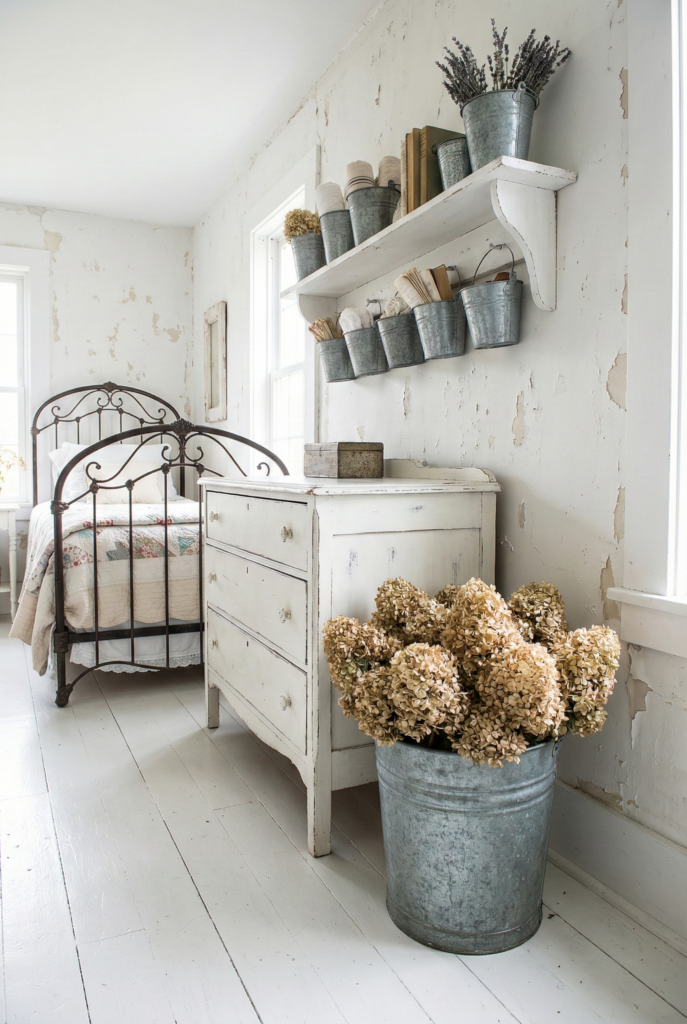
Farmhouse Storage:
I love using galvanized metal buckets for storage or as planters. The grey metal tone works as a neutral and breaks up all the white wood. I use small ones on my desk for pens and larger ones on the floor for holding extra throw pillows. They are indestructible and add a nice rustic touch.
Floral Displays:
Nothing looks better than a big metal bucket filled with hydrangeas or lavender. The contrast between the industrial metal and the soft flowers is classic shabby chic. It brings a bit of the garden indoors. I usually place one by the door or in a corner to add life to the room without worrying about a delicate vase breaking.
Conclusion
So, there you have it. Twenty-one ways to bring that perfectly imperfect vibe into your bedroom. I hope you see that shabby chic isn’t about spending a fortune on antiques; it is about creating a space that feels lived-in, comfortable, and uniquely yours.
Don’t stress about getting it “right.” If you love a piece and it makes you smile, it belongs in your room. Why not start small this weekend? Maybe distress an old frame or switch out your bedding. I promise, once you start embracing the charm of the old and worn, you will never want to go back to showroom perfection.