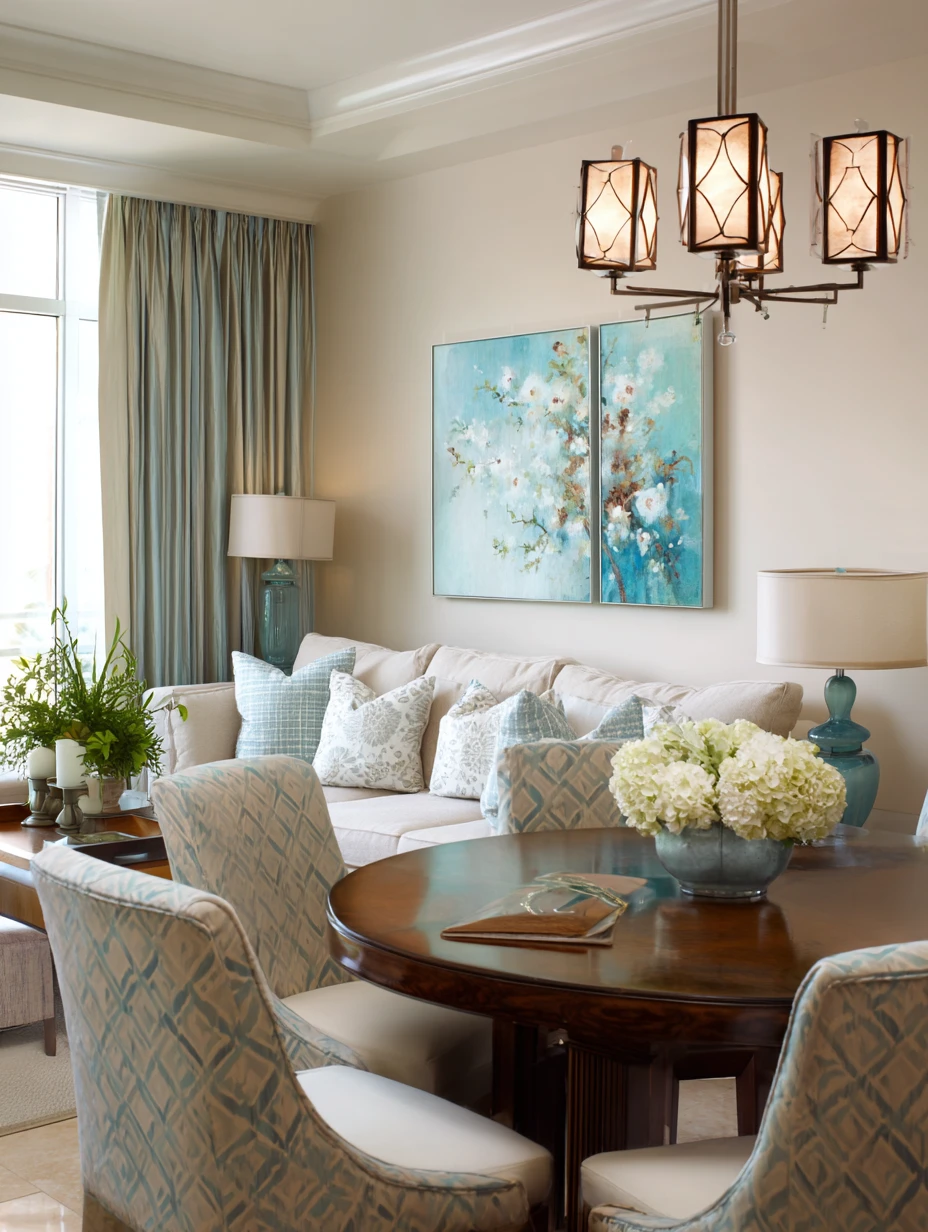

Living in a small space doesn’t mean you need to sacrifice style or functionality. When your living room and dining area share the same square footage, you face a unique challenge: how do you create two distinct spaces without making everything feel cramped and chaotic? The good news? You can absolutely nail this combo setup with some clever design moves and creative thinking.
Whether you’re dealing with a studio apartment or a cozy house with limited space, these ideas will help you maximize every inch while keeping things stylish and livable. Let’s get into practical solutions that work for real people with real spaces.
1. Float Your Furniture Away From the Walls
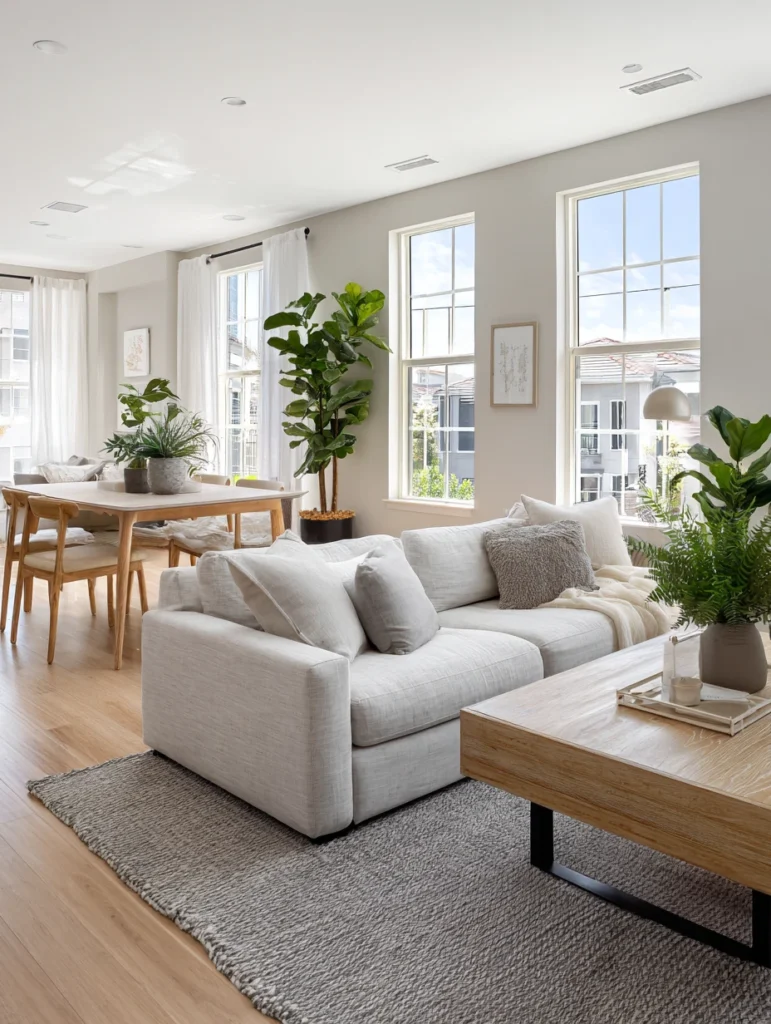
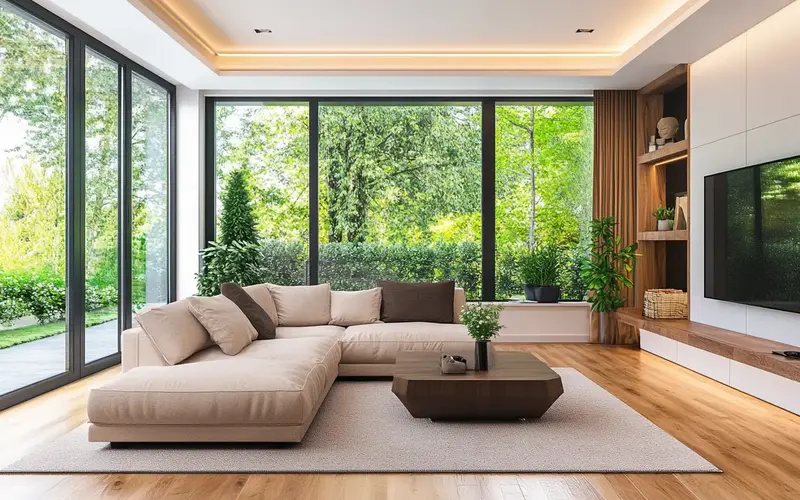
Create Visual Breathing Room: Pushing all your furniture against the walls might seem like the obvious space-saving move, but it actually makes rooms feel smaller and more cramped. Pull your sofa a few feet away from the wall and position your dining table behind it. This creates natural zones without needing actual dividers, and you’ll be surprised how much more spacious everything feels.
Define Traffic Flow: When you float furniture, you naturally create pathways that guide people through the space. Place your sofa facing the TV or main focal point, then position your dining table so it doesn’t interrupt the walking path. This setup works exceptionally well in rectangular rooms, where you can create a clear line between the living and dining areas.
Product Spotlight: The Rivet Revolve Modern Upholstered Sofa works perfectly for floating arrangements because it looks finished from all angles. You won’t have that awkward “back of the sofa” view ruining your dining area aesthetic. The clean lines and neutral colors blend seamlessly with most decor styles, and the compact size won’t overwhelm your space.
Read More: 17 Living Room Decor Ideas for Plant Lovers
2. Use a Rug to Anchor Each Zone
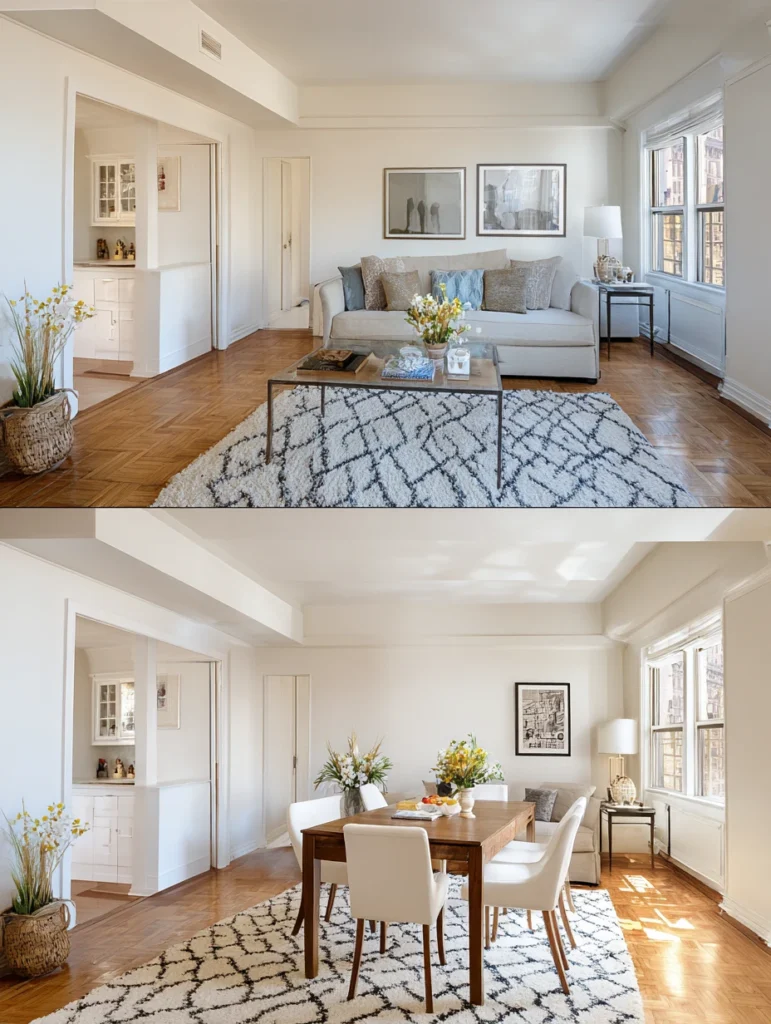
Ground Your Living Space: A rug under your coffee table and seating area instantly defines the boundaries of your living room. Choose something with texture or pattern that complements your style without overwhelming the room. The rug serves as a visual anchor, telling your brain, “This is the relaxation zone.”
Separate the Dining Area: Place a second rug under your dining table and chairs. Make sure it’s large enough that chairs don’t fall off the edge when you pull them out – nothing says “design mistake” quite like chair legs constantly catching on rug edges. This simple trick creates two distinct areas without building a single wall.
Product Spotlight: The Moroccan Blythe Area Rug comes in multiple sizes and adds just enough pattern to define space without being too busy. The low pile makes it easy to move dining chairs, and it’s machine washable because let’s face it, dining areas get messy. The neutral colors work with pretty much any furniture you already own.
Read More: 17 Stunning Fireplace Wall Ideas with a TV for your Living Room
3. Install a Statement Light Fixture Over Your Dining Table
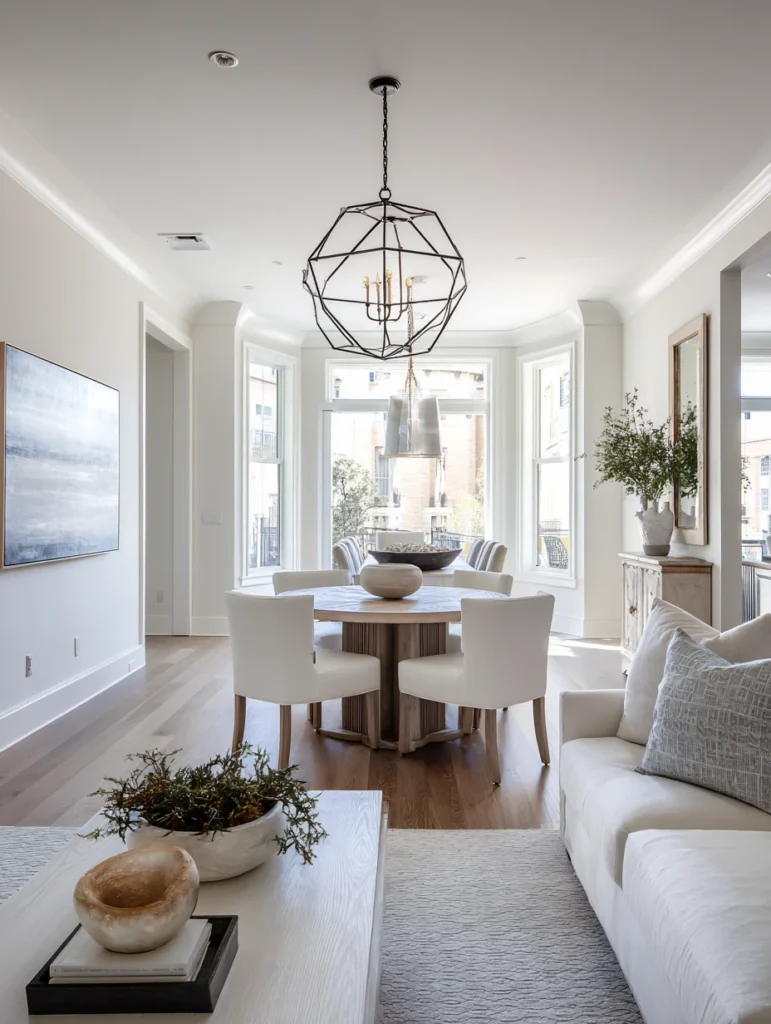
Draw the Eye Upward: A pendant light or chandelier hanging over your dining table does double duty – it provides focused lighting for meals and creates a clear visual marker that says “dining happens here.” This vertical element helps distinguish the eating area from the living space in a way that feels natural and stylish.
Choose the Right Scale: Your light fixture should be roughly one-third the width of your table. Too small and it looks lost, too large and it overwhelms the space. Hang it about 30-36 inches above the table surface so you don’t smack your head every time you stand up.
Product Spotlight: The Pendant Light Fixture offers modern industrial style without the premium price tag. The adjustable cord length lets you customize it to your ceiling height, and the simple design won’t compete with your decor. It provides plenty of light for dinner parties while looking intentional and designed.
Read More: 17 Totally Awesome 1930s Living Room Decor Ideas
4. Pick a Sofa With a Low Back
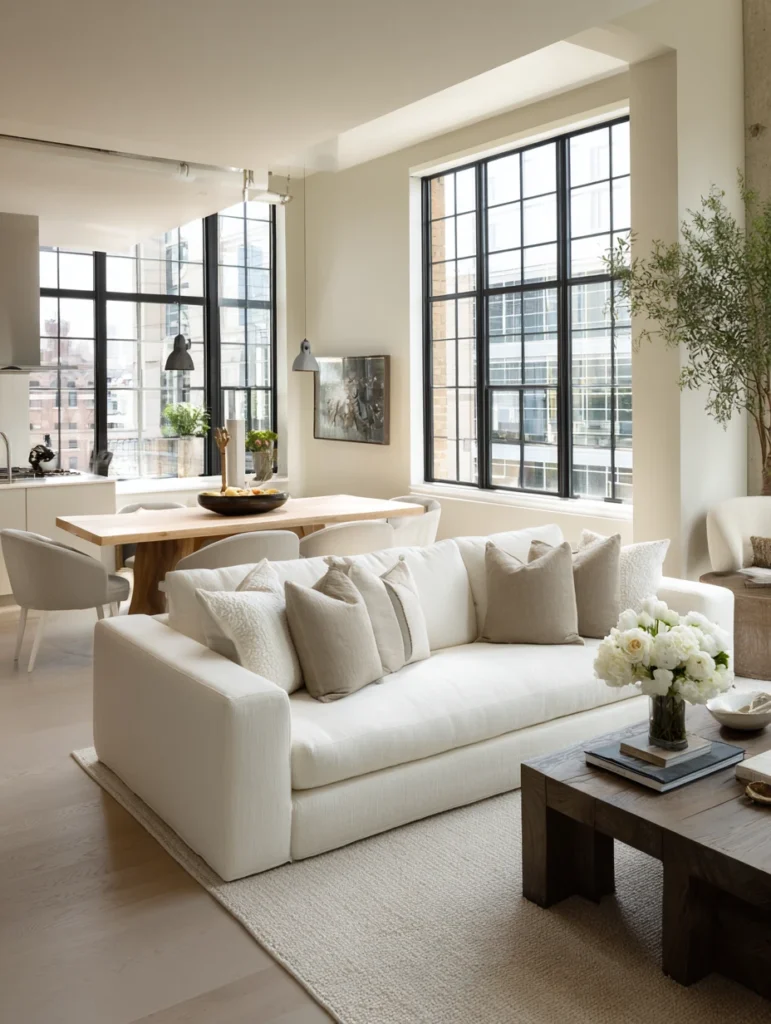
Maintain Sight Lines: A low-profile sofa keeps your space feeling open because you can see over it to the dining area and beyond. High-backed sofas create visual barriers that make small spaces feel even more confined. When you can see across the entire room, everything feels bigger and less claustrophobic.
Encourage Conversation: Lower backs make it easier to chat between the living and dining areas. If you’re cooking in an adjacent kitchen or setting the table, you won’t feel cut off from guests lounging on the sofa. This openness makes the whole space more sociable and connected.
Product Spotlight: The Novogratz Brittany Sofa Futon offers seating flexibility with its low-profile design. The clean-lined back won’t block your view, and its ability to convert to a bed adds functionality. The linen upholstery looks more expensive than it is, and it comes in colors that won’t clash with your dining furniture.
Read More: 17 Chic Picture Wall Ideas for a Modern Living Room
5. Choose a Round Dining Table
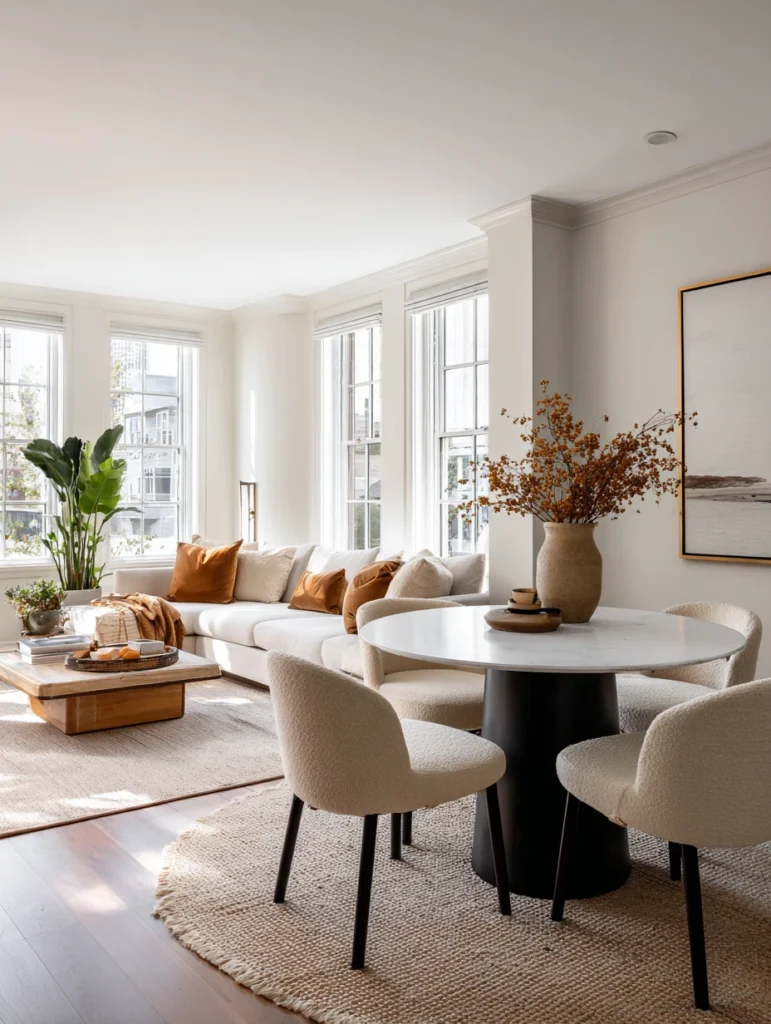
Maximize Movement Space: Round tables have no corners to bump into, which is especially important when working with limited square footage. You can squeeze past chairs more easily, and the circular shape naturally encourages conversation. Ever noticed how restaurant designers use round tables in tight spots? There’s a reason for that.
Soften the Hard Lines: Most rooms have angular furniture – rectangular sofas, square coffee tables, boxy entertainment centers. A round dining table breaks up all those straight lines and adds visual interest. The curved shape feels more organic and less institutional.
Product Spotlight: The Small Modern Round Dining Table fits perfectly in compact spaces without sacrificing style. The pedestal base means you’re not dealing with table legs getting in everyone’s way, and you can fit an extra chair in a pinch—the simple design pairs well with both modern and traditional dining chairs.
Read More: 21 Amazing Black and Beige Living Room Ideas
6. Mount Your TV on the Wall
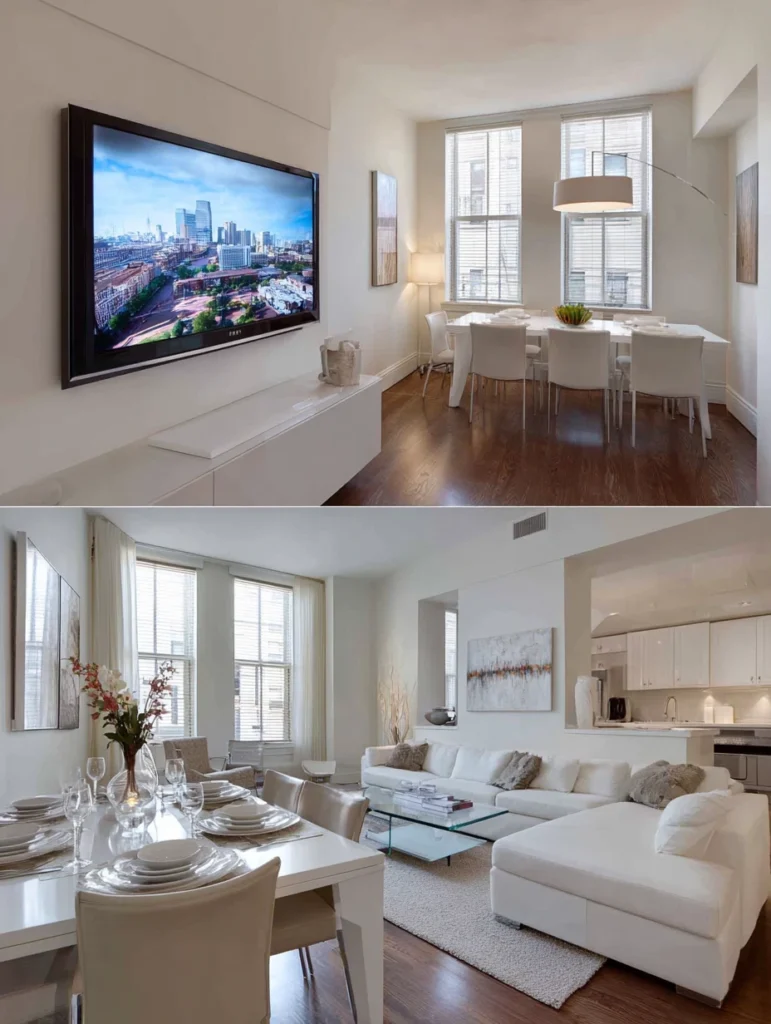
Free Up Floor Space: A wall-mounted TV eliminates the need for a bulky entertainment center, freeing up valuable real estate. That freed-up floor space can go toward better furniture arrangement or just creating more breathing room in your combo space.
Create Clean Lines: Floating your TV on the wall looks more intentional and modern than plunking it on a stand. Run the cords through the wall if possible, or use a cord cover to keep things tidy. This streamlined look makes your whole space feel more organized and less cluttered.
Product Spotlight: The Mounting Dream Full Motion TV Wall Mount works with most TV sizes and lets you adjust the viewing angle. When you’re eating dinner, angle it away from you. When you’re on the sofa, swing it toward you. This flexibility is perfect for combo spaces where your viewing position changes depending on what you’re doing.
Read More: 17 Totally Awesome 70s Living Room Decor Ideas
7. Use a Console Table as a Room Divider
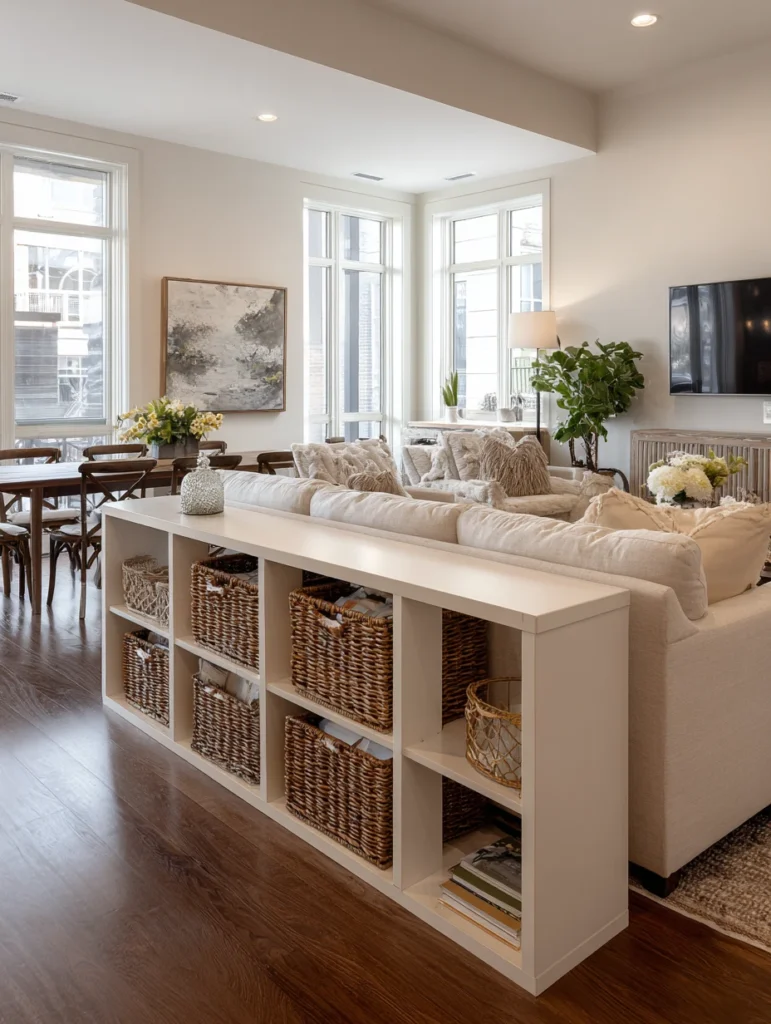
Create a Subtle Separation: Position a console table behind your sofa to mark the transition from the living room to the dining area. This gives you a place to display decor, store essentials, or even set up a bar area. The open design doesn’t block light or views as a solid partition would.
Add Functional Storage: Use the console for stashing dining linens, extra serving pieces, or living room items like remotes and magazines. Baskets or bins on the lower shelf keep things organized and hidden. This dual-purpose piece works harder than purely decorative dividers.
Product Spotlight: The Tribesigns 70.9-inch Extra Long Sofa Table provides serious surface space without feeling heavy. The industrial design works with multiple decor styles, and the bottom shelf gives you storage options. At nearly six feet long, it makes a real statement as a room divider while remaining functional.
Read More: 17 Kid-Friendly Living Room Decor Ideas
8. Paint an Accent Wall Behind Your Dining Area
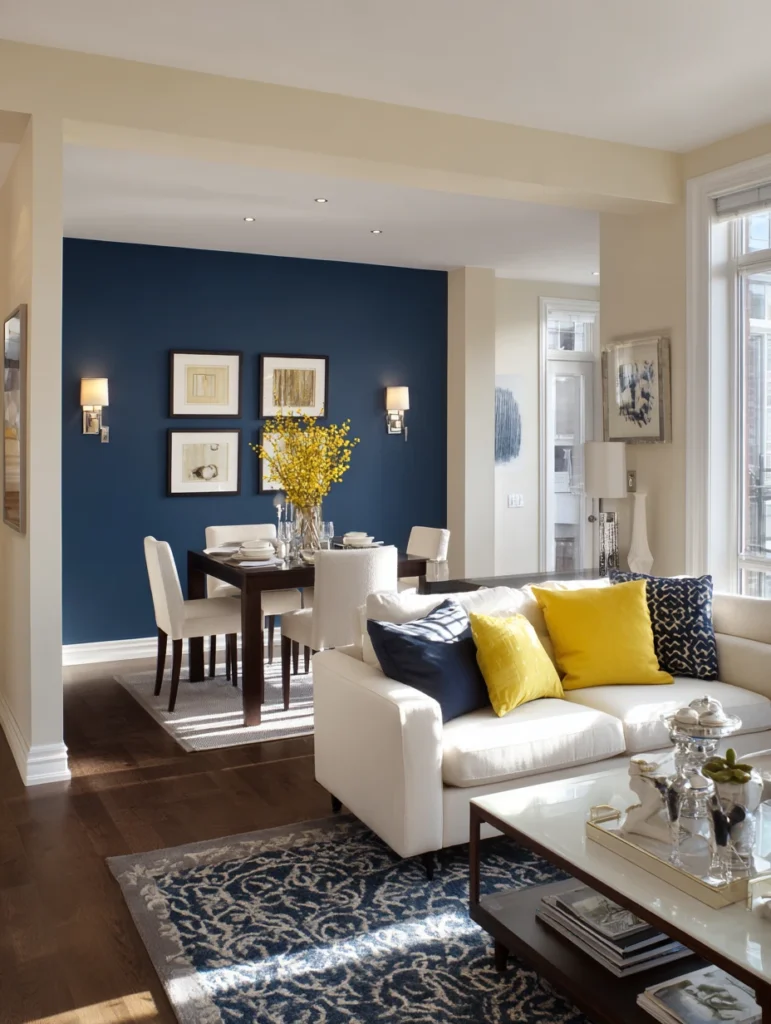
Define the Zone With Color: A different wall color behind your dining table creates a visual boundary without physical barriers. Choose a shade that complements your primary wall color but provides enough contrast to feel intentional. This works exceptionally well in open floor plans where you need to distinguish spaces.
Add Depth and Interest: Accent walls make rooms feel more dynamic and thoughtfully designed. You don’t need to go wild with bold colors – even a slightly darker shade of your existing wall color can create that zone definition you’re after.
Product Spotlight: The Behr Premium Plus Interior Paint offers excellent coverage and durability for your accent wall. The one-coat coverage saves time, and the low-VOC formula means less smell and faster room readiness. Pick a satin finish for dining areas since it’s easier to wipe down than flat paint.
Read More: 17 Quirky Living Room Decor Ideas
9. Choose Armless Dining Chairs
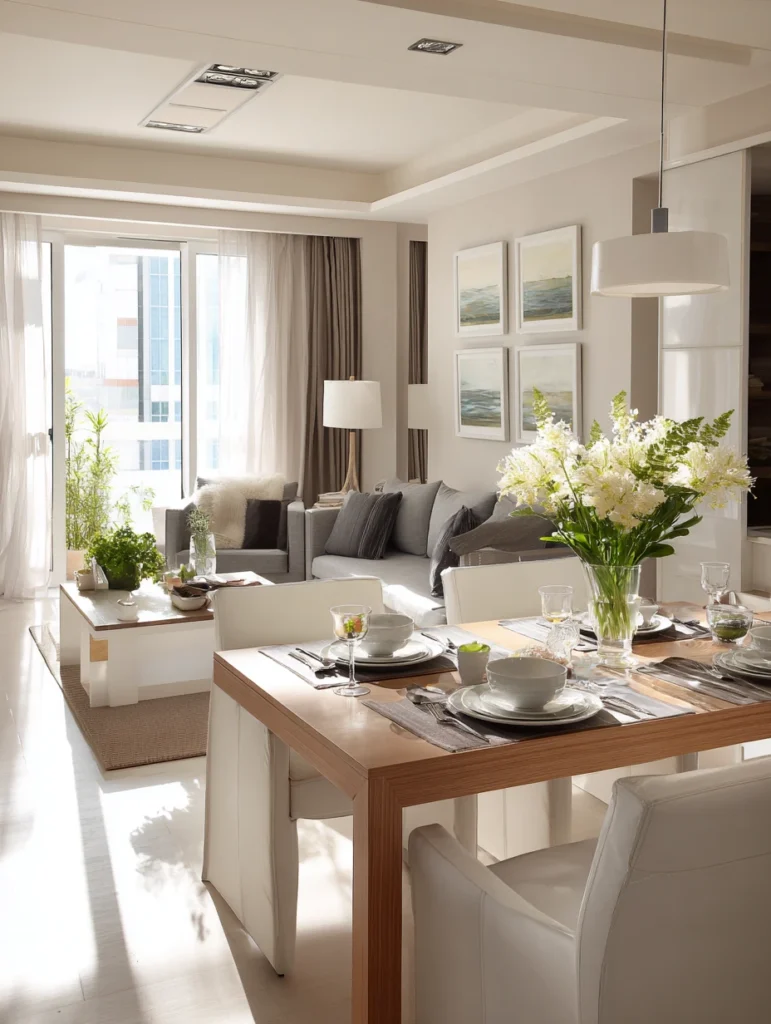
Slide Them Under the Table: Armless chairs tuck completely under your table when not in use, visually reducing clutter and physically saving space. When everything’s pushed in, your dining area takes up less visual real estate, making your combo room feel more spacious.
Mix and Match Easily: Without arms limiting your options, you can mix different chair styles more freely. Try a bench on one side with armless chairs on the other, or blend various armless styles for an eclectic look. This flexibility lets you adapt your seating as your style evolves.
Product Spotlight: The Furmax Pre-Assembled Modern Style Dining Chair comes in a set that won’t break the bank. The mid-century modern design stays current, and the armless construction means they disappear under your table. The sturdy build handles daily use, and multiple color options let you match your existing decor.
Read More: 17 Organic Modern Living Room Ideas
10. Invest in a Storage Ottoman
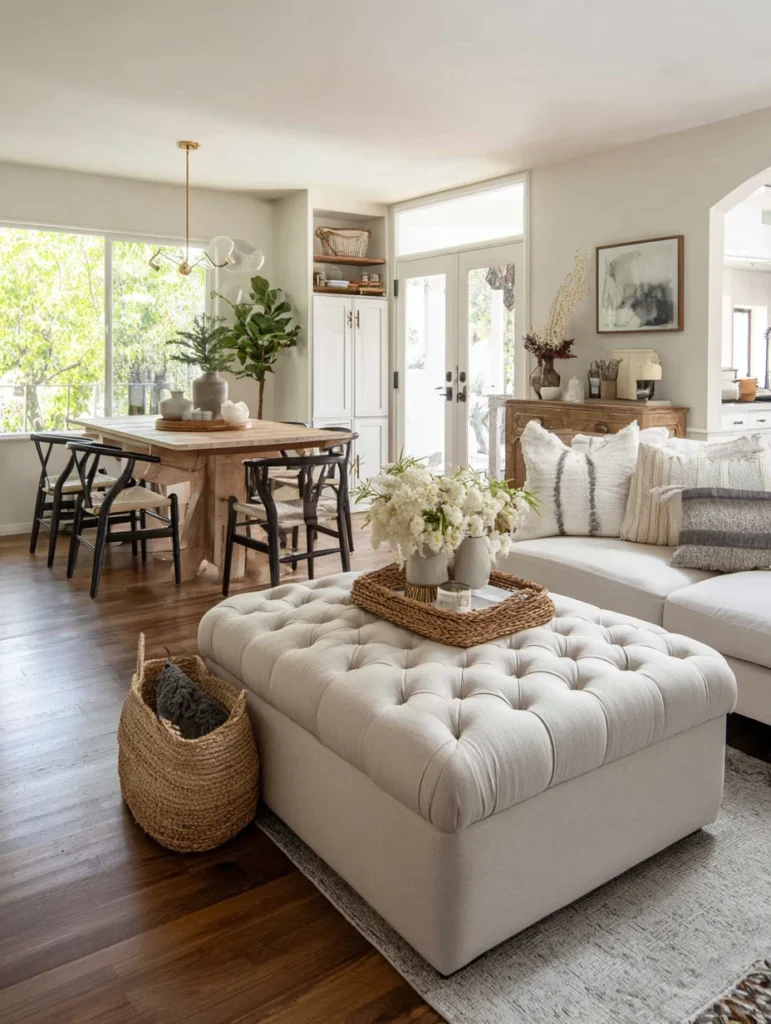
Hide the Mess: An ottoman with interior storage gives you a place to stash blankets, remotes, magazines, or whatever else clutters your combo space. When guests come over, everything disappears inside, and your room instantly looks tidier. This matters more in small spaces where clutter has nowhere to hide.
Flexible Seating Option: Need extra seating when friends visit? Your ottoman becomes another seat. Hosting a bigger dinner party? Pull it up to the table for one more guest. This versatility is gold when you’re working with limited square footage.
Product Spotlight: The Ornavo Home Foldable Tufted Storage Ottoman looks way more expensive than it is, with its button-tufted lid and linen upholstery. The foldable design lets you collapse it for storage when not needed, and the weight capacity supports adults sitting comfortably. Neutral colors blend with any decor scheme.
Read More: 17 Western Gothic Living Room Ideas
11. Hang Floating Shelves Above Your Dining Table
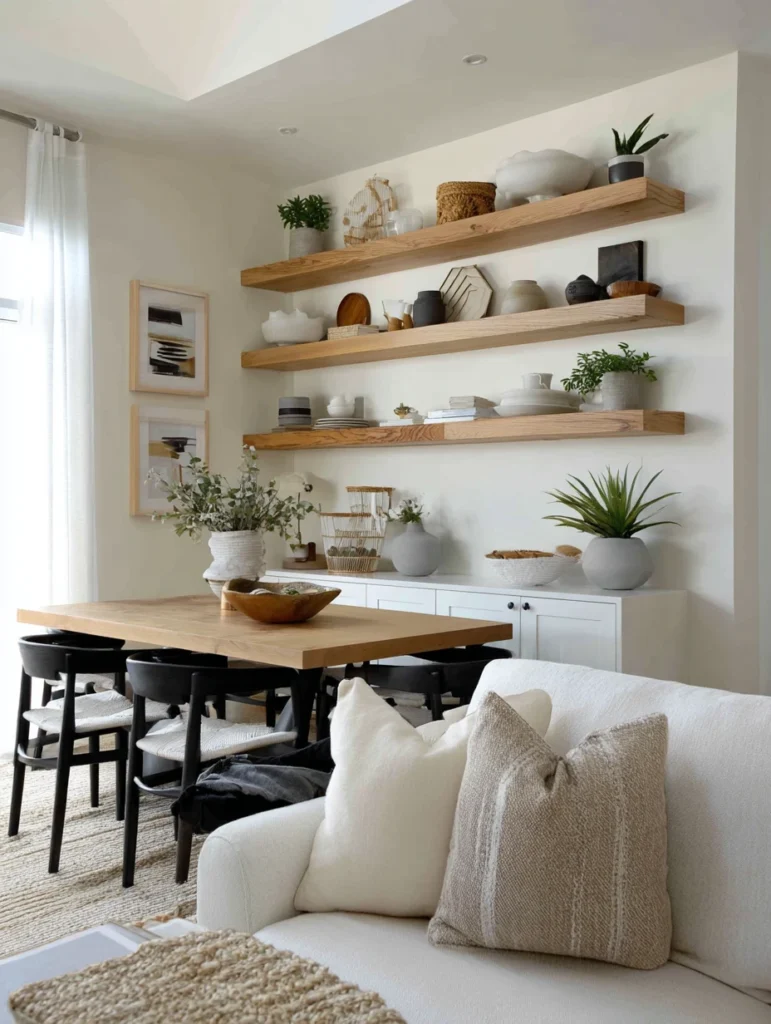
Display Without Floor Space: Floating shelves add personality and storage without taking up precious floor space. Use them for displaying dishes, plants, cookbooks, or decorative objects. Vertical storage draws the eye upward, making ceilings feel higher and rooms feel larger.
Balance Your Wall Space: Large blank walls can make small rooms feel empty and unfinished. Floating shelves break up that emptiness while adding functionality. Style them thoughtfully – not too cluttered, not too sparse – to create visual interest without overwhelming the space.
Product Spotlight: The Rustic Wood Floating Shelves bring warmth and character to your dining area. The natural wood grain adds texture, and the simple installation doesn’t require professional help. These shelves hold real weight so that you can display actual dishes and glassware, not just lightweight decor.
Read More: 17 Navy Blue Living Room Decor Ideas
12. Use Mirrors to Expand the Space Visually
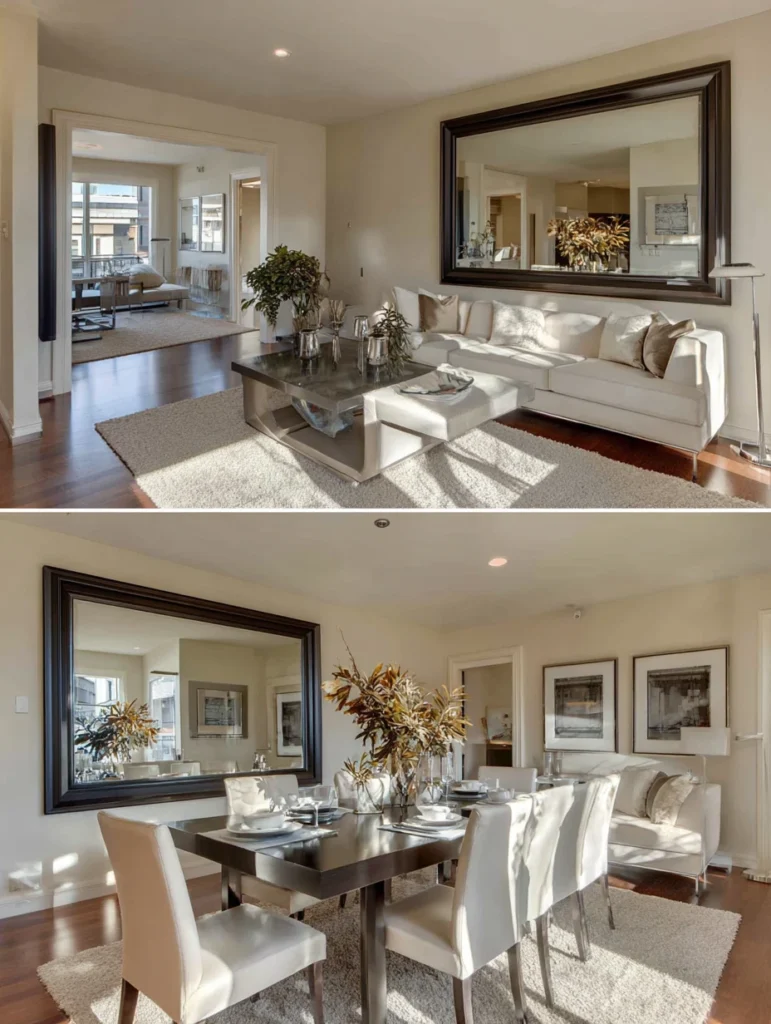
Double Your Light: Position a large mirror opposite a window or near your light sources to bounce light around the room. This makes everything feel brighter and more open. Small spaces benefit hugely from this simple trick that costs nothing except the mirror itself.
Create Depth Illusion: Mirrors trick your brain into thinking a space extends further than it does. Place one on a wall in your dining area, and suddenly that zone feels twice as large. The reflection adds visual complexity without actual clutter.
Product Spotlight: The Naomi Home Cheval Floor Mirror can lean against the wall without requiring mounting hardware. The full-length size creates maximum impact, and you can angle it to reflect light from windows. The classic frame design works equally well in traditional and modern spaces.
Read More: 17 Retro Living Room Decor Ideas to Turn Back Time
13. Choose Furniture With Exposed Legs
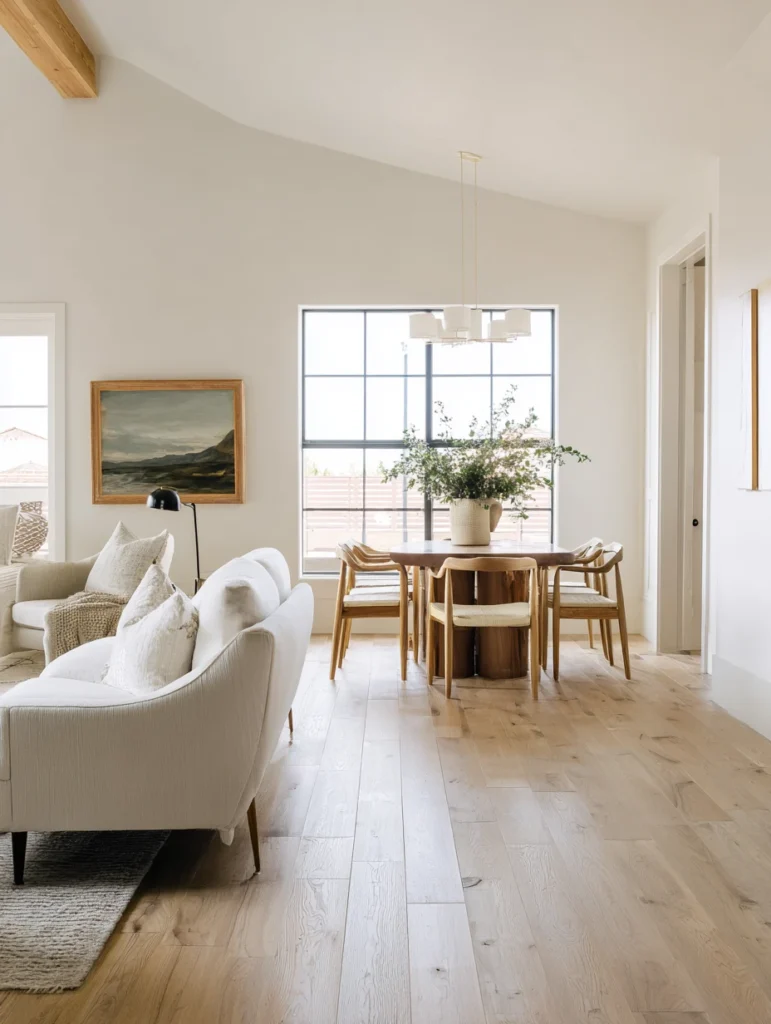
See More Floor: Furniture that sits directly on the floor makes spaces feel heavier and more crowded. Pieces with exposed legs let you see the floor below, creating an airier, more spacious feeling. Your brain reads that visible floor space as “more room.”
Simplify Cleaning: Ever tried vacuuming under a sofa that sits flush with the floor? It’s annoying. Exposed legs give you access underneath for cleaning, which keeps your combo space looking fresh. This practical benefit matters just as much as the visual one.
Product Spotlight: The Novogratz Tallulah Memory Foam Futon features tapered wooden legs that leave plenty of floor space. The modern design keeps sight lines open, and the multi-position back adds functionality. The memory foam makes it comfortable enough for overnight guests without feeling like cheap furniture.
Read More: 17 Japanese Living Room Decor Ideas (Japanese Aesthetics)
14. Install Wall-Mounted Shelving for Dining Storage
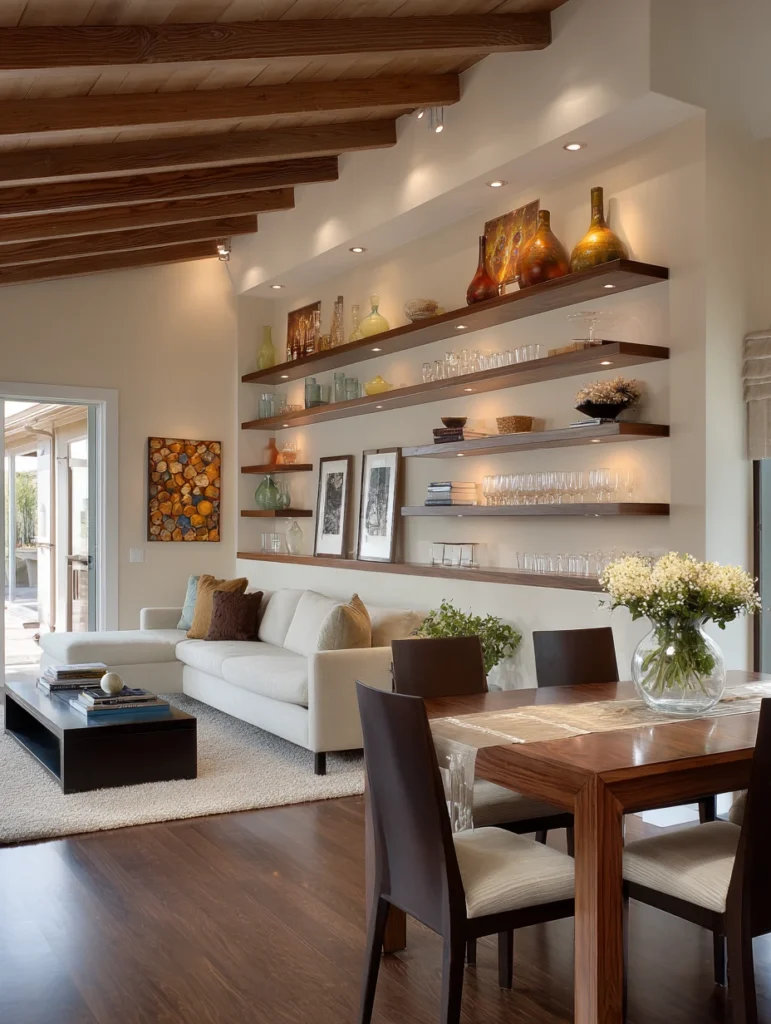
Keep Things Accessible: Wall-mounted shelves near your dining area provide a place for dishes, glasses, or serving pieces you use regularly. Unlike cabinets, open shelving keeps everything visible and easy to grab. This speeds up table setting and cleanup.
Add Decorative Elements: Mix functional items with decorative pieces on your dining shelves. A few lovely dishes displayed alongside plants or candles create visual interest while remaining practical. The key is balance – too much function looks messy, too much decoration looks impractical.
Product Spotlight: The Utex Floating Shelves Wall-Mounted Set comes in three sizes, allowing you to arrange them however works best for your space. The weight capacity handles authentic dishes and glasses, not just lightweight decor. The espresso finish adds warmth without competing with your furniture.
Read More: 17 Chic Accent Chair Living Room Ideas
15. Pick a Sofa Bed for Ultimate Flexibility
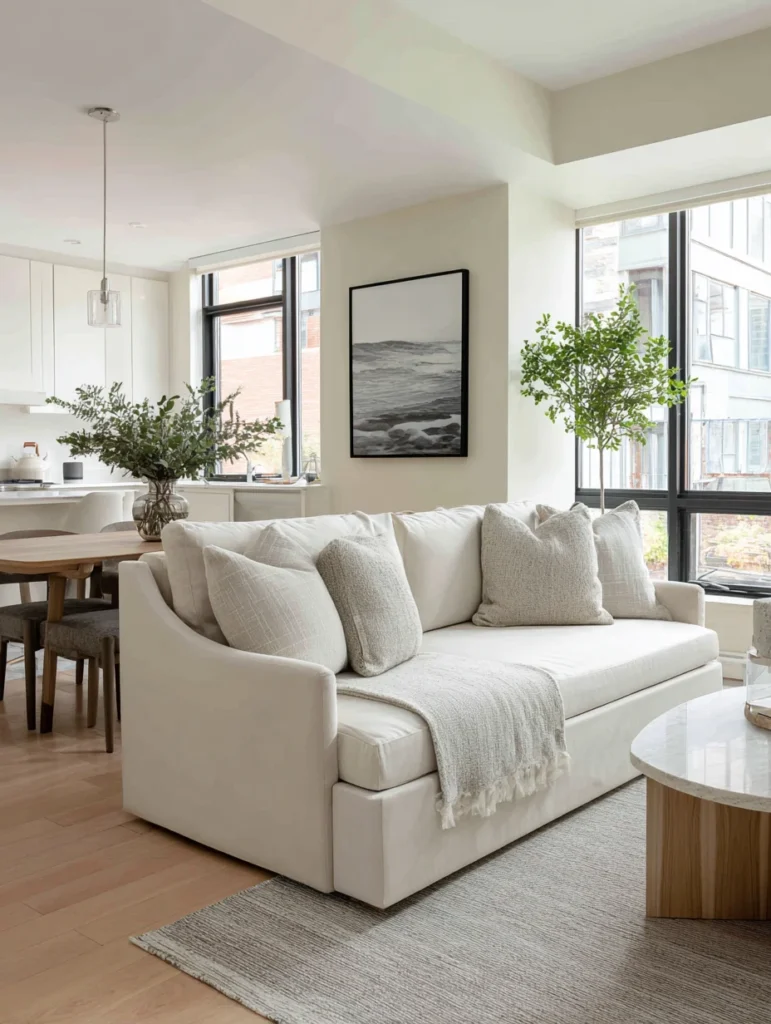
Host Overnight Guests: A sofa bed transforms your living room into a guest room when needed. This flexibility matters hugely in small spaces where you can’t dedicate an entire room to occasional guests. Your combo space pulls triple duty – living, dining, and sleeping.
Maintain Daily Functionality: Modern sofa beds look and feel like regular sofas during the day. You don’t sacrifice comfort or style for that occasional guest functionality. The days of obviously uncomfortable convertible sofas are behind us.
Product Spotlight: The Zinus Josh Sofa Couch converts to a bed in seconds and looks surprisingly good in both forms. The affordable price point doesn’t scream “cheap,” and the sturdy frame handles daily use plus sleeping. Multiple neutral colors let you match your existing color scheme.
Read More: 17 Vintage Living Room Decor Ideas: Nostalgic Charm
16. Use a Bar Cart for Dining Storage
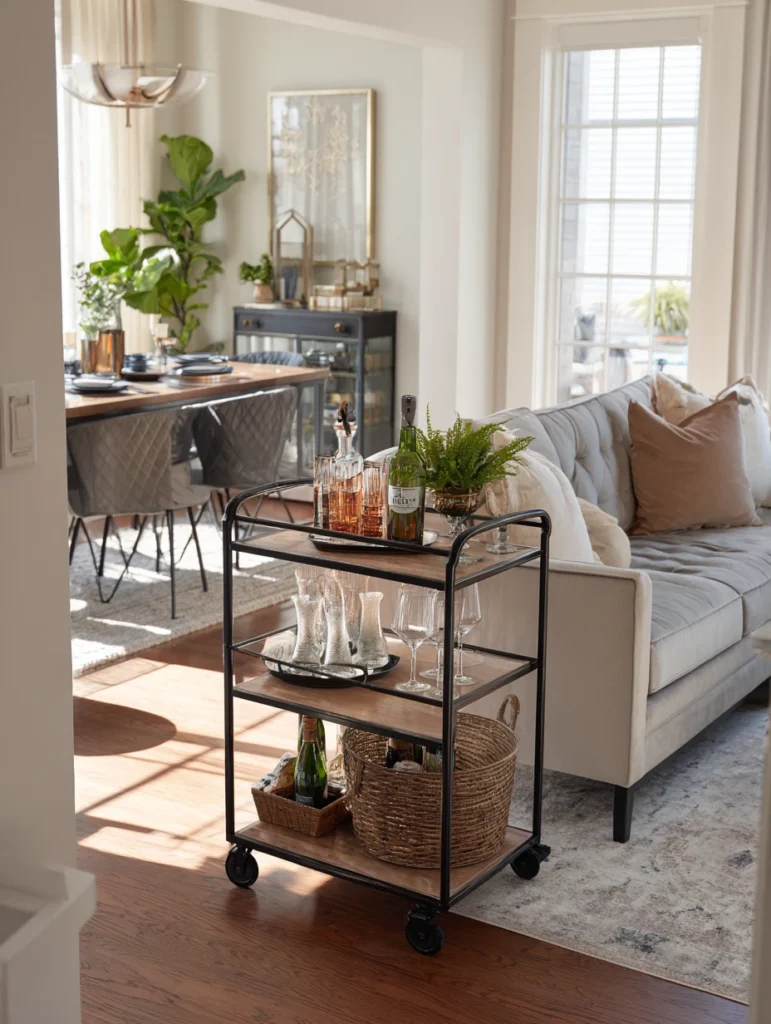
Mobile Functionality: A bar cart rolls wherever you need it – beside your dining table for drinks and serving, next to your sofa for snacks during movie night, or out of the way when not in use. This mobility matters in small spaces where static furniture can feel limiting.
Style Meets Storage: Bar carts add personality while providing practical storage for dining essentials. Style it with your nice glassware, bottles, and some plants or decor. The open design doesn’t feel heavy or cluttered like closed cabinets would.
Product Spotlight: The 2-Tier Rolling Bar Cart combines modern industrial style with genuine functionality. The wheels lock in place for stability, and the two shelves provide surprising storage. The compact footprint fits into tight corners when not in use.
17. Hang Curtains to Create a Flexible Division
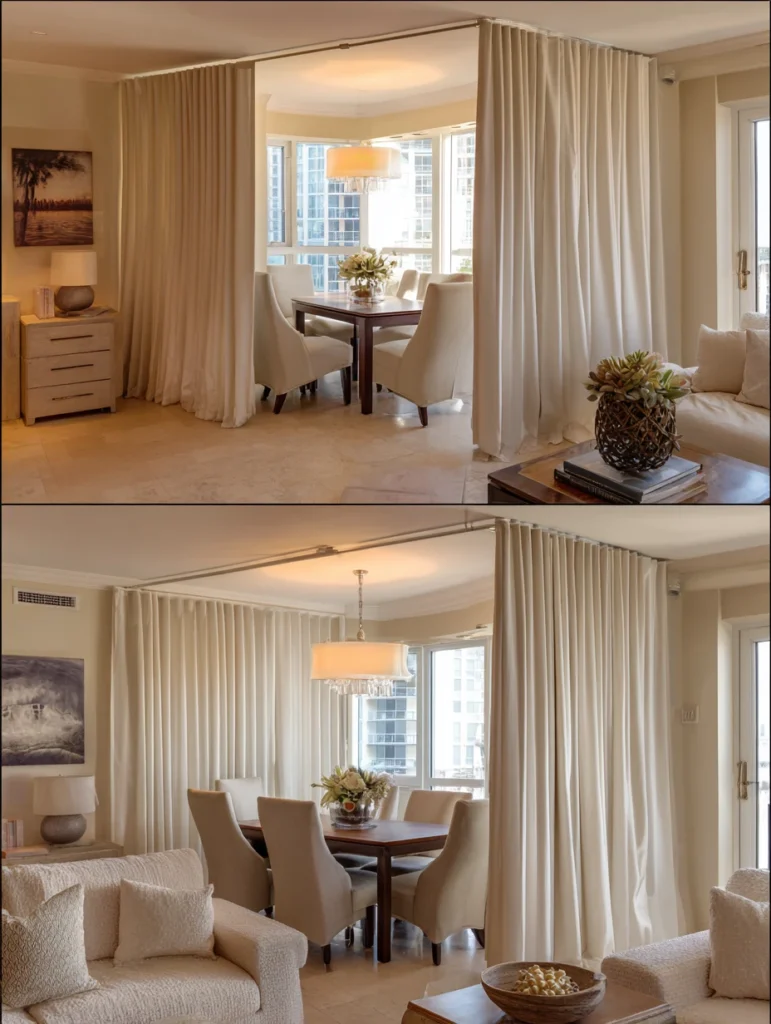
Instant Privacy: Curtains let you separate your dining and living areas when desired. Need to hide a messy dining table while lounging? Close the curtains. Want the open flow back? Pull them aside. This flexibility adapts to your changing needs.
Soften Hard Spaces: Fabric adds warmth and texture that’s often missing in small modern spaces. The draping material softens harsh lines and makes the whole room feel more inviting. Choose colors and patterns that complement both zones.
Product Spotlight: The Room Divider Curtains come in wide panels designed to separate spaces. Thermal insulation is a bonus that improves energy efficiency. Multiple color options let you match your decor, and the easy installation doesn’t require professional help.
18. Choose a Bench for Dining Seating
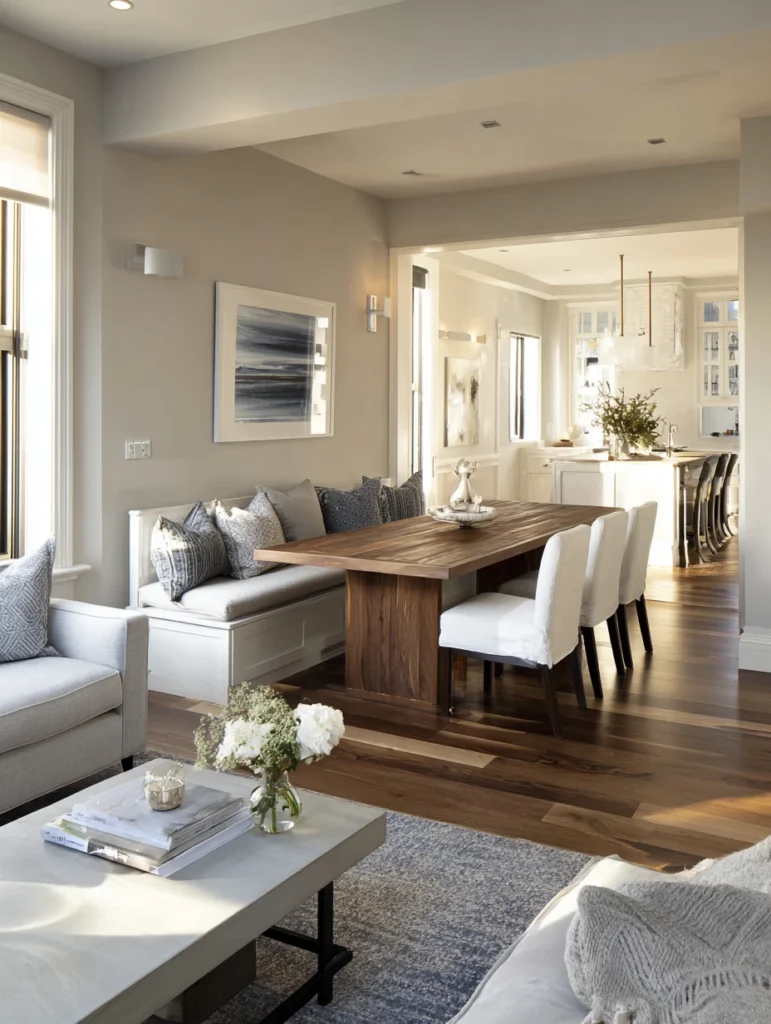
Slide It Under: A dining bench tucks completely under your table when not in use, creating a streamlined look that saves visual space. No chair backs sticking out, no arms jutting into walkways – just a clean line that makes your combo room feel less crowded.
Flexible Seating Count: Benches accommodate more people than individual chairs in a pinch. Squeeze three people on a bench that would only fit two chairs, which helps when you’re hosting in a small space. This flexibility matters when floor space is limited.
Product Spotlight: The Nathan James Reno Upholstered Bench features a tufted cushion that’s comfortable enough for long dinners. The solid wood legs match most dining tables, and the neutral upholstery blends with any color scheme. The backless design slides completely under standard-height tables.
19. Paint Everything in Light Colors
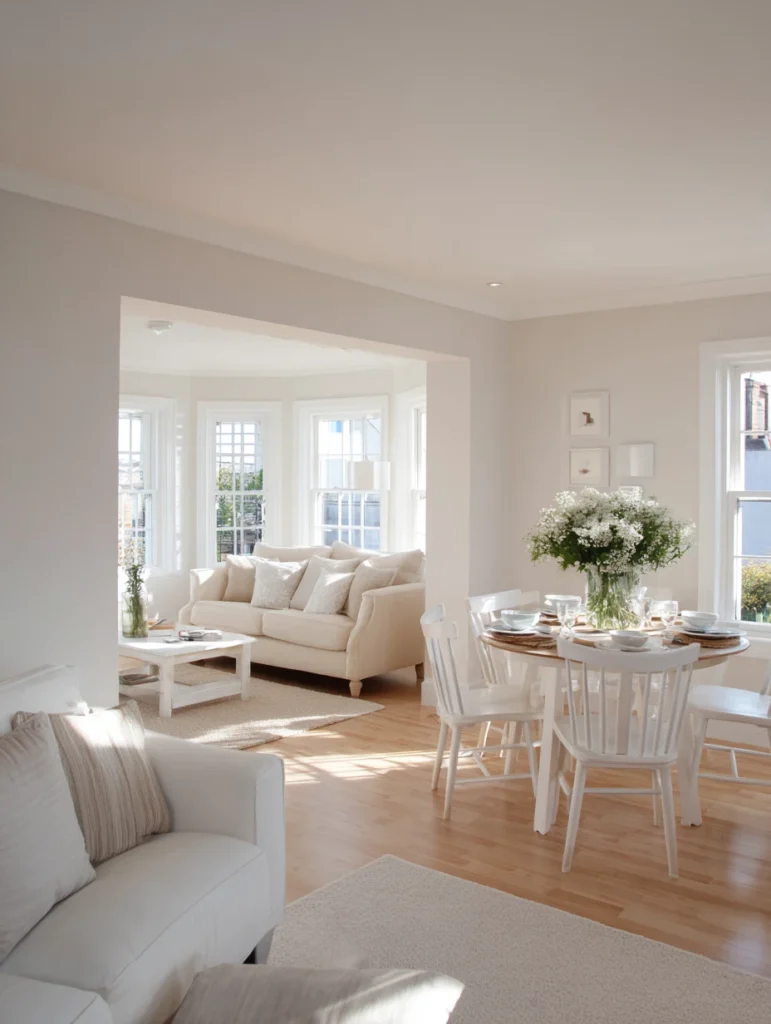
Reflect Maximum Light: Light colors bounce light around your space, making it feel brighter and more open. Dark colors absorb light, making rooms feel smaller and more enclosed. This fundamental design principle becomes crucial in combo spaces where you’re already working with limited square footage.
Create Cohesion: Using a consistent light palette throughout both zones makes the space feel unified rather than choppy. You can add darker accents, but keeping the base light maintains that airy, spacious feeling you’re after.
Product Spotlight: Valspar Interior Paint in its lighter shades provides excellent coverage with just one coat. The zero-VOC formula means less smell during application, and the washable finish handles the wear and tear of high-traffic combo spaces. The subtle sheen reflects light without being too glossy.
20. Install Dimmer Switches for Layered Lighting
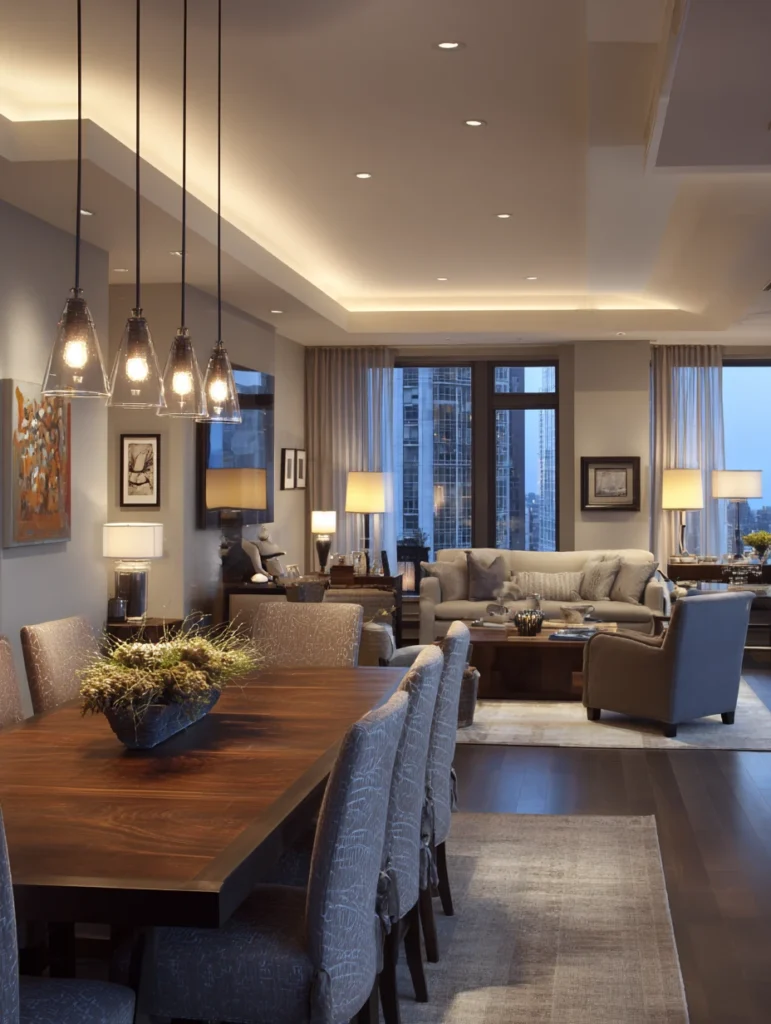
Set Different Moods: Dimmer switches let you adjust lighting for different activities – bright for dinner prep and eating, dimmed for movie watching or romantic evenings. This control helps distinguish between living and dining functions even though they share the same space.
Save Energy: Running lights at lower settings uses less electricity, which adds up over time. The ability to customize light levels also extends bulb life since you’re not constantly running them at full intensity.
Product Spotlight: The Lutron Caseta Smart Dimmer Switch installs easily and works with standard bulbs. The smart home compatibility is a bonus that lets you control lights from your phone, but the basic dimming function works perfectly without any tech setup. The sleek design looks modern without being flashy.
21. Add Vertical Storage Solutions
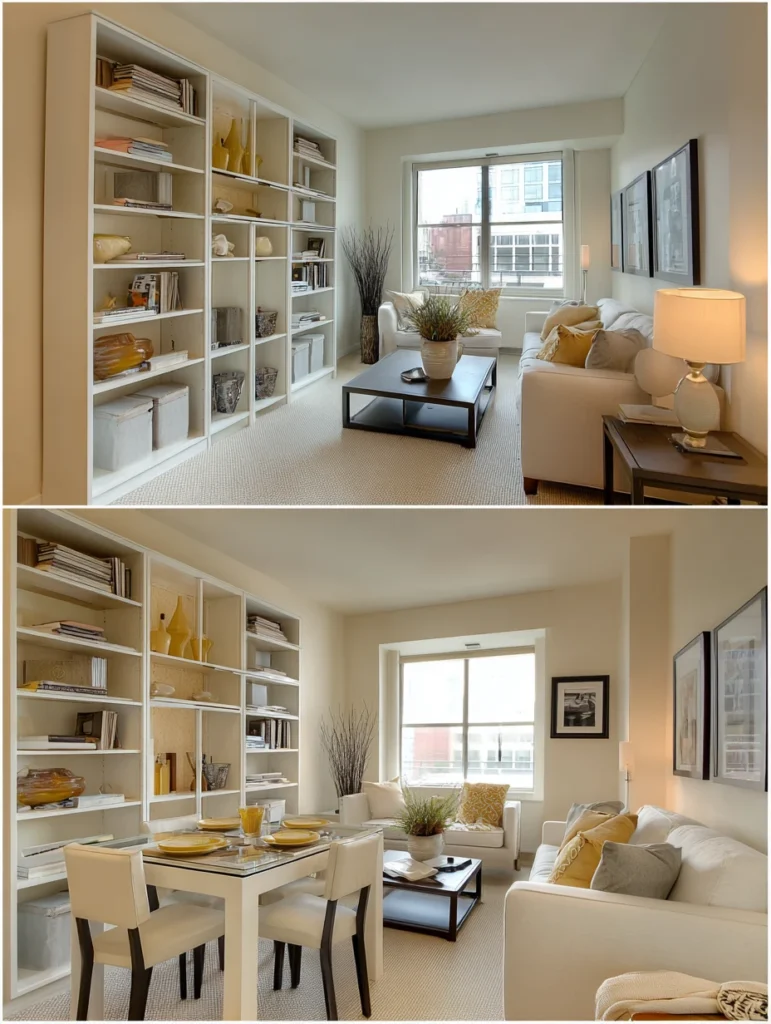
Use Wall Height: Tall bookcases or shelving units draw eyes upward, making ceilings feel higher while providing tons of storage. Vertical storage takes advantage of often-wasted wall space above eye level, which is especially valuable in small combo rooms.
Display and Hide: Mix open shelving with closed cabinets for versatility. Display nice items on open shelves while hiding clutter in closed sections. This balance keeps your space interesting without feeling chaotic or overly busy.
Product Spotlight: The Tribesigns Bookshelf 5-Tier Open Bookcase reaches ceiling height without requiring wall mounting. The open design doesn’t block light or make the space feel heavy. Use it between your living and dining areas as a semi-divider that provides storage for both zones.
Final Thoughts
Creating a functional and stylish small living room dining room combo doesn’t require magic or a massive budget. These ideas work because they address real challenges – limited floor space, the need for zone definition, and the desire for both areas to look intentional rather than cramped.
Start with one or two changes that resonate with your space and lifestyle, then build from there. Your combo room can absolutely work hard while looking great. What’s stopping you from trying that first idea this weekend?