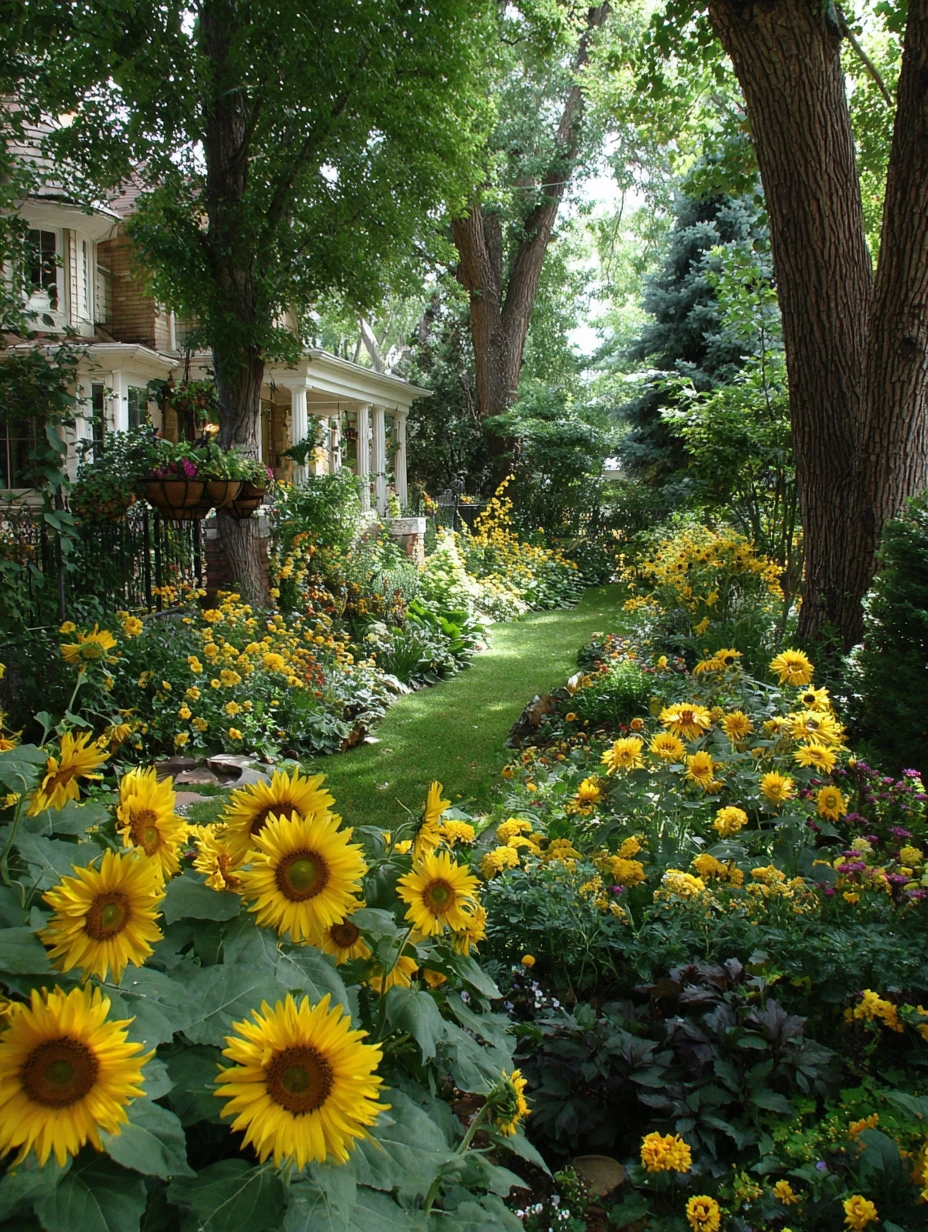

There’s something about sunflowers that just makes you smile, right? Maybe it’s those giant golden petals reaching toward the sky, or the way they can turn a boring corner of your yard into something Instagram-worthy. I’ve been growing sunflowers for years, and honestly, they’re one of the easiest ways to add serious wow factor to your outdoor space.
Whether you’ve got a sprawling backyard or just a tiny balcony, these cheerful blooms work their magic anywhere you plant them. And the best part? You don’t need a degree in horticulture to pull off these ideas. I’m sharing 21 creative ways to incorporate sunflowers into your garden that’ll have you planning your spring planting schedule before you finish reading. Let’s get started!
1. Create a Living Sunflower Fence
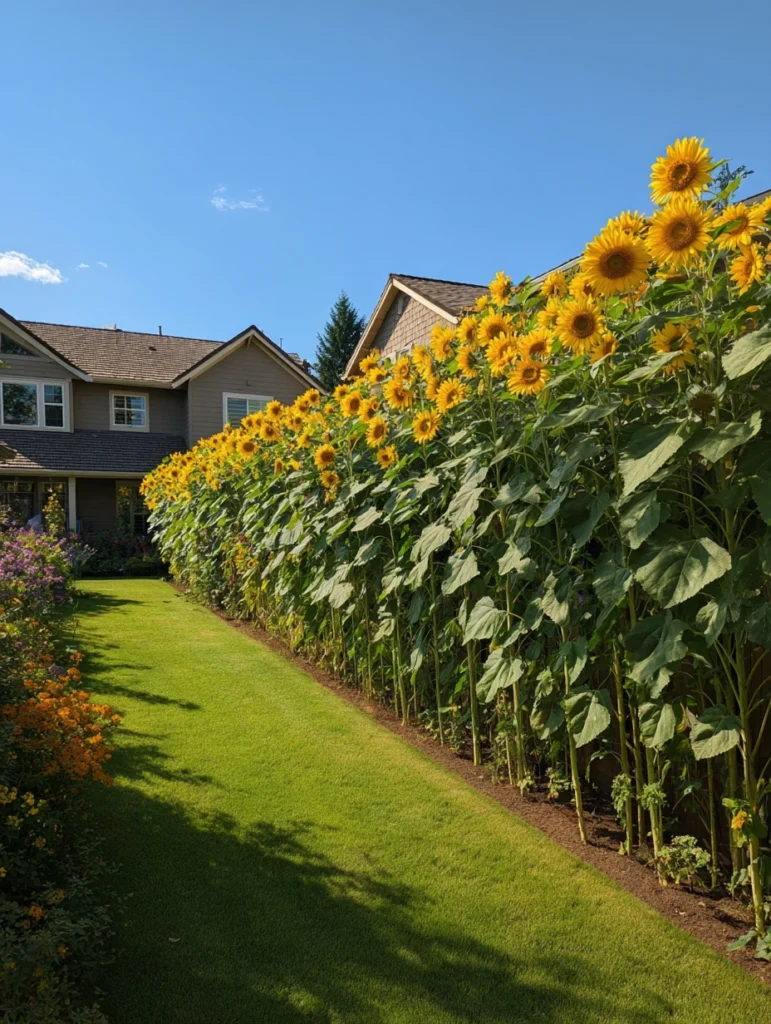
Natural Privacy Screen: Tired of staring at your neighbor’s cluttered garage? Plant tall sunflower varieties, such as Mammoth or Russian Giant, along your property line. These beauties can reach heights of 10-12 feet, providing a natural privacy screen that’s far more charming than any wooden fence. Space them about 6 inches apart for maximum coverage.
Seasonal Boundary Marker: Sunflowers work brilliantly as temporary garden dividers, defining different zones in your yard. Plant them in rows to separate your vegetable patch from your flower beds, or use them to create a sunny border along your driveway. The vertical height adds dimension to flat spaces, and when you’re ready to change up your layout, you can easily remove them.
Product Spotlight: The Burpee Mammoth Sunflower Seeds give you those towering giants perfect for fence-line planting, with each packet containing enough seeds to create a substantial barrier. Pair them with Jobe’s Organics Vegetable & Tomato Fertilizer Spikes to keep your sunflower fence healthy and blooming strong throughout the entire season.
Read More: 21 Inspiring Vegetable Garden Design Ideas
2. Design a Sunflower Cutting Garden
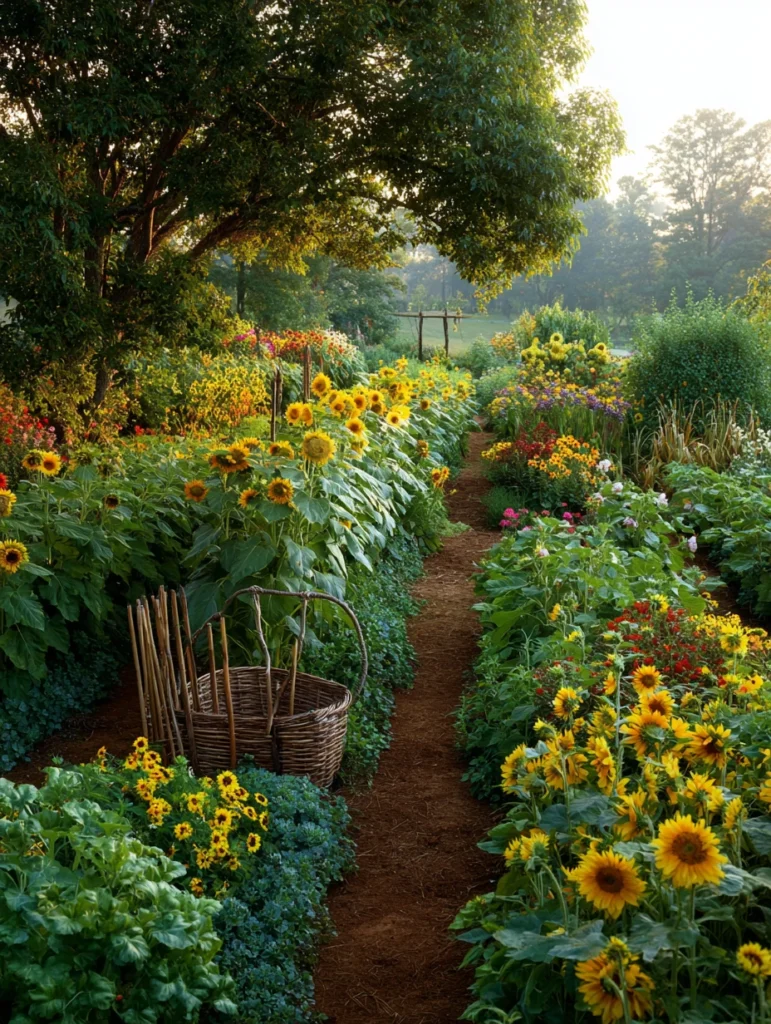
Dedicated Cutting Area: Set aside a small section of your garden specifically for growing sunflowers you’ll cut for indoor arrangements. Select plant varieties with different bloom times to enjoy fresh flowers from early summer through fall.
Succession Planting Strategy: Here’s a pro tip that keeps the flowers coming – plant new sunflower seeds every two weeks throughout late spring and early summer. This staggered approach means you’ll have continuous blooms instead of a single massive flush that lasts only three weeks.
Product Spotlight: The Floracraft Floral Dry Foam Bricks are ideal for crafting stunning sunflower arrangements that last for weeks, providing a stable base for those heavy sunflower heads. Grab some AmazonBasics Pruning Shears for clean cuts that help your sunflowers last longer in the vase. Dull scissors can damage the stems and significantly reduce their ability to uptake water.
Read More: 21 Small Zen Garden Ideas for a Tranquil Home
3. Plant a Dwarf Sunflower Container Garden
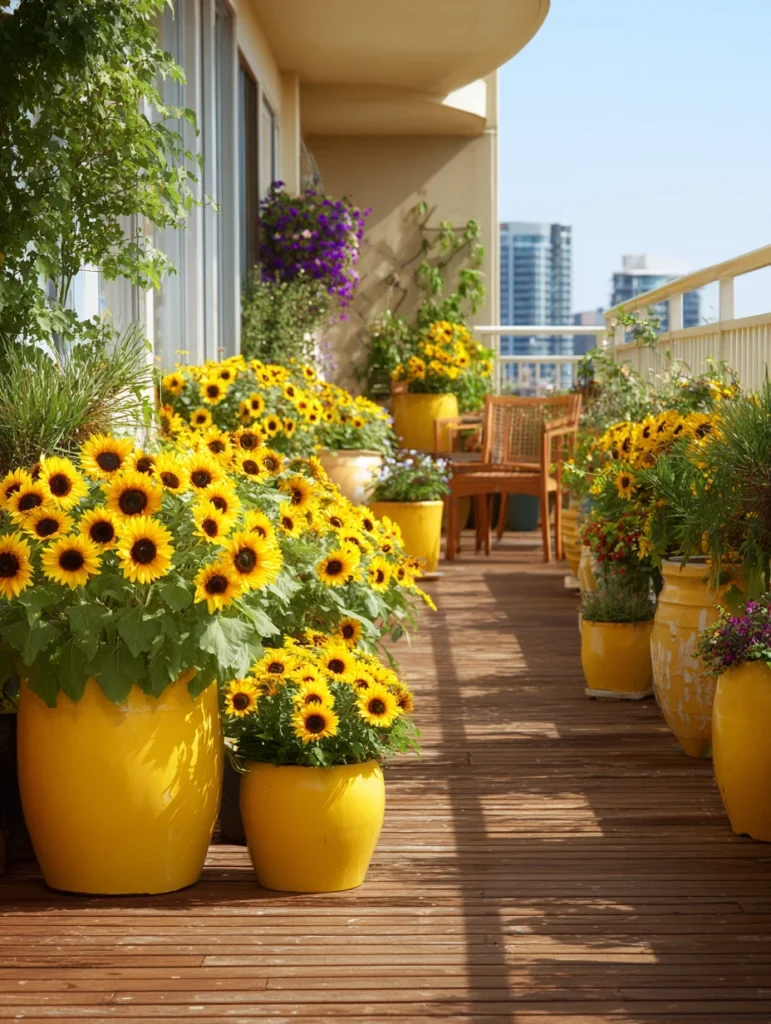
Balcony-Friendly Options: Who says you need acres of land to grow sunflowers? Dwarf varieties, such as Teddy Bear and Sunny Smile, thrive in containers and typically reach heights of 1 to 2 feet. I’ve seen incredible container gardens on tiny apartment balconies where these compact beauties steal the show.
Patio Centerpiece: Group several containers of varying heights on your patio or deck to create a dynamic display. Mix dwarf sunflowers with trailing plants, such as sweet potato vine, for a layered look that adds visual interest. The best part about container gardening? You can move your sunflowers around to catch the best light or rearrange them when you’re hosting outdoor gatherings.
Product Spotlight: The Classic Home and Garden Honeysuckle Planter provides the perfect depth and drainage for dwarf sunflowers, featuring a classic design that complements any patio. Fill it with Miracle-Gro Potting Mix, explicitly formulated for container plants – it feeds your sunflowers for up to 6 months. It prevents the annoying soil compaction that kills many potted plants.
Read More: 21 Cottage Garden Ideas for a Whimsical Space
4. Build a Sunflower Maze for Kids

Backyard Adventure: Turn your garden into a magical playground by planting sunflowers in a maze pattern. Kids absolutely love weaving through these tall corridors, and it gives them a reason to actually go outside instead of staring at screens all day.
Educational Experience: A sunflower maze teaches children about plant growth in a hands-on way. They can measure the plants weekly, observe pollinators visiting the blooms, and learn about the sunflower’s heliotropic behavior – that fancy term for how young sunflowers follow the sun across the sky.
Product Spotlight: Mark your maze pathways clearly with Sunnyglade Outdoor String Lights, which make evening maze adventures possible and add an enchanting ambiance. Keep the kids’ measuring activities organized with a simple Learning Resources Primary Bucket Balance that lets them weigh and compare sunflower growth in a fun, tactile way.
Read More: How to Design a Container Garden for Your Flowers
5. Create a Pollinator Paradise
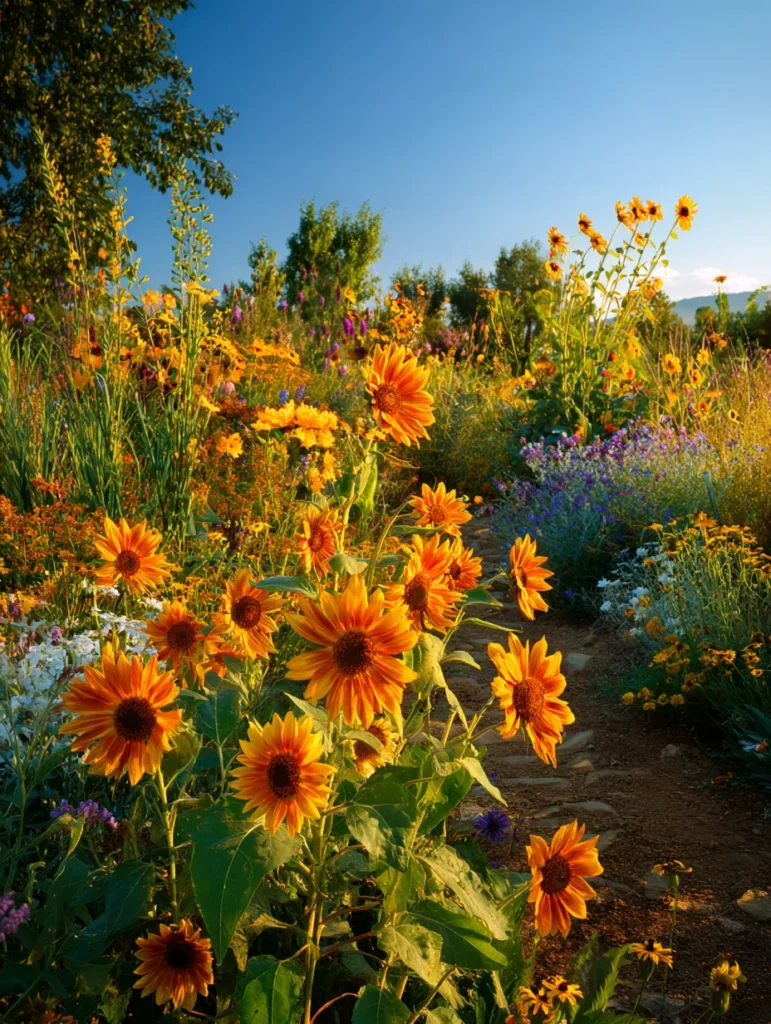
Bee and Butterfly Haven: Sunflowers are like magnets for beneficial insects, and planting them strategically turns your garden into pollinator central. Single-petal varieties work better than double-petal types because bees and butterflies can actually access the nectar and pollen.
Native Plant Companion: Pair your sunflowers with native wildflowers and herbs to create an ecosystem that supports local pollinators throughout the entire growing season. When your sunflowers finish blooming, leave the seed heads intact – goldfinches and other songbirds will thank you by putting on an entertaining show while they feast.
Product Spotlight: Attract even more pollinators with a Nature’s Way Cedar Butterfly House placed near your sunflowers, giving butterflies a safe shelter while they work your garden. Add Wildlife Hummingbird Nectar Powder in feeders nearby to draw hummingbirds that’ll also visit your sunflower blooms.
Read More: Amazing Herb Garden Ideas for Your Outdoor Oasis
6. Design a Gradient Color Scheme
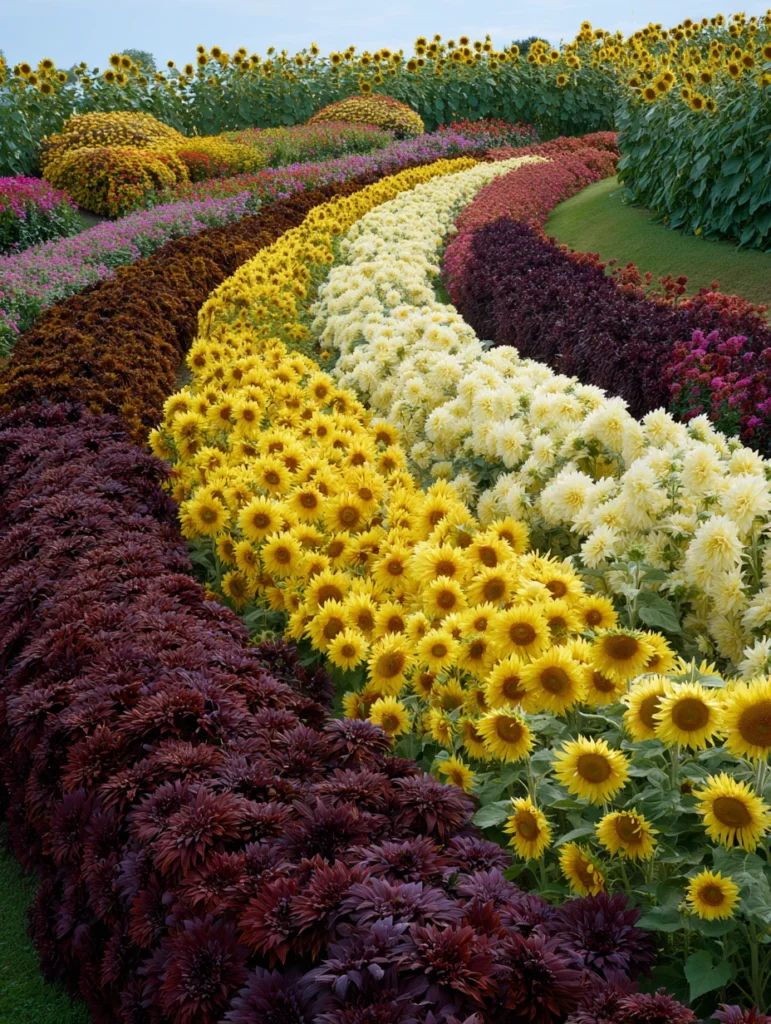
Ombre Effect: Not all sunflowers are bright yellow – varieties come in burgundy, bronze, cream, and even chocolate brown. Plant them in color groups that transition from light to dark for a stunning gradient effect that photographs beautifully.
Artistic Layout: Think of your garden bed as a canvas where you’re painting with living flowers. Group at least five plants of each color variety together for a visual punch – scattered single plants just look messy and chaotic. The repetition of color blocks creates cohesion, making your garden look intentionally designed rather than accidentally thrown together.
Product Spotlight: The David’s Garden Seeds Sunflower Autumn Beauty Mix offers multiple colors in one packet, making it perfect for creating a gradient without purchasing five separate seed varieties. Prepare your soil properly with Dr. Earth Organic All-Purpose Fertilizer, which naturally feeds your diverse color palette without harsh chemicals.
Read More: 21 Corner Garden Ideas to Transform Your Backyard
7. Install a Vertical Sunflower Wall
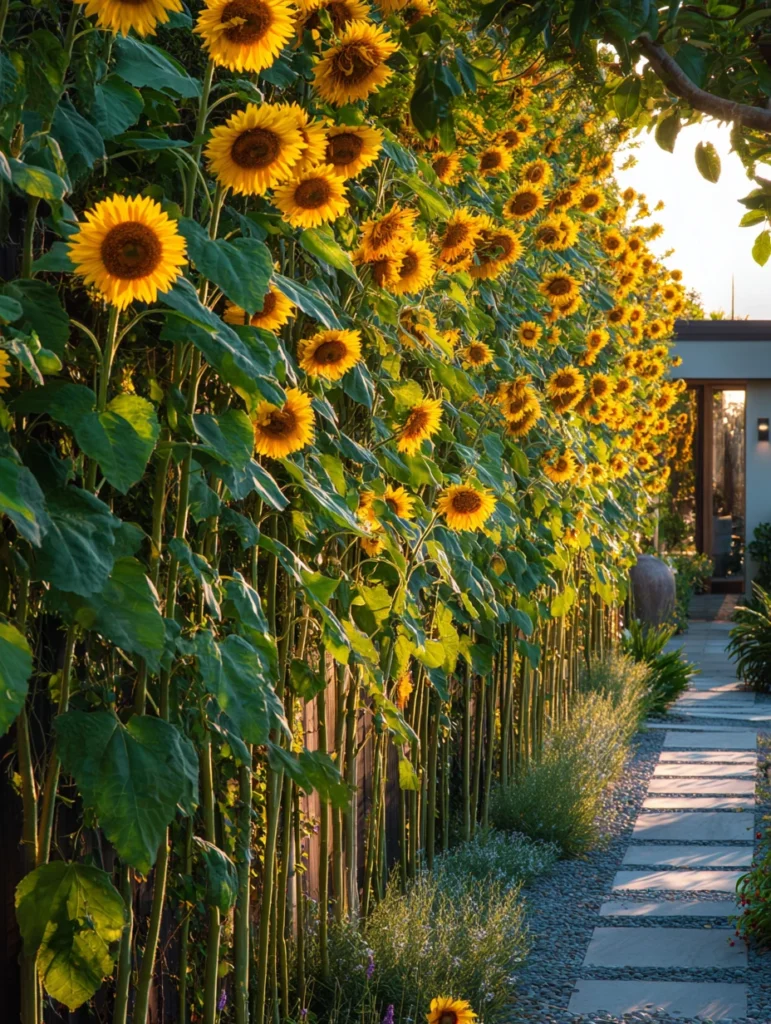
Space-Saving Solution: Got limited ground space but plenty of vertical real estate? Train climbing or tall sunflower varieties against a trellis or wall for a living vertical garden. This technique works brilliantly in narrow side yards where you can’t spread out horizontally.
Architectural Interest: A sunflower wall adds dramatic architectural elements to otherwise flat, boring exterior walls or fences. The vertical lines draw the eye upward, making your garden feel larger than it actually is. Plus, the shadows cast by tall sunflowers throughout the day create constantly changing patterns that add depth and interest to your outdoor space.
Product Spotlight: Support your vertical garden with the Gardener’s Supply Company Heavy-Gauge Tomato Cage, which works brilliantly for staking tall sunflowers and preventing them from toppling in the wind. Secure plants gently to structures using Gardener’s Blue Ribbon Soft Garden Tie Tape that won’t cut into stems as they grow thicker.
Read More: Stunning Flower Bed Ideas for the Front of the House
8. Plant a Moon Garden Variation
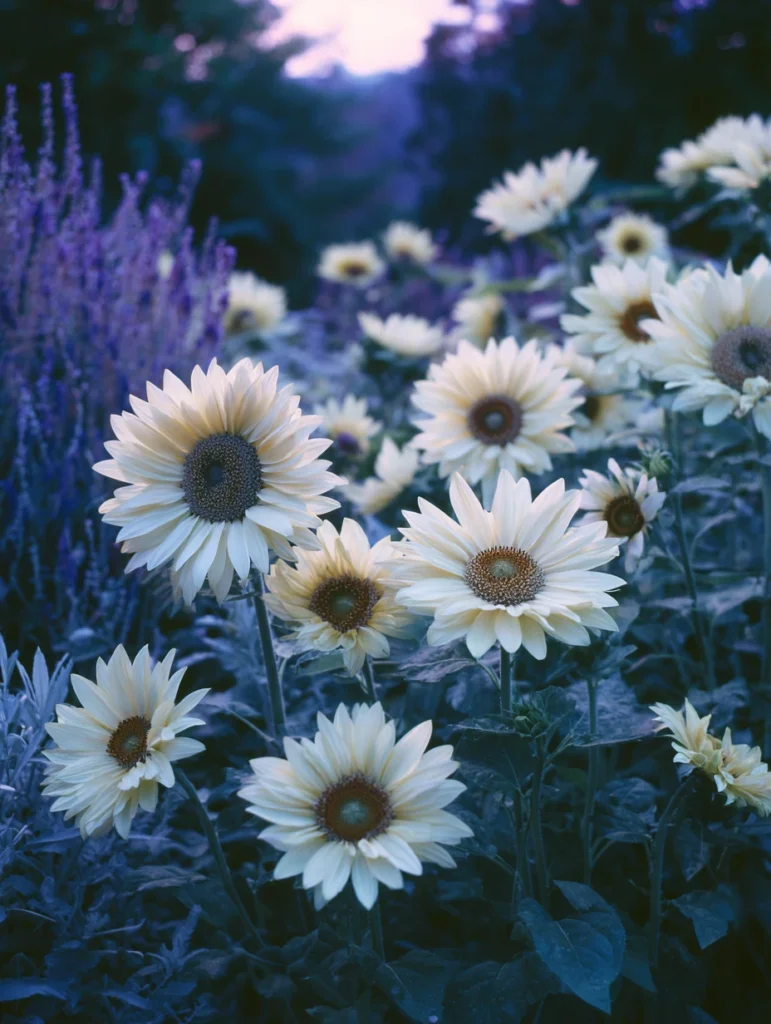
Evening Bloomers: While classic sunflowers close at night, varieties like Italian White and Coconut Ice maintain their visual appeal into evening hours with their pale, luminous petals that seem to glow in twilight. Plant these lighter varieties where you spend time during evening hours.
Night Garden Enhancement: Combine pale sunflowers with other white and silver-foliaged plants to create a moon garden that comes alive when traditional yellow sunflowers call it quits for the day. The effect is surprisingly sophisticated and provides an entirely different garden experience after sunset.
Product Spotlight: Enhance your evening sunflower display with Solar Landscape Spotlights that uplight your pale blooms for a dramatic nighttime effect without running electrical lines. Keep your moon garden healthy with Bonide Liquid Plant Food, which can be applied during evening watering sessions.
Read More: 17 Garden Ideas for Small Spaces and Maximum Yield
9. Create a Sunflower Photo Backdrop

Instagram-Ready Setup: Let’s be honest – everyone wants that perfect sunflower photo. Plant a dense patch specifically for photo opportunities, positioning it where you get good natural light during golden hour. Make the planting deep enough that people can stand among the flowers without the background showing through.
Event-Worthy Display: Planning a summer wedding, graduation party, or baby shower? A sunflower backdrop beats any rented decorations. Plant your photo backdrop sunflowers 8-10 weeks before your event date, choosing varieties that bloom simultaneously.
Product Spotlight: Secure your photo backdrop sunflowers with Gardener’s Blue Ribbon Green Bamboo Stakes, which blend seamlessly into the foliage and won’t photobomb your pictures. Protect your investment with Bonide Captain Jack’s Deadbug Brew organic insecticide, which keeps pests away without harsh chemicals that could harm people, especially when posing among the flowers.
Read More: How To Create a Beautiful Rose Garden To Inspire You
10. Design a Cutting-Edge Kitchen Garden
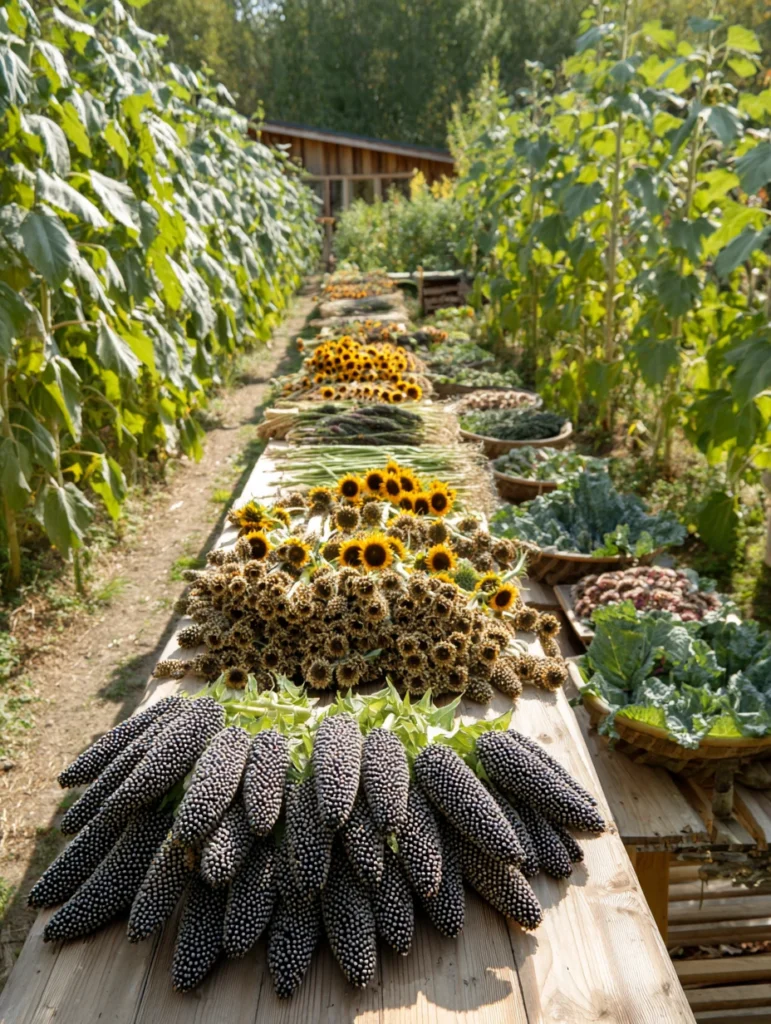
Edible Sunflower Patch: Grow sunflowers specifically for harvesting seeds, sprouts, and petals you can actually eat. Some varieties produce bigger, tastier seeds than others – Mammoth Grey Stripe and Black Oil types are your best bets.
Culinary Integration: Harvest young sunflower greens for salads, roast mature seeds for snacking, or use fresh petals as edible garnishes that add pop to summer dishes. The petals have a slightly bitter taste, so use them sparingly as a decorative element rather than as a main ingredient.
Product Spotlight: Efficiently process your sunflower seed harvest with the Mueller Austria Manual Food Grinder, ideal for making sunflower seed butter or cracking seeds for baking. Store your harvested seeds properly in Rubbermaid Brilliance Food Storage Containers that keep them fresh and protect them from pantry pests.
Read More: 21 Japanese Garden Ideas for Serene Outdoor Spaces
11. Build a Three-Season Rotation
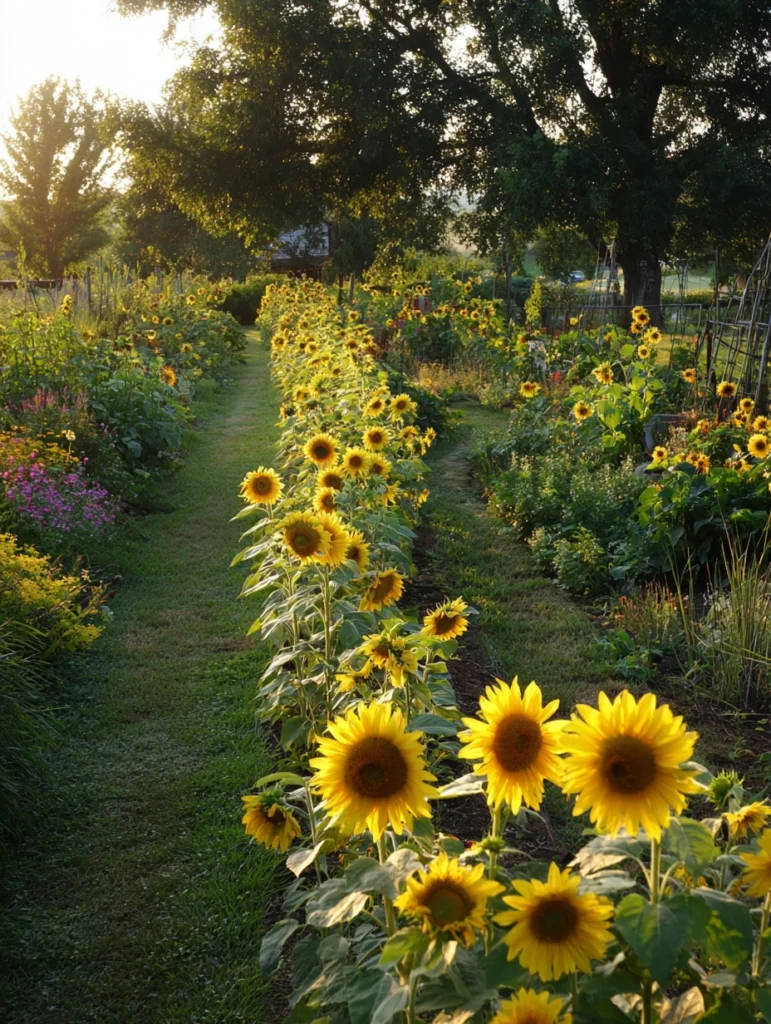
Extended Blooming Period: Select early, mid-season, and late-season sunflower varieties to maintain blooms from June through October. Early varieties, such as Sunbright Supreme, bloom in 55-60 days, mid-season types take 70-80 days, and late bloomers, like Autumn Beauty, require 90 days or more.
Strategic Planning: Mark your calendar and plant each variety at the right time for continuous color. I plant early varieties in late April, mid-season types in late May, and late bloomers in mid-June. You’ll have something blooming constantly instead of that awkward gap in August when many gardens look tired and spent.
Product Spotlight: Track your planting schedule perfectly with the Moleskine Weekly Planner, designed explicitly for garden planning and recording what works each season. Protect your spring seedlings with the Planters Pride Seed Starter Greenhouse Kit, which gives your earliest sunflowers a head start when temperatures are still unpredictable.
Read More: 21 Stunning Mediterranean Garden Ideas To Inspire You
12. Create a Wildlife Feeding Station

Natural Bird Feeder: Skip the expensive bird feeders and let your sunflowers serve as natural feeding stations for birds. Leave seed heads on the stalks after blooming finishes, and watch cardinals, finches, and chickadees flock to your garden.
Ecosystem Support: Sunflower seeds provide crucial calories for birds preparing for migration or winter survival. By leaving your seed heads intact through fall and early winter, you’re supporting local wildlife populations while reducing garden waste. The empty stalks also provide shelter for beneficial insects that overwinter in hollow stems.
Product Spotlight: Enhance your wildlife area with Songbird Essentials Ultimate Bluebird House that attracts cavity-nesting birds year-round to your sunflower patch. Keep a Carson Binoculars for Kids handy so children can observe visiting birds up close without disturbing them.
Read More: How To Create an English Cottage Garden for Your Flowers
13. Design a Companion Planting System
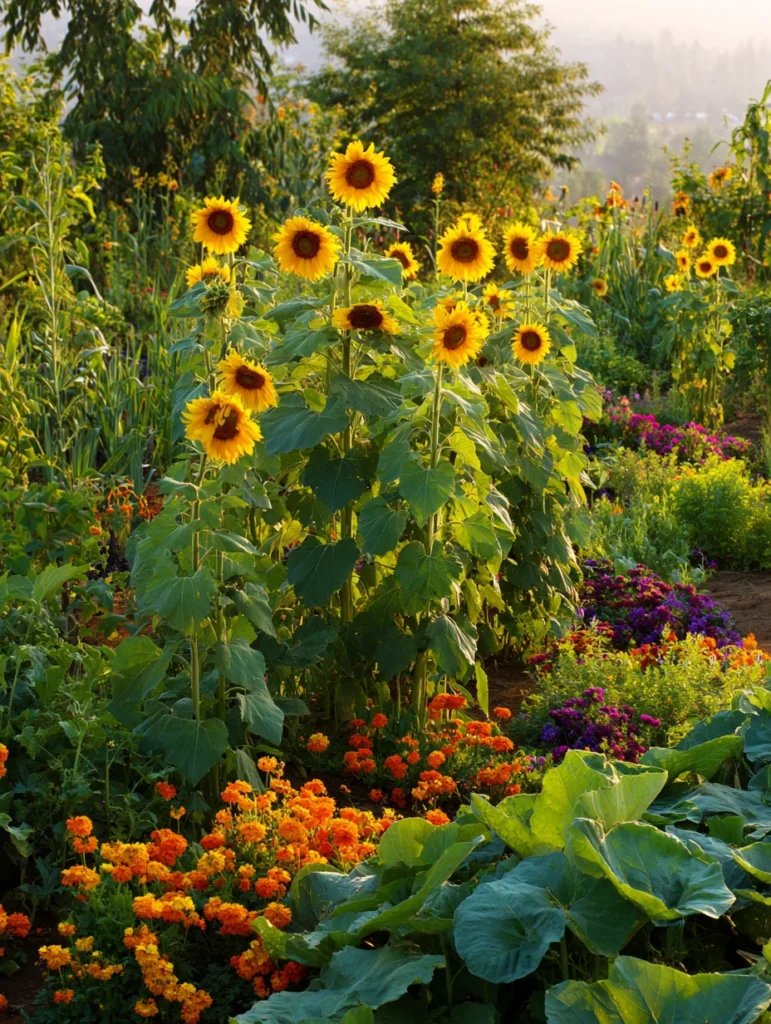
Symbiotic Relationships: Sunflowers play well with others when you choose the right companions. Plant cucumbers and squash at their base – the sunflowers provide natural trellising while the sprawling vines shade the soil and reduce water evaporation.
Pest Management: Certain companion plants actually protect your sunflowers from pests. Nasturtiums planted nearby attract aphids away from sunflowers, while marigolds repel beetles and other chewing insects. This natural pest control reduces your reliance on chemical interventions and fosters a more balanced garden ecosystem.
Product Spotlight: Efficiently plant your companion vegetables and flowers with the Edward Tools Garden Dibber and Planting Tool, which quickly creates perfectly sized holes for transplants. Feed your entire companion planting bed with Jobe’s Organics All-Purpose Fertilizer Spikes, which work for both sunflowers and their companion plants.
Read More: 21 Aesthetic Garden Ideas to Transform Your Outdoor Space
14. Install a Sunflower Windbreak
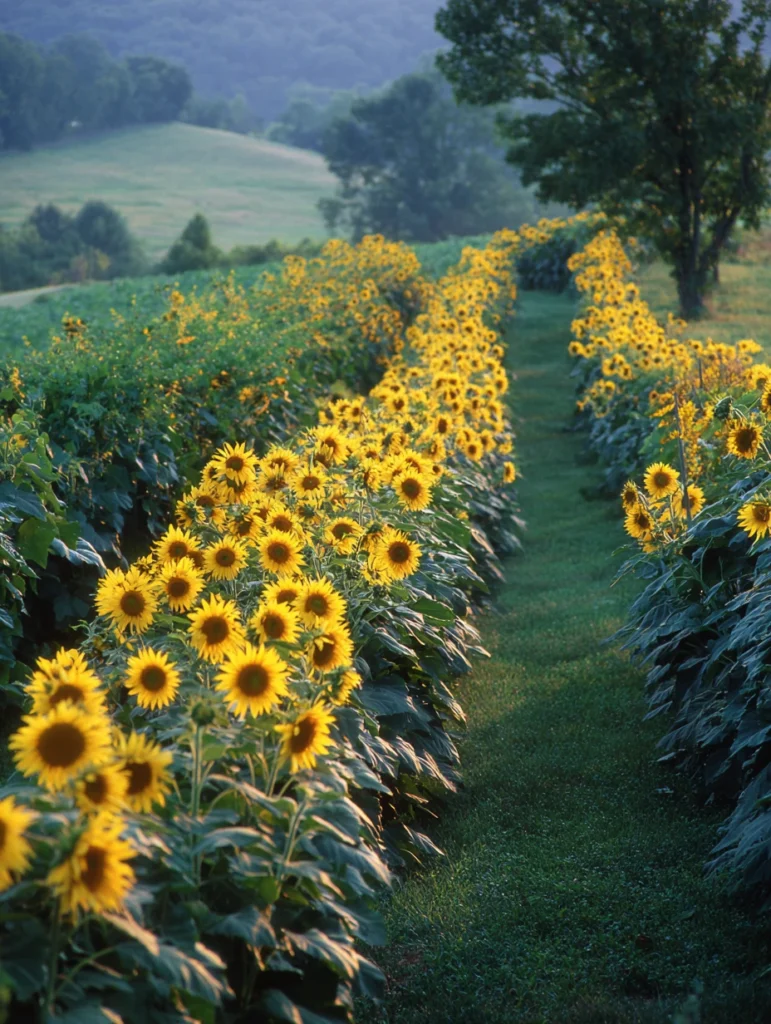
Wind Protection: Tall sunflowers planted in rows create effective windbreaks that protect more delicate plants behind them. This works exceptionally well if your property is situated on an exposed hillside or open prairie, where wind damage is a constant concern.
Microclimate Creation: That windbreak doesn’t just block wind; it creates a warmer microclimate behind it, where heat-loving plants thrive. I’ve extended my growing season by nearly two weeks using this technique, allowing tomatoes to ripen that would usually not have time to do so before frost hits.
Product Spotlight: Stake your windbreak sunflowers securely with Vigoro Heavy-Duty Steel Garden Stakes that won’t bend or break when strong winds hit. Establish roots quickly with Plant Vitamin Solution that reduces transplant shock and helps your windbreak fill in faster.
Read More: How To Create a Magical DIY Fairy Garden for Your Backyard
15. Create a Sunflower Tunnel Walkway
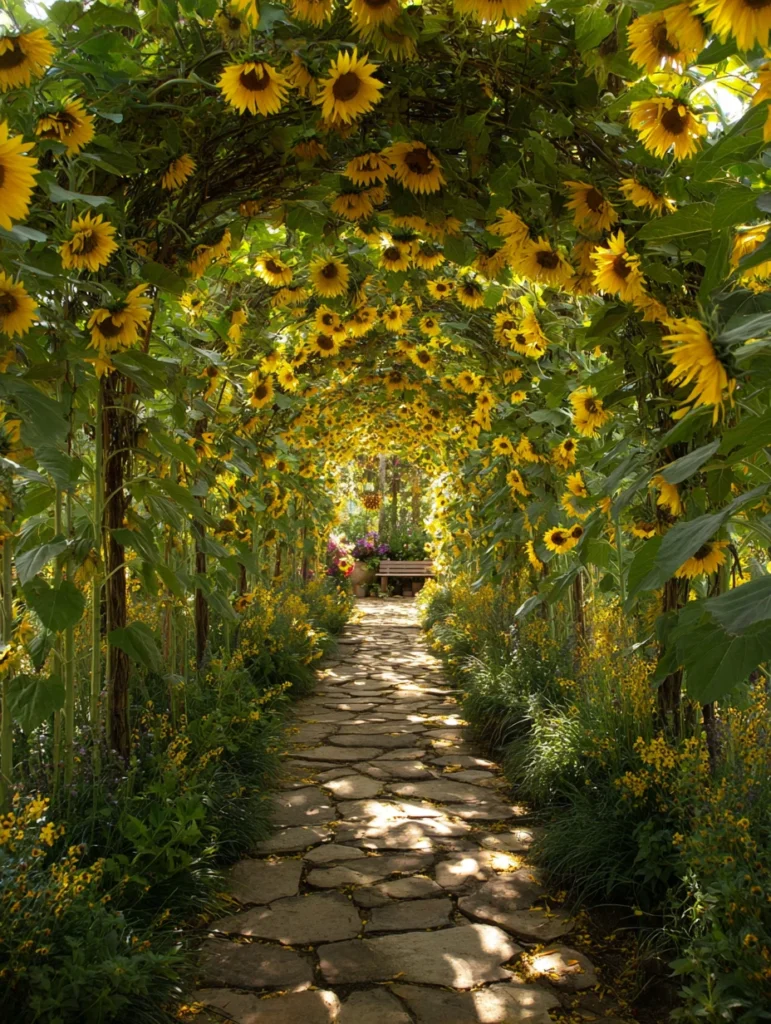
Magical Pathway: Plant tall sunflowers on both sides of a garden path, spacing them close enough that they arch over the walkway as they grow. This creates an enchanting tunnel effect that transforms a simple garden path into something special.
Sense of Discovery: A sunflower tunnel adds a sense of mystery and anticipation to your garden design. You can’t see what’s at the end until you walk through, creating a sense of journey and discovery. It’s particularly effective when the tunnel leads to a seating area, water feature, or other garden focal point.
Product Spotlight: Define your tunnel pathway with Dimex EasyFlex Plastic No-Dig Landscape Edging that keeps grass from encroaching and maintains clean lines. Light your tunnel for evening walks with Solar Pathway Lights that charge during the day and provide soft illumination after dark.
Read More: Urban Gardening Solutions: Creating a Small Patio Veggie Garden
16. Design a Drought-Tolerant Xeriscape
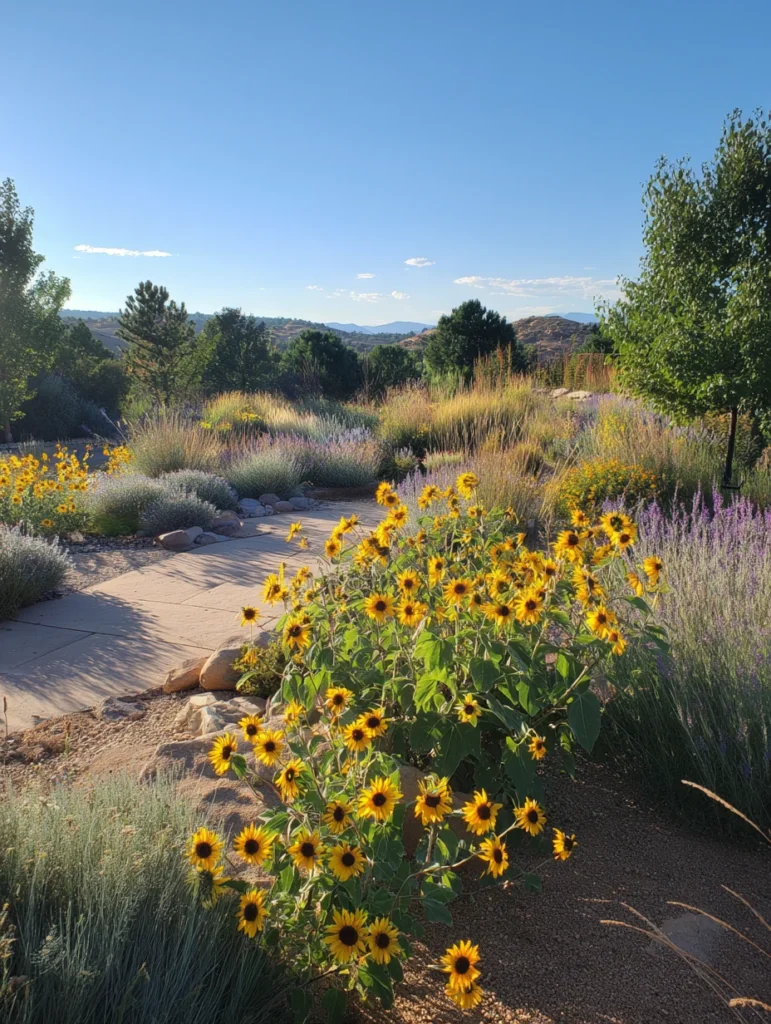
Low-Water Solution: Once established, sunflowers tolerate drought remarkably well, making them perfect for water-wise gardens in arid climates. Their deep taproots access moisture that shallow-rooted plants can’t reach. Combine sunflowers with other drought-tolerant plants, such as lavender, sage, and ornamental grasses.
Climate-Appropriate Landscaping: If you live in an area with common water restrictions, a sunflower-based xeriscape allows you to have beauty without guilt. These tough plants evolved on the Great Plains, where rainfall is unpredictable and summer heat is brutal; they’re essentially designed for complex conditions.
Product Spotlight: Conserve water with the Raindrip Automatic Watering Kit, which delivers moisture directly to the roots without waste through evaporation. Enhance soil water retention with Miracle-Gro Water Storing Crystals, which absorb water when available and slowly release it during dry periods.
17. Build a Sensory Garden Feature
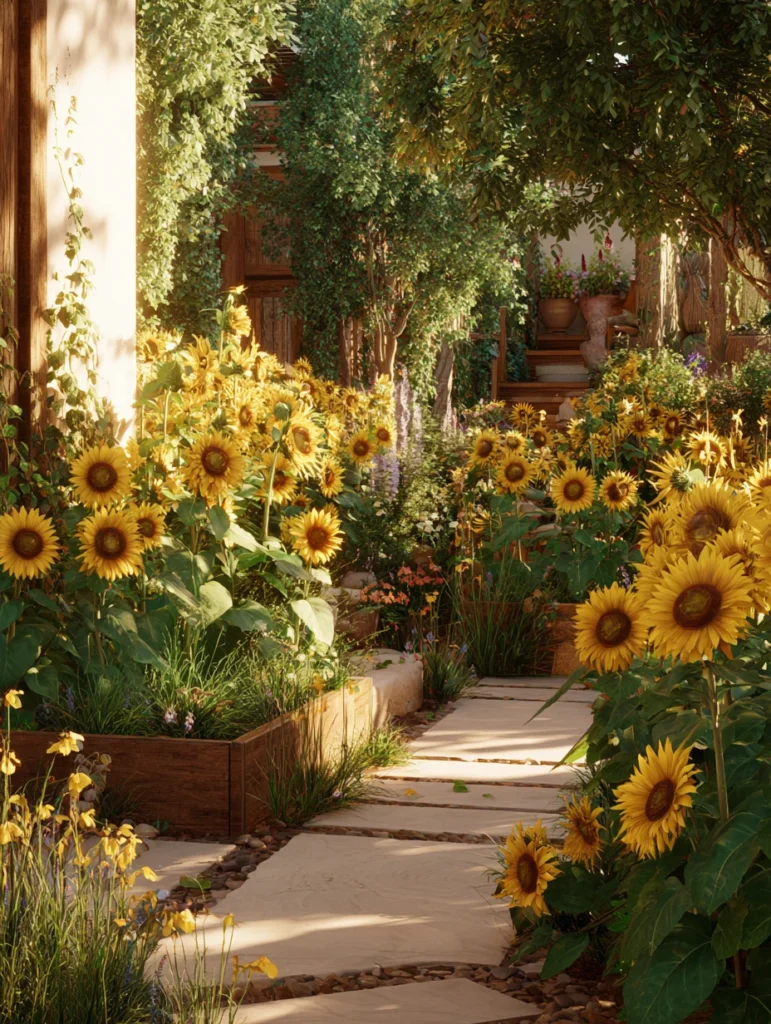
Textured Experience: Sunflowers engage multiple senses beyond just sight. The velvety petals feel surprisingly soft, the large leaves create rustling sounds in the breeze, and different varieties have distinct scents. Some people find the leaves’ slightly rough texture interesting to touch.
Interactive Learning: A sensory garden with sunflowers works beautifully for children, elderly adults, and anyone who benefits from tactile experiences. Plant sunflowers at varying heights so everyone can reach and interact with them, regardless of mobility limitations. Include dwarf varieties that people in wheelchairs can easily touch and smell.
Product Spotlight: Create accessible raised beds with the Outdoor Raised Garden Bed Kit, which brings sunflowers within reach for everyone. Mark your sensory garden sections clearly with Houseables Plant Labels that identify different varieties and their unique sensory characteristics.
18. Design a Rainbow Garden Theme
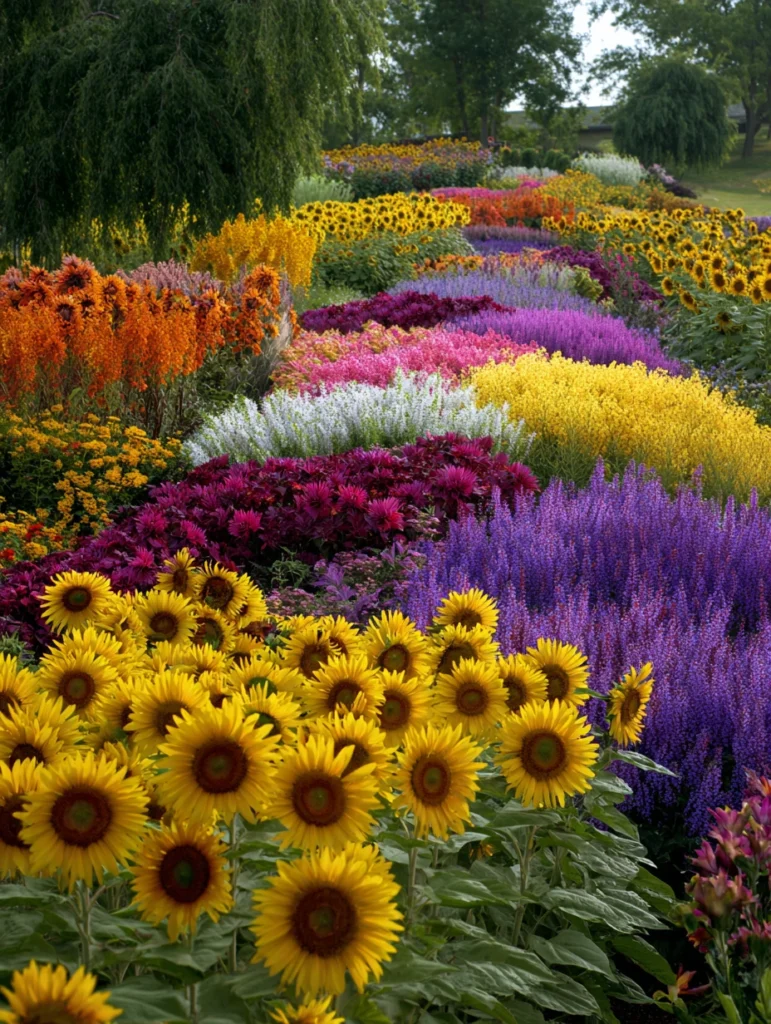
Color Diversity: Modern sunflower breeding has created an incredible range of colors beyond traditional yellow. Mix Chocolate Cherry, Evening Sun, Strawberry Blonde, and ProCut Plum varieties for a rainbow effect that challenges everyone’s assumption that sunflowers only come in yellow.
Themed Plantings: Organize your rainbow sunflowers in color-blocked sections or mix them randomly for a confetti effect – both approaches work, depending on your design preference. I prefer the color-blocked method because it creates a more substantial visual impact and makes each color really pop.
Product Spotlight: Get multiple colors in one convenient package with Seed Needs Sunflower Mixture that takes the guesswork out of creating a rainbow garden. Enhance your diverse color palette with Jobe’s Organics Flower & Rose Granular Fertilizer, which promotes vibrant blooms across all varieties of flowers and roses.
19. Create a Fall Harvest Display
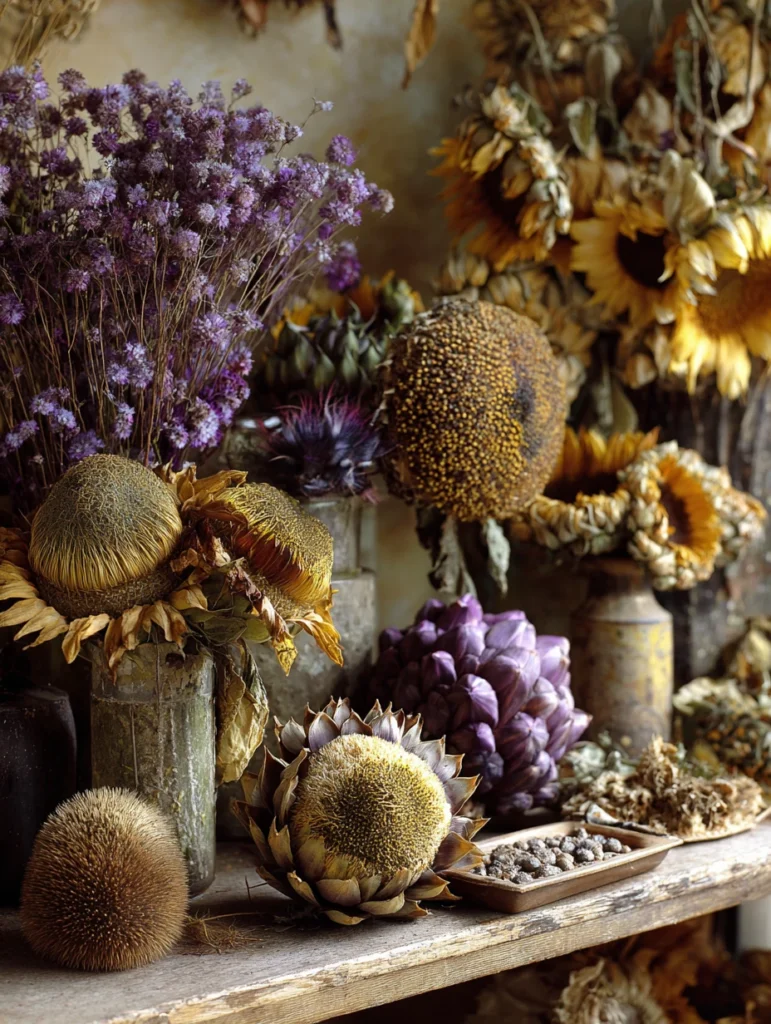
Autumn Decoration: As summer ends, sunflower seed heads dry into gorgeous decorative elements perfect for fall displays. Leave them standing in the garden as architectural interest, or cut them for indoor arrangements. Those dried heads last for months and add rustic charm to mantels, wreaths, and centerpieces.
Seasonal Transition: Sunflowers bridge the gap between summer and fall beautifully, maintaining interest long after other annuals peter out. Their seed heads look increasingly attractive as they dry and weather, developing beautiful patterns and textures. Pair them with ornamental grasses and asters for stunning late-season combinations.
Product Spotlight: Preserve your dried sunflower heads perfectly with Design Master Premium Matte Sealer that locks in their natural beauty without adding unwanted shine. Display your harvested heads in Mkono Ceramic Wall Planter sets, which showcase their sculptural qualities indoors.
20. Build a Seed Saving Station
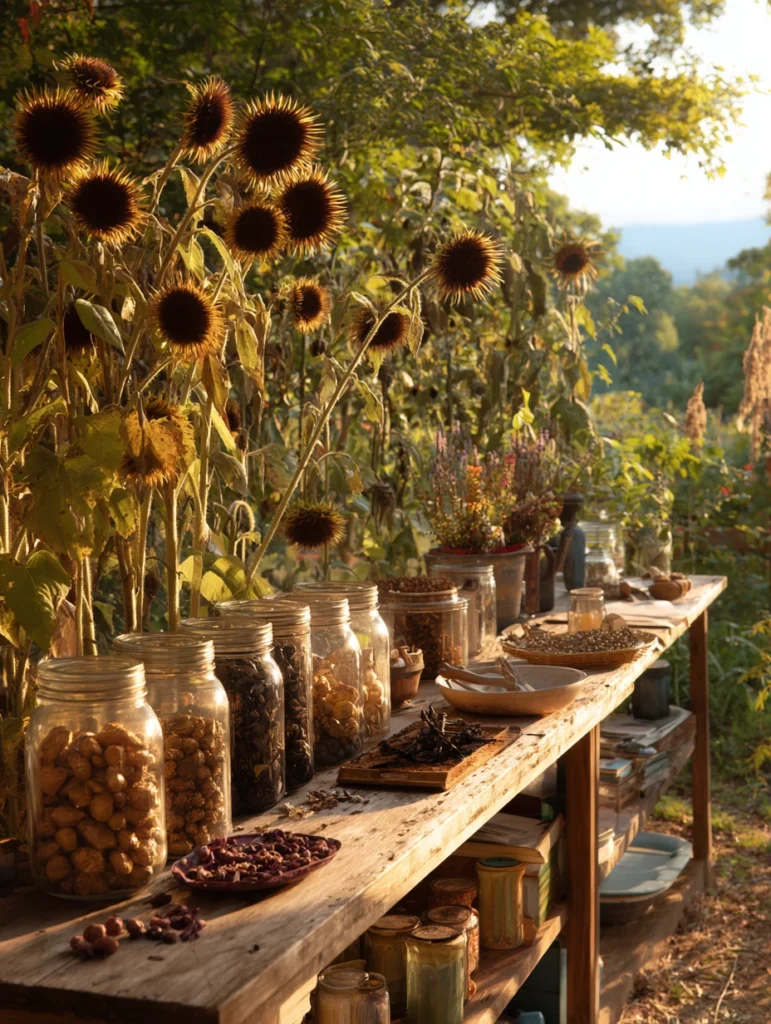
Sustainable Gardening: Growing sunflowers specifically for seed saving creates a sustainable cycle, allowing you to never need to repurchase seeds. Choose open-pollinated (not hybrid) varieties, let seed heads mature completely on the stalk, then harvest and dry them properly.
Educational Opportunity: Seed saving teaches valuable lessons about plant life cycles and self-sufficiency. Kids, especially, love harvesting seeds; they’ll plant them the following spring – it connects them to gardening in a tangible way. Plus, you’re preserving genetic diversity and adapting plants to your specific growing conditions over time.
Product Spotlight: Store your harvested seeds properly with Ball Mason Jars Regular Mouth that keep seeds dry and viable for years when stored in cool conditions. Label everything clearly with Avery Removable Rectangular Labels that detail variety names and harvest dates for future planting success.
21. Design a Sunflower Art Installation
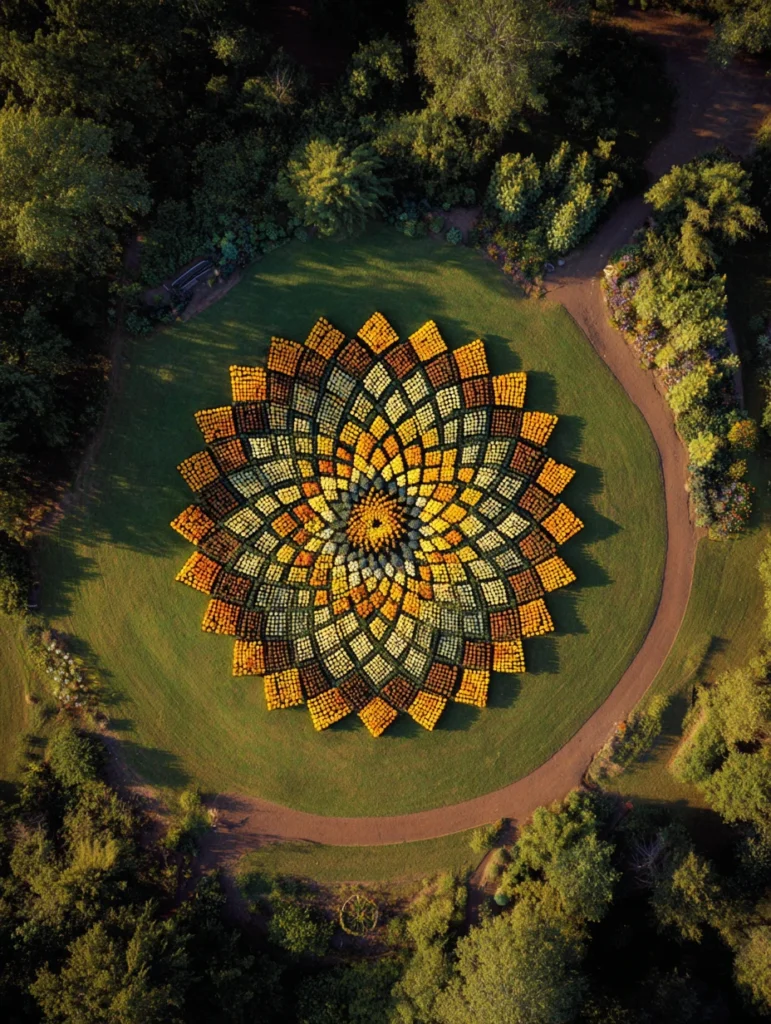
Living Sculpture: Use sunflowers as living art by planting them in geometric patterns, spirals, or other artistic designs visible from above or an elevated viewpoint. This works brilliantly if you have a second-story window or deck overlooking your garden—plant different heights and colors to add dimension to your living artwork.
Creative Expression: Your garden is your canvas – why not use it to create something uniquely artistic? I’ve seen people spell out initials, create mandala patterns, and even replicate famous paintings using different colored sunflower varieties. The temporary nature makes it feel special and permits you to experiment without worrying about permanent installations.
Product Spotlight: Plan your art installation accurately with Stanley PowerLock Tape Measure to measure and mark your design precisely before planting. Capture your creation from above with the Drone with Camera for Adults that lets you photograph your sunflower art installation from the perfect aerial perspective.
Final Thoughts
So there you have it – 21 ways to transform your garden into a sunflower paradise that’ll make every day feel a little brighter. The beauty of sunflowers is that they’re practically foolproof, forgiving enough for beginners while offering endless creative possibilities for experienced gardeners.
Whether you choose one idea or combine several, you’re guaranteed to create something special that brings joy to everyone who sees it. Now grab those seeds, get your hands dirty, and watch your garden transform into the happiest spot in the neighborhood. Your sunflower adventure starts now!