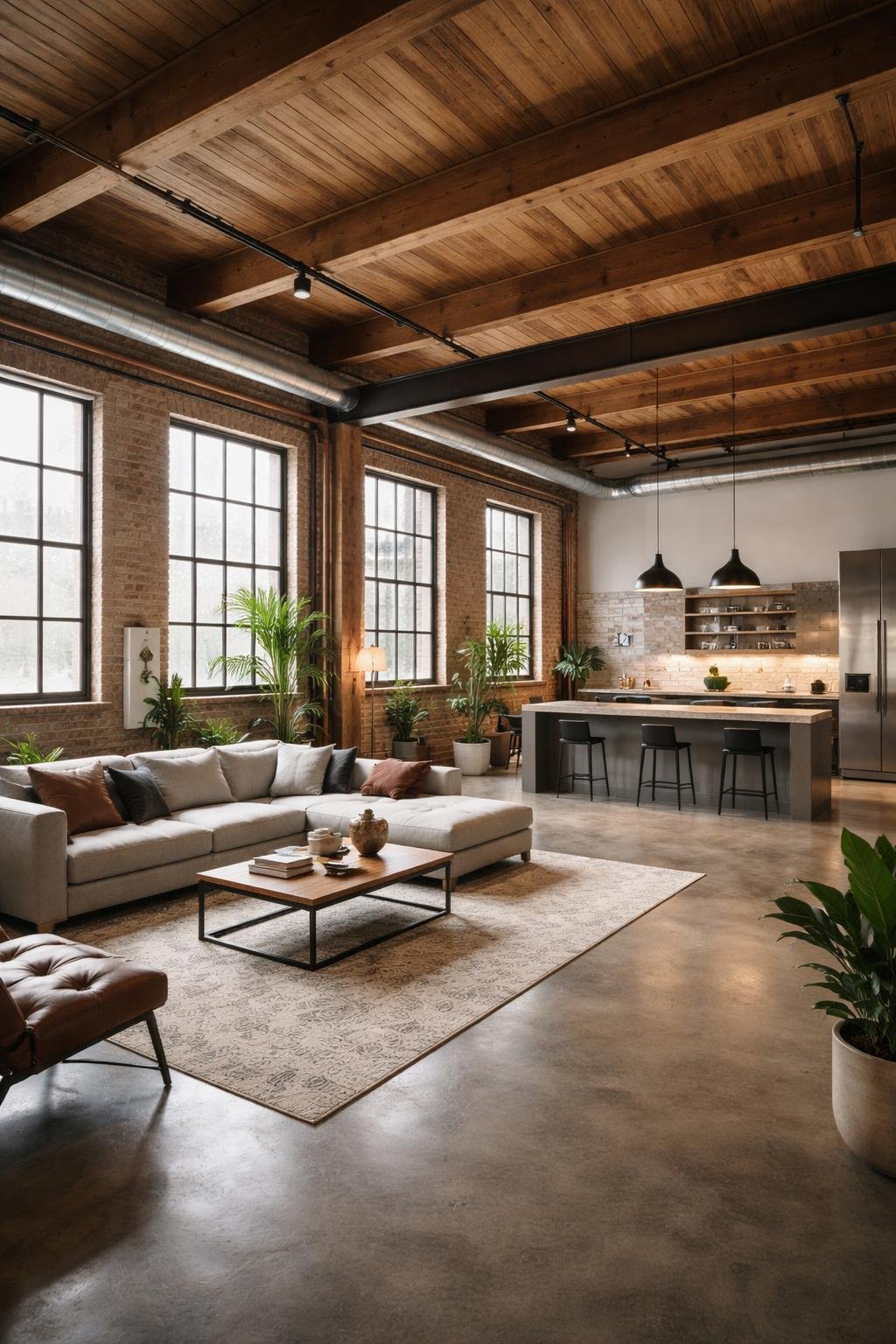

Warehouse loft apartments mix old industrial buildings with modern living. You get high ceilings, big windows, and classic details like exposed brick and metal beams. These places used to be factories or storage spaces, but now they’re some of the coolest homes around.
If you’re designing your warehouse loft, you’ll want to keep that industrial vibe but still make it feel cozy. The trick is to mix tough materials like concrete and steel with softer things—plants, plush chairs, and maybe a few throw blankets.
You’ll work with the building’s original features to make your space stand out. Lighting, furniture, and layout all matter when you’re creating your dream urban home.
1. Exposed Brick Walls: Because who doesn’t want their home to look like a cozy historic prison?
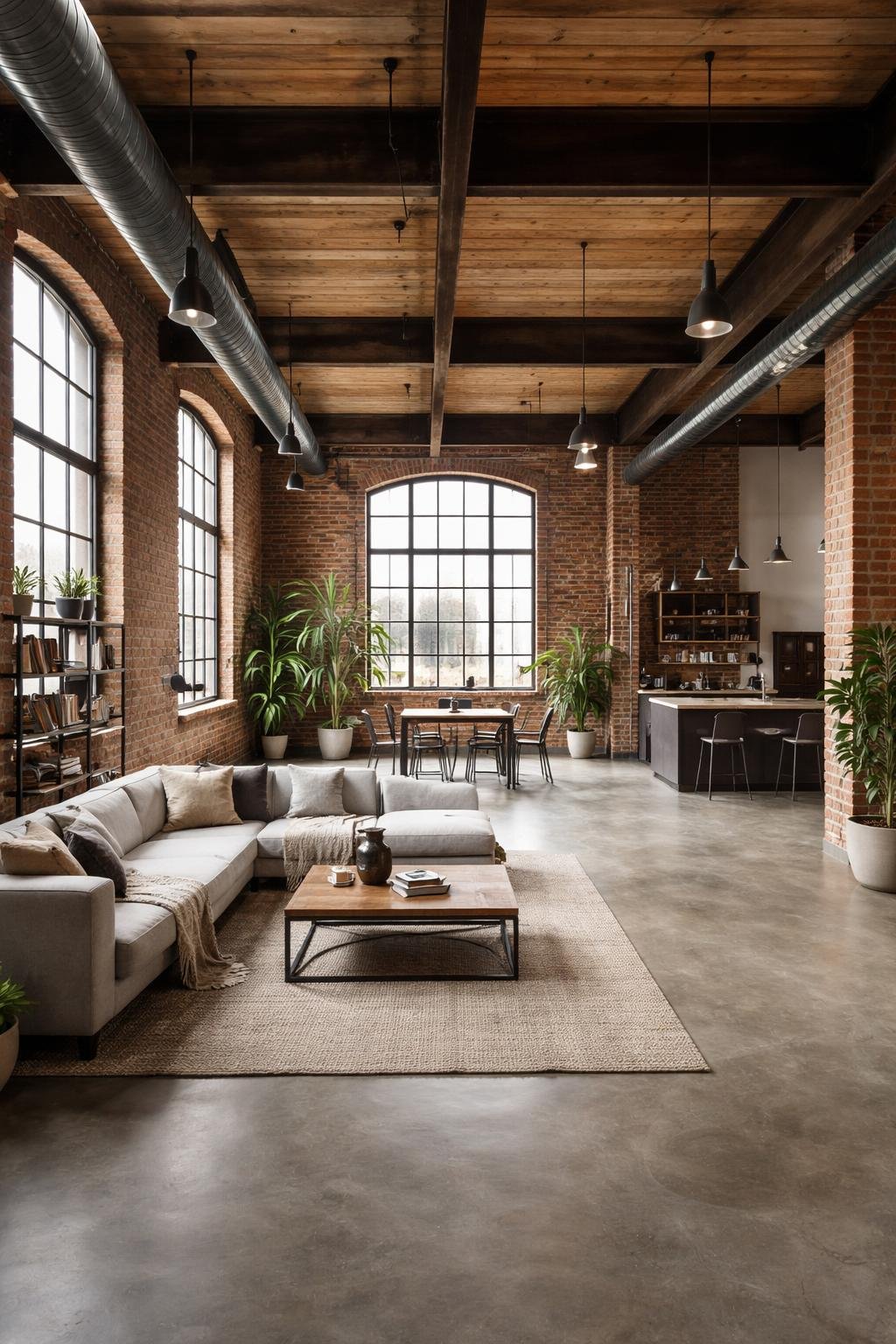
Exposed brick walls are basically a must in warehouse lofts. They add warmth and a ton of personality, and honestly, they make you look like you know what you’re doing.
Exposed brick brings texture and visual interest to your apartment. You’ll feel like you’re living inside a piece of history—just with better plumbing and WiFi.
You’ll notice these walls help with sound and keep your place warmer, too. Your 2 AM TV binges won’t wake the neighbors, and you might even save on heating.
The rustic charm pairs perfectly with metal shelves and visible pipes. You’ll end up with a backdrop that’s basically begging for Instagram photos.
Keep in mind, interior bricks aren’t always pretty. Builders sometimes used the rough stuff inside, so you might want to seal or paint them if they look too scruffy.
2. Soaring Ceilings: For all your dramatic selfie needs and chandelier ambitions.
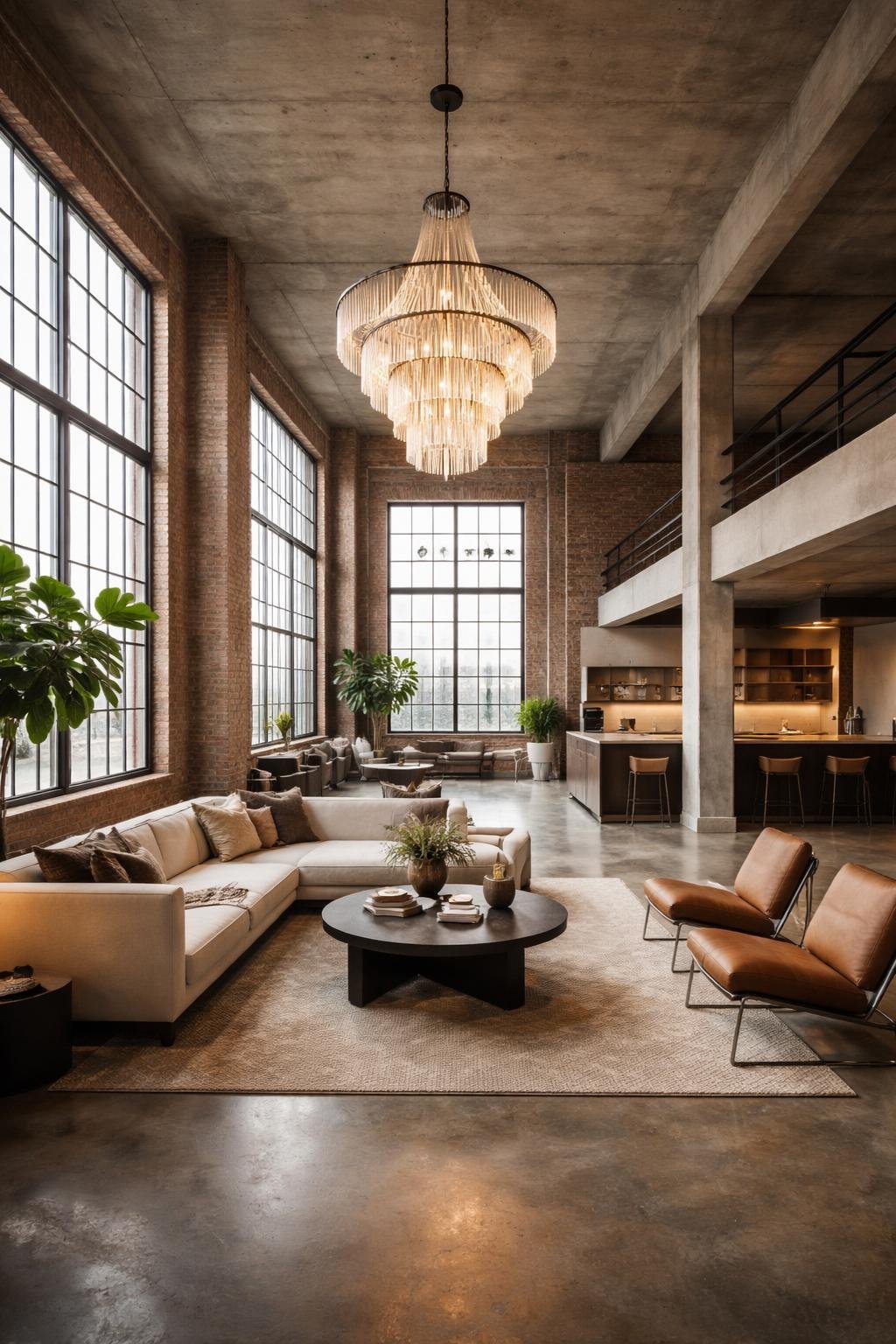
Warehouse lofts almost always come with ridiculously high ceilings. They used to store big stuff up there, but now you get to show off.
Your phone’s panorama mode finally makes sense. You can take a full-body photo without lying flat on the floor.
Lighting steals the show in these tall spaces. Hang a chandelier that would crush a normal apartment. Crystal, industrial, or totally over-the-top—pick what you love.
You can go big with bookshelves or giant art. It won’t feel crowded. If you’ve always wanted a loft bed, this is your chance.
Big windows usually come with these ceilings. Natural light pours in and makes everything look better, even your breakfast. The open vibe helps small furniture groupings feel more chill.
Guests always look up when they walk in. That’s when you know the ceilings are working their magic.
3. Open Plan Living: AKA, where you can burn dinner and chill all in one spot.
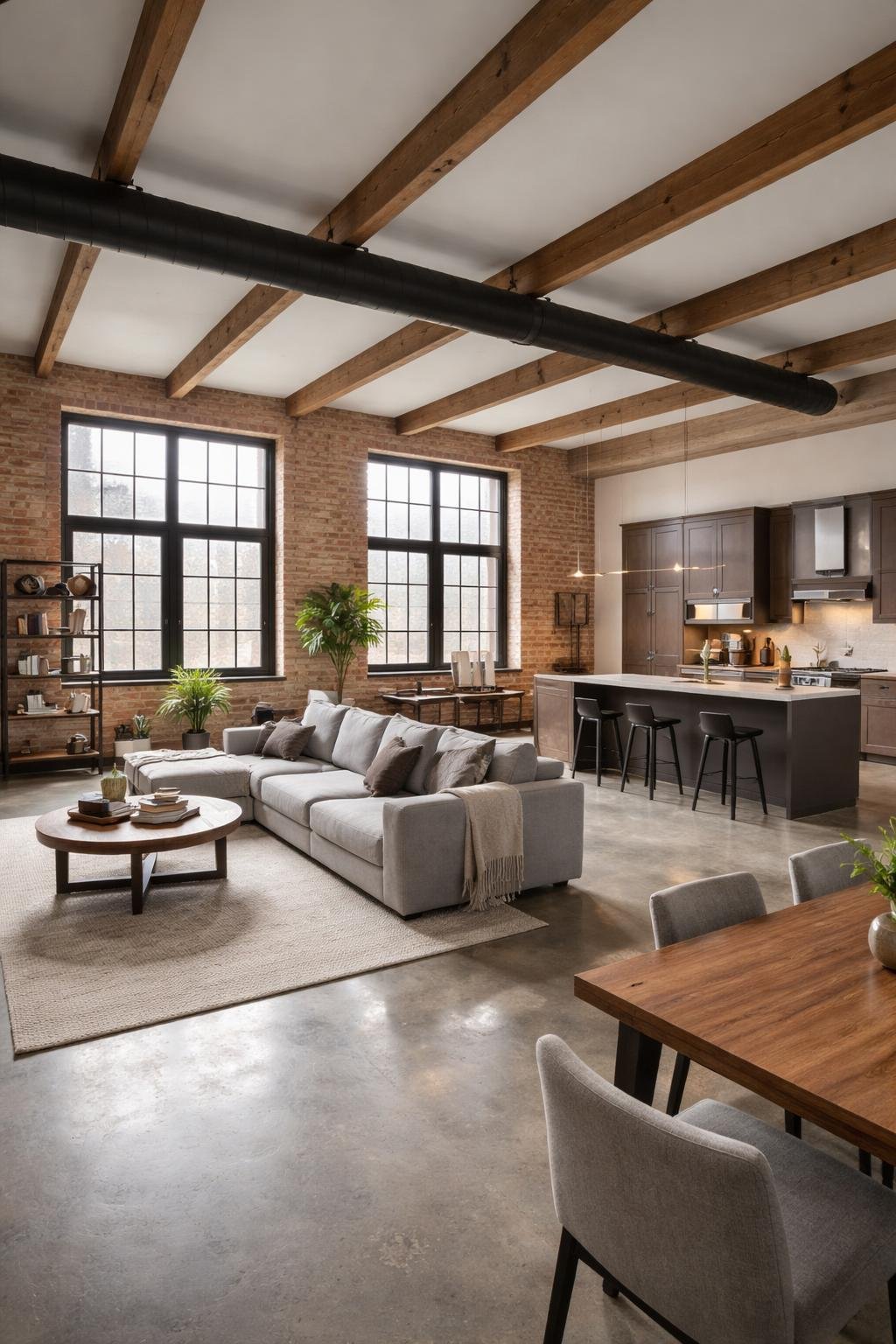
Warehouse lofts just aren’t into walls. The open floor plan means your kitchen, living, and dining spaces all blend together.
You can cook and watch TV at the same time. Chat with friends while you chop veggies. No one gets stuck in the kitchen alone during a party.
The open space makes even small lofts feel huge. Light flows through the whole apartment instead of getting blocked by walls.
If you like being around people, you’ll love it. The living areas just flow together and make the place feel bright and open.
The downside? Burn dinner and everyone knows instantly. But hey, at least you can all laugh about it while you fan the smoke away.
4. Statement Industrial Lighting: That giant metal thing that makes people go ‘Ooh!’
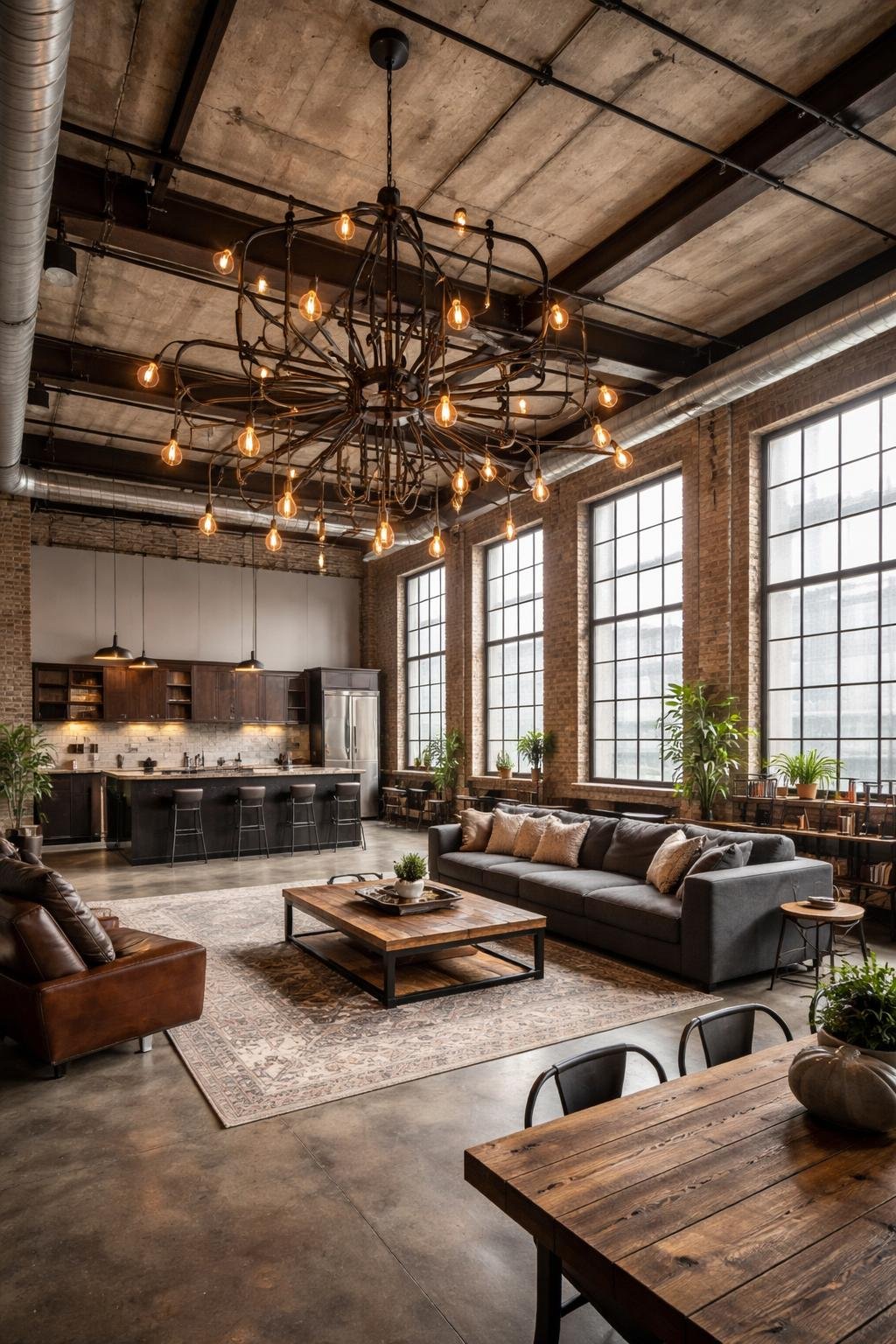
Nothing says “warehouse loft” like a massive light fixture that might weigh more than your fridge. These lights are basically the jewelry of your apartment.
Go for exposed bulbs, black metal, or weird geometric shapes. If it looks like it came from a factory, you’re on the right track. Make sure it’s big enough to catch everyone’s eye.
Oversized pendants look awesome over dining tables or kitchen islands. Cage lights bring that real industrial vibe. Metal chandeliers? They’re dramatic and practical.
Statement lighting does two jobs—it lights up your place and gets people talking. Friends will ask where you found it, guaranteed.
If you’re not ready to commit to one giant thing, try track lighting. Move the lights around and highlight different corners. It’s functional and looks cool.
Go bold. Your warehouse loft can totally handle it.
5. Concrete Floors: The cold embrace of urban sophistication (and perfect for dropped toast)
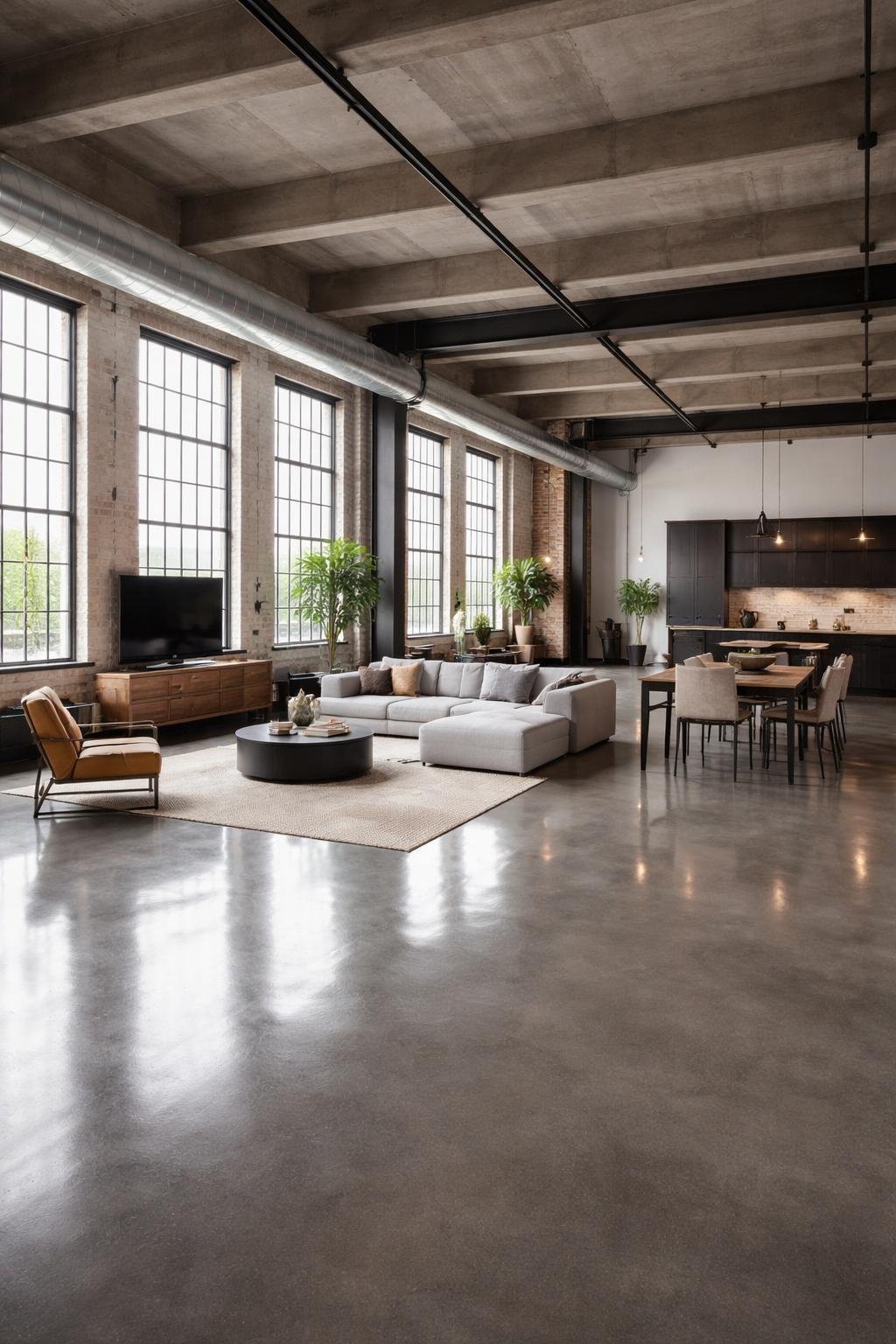
Concrete floors are kind of the standard in warehouse lofts. They’re tough, easy to clean, and make your apartment look photo-ready at all times.
Cleaning up is a breeze. Spill your coffee? Just grab a mop. Drop your toast? You’ll see exactly where it lands—no mystery crumbs.
Concrete brings that pure industrial vibe. Leave it raw and gray for the full effect, or get fancy with polished or stained finishes. Some folks even add patterns to spice things up.
Your feet might get tired, so toss down some area rugs where you stand a lot. Rugs warm up the space and make it feel less chilly.
These floors are super durable. Move your furniture around as much as you want; they won’t mind.
6. Steel Support Beams: Visible muscles of your apartment flexing for your guests.
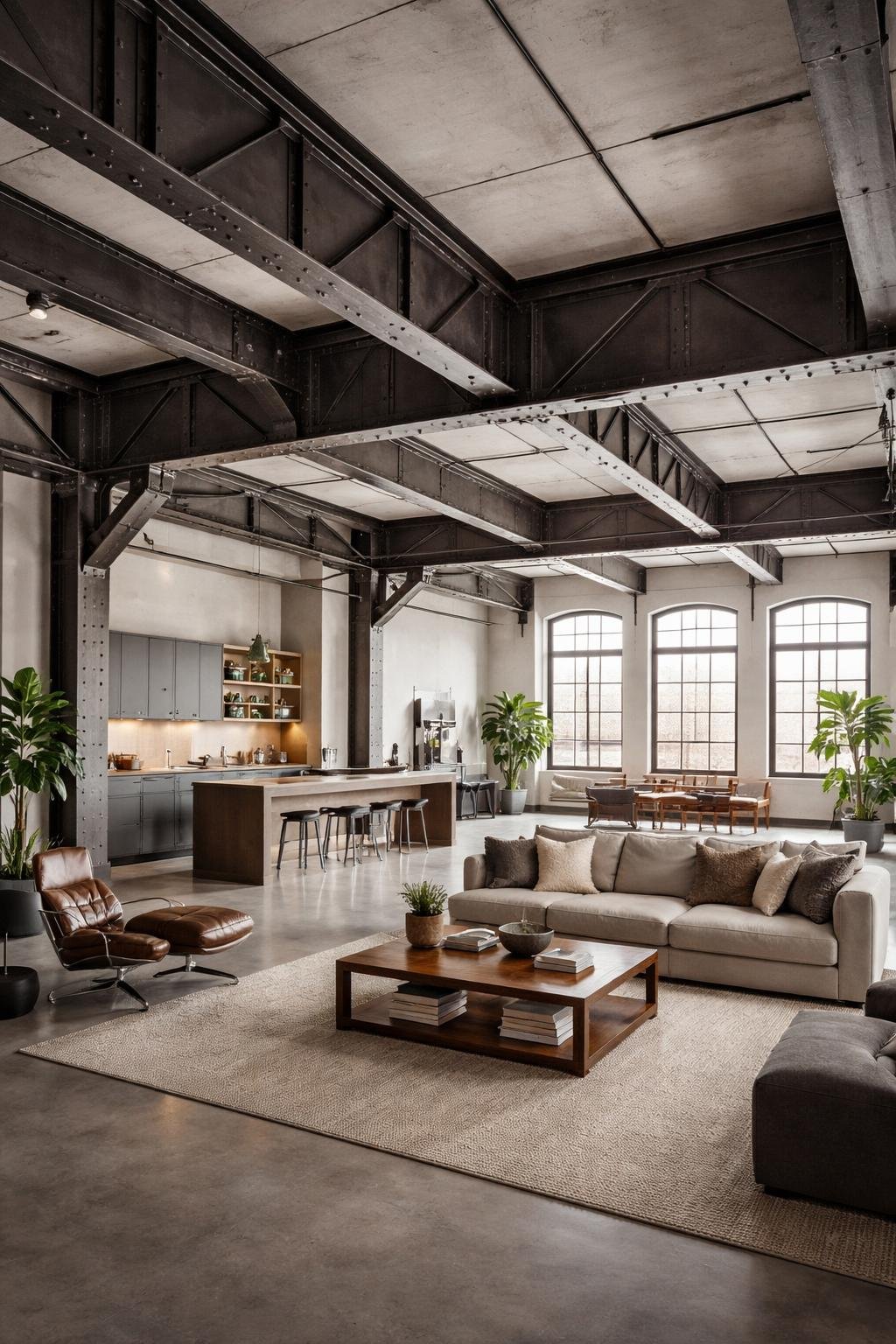
Steel beams are the real muscle of warehouse lofts. They hold everything up and look pretty awesome while doing it.
These supports bring that industrial feel. Forget hiding them—let them show off their raw metal finish.
Steel beams work well in open layouts. They frame your rooms without blocking your view. Think of them as the bones of your space, but way cooler.
Guests will definitely notice those beams. They add something special up top, and you barely have to do anything.
You can leave them as they are or add some lighting for drama. Some people string bulbs along the beams, others just let the metal speak for itself.
Steel beams also make your place feel bigger. They draw your eyes up and create clean lines across the ceiling. Just don’t cover them up—you’ll lose half the vibe.
7. Lofted Sleeping Areas: Because who doesn’t want a bed that feels like it’s in a treehouse?
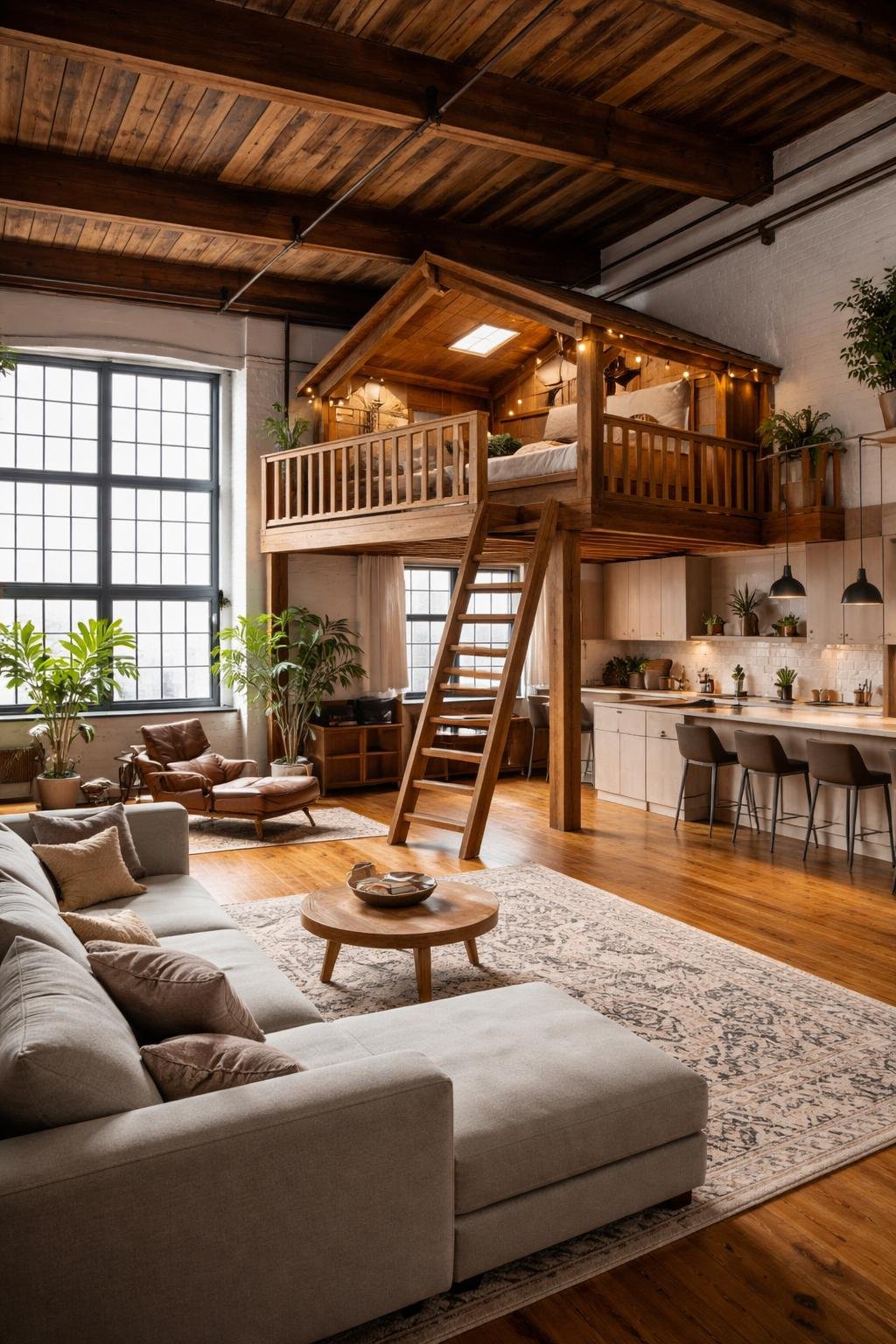
If your warehouse loft has tall ceilings, don’t waste that space. Build yourself a lofted bed and double your living area.
A raised bed gives you a cozy nook on top and more room for living or working underneath. It’s like getting an extra room for free.
Use the space below for a mini office, lounge zone, or storage. Some folks even squeeze a whole closet under there.
You’ll need a sturdy ladder or stairs to get up. It might feel weird at first, but you’ll get the hang of it. Just watch your step at night.
The lofted bed separates your sleeping spot from the rest of the place. In a studio, that’s a game changer. Your bed feels private, even in an open room.
8. Vintage Factory Windows: They let in light and also increase your nostalgia levels.
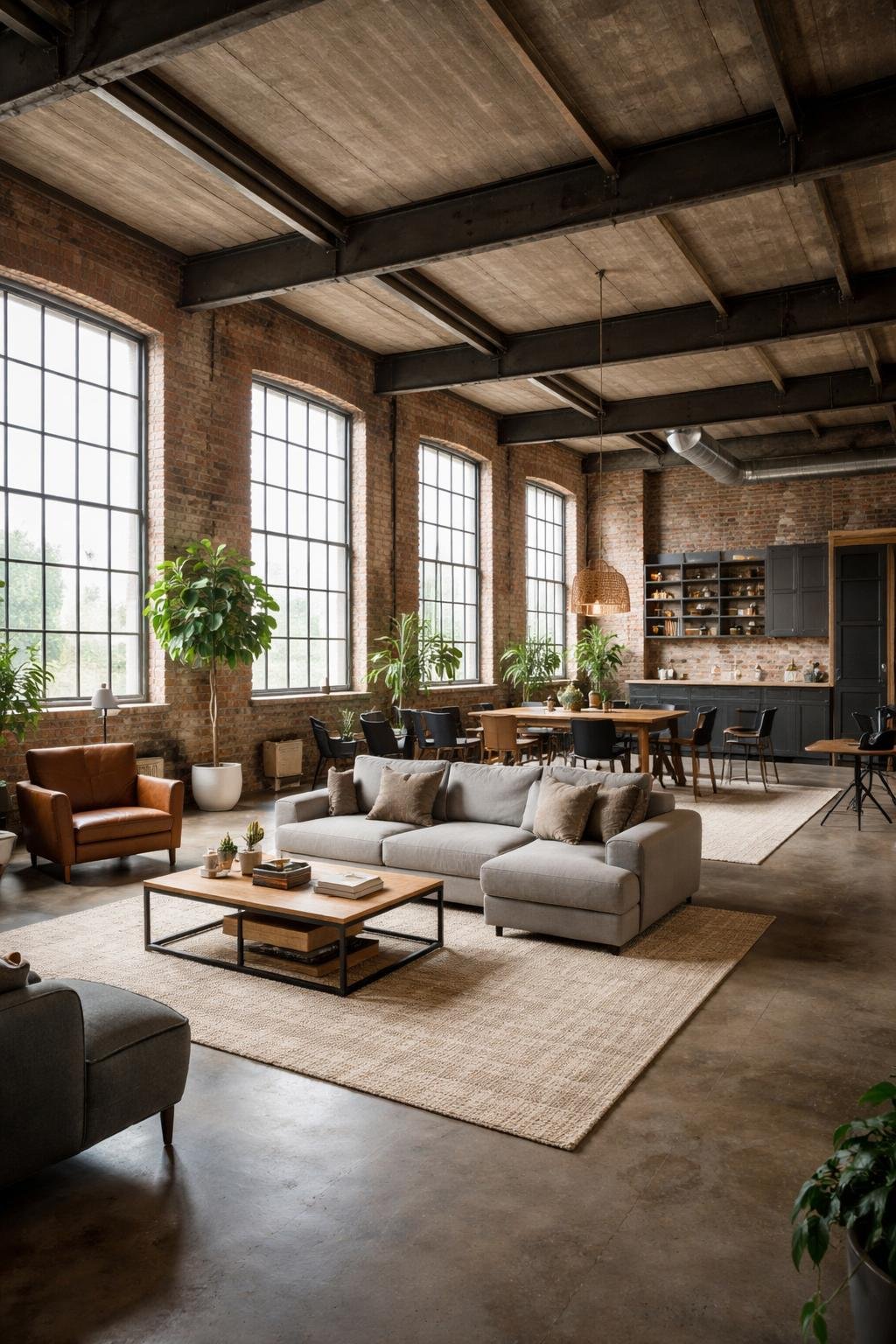
Old factory windows are like time machines that also flood your loft with sunlight. These industrial classics have steel frames and tons of panes, giving your place instant character.
The best part? All that natural light. Guests will think you’re an artist or maybe just really good at finding cool salvage stuff.
These windows bring together the building’s original bones with whatever new stuff you bring in. Metal frames add texture and make your walls way more interesting.
You can leave them as-is for an authentic look, or clean them up if you want. The old, wavy glass gives you privacy while still letting in light—perfect if you don’t want the neighbors watching your cereal routine.
9. Mixed Metal Accents: When brass, copper, and steel have a stylish family reunion.
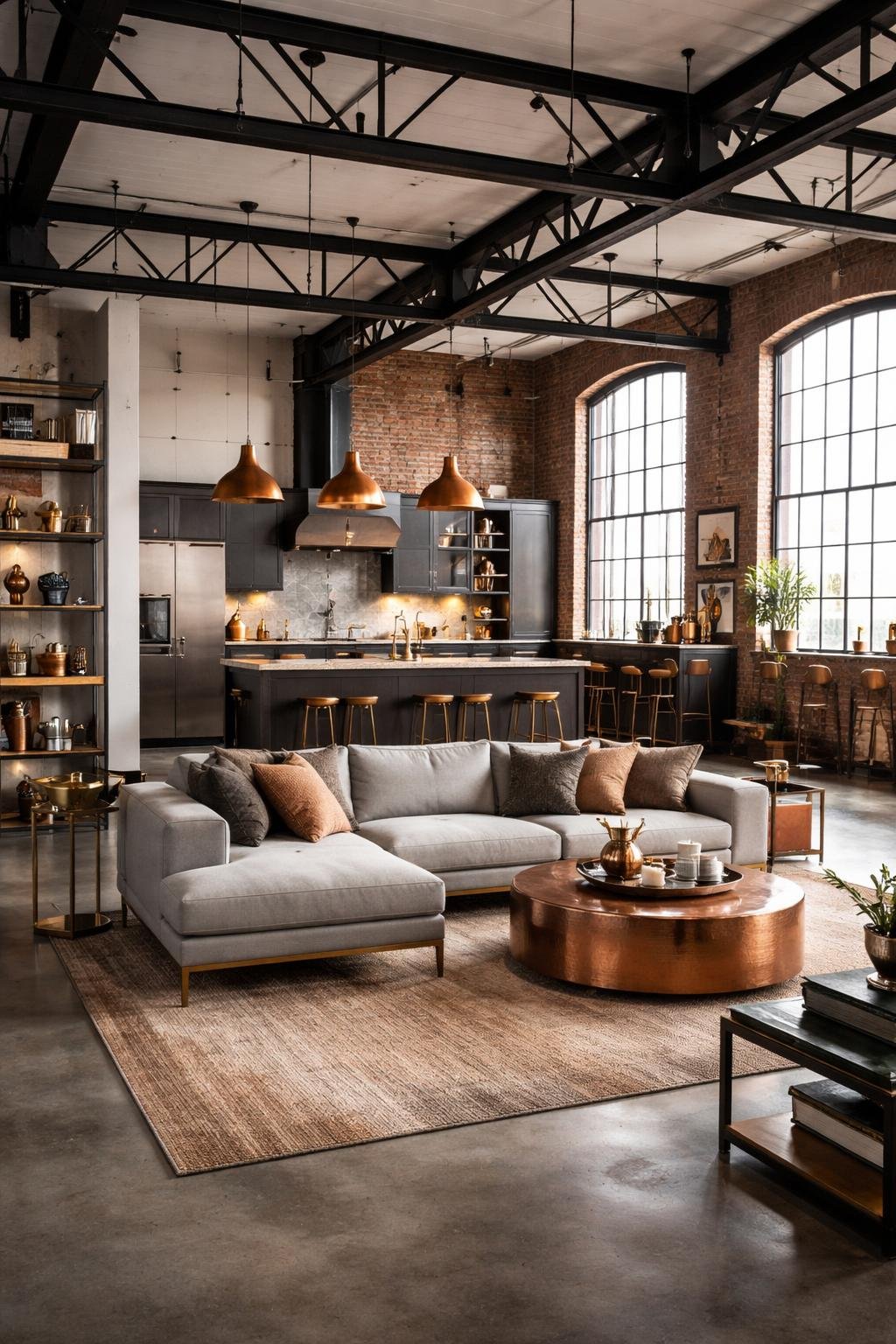
A warehouse loft is basically made for mixing metals. Seriously, nobody’s going to call the design police if you throw brass, copper, and steel together. The whole industrial vibe almost dares you to get bold with your finishes.
Pick one metal to take the lead. Maybe it’s steel showing off through your beams and windows.
Then, let brass and copper play supporting roles in lighting, hardware, or a few well-placed decorative pieces.
Try to stick with two or three different metals in each room, so things look intentional, not like a scrapyard. In the kitchen, you could team up stainless steel appliances with brass cabinet pulls and maybe a copper range hood.
Spread each metal throughout the space instead of piling one finish into a single corner. That way, the look feels balanced.
Brass and copper—both warm metals—get along great, and steel brings in a cool contrast that makes those warm tones pop. The exposed brick and concrete in your loft give you the perfect neutral backdrop for all this metallic action.
Don’t stress about matching every finish. The fun is in the mix, not the match.
10. Repurposed Wood Furniture: Making old pallets look chic since forever.
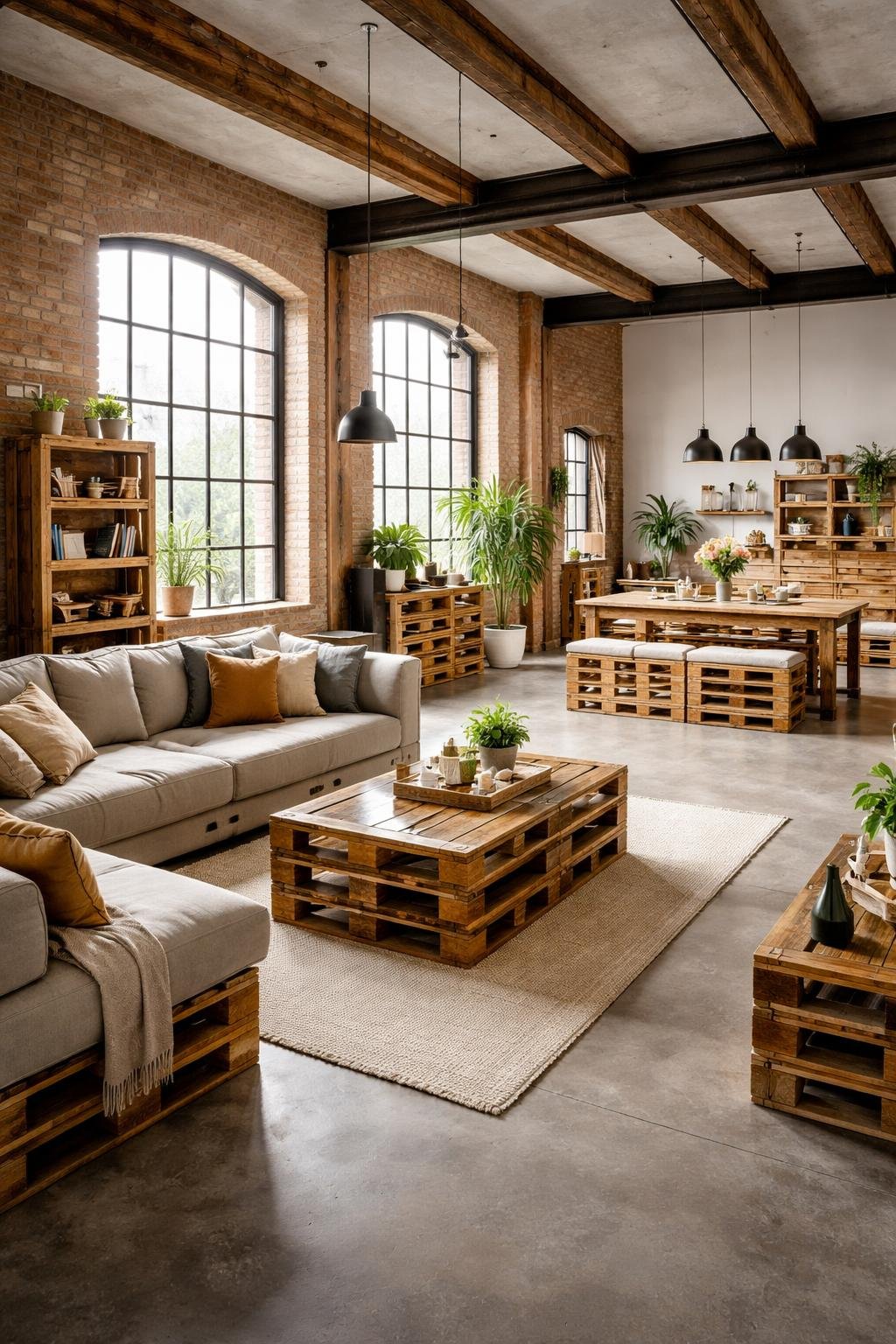
Warehouse lofts just beg for furniture with a bit of history, and repurposed pallet wood totally nails that industrial vibe. Those sturdy old frames that once hauled boxes? You can turn them into your next coffee table, bookshelf, or even a bed frame.
The cool thing is, you can often score pallets for free from local businesses. With a little creativity, you’ll end up with furniture that looks like you paid vintage shop prices.
Pallet pieces just fit in lofts—raw, a little rough, and full of character. A pallet couch brings rustic charm to your hangout spot.
A pallet desk? Instant street cred for your workspace.
You don’t need to be a master woodworker. Just sand down the splinters, slap on some stain or paint, and stack things how you like. Simple shapes work best—let the wood’s texture and weathered look do the heavy lifting.
These pieces look great against brick and concrete. And hey, you get to brag about your eco-friendly style while keeping your wallet happy.
11. Minimalist Furniture: When less is more, but not so less that it looks empty.
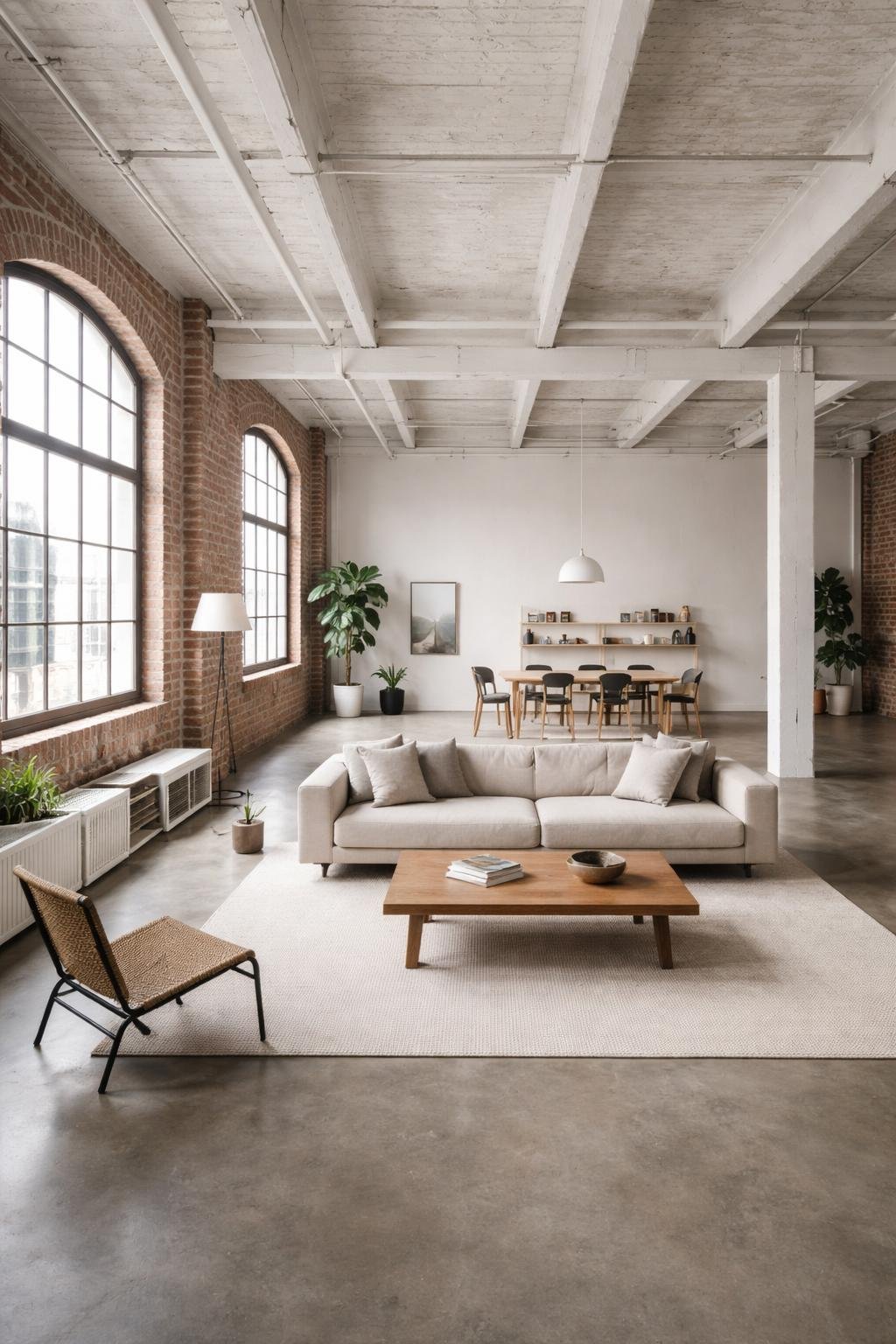
Lofts need furniture that lets those big, open spaces breathe. But you don’t want it to look like you just moved in and never unpacked.
Pick pieces that pull double duty. A sofa that turns into a guest bed? Yes, please.
An ottoman with hidden storage means you can stash your stuff and still have a spot to kick up your feet.
Stick to clean lines and simple shapes. Furniture should look confident, not like it’s trying too hard.
Neutrals are your friend—they won’t clash with exposed brick or concrete floors.
Hidden storage is a lifesaver. Coffee tables with drawers or TV stands with cabinets keep things tidy.
You can keep remotes, magazines, and all that random stuff out of sight.
Go for quality, not quantity. Three solid pieces beat ten flimsy ones any day.
Your loft isn’t a showroom, so pick what you’ll actually use.
12. Industrial Pipe Shelving: For the shelving that screams ‘I was born in a warehouse!’
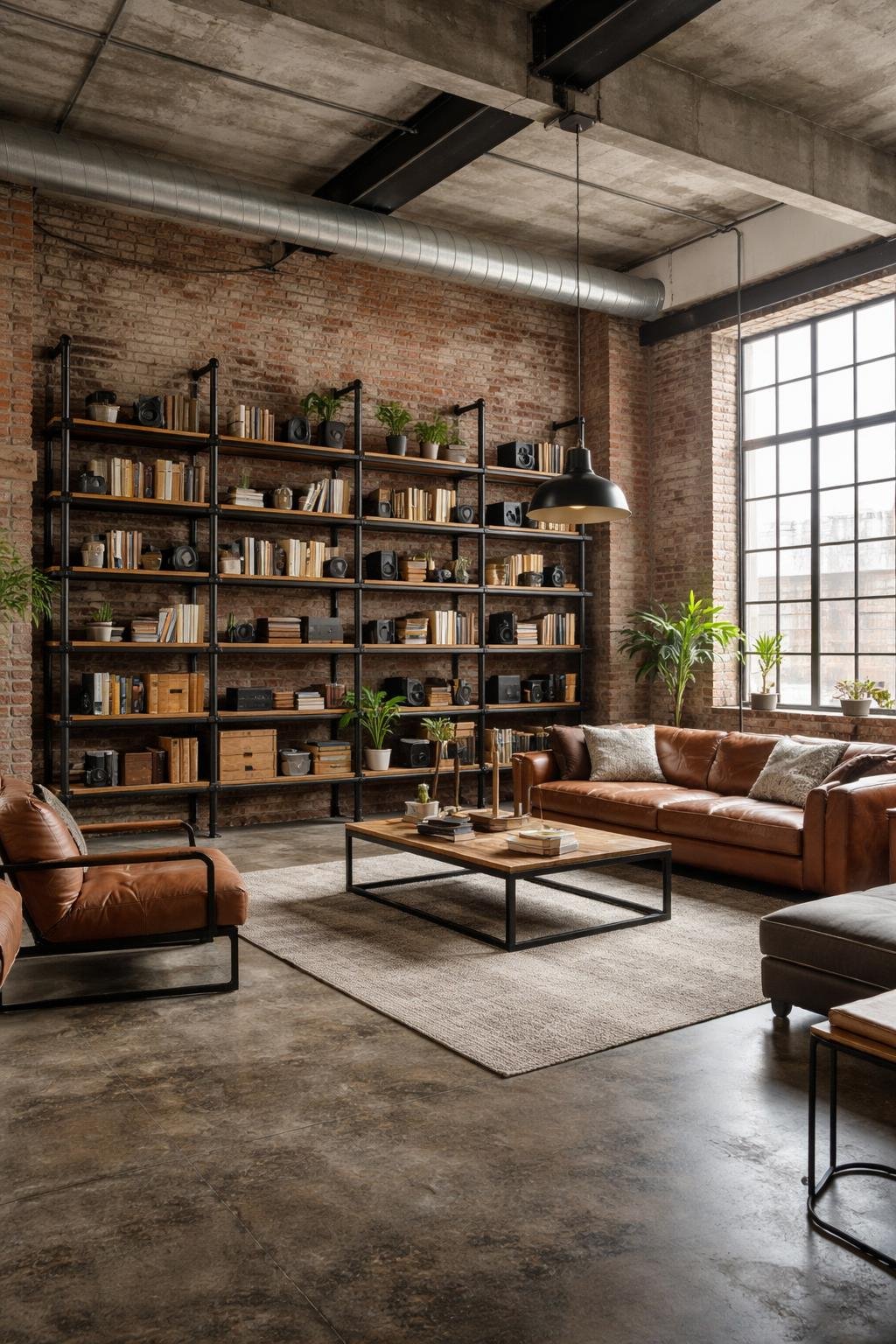
Want a real warehouse vibe? Industrial pipe shelving is the way to go.
You get metal pipes and wood planks teamed up for storage that looks straight off a factory floor. The bonus: you can build these yourself with basic tools from the hardware store.
Customize pipe shelves to fit any nook. Put them in the kitchen for dishes, the bedroom for books, or the bathroom for towels and toiletries.
The metal pipes can hold a surprising amount—some setups handle up to 50 pounds per shelf. So yes, you can actually use them for storage, not just for show.
Not into DIY? Plenty of stores sell ready-made pipe shelving you just bolt to the wall. They come in all sorts of sizes and finishes.
The industrial look just clicks with exposed brick and concrete. Your guests might even think you actually lived in a warehouse before.
13. Large Abstract Art: Because your walls deserve to be as confused as your taste buds.
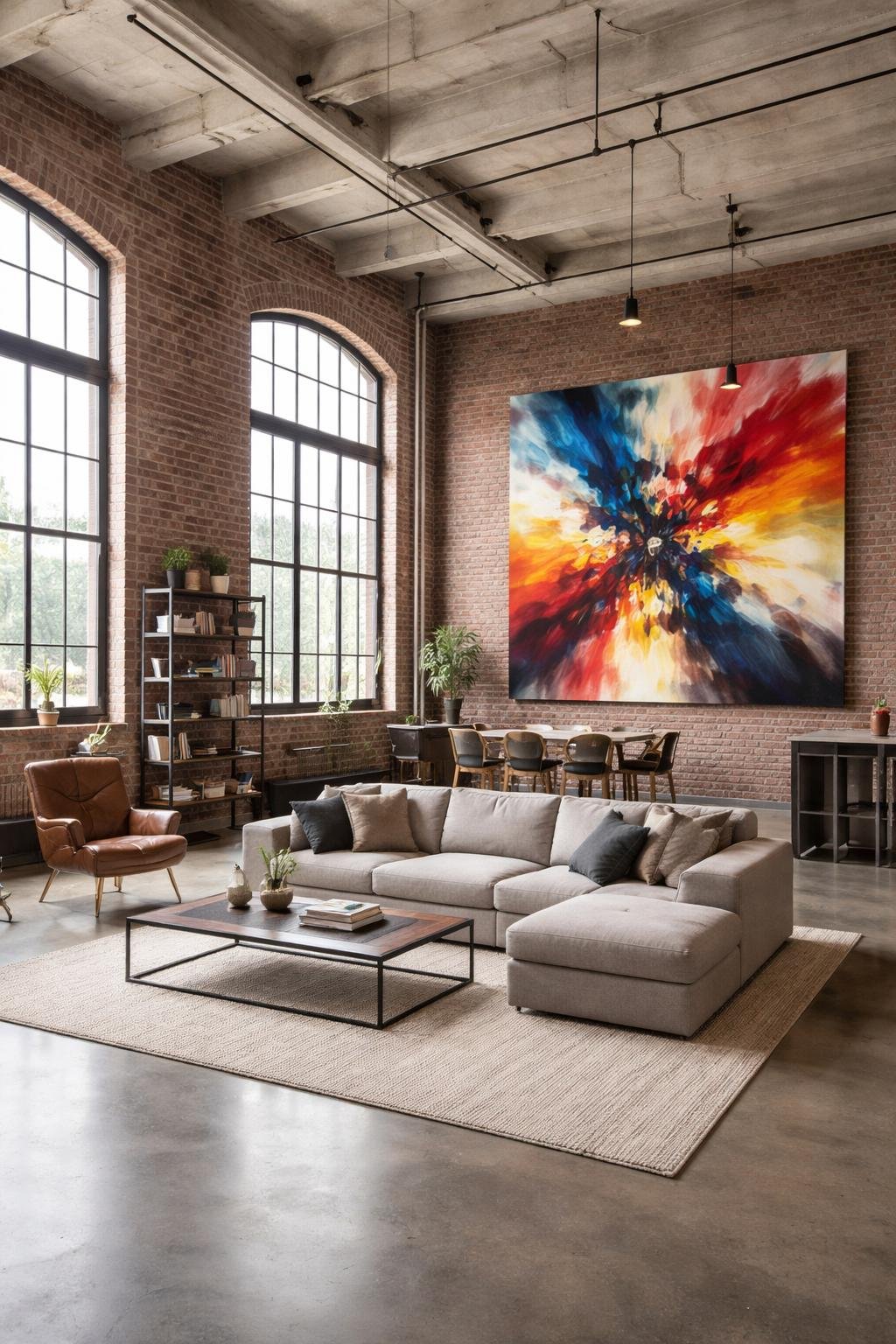
Loft walls are huge, and regular art just gets lost. Large abstract pieces fill the space without making you hang a million tiny frames.
Abstract art feels right at home in a loft. The bold colors and shapes play well with exposed brick and concrete.
Plus, nobody can tell if you’ve hung it upside down. That’s a win.
A big canvas becomes a focal point and helps define areas in your open floor plan. Hang one above the couch or bed, and suddenly the space feels intentional.
You don’t have to break the bank, either. Shop online, check out local artists, or even try making your own if you’re feeling brave.
Earth tones and neutrals blend in, while bright colors wake up gray concrete. The best thing about abstract art? It means whatever you want.
Your guests will probably nod along as you explain your “deep connection” to those blue squiggles.
14. Open Ductwork: Giving your ceilings personality and occasional ghostly whistles.
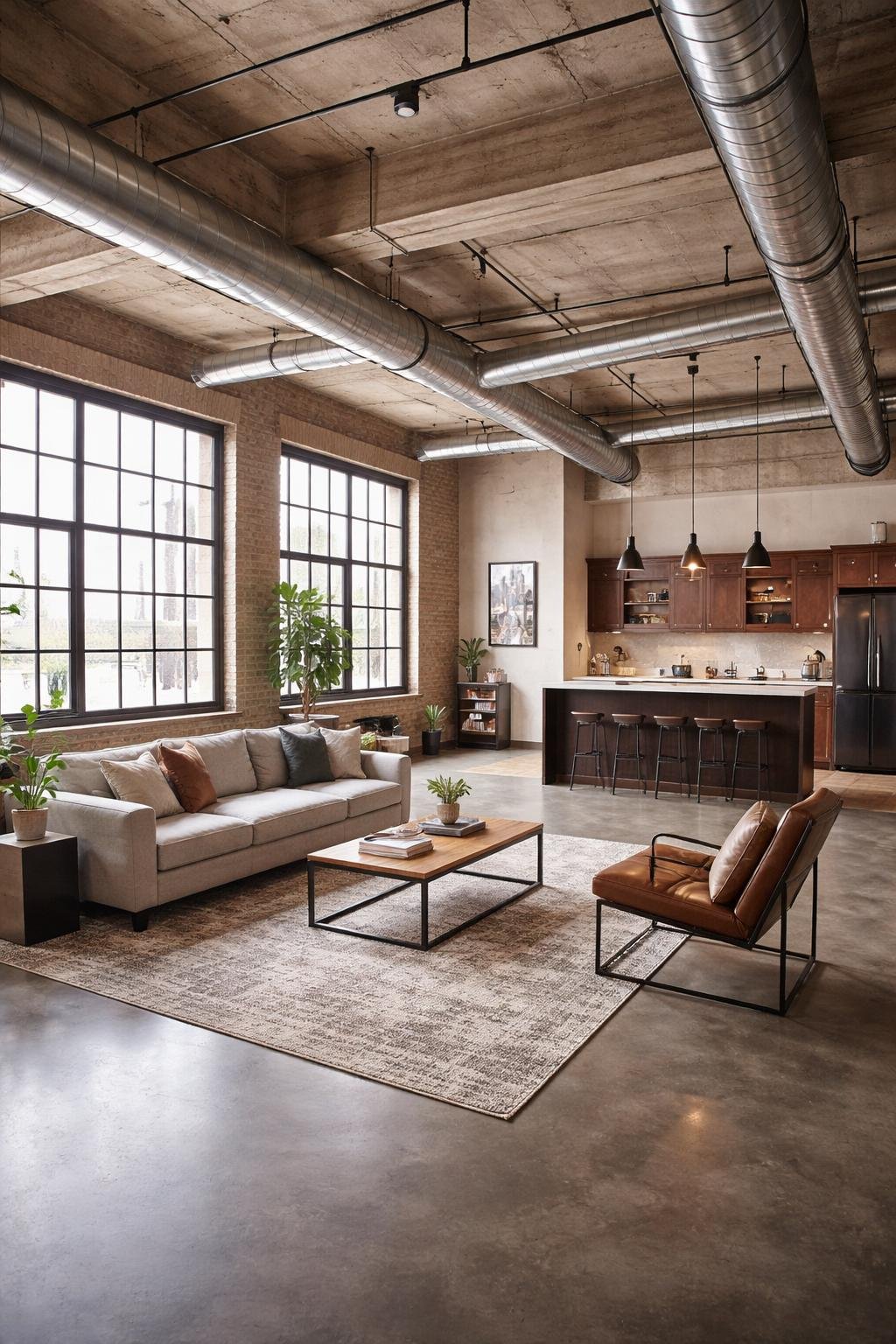
Exposed ductwork turns your ceiling into industrial art. All those pipes and ducts add visual interest and make the loft feel both modern and authentic.
You can paint your ductwork black for a sleek vibe, stick with silver for true industrial style, or even go bold with color if you’re feeling adventurous.
The pipes snaking across the ceiling give your space depth and character. They especially shine in lofts with high ceilings, where they won’t make you feel boxed in.
No need for a drop ceiling, either—so that’s one less expense.
Sometimes, your HVAC system will whistle or hum as air moves through those exposed ducts. It’s quirky, but honestly, it just becomes part of your loft’s personality.
If you’re thinking about painting or changing the ducts, talk to an HVAC pro first. You don’t want to mess up your heating and cooling.
15. Metal Mesh Dividers: The stylish way to separate spaces and hide your laundry.
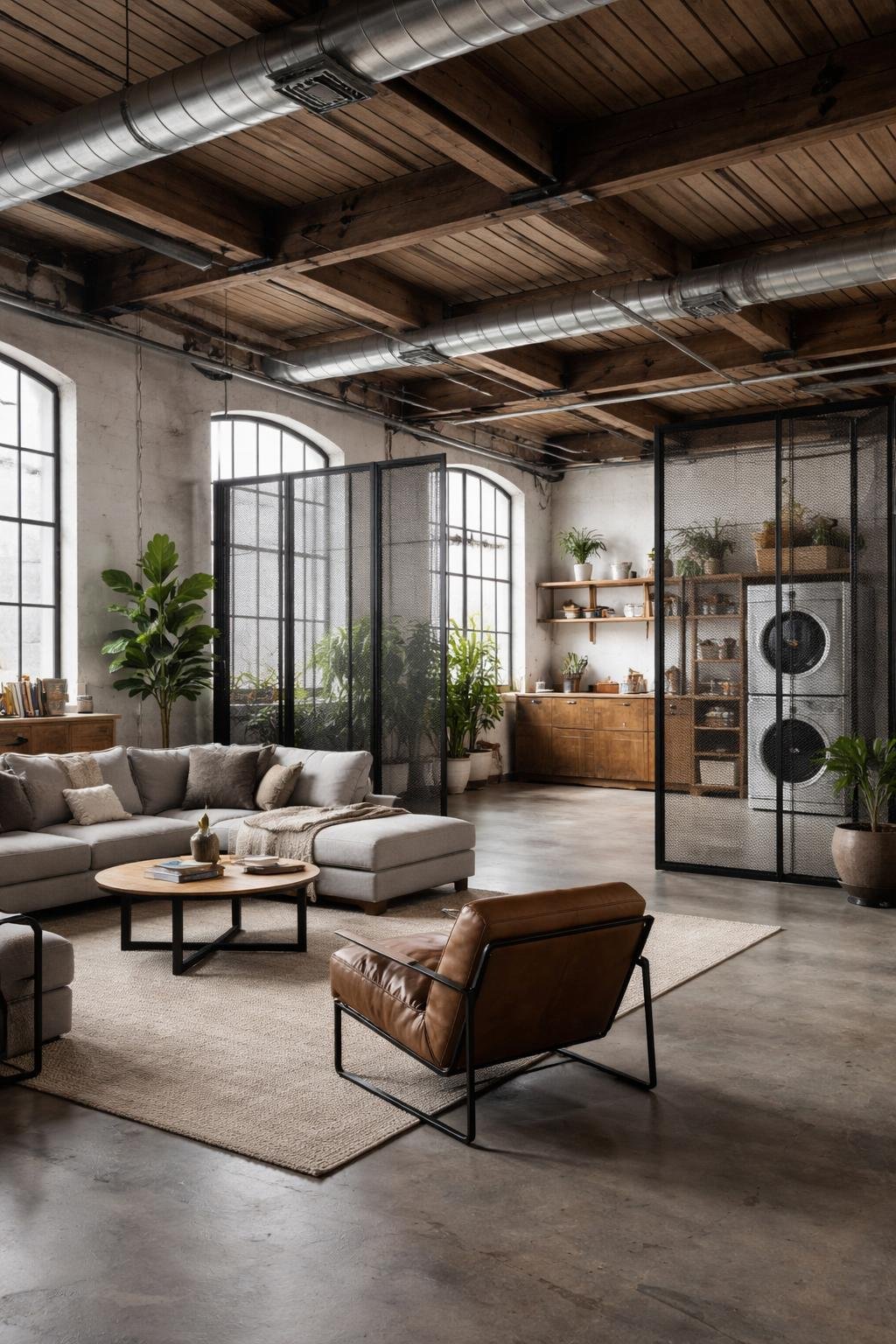
Metal mesh dividers are a game-changer in a warehouse loft. They let you split up spaces—like your bedroom and living area—without blocking natural light.
Air and light flow right through, but you still get those clear boundaries.
They’re perfect for hiding that laundry pile you keep meaning to fold. Your guests won’t spot your clothes from across the room.
You could also use them to carve out a private workspace or tuck away storage that’s not exactly Instagram-worthy.
Metal mesh comes in all sorts of patterns and finishes—copper, steel, powder-coated, you name it. Some dividers even fold up or roll on wheels, so you can change up your layout whenever the mood hits.
They’re tough, too. Metal mesh stands up to daily use and won’t fall apart like cheap curtains. You won’t have to replace them every year.
16. Concrete Countertops: Tough, durable, and just cold enough to keep guests away.
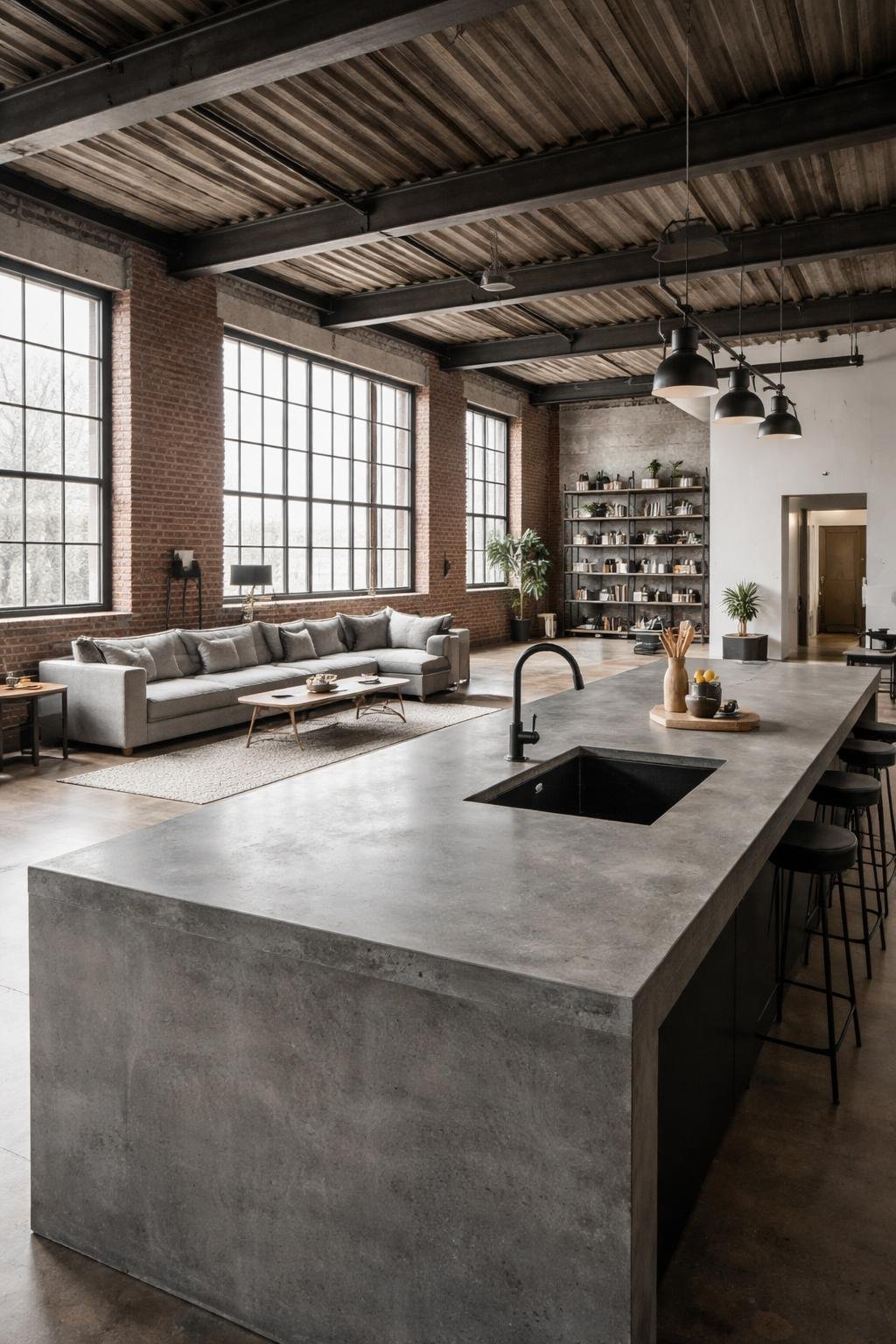
Concrete countertops just scream industrial warehouse. They’re tough enough to handle anything you throw at them—sometimes literally.
You can customize concrete countertops with different colors and textures. Forget boring gray if that’s not your thing.
These surfaces fit perfectly in a loft with that raw, unfinished look.
They’ll last basically forever, which is a win if you’re tired of moving every year. The cool surface is great for baking, but your coffee cup will remind you how cold concrete can get.
Expect to pay $65 to $135 per square foot, unless you want to try a DIY project over a weekend.
Concrete matches exposed brick and metal fixtures effortlessly. Your friends might think you hired a designer, when really you just leaned into what the building already had.
And when guests lean on your counter and shiver? That’s just part of the uncomfortably chic experience.
17. Neutral Color Palettes: When you want your apartment to whisper ‘I’m fancy’ softly.
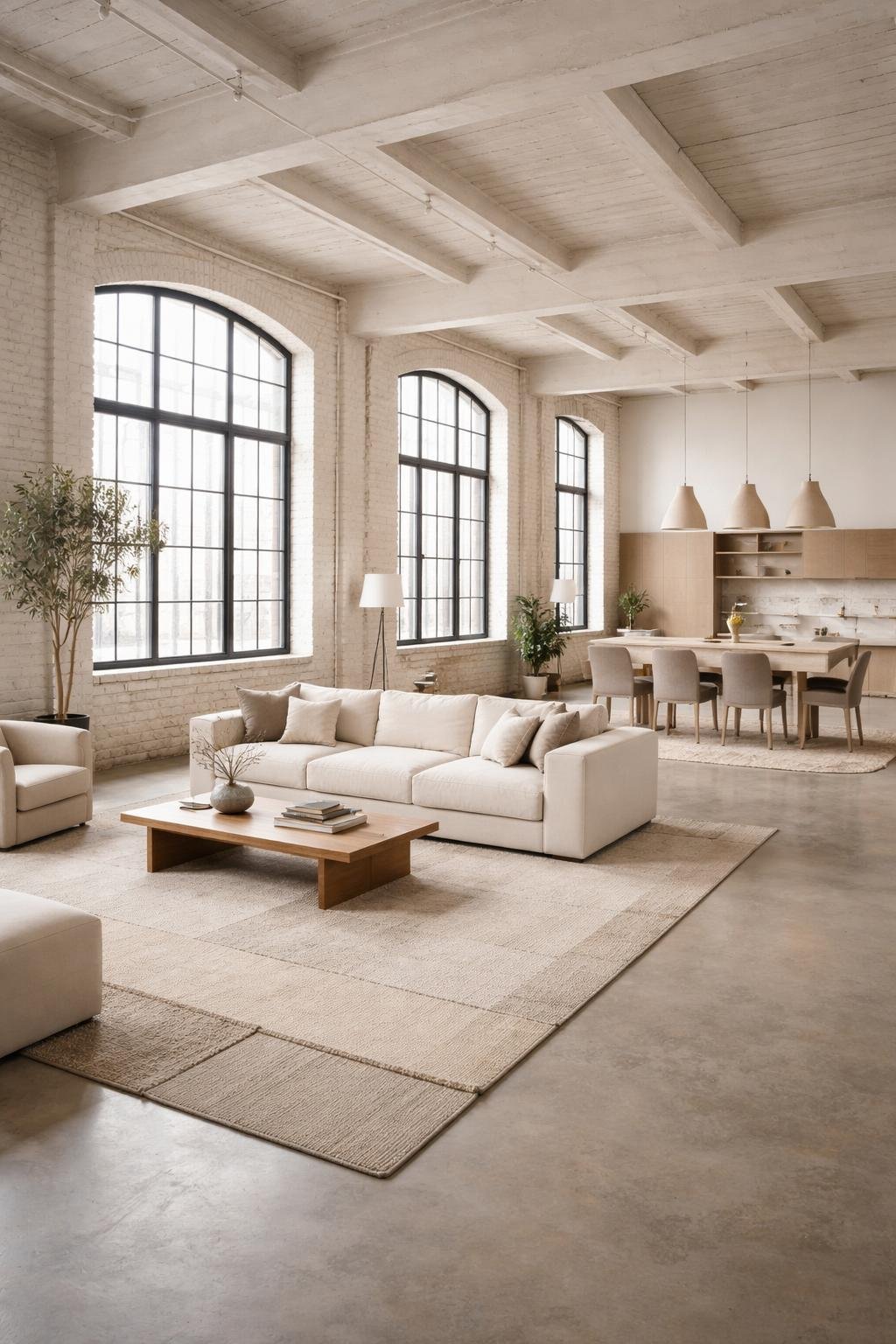
Neutral colors are kind of the unsung heroes in lofts. They’re not loud, but they pull everything together and make your space feel put-together without even trying.
Beige, taupe, soft gray, and warm white work magic in big lofts. These shades create a calm backdrop that makes everything feel larger and more open.
Go for warm neutrals if your place doesn’t get much sunlight, or cool grays if you’re lucky enough to have giant windows.
The best thing about neutrals? They let your furniture and art shine. That vintage chair or wild shelving unit gets the spotlight when it’s not fighting with a neon wall.
Layer different neutral tones to keep things interesting. Try cream walls, tan furniture, and gray accents.
Add texture with woven rugs, linen curtains, or concrete surfaces so things don’t go flat.
Neutral isn’t boring—it’s a blank canvas for whatever style you’re feeling, whether that’s modern, industrial, or some mashup in between.
18. Greenery in Industrial Pots: Bringing life into the concrete jungle, literally.
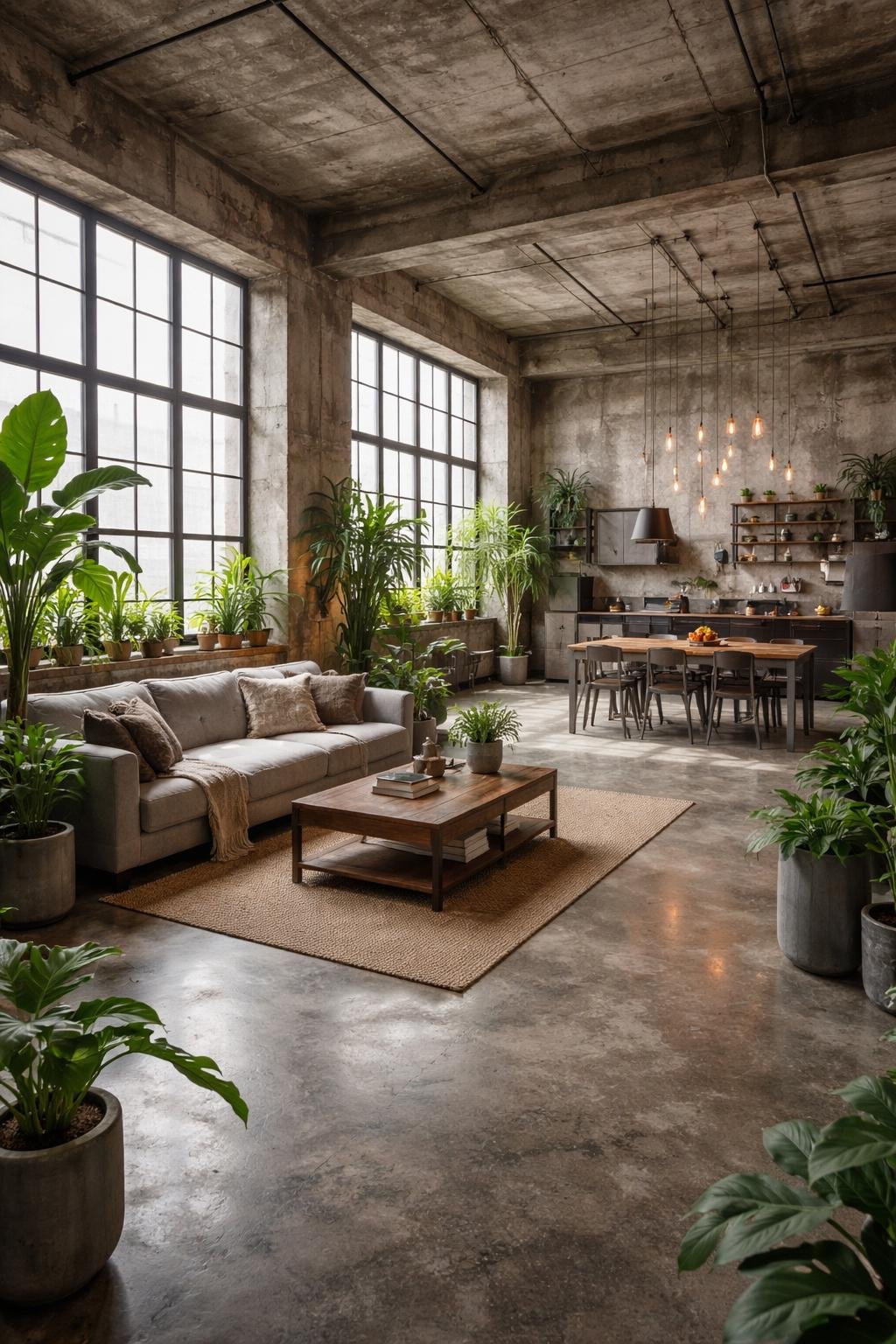
Your warehouse loft probably has enough exposed brick and concrete to make any brutalist architect shed a happy tear.
It’s time to soften all that hard industrial edge with some actual living things.
Industrial-style planters are your secret weapon. Picture concrete pots, metal containers, and weathered steel planters that almost look like they just rolled off a factory line.
These vessels let you add greenery without fighting against your loft’s raw vibe.
Pop a fiddle leaf fig in a concrete planter by those oversized windows. Maybe tuck some pothos into galvanized metal containers on your shelves.
The contrast between soft, flowing plants and hard industrial materials just works. It keeps the space from feeling too sterile.
You don’t have to turn your loft into a jungle. Placement matters way more than how many plants you have.
A few well-chosen plants in the right pots can breathe life into your concrete surroundings without making things feel cluttered.
If floor space is tight, look up. Vertical options like wall-mounted metal planters or hanging concrete vessels give you more greenery without eating up precious square footage.
19. Sliding Barn Doors: Because swinging doors are so last century.
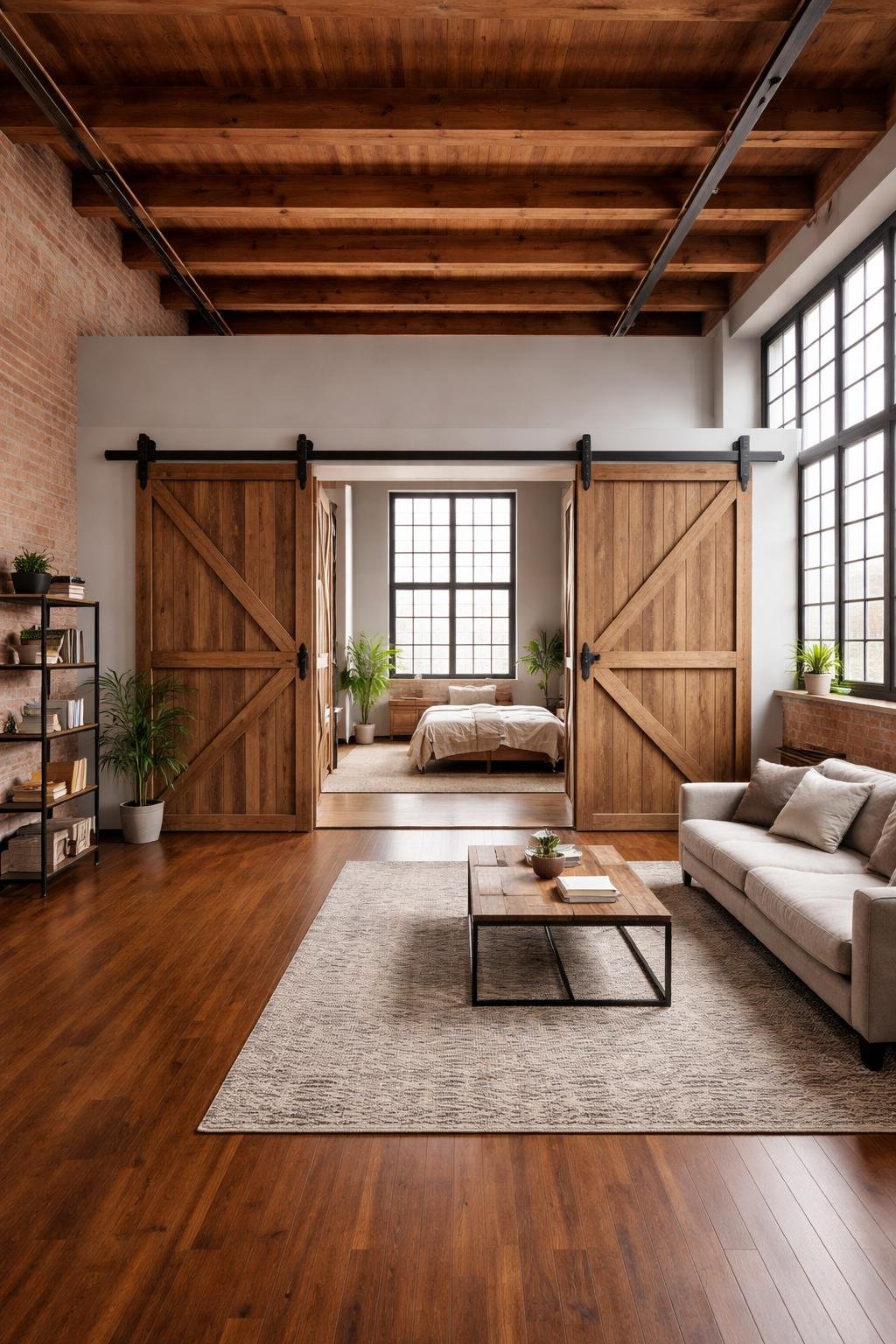
Your warehouse loft deserves doors that actually make sense for the space.
Sliding barn doors ride on a track above the doorway, so they don’t gobble up floor space like swinging doors do.
These doors started out in real barns, where farmers needed wide openings but didn’t want doors crashing into everything. Gotta admit, that’s pretty clever.
In a loft, barn doors work great for bedrooms, bathrooms, or closets. They add some industrial charm while solving the “where does this door swing?” problem.
You can pick wood for a rustic look or go with metal and glass for something more modern. Glass barn doors especially nail the warehouse vibe and let light flow between rooms.
The hardware mounts to your wall or ceiling, and the door glides along its track. Installing them takes some effort, but honestly, the payoff is worth it.
You get both function and style points.
Just remember—barn doors don’t seal as tightly as traditional ones. Your bathroom guests might hear your questionable playlist, so keep that in mind.
Design Principles For The Perfect Warehouse Loft
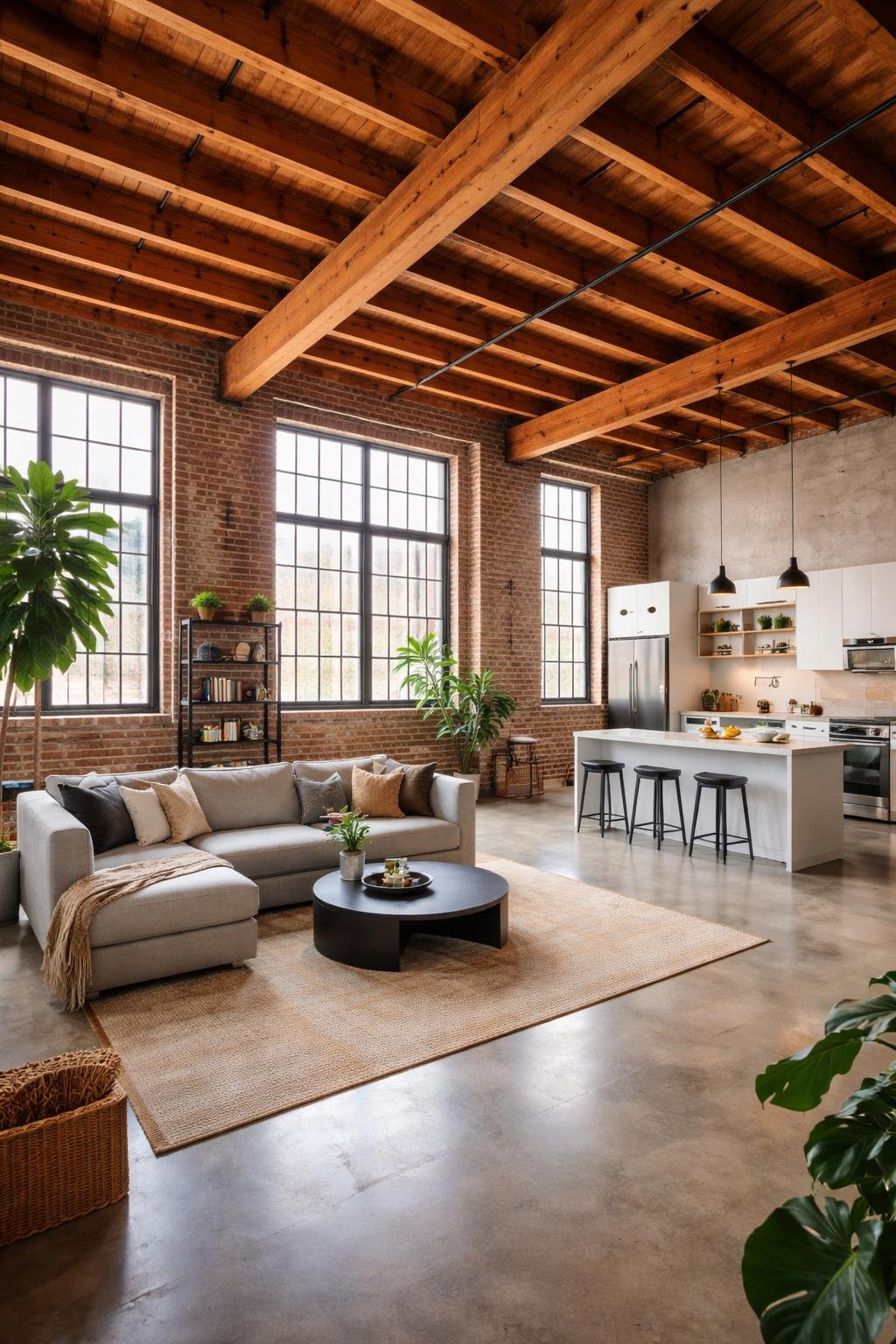
A good warehouse loft balances raw industrial features with livable comfort.
You also have to make smart use of those wide-open spaces that can easily feel empty or, honestly, kind of chaotic.
Blending Industrial Charm With Comfort
Your exposed brick walls and steel beams steal the show, but nobody really wants to live in an actual factory, right?
Keep those raw materials visible, but start layering in softer elements that make the space feel like home.
Add area rugs to break up cold concrete floors and help muffle echoes. Throw in some plush furniture like a deep sofa or a couple of upholstered chairs to contrast with all those hard surfaces.
Key comfort additions:
- Warm lighting fixtures (seriously, skip the harsh fluorescent bulbs)
- Textile window treatments to soften those massive windows
- Wood furniture for a bit of natural warmth
- Plants to bring life into the industrial space
The polished concrete floors look great, but you’ll want some cozy spots where your feet aren’t freezing.
Mix metal finishes with warmer materials like leather, wood, and fabric. The goal is to honor the building’s history without living like a warehouse worker from 1920.
Optimizing Open Floor Plans Without Getting Lost
Open floor plans are awesome—until your bedroom is also your kitchen, living room, and gym.
You need to create distinct zones without building walls that kill the spacious feel.
Use furniture placement as your main divider. A big bookshelf, a sofa facing away from the dining area, or a kitchen island can mark boundaries between spaces.
Different area rugs define separate zones without blocking sightlines.
Effective zoning strategies:
- Lighting levels (brighter for work areas, dimmer for relaxing)
- Floor-to-ceiling curtains on tracks for flexible privacy
- Platform risers to elevate sleeping or dining areas
- Partial walls or glass partitions that keep things open
Vertical storage keeps your stuff organized without eating up floor space.
Don’t let those high ceilings go to waste—use them.
Navigating Lighting And Acoustics (Without Wearing Sunglasses Indoors)
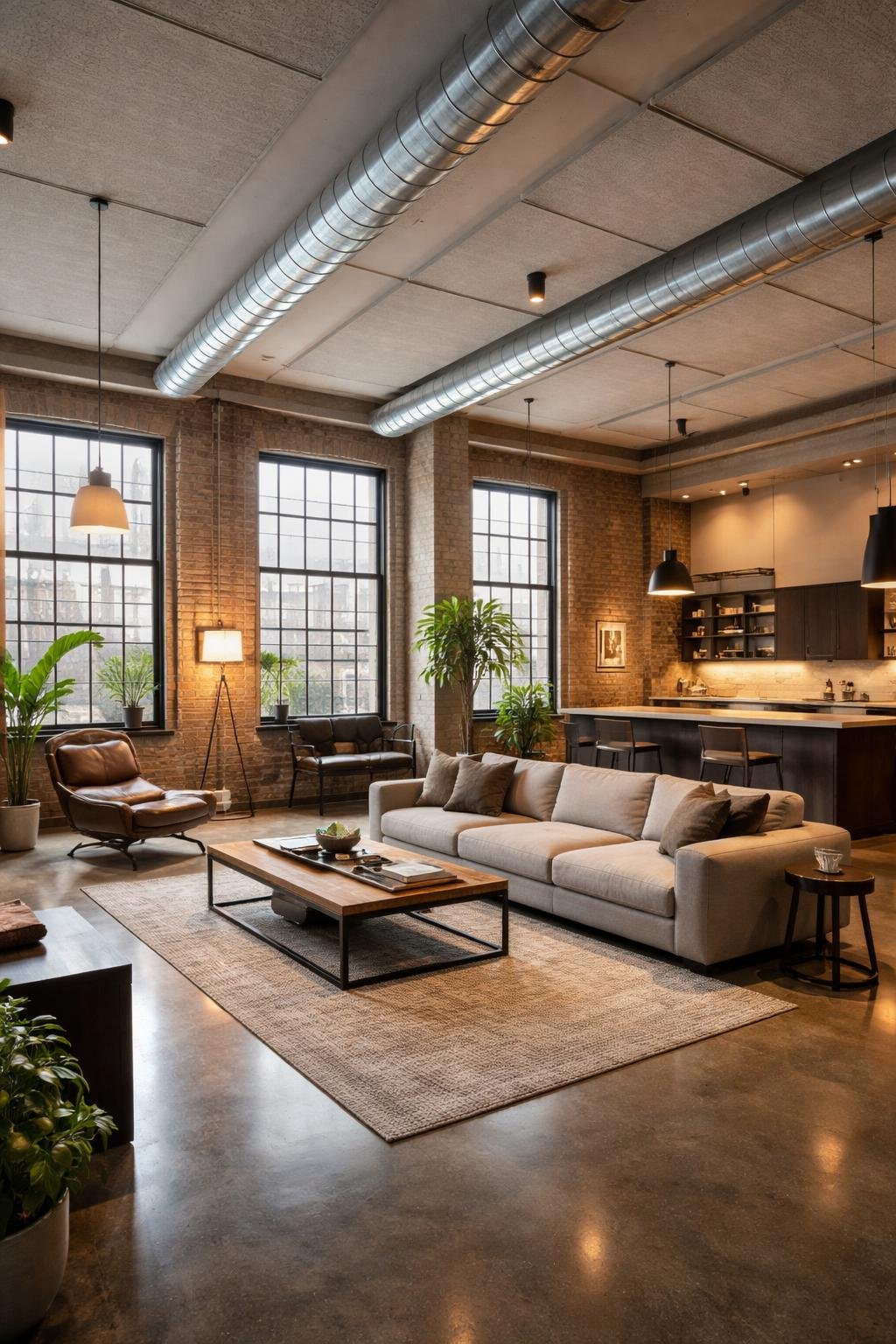
Warehouse lofts usually come with floor-to-ceiling windows that flood the place with light.
Bare walls bounce sound around like a racquetball court. It can get a bit wild.
Luckily, you can fix both issues without looking like a celebrity hiding from paparazzi or living in a padded room.
Taming Natural Light From Giant Windows
Those massive industrial windows look amazing—until 6 AM, when your bedroom turns into a tanning bed.
You need window treatments that can handle serious sun but don’t block your views completely.
Sheer curtains do a great job of diffusing harsh light during the day. They soften things up while still letting you see outside.
For more control, install dual-layer curtains with sheers close to the glass and blackout panels on an outer track.
Roller shades give you even more precision over light levels. You can pick different opacity levels, from light-filtering to room-darkening.
Top-down bottom-up shades are especially useful. You can lower them from the ceiling for privacy but still keep the top open for natural light.
Full-spectrum LED bulbs help balance your lighting after sunset. They mimic natural daylight better than regular bulbs, so your space feels less harsh when you switch from sunlight to lamps.
Conquering Echoes With Style
Hard surfaces everywhere? Your voice just bounces around like you’re yelling in a parking garage.
Every footstep, conversation, or dropped fork turns into its own little acoustic event.
Large area rugs really help with echo. Tossing one down absorbs sound from footsteps and cuts down on noise bouncing off the floor.
I’d always pick wool or a thick-pile rug over those thin synthetic ones. They just work better.
Fabric furniture does more than just look good—it soaks up sound, too. A chunky sectional, some upholstered chairs, and a pile of throw pillows can make a surprising difference.
Heavy curtains? They block light and soak up sound at the same time.
Wall hangings and tapestries break up sound reflection, no construction needed. You can even sneak in some acoustic panels that look like art or fabric-wrapped boards.
Bookshelves stuffed with books add uneven surfaces, so they scatter sound waves instead of just bouncing them right back at you.