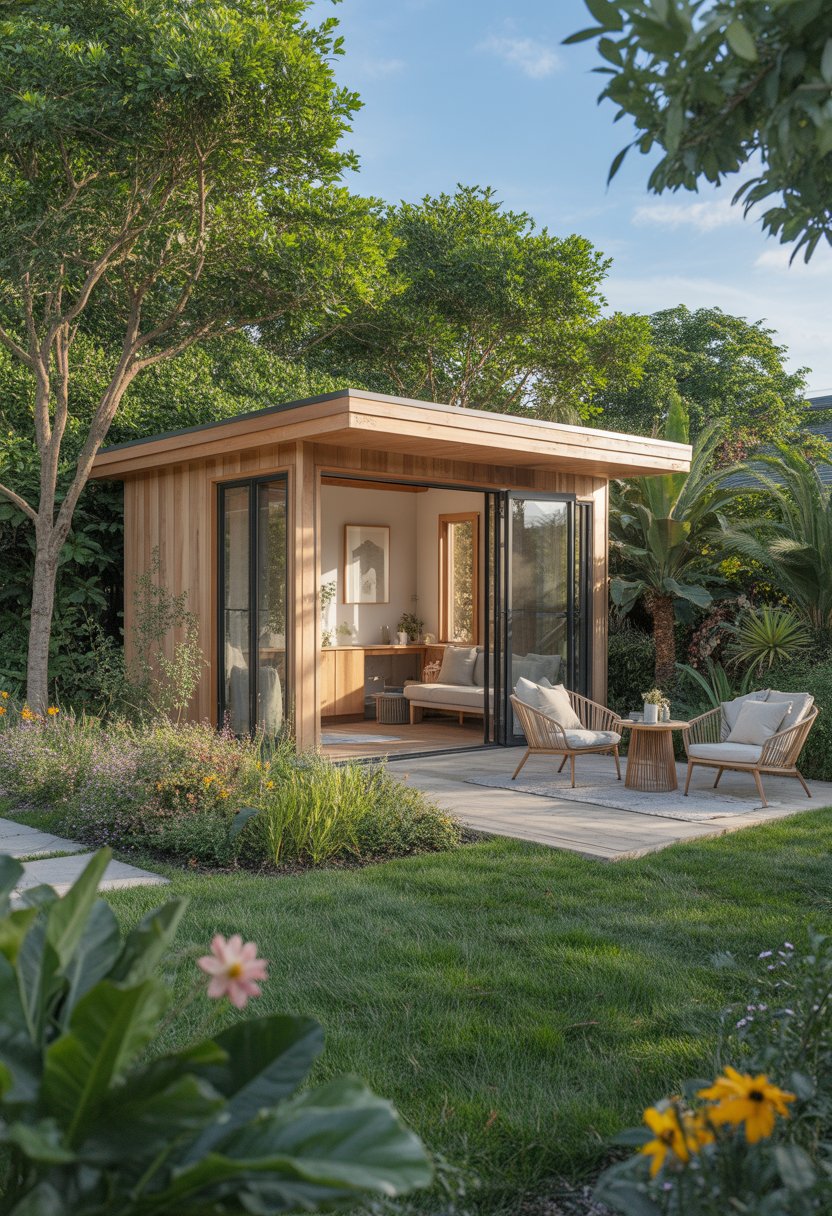

A garden studio gives you extra space right in your backyard. It can work as a home office, art space, music room, or quiet spot to relax. More people are building these outdoor rooms because they need space away from the main house.
Garden studios come in many styles, from modern glass boxes to rustic wood cabins, so you can find one that fits your yard and needs. Some are designed for creative work like painting or music. Others work better as offices or guest rooms. The right studio depends on how you want to use it and what your budget allows.
You can choose from different materials, sizes, and features. This article covers various garden studio designs to help you pick the best option for your space.
1. Modern Farmhouse Garden Studio
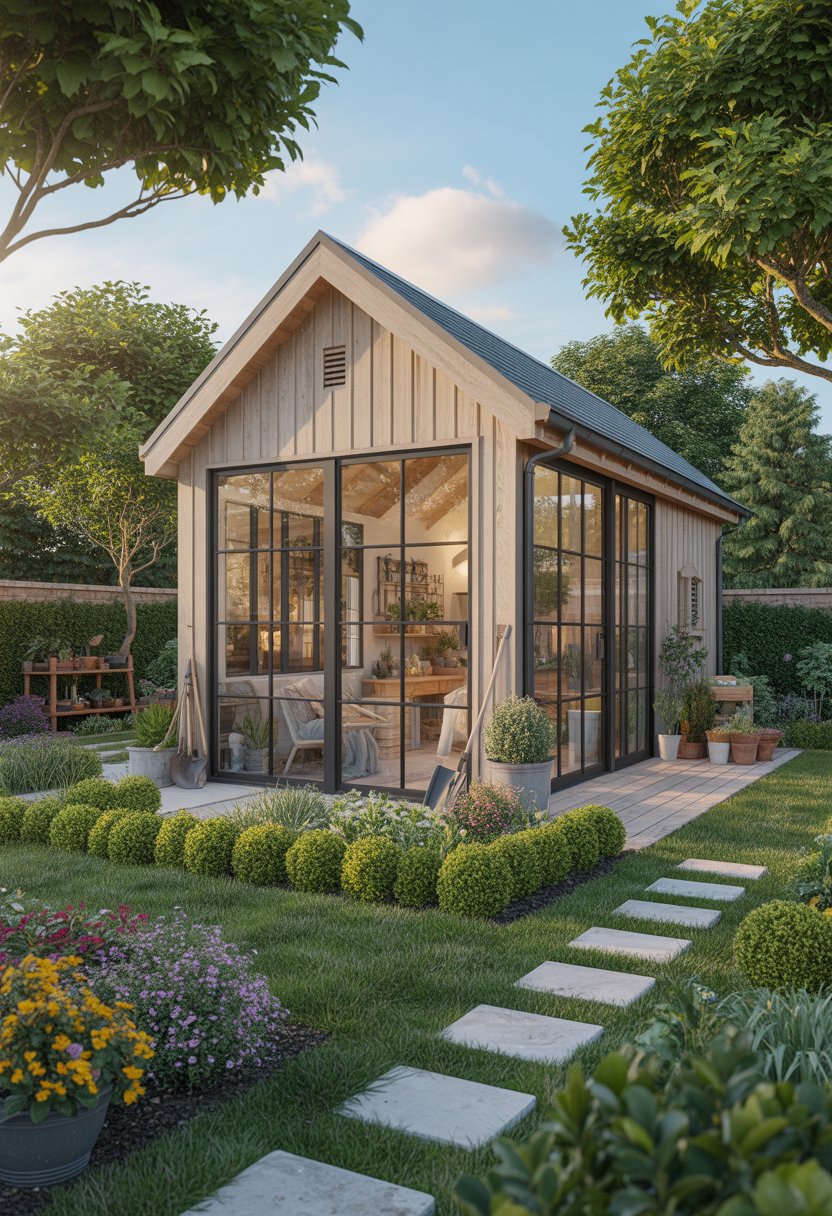
A modern farmhouse garden studio brings together rustic charm and clean, simple design. You can create this look by using natural materials like wood and stone alongside neutral colors such as white, cream, and soft gray.
The style focuses on clean lines and practical features. Your studio can include large windows that let in plenty of natural light while keeping the space connected to your garden. Simple board-and-batten siding or shiplap walls help achieve the classic farmhouse appearance.
You should choose furniture and decor that balances old and new elements. A vintage desk paired with modern lighting fixtures works well. Metal accents and exposed beams add character without overwhelming the space.
The exterior can feature a simple gable roof and a small covered porch. Gravel pathways or stepping stones lead naturally to your studio door. You can add window boxes with flowers or small planters near the entrance to soften the structure.
This design works for home offices, art studios, or quiet retreat spaces. The modern farmhouse style stays timeless while providing a comfortable place to work or relax in your backyard.
2. Glass Box Office Studio
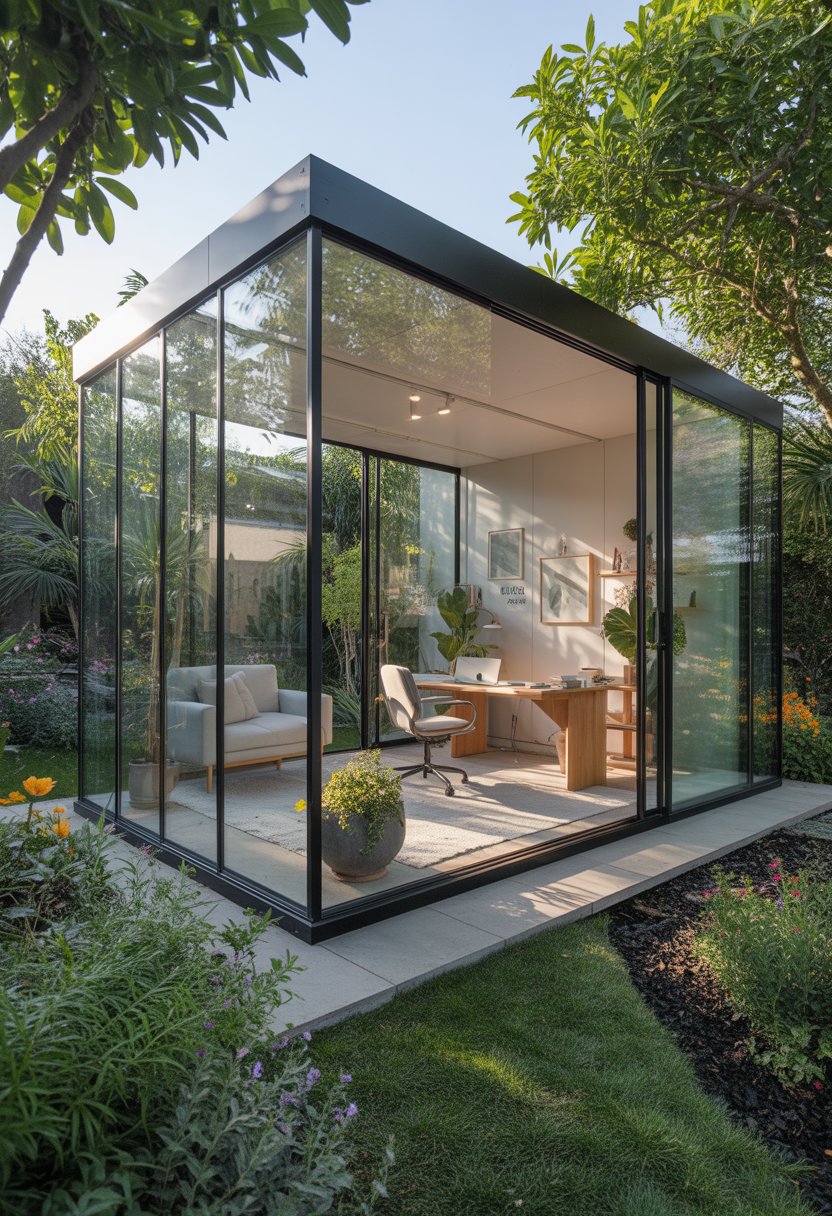
A glass box office studio brings the outdoors into your workspace. The transparent walls create a bright environment filled with natural light throughout the day. You’ll feel connected to your garden while staying protected from weather.
This design works well in backyards with attractive landscaping or natural views. The glass walls let you watch the seasons change and observe wildlife while you work. Many people find this connection to nature helps them focus better and reduces stress during work hours.
You’ll need to consider privacy and sun exposure when planning your glass box studio. Frosted or tinted glass panels can help with both issues. Adding curtains or blinds gives you control over light levels and privacy when needed.
The modern look of a glass box office adds visual interest to your backyard. It creates a distinct work zone separate from your home. Most glass studios include insulated glass to keep the space comfortable year-round. You can add heating and cooling systems to maintain ideal working temperatures in any season.
3. Boho Style Garden Shed
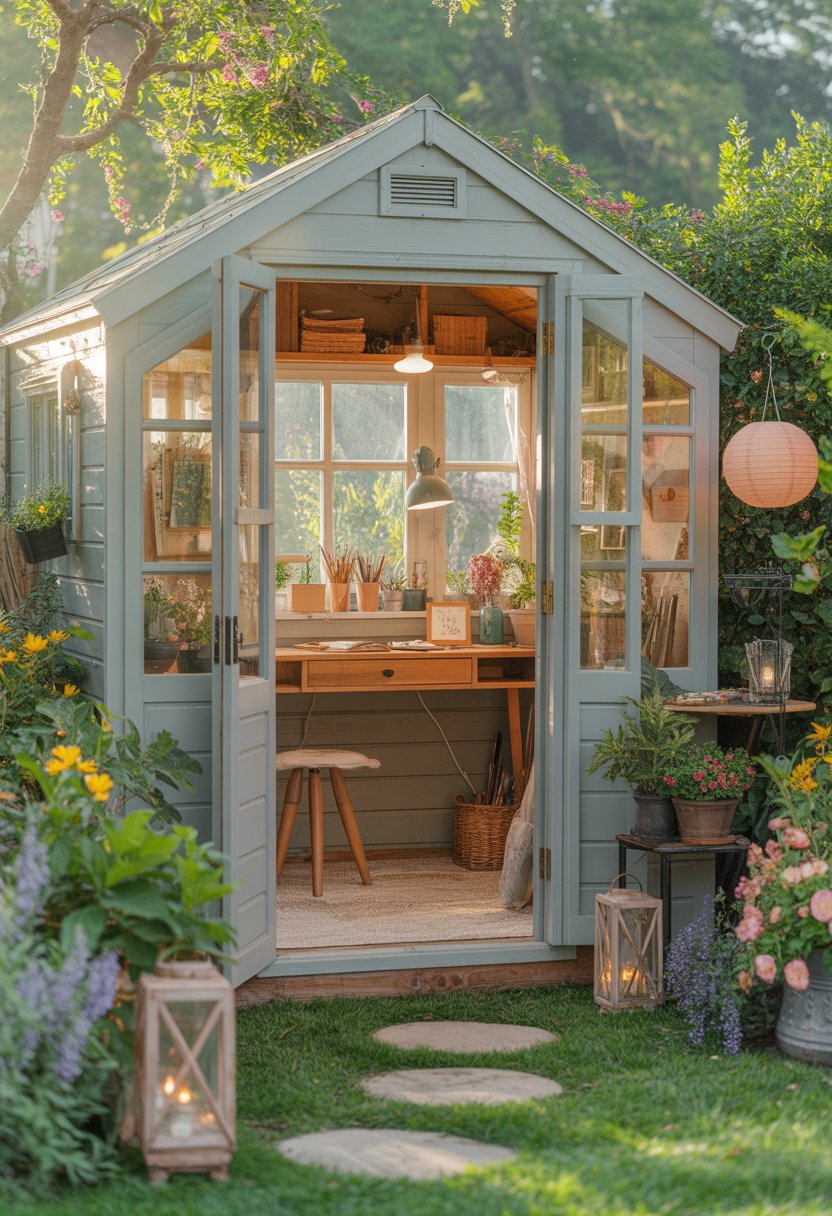
A boho garden shed gives your backyard a relaxed, artistic feel. You can create this look with natural materials like wood, rattan, and woven textiles. These elements work together to make a space that feels creative and personal.
Start with the exterior by adding plants around your shed. Wildflowers, climbing vines, and hanging planters soften the structure and blend it into your garden. You can paint the shed in earthy tones like terracotta, sage green, or warm white.
Inside, focus on comfort and texture. Layer rugs on the floor and add floor cushions or a low seating area. Macrame wall hangings, woven baskets, and string lights add visual interest without cluttering the space. Natural light is important, so keep windows clear or use light, flowing curtains.
Your boho shed works well as a creative studio, reading space, or meditation room. The key is mixing patterns and textures while keeping the overall feel calm and inviting. Add personal touches like collected treasures, plants in ceramic pots, and vintage furniture pieces to make the space truly yours.
4. Poolside Creative Studio
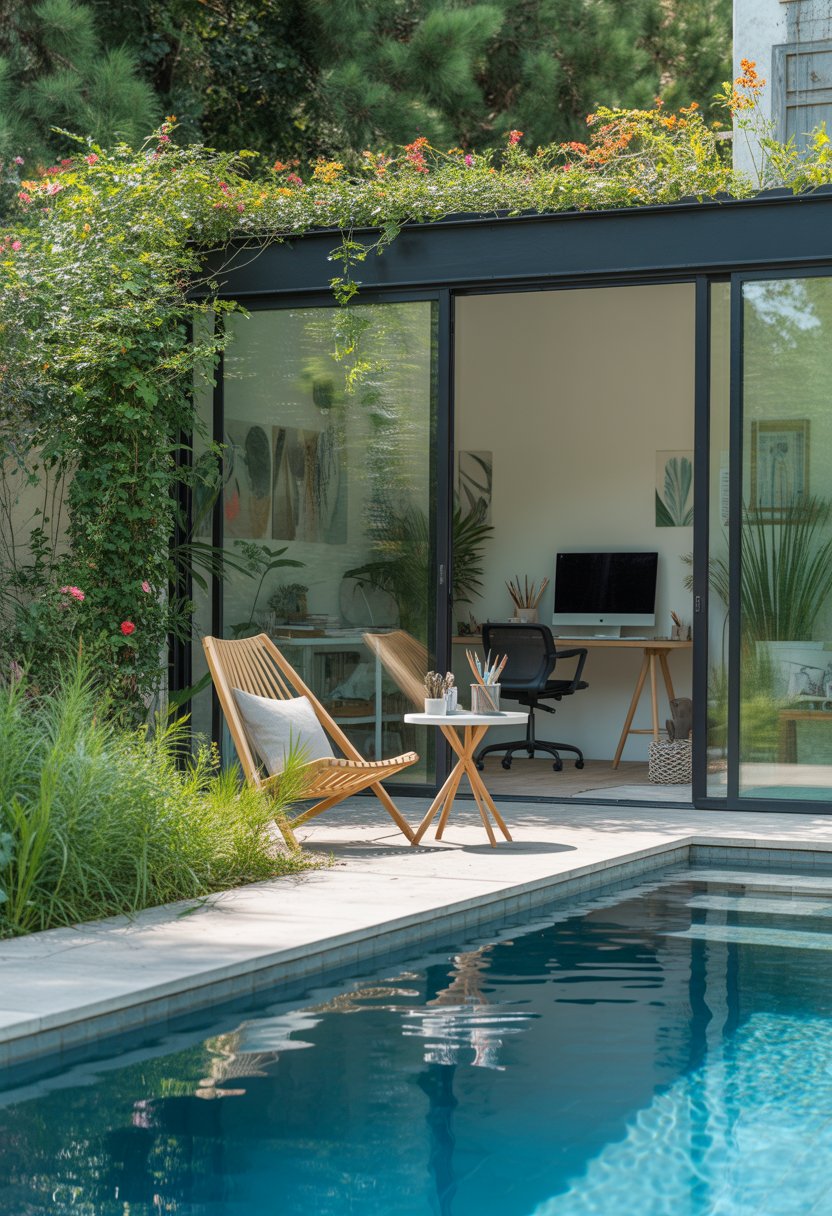
A poolside creative studio combines work and leisure in one convenient location. You can build this structure near your pool to serve multiple purposes throughout the year.
This type of studio works well as a pool house where you store towels, equipment, and changing areas. You can also transform it into a creative workspace with natural light and views of the water. The proximity to your pool makes it easy to take breaks and refresh during hot days.
When planning your poolside studio, consider using large windows or glass panels to maximize light and maintain visual connection with your outdoor space. You need adequate electrical outlets for your equipment and proper ventilation to keep the space comfortable.
The studio can function as a workout area, art space, or quiet reading nook. You have the flexibility to change its purpose based on your current needs. Add a small deck or patio area outside the entrance to create a transition zone between the studio and pool area.
Make sure to choose weather-resistant materials that can handle moisture and humidity from the nearby pool. Proper insulation and climate control will keep your studio usable year-round.
5. Music Recording Garden Studio
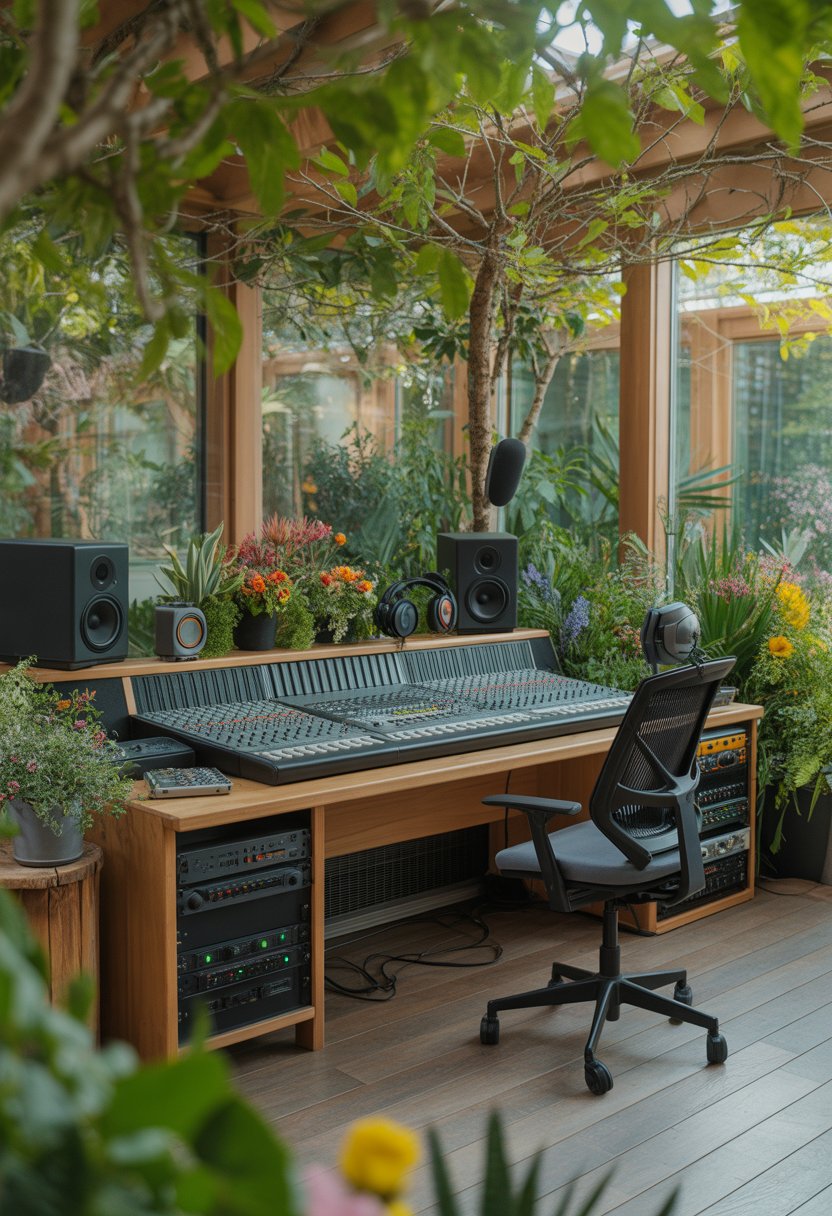
A garden music studio gives you a dedicated space to record, practice, and produce music away from your main home. You can work on projects without disturbing family members or neighbors thanks to proper soundproofing.
These studios work well for professional musicians and hobbyists alike. You can set up recording equipment, instruments, and mixing boards in a controlled environment designed for acoustics.
Garden music studios need good insulation and soundproofing materials to control noise both ways. This keeps outside sounds from interfering with your recordings while preventing your music from bothering others.
You should consider the room’s size based on your needs. A solo recording space requires less room than a studio meant for a full band or multiple musicians.
Most garden studios include climate control to protect expensive equipment and maintain comfort during long sessions. Year-round temperature regulation helps you work in any season.
The separate location from your house creates a professional workspace that helps you focus on creativity. You can leave equipment set up and ready to use without taking up space in your home.
6. Contemporary Soundproof Music Room
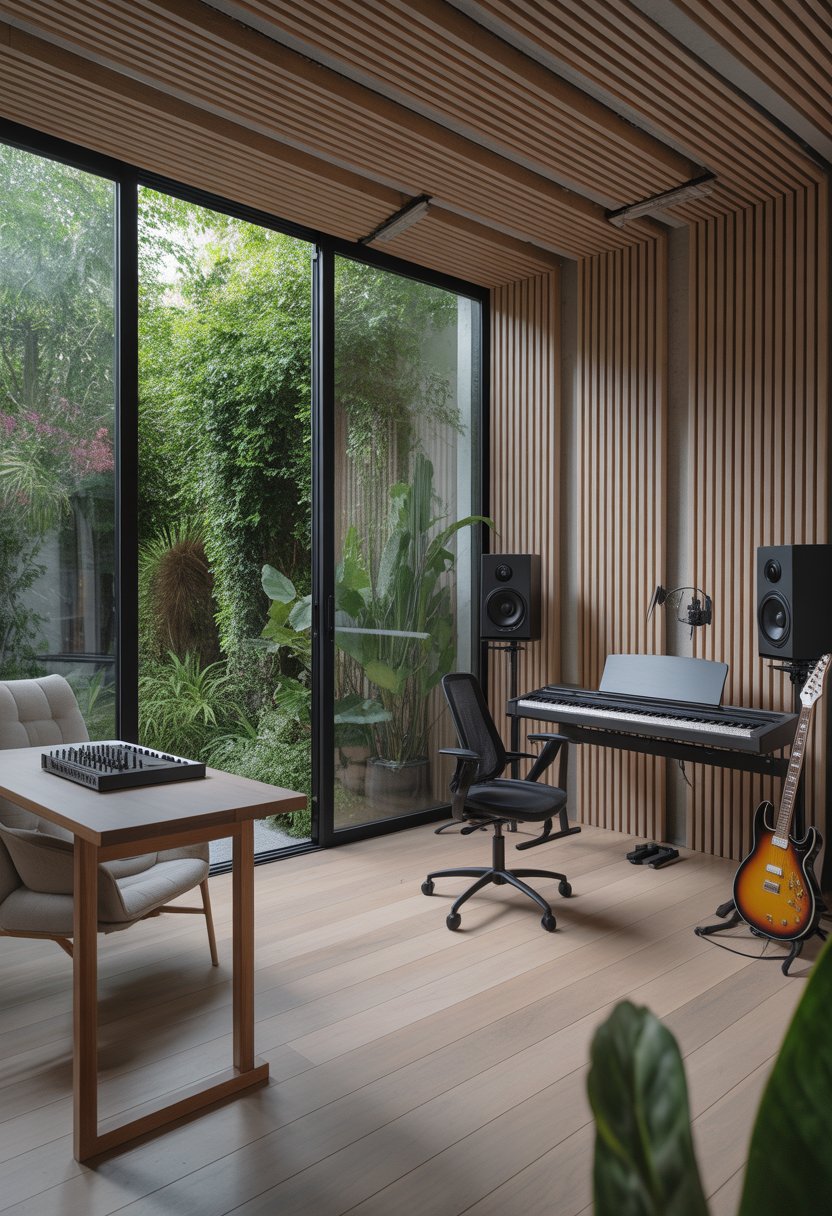
A soundproof garden music room gives you a dedicated space to practice, record, or produce music without disturbing your household or neighbors. These studios use special insulation and construction methods to keep sound contained inside while blocking outside noise.
You can choose from ready-made garden room pods or custom-built structures designed specifically for musical activities. Many companies offer professional-grade soundproofing that works for both hobbyists and professional musicians.
The key features include thick insulated walls, acoustic panels, and sealed doors and windows. You’ll want to consider the size based on your instruments and equipment needs. A drum kit requires more space than a vocal recording setup.
Garden music rooms typically sit separate from your main house, which provides natural sound isolation. You can customize the interior with proper acoustic treatment, electrical outlets for equipment, and climate control to protect your instruments.
These structures work well for various uses beyond music practice. You might use the space for podcast recording, band rehearsals, or teaching music lessons. The soundproofing makes it a versatile addition to your property.
7. Minimalist Monochrome Studio
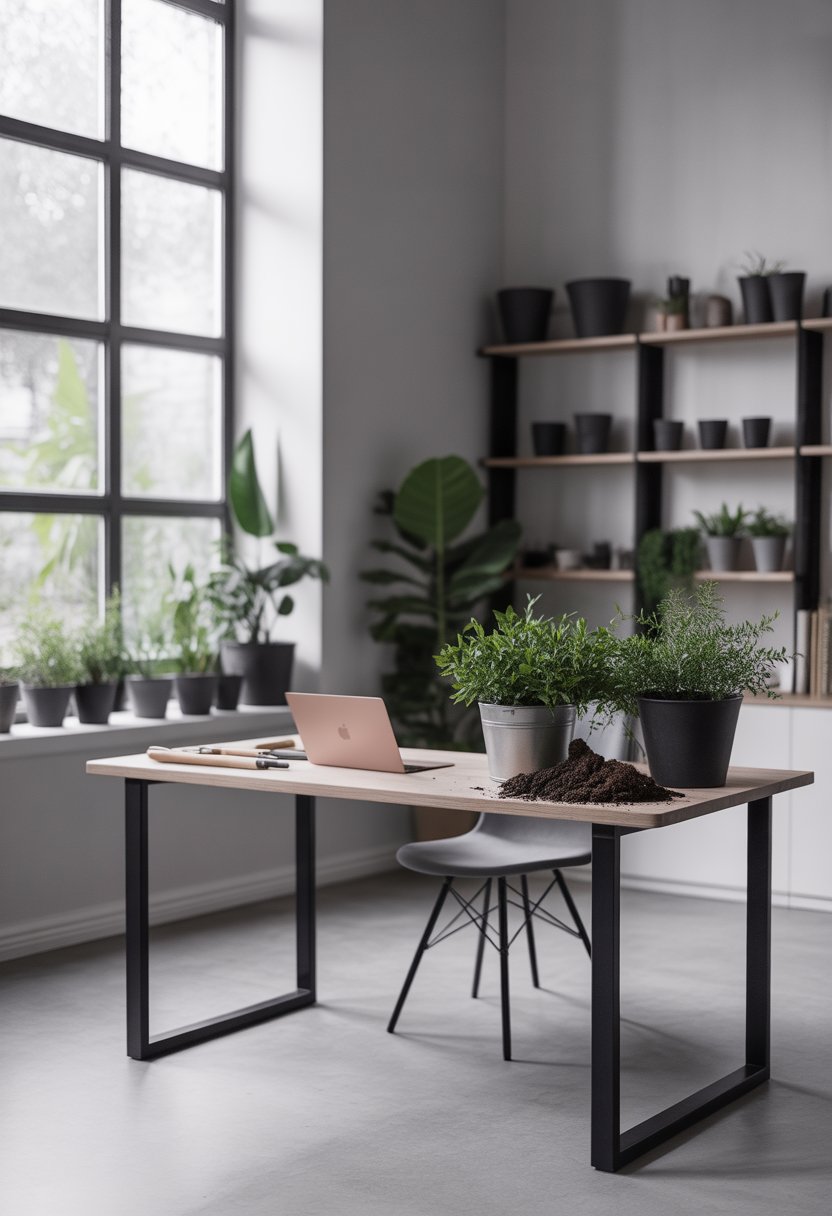
A monochrome color scheme brings visual unity to your garden studio. You can choose black and white for a classic look, or work with shades of gray for softer contrast.
The single-color approach makes your space feel larger and more organized. White walls reflect natural light and create an airy feeling. Black accents add depth without cluttering the design.
You should keep furniture simple and functional. Pick pieces that serve clear purposes and avoid decorative items that don’t add value. Clean lines work better than ornate details in this style.
Natural materials fit well within a monochrome palette. Wood floors in light or dark tones complement the color scheme while adding warmth. Concrete surfaces provide texture without breaking the visual flow.
Large windows are important for this design. They let in plenty of natural light and connect your studio to the garden outside. The glass creates a seamless transition between indoor and outdoor spaces.
Storage solutions should blend into the walls. Built-in shelves and cabinets in matching colors keep your studio tidy and maintain the minimalist aesthetic. This approach gives you a calm workspace that focuses your attention.
8. Rustic Wood Cabin Studio
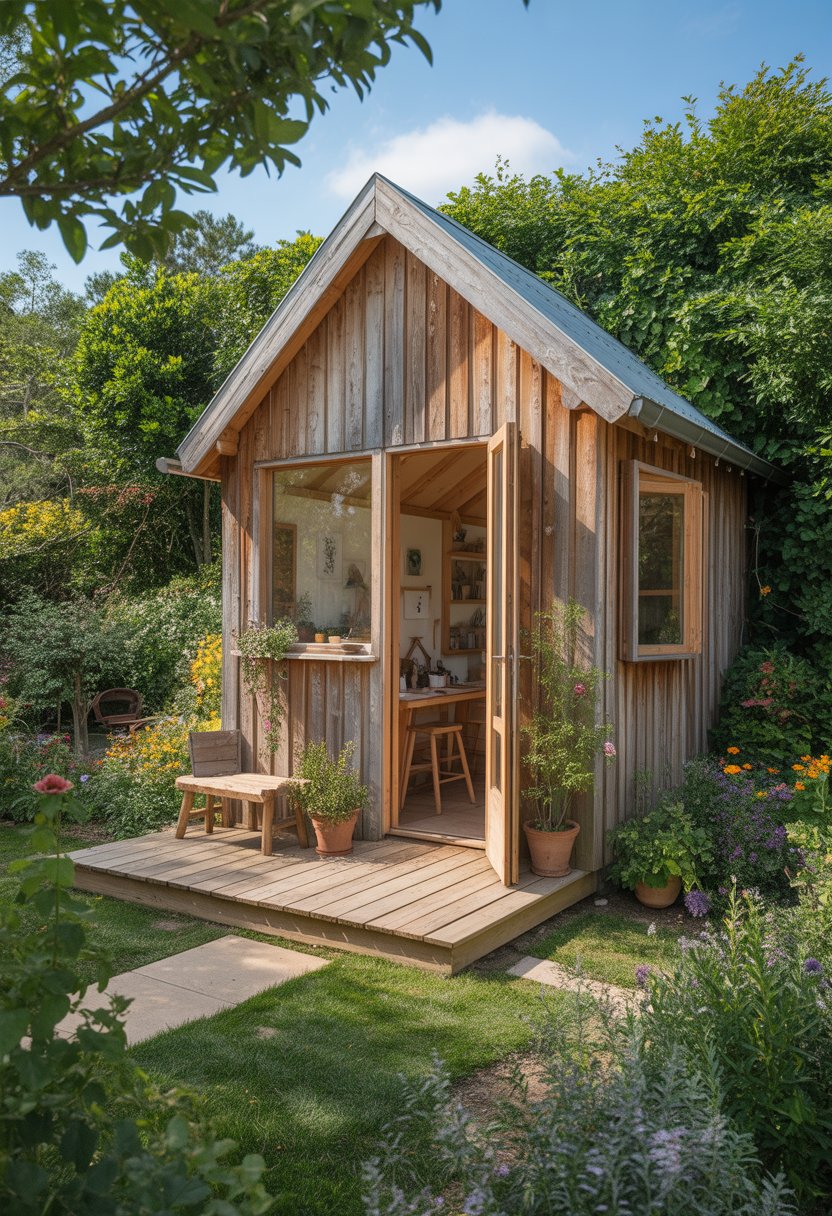
A rustic wood cabin studio brings natural warmth to your garden through reclaimed wood or timber construction. This design creates a cozy space that blends with your outdoor surroundings.
You can use this type of studio for various purposes. It works well as an art studio where natural light and earthy materials inspire creativity. The wood interior also makes it suitable as a quiet reading space or home office.
The rustic aesthetic features exposed wooden beams and natural wood finishes. You might add a pitched roof to enhance the cabin feel. These elements create an inviting atmosphere without requiring complex design choices.
Your rustic cabin studio offers practical benefits too. Wood provides natural insulation that helps regulate temperature throughout the year. The sturdy construction stands up well to outdoor conditions.
You can personalize the interior with simple touches. Vintage furniture and warm lighting complement the wood surfaces. Large windows let you enjoy garden views while working or relaxing inside.
This studio type suits gardens of different sizes. A small cabin provides enough room for a personal retreat, while larger versions can accommodate more equipment or furniture.
9. Eco-Friendly Green Roof Studio
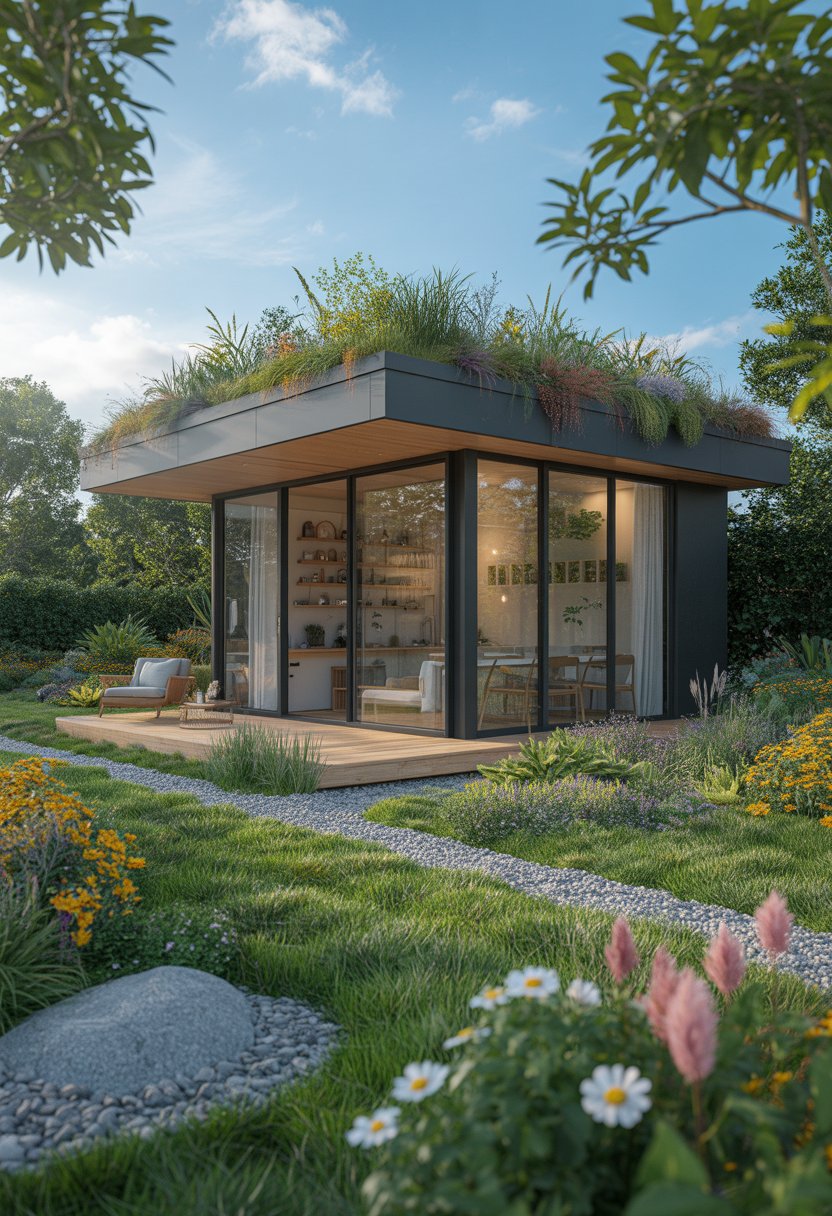
A green roof studio combines workspace with environmental benefits. The living roof acts as natural insulation, reducing your heating and cooling costs throughout the year.
You can choose from several green roof options for your studio. A wildflower meadow attracts bees and butterflies while requiring minimal upkeep. Native plants need less water once they establish roots, making maintenance simple.
The roof system includes a waterproof layer, root barrier, and drainage system. A growing medium supports your chosen plants. This setup protects your studio while creating habitat for birds and insects.
Your green roof studio should use sustainable building materials. Bamboo, reclaimed wood, or recycled metal work well for the structure. Adding solar panels provides renewable energy for lighting and equipment.
The design integrates your studio into the surrounding landscape. This approach creates visual harmony with your garden while providing extra green space. You gain a functional workspace that supports local biodiversity and reduces your environmental impact.
Green roofs also manage stormwater runoff and improve air quality around your property. Your studio becomes both a productive space and an eco-friendly addition to your backyard.
10. Compact Writer’s Retreat
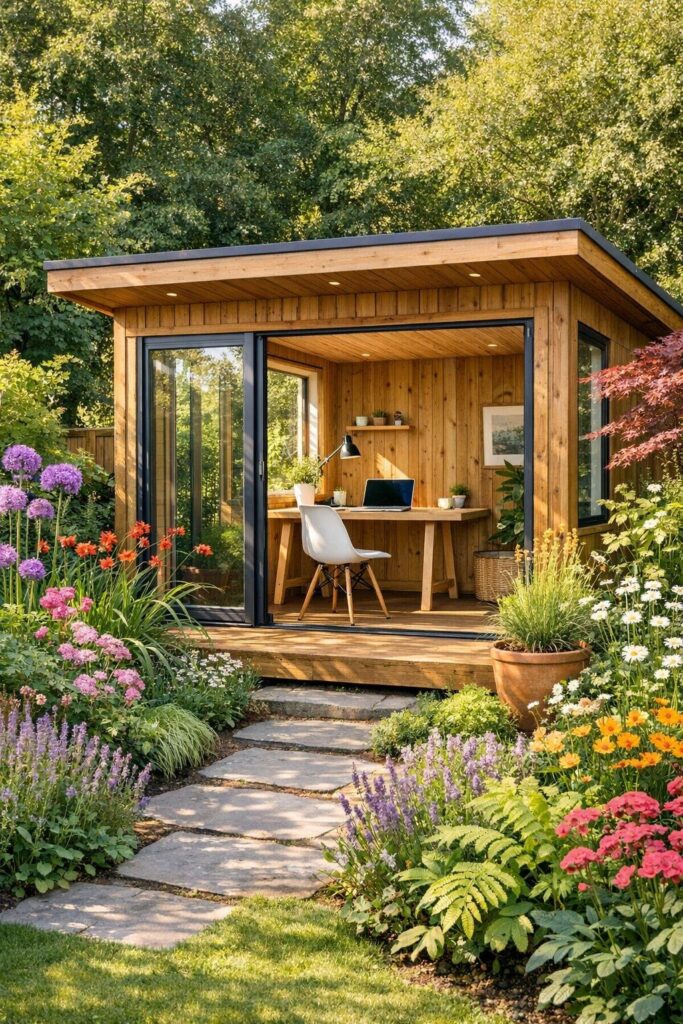
A small backyard studio can become your dedicated writing space without taking up much room. You don’t need a large area to create a productive environment where words flow freely.
Start with the basics: a comfortable desk, good lighting, and a chair that supports long writing sessions. These elements form the foundation of your retreat. Natural light works best during the day, while soft lamps help maintain focus in the evening.
Keep your layout simple and functional. A small bookshelf holds your favorite references and inspiring reads. Wall-mounted storage saves floor space and keeps supplies within reach. Choose furniture that serves multiple purposes when possible.
The key is eliminating distractions. Your compact studio should feel separate from your main house, giving you a clear boundary between work and home life. Even a small pod or converted shed provides this important separation.
Personal touches make the space yours. Add a few meaningful items that spark creativity, but avoid clutter. A minimalist approach often works best in smaller studios, keeping your mind clear and your focus sharp.
11. Artist’s Light-Filled Studio
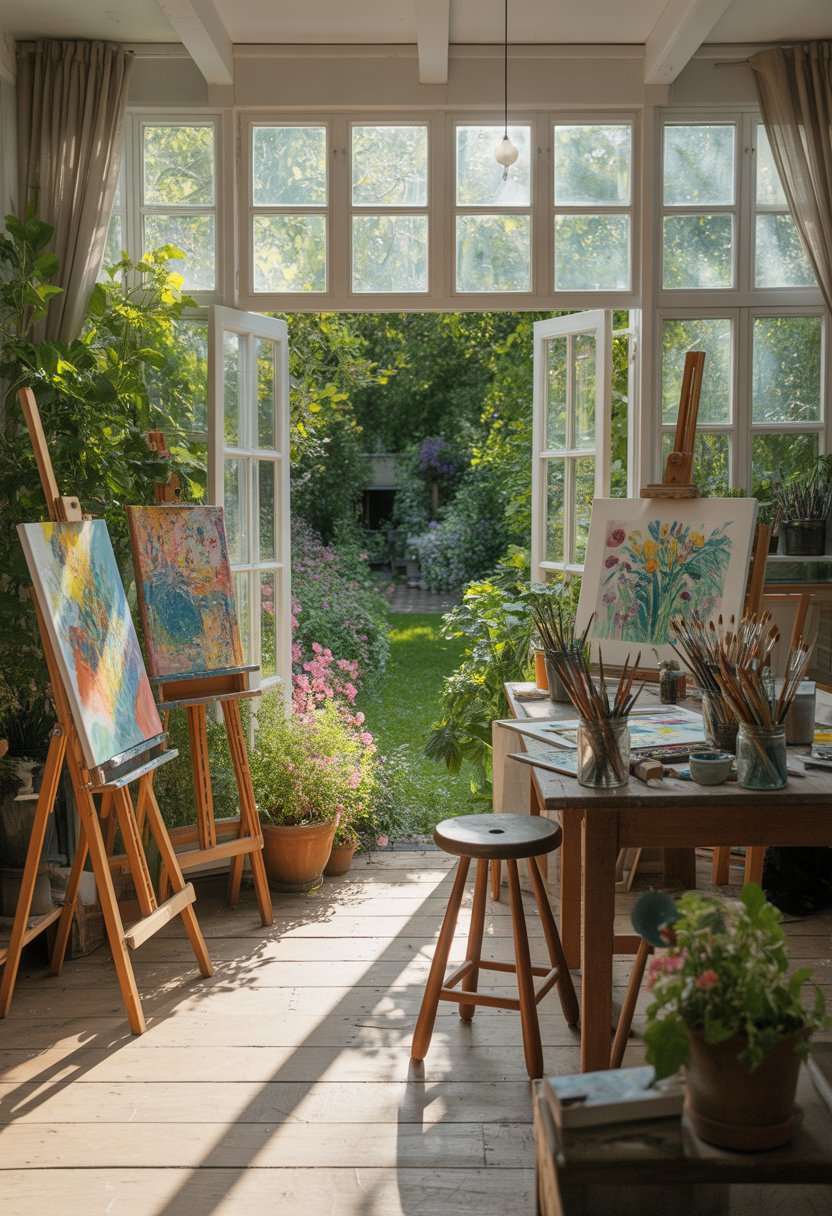
Natural light makes all the difference when you’re creating art. An artist’s studio in your garden can give you the bright, inspiring space you need to work on your projects.
Large windows and glass panels bring in plenty of sunlight throughout the day. You can position your studio to face north for consistent, indirect light that won’t create harsh shadows on your canvas. Glass walls or ceiling panels let you feel connected to the outdoors while you paint or draw.
The key is creating a distraction-free zone where you can focus on your work. A separate garden building keeps household noise and interruptions away from your creative time.
You’ll want to include practical features like good storage for supplies and enough wall space to display work in progress. Consider adding a sink for cleaning brushes and mixing materials. The studio should have proper insulation and heating so you can use it year-round, not just in warm weather.
Plants near the entrance or climbing vines on the exterior help blend your studio into the garden setting. This creates a peaceful transition between your yard and your workspace.
12. Multifunctional Garden Office
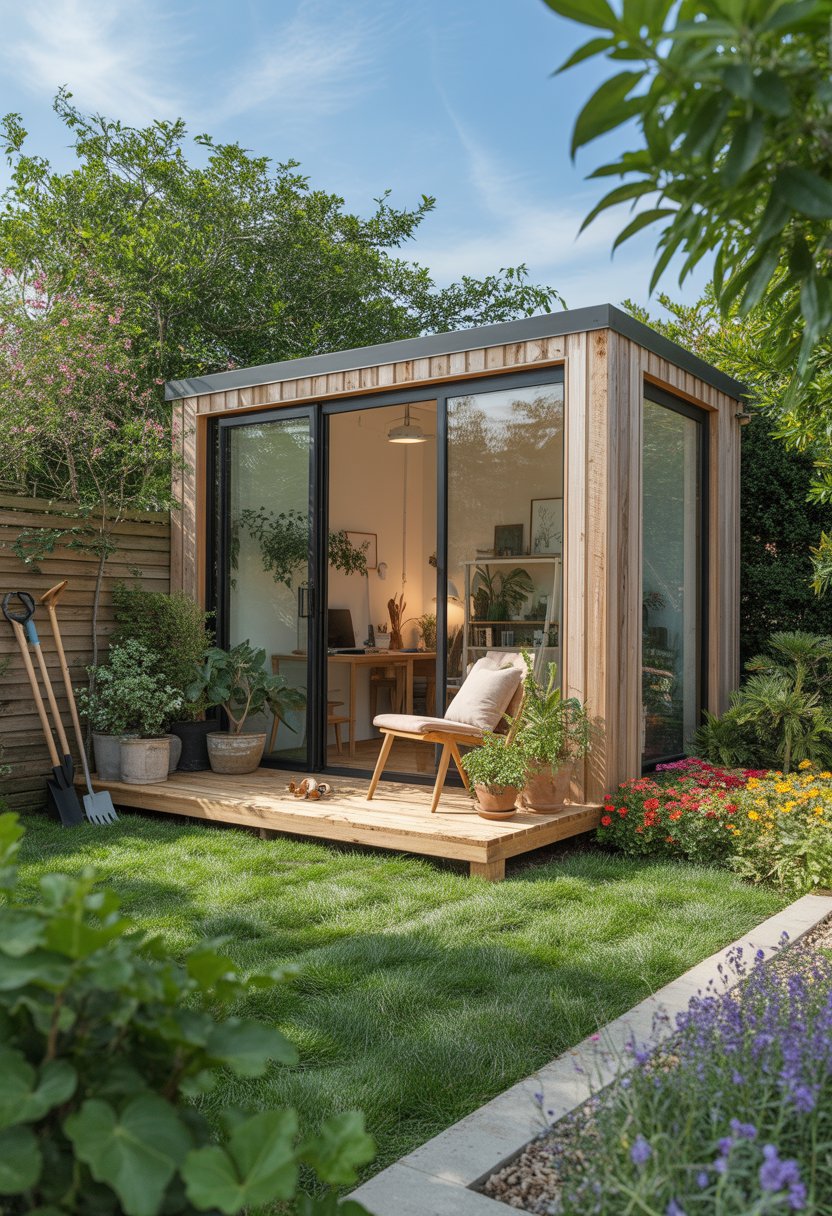
A multifunctional garden office gives you the freedom to work and pursue creative hobbies in one space. You can set up a desk area for your professional tasks while dedicating another section to art, crafts, or other interests.
The key is creating distinct zones within your garden studio. Position your workspace near windows for natural light and good focus. Use the remaining area for your creative activities with proper storage for supplies and equipment.
This design works well if you need flexibility throughout your day. You can switch from work meetings to painting or woodworking without leaving your garden space. The separation from your main house helps you concentrate on either task.
Consider adding adjustable furniture that serves multiple purposes. A large table can function as both a desk and a crafting surface. Install shelving units that accommodate both work files and hobby materials.
Your multifunctional garden office should have good ventilation and lighting for both activities. Make sure you have enough electrical outlets for computers, tools, and equipment. This setup maximizes your garden studio investment while giving you room to balance productivity with creativity.
13. Japanese-Inspired Zen Studio
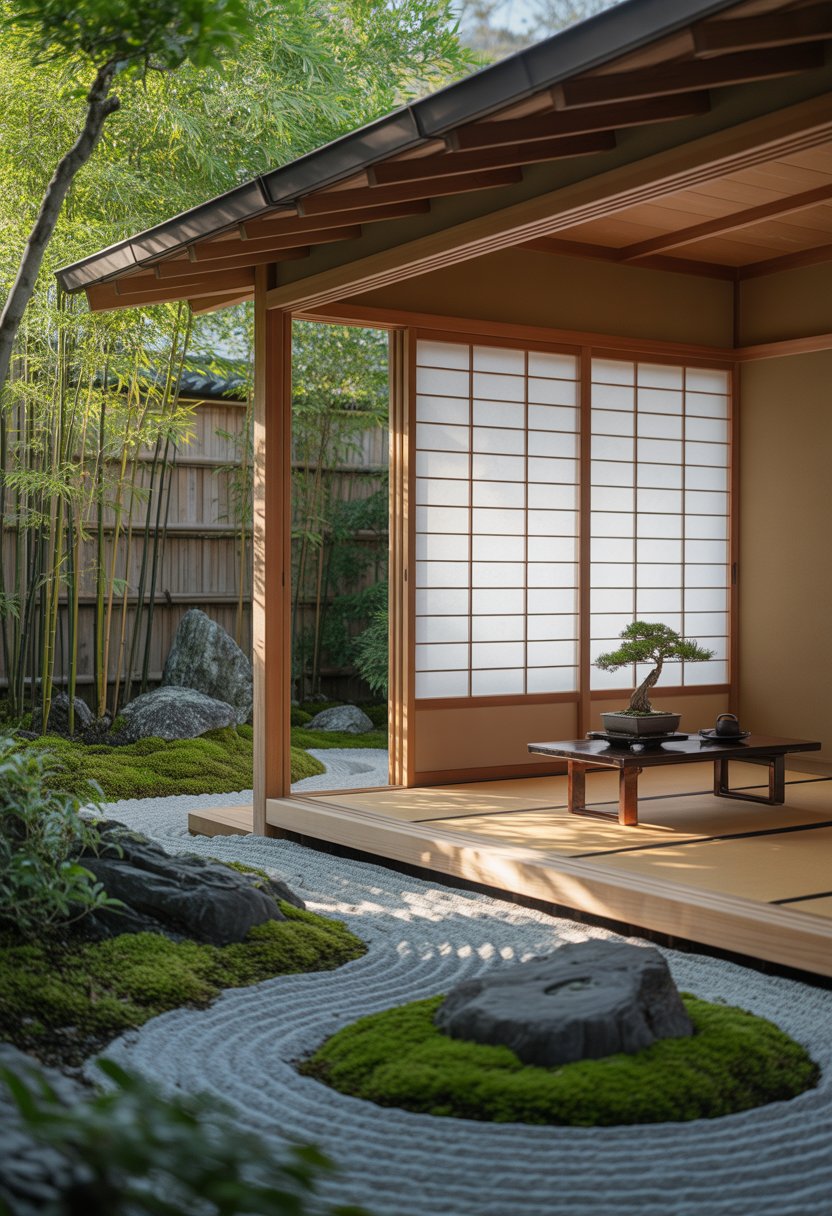
A Japanese-inspired garden studio brings calm and simplicity to your outdoor space. This design focuses on natural materials and minimal decoration to create a peaceful work environment.
Start with neutral colors like beige, gray, and white for your studio’s exterior. Wood siding or panels work well to match traditional Japanese architecture. Large windows or sliding glass doors help connect your indoor workspace with the garden outside.
Inside, keep furnishings simple and functional. Low furniture pieces and clean lines follow Zen principles. Use natural materials like bamboo flooring, wood shelving, and stone accents.
Add a small rock garden or raked gravel area near your studio entrance. This creates a transition zone between your main garden and workspace. Place a few smooth river stones and minimal plantings around the foundation.
Consider adding a bamboo fence or screen for privacy. Moss, ferns, and evergreen shrubs planted nearby reinforce the Japanese garden aesthetic. A simple stone pathway leading to your studio door completes the design.
The result is a workspace that promotes focus and reduces stress through its connection to nature and thoughtful simplicity.
14. Luxury Outdoor Spa Studio
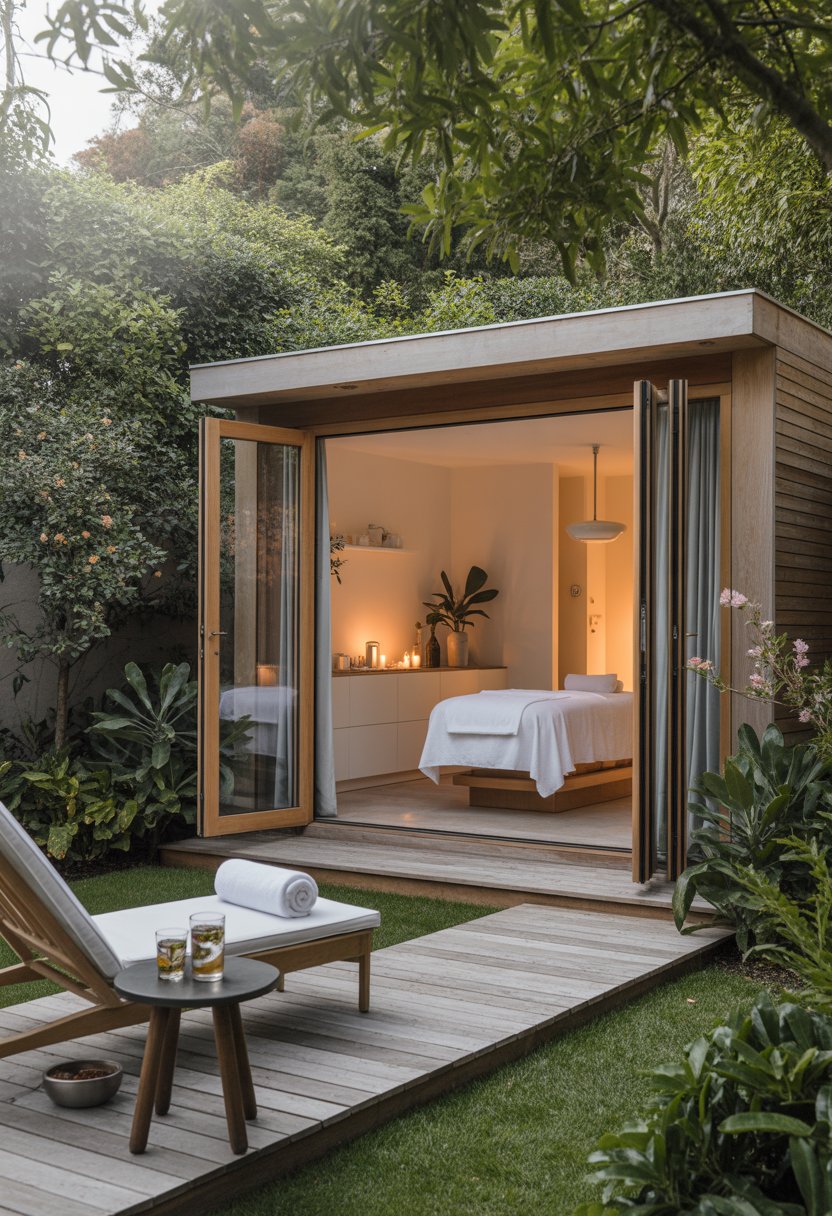
A spa studio transforms your garden into a private wellness retreat. You can include features like a hot tub, sauna, or massage area to create a complete relaxation space.
Natural materials work best for this type of studio. Consider using stone pathways, wooden decking, and bamboo screens to enhance privacy. These elements help blend your spa studio into the surrounding landscape.
Add plants around your spa area to create a calm atmosphere. Lush greenery and carefully placed lighting can make the space feel more inviting. You might also include a small water feature to add soothing sounds.
Your spa studio should have proper heating and ventilation if you plan to use it year-round. Think about including a changing area and storage for towels and robes. Good insulation keeps the space comfortable in all seasons.
The design can range from rustic to modern based on your preferences. Some homeowners prefer natural stone tubs nestled in gardens, while others choose sleek contemporary designs. Your choice should match your existing garden style and personal taste.
15. Vintage Garden Potting Shed
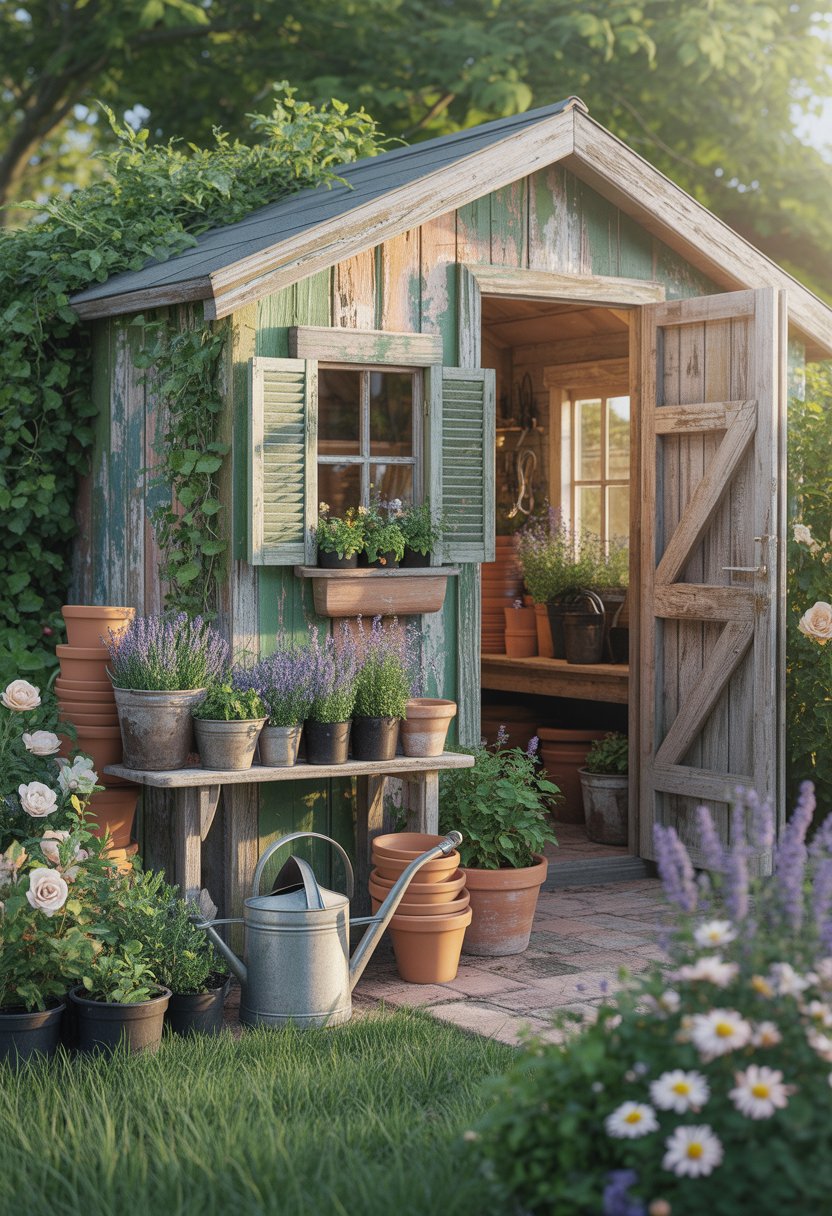
A vintage garden potting shed combines practical workspace with old-fashioned charm. You can create this look by incorporating reclaimed materials and antique garden tools into your design.
Start with weathered wood siding or salvaged windows to establish an aged appearance. Display vintage terracotta pots, old watering cans, and rustic tool collections on open shelving. These items serve as both decoration and functional storage.
Inside, install a sturdy potting bench where you can prepare plants and arrange flowers. Wall-mounted shelves keep supplies organized while maintaining the vintage aesthetic. Framed botanical prints add character to your walls without taking up floor space.
Small garden sculptures and vintage signs enhance the nostalgic feel. You can find authentic pieces at estate sales or antique shops. Reproductions work well too if you prefer new items with vintage styling.
Keep your color palette simple with whites, creams, and natural wood tones. This approach lets the vintage elements stand out. Add hooks for hanging tools and baskets to maximize vertical storage.
Your vintage potting shed becomes a dedicated garden workspace that feels separate from your main home. It provides shelter for your plants and a comfortable spot to work on gardening projects year-round.
16. Portable Garden Office Pod
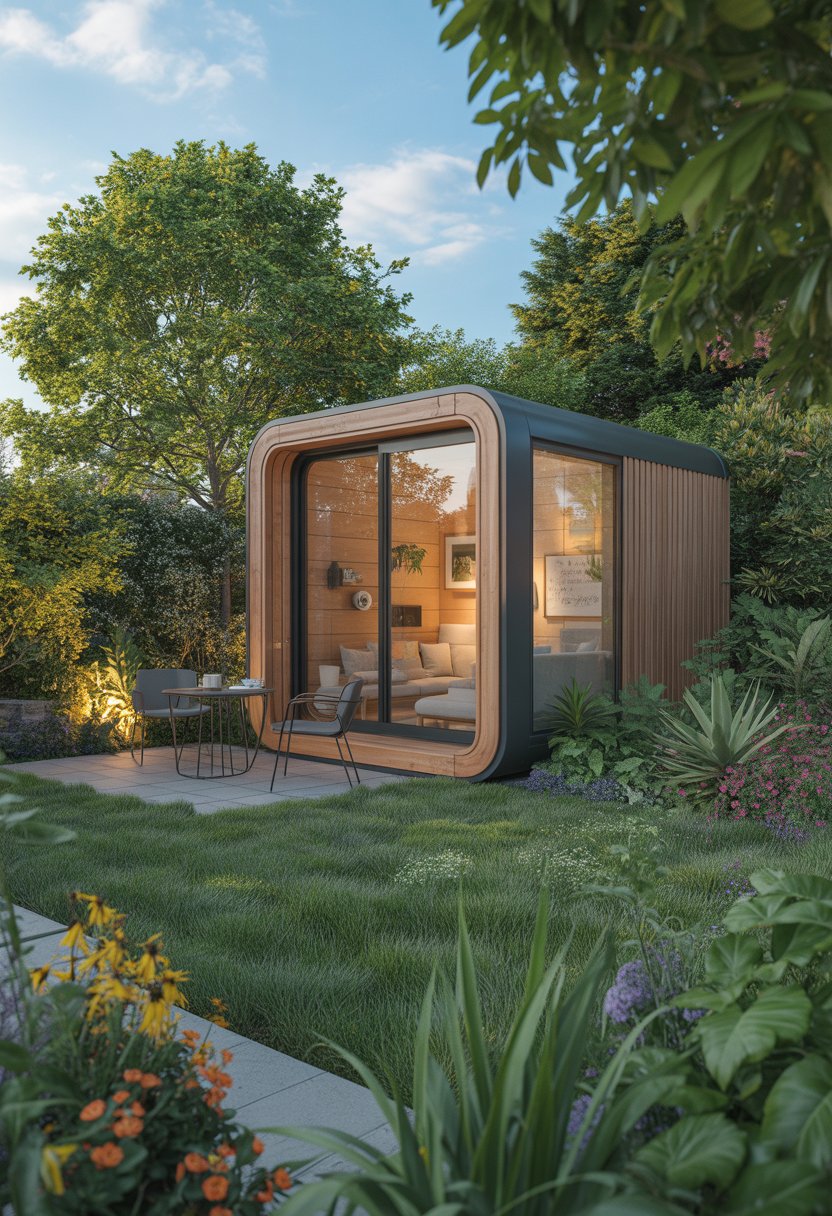
A portable garden office pod gives you the freedom to move your workspace when needed. These compact, prefabricated structures are designed to be relocated without major construction work. You can place them in one corner of your garden and move them later if your needs change.
The main advantage is flexibility. If you decide to redesign your garden or need the pod in a different location, you won’t be stuck with a permanent structure. Many portable pods come fully assembled or require minimal setup.
These units typically include insulation, electrical wiring, and windows. You get a complete office space that’s ready to use quickly. The compact design means they fit in smaller gardens where larger studios wouldn’t work.
Most portable pods range from 2 to 4 square meters, which provides enough room for a desk, chair, and storage. You can customize the interior to match your work style. The lightweight construction makes these pods easier to install than traditional garden buildings, and you won’t always need planning permission for temporary structures.
17. Scandinavian Design Studio
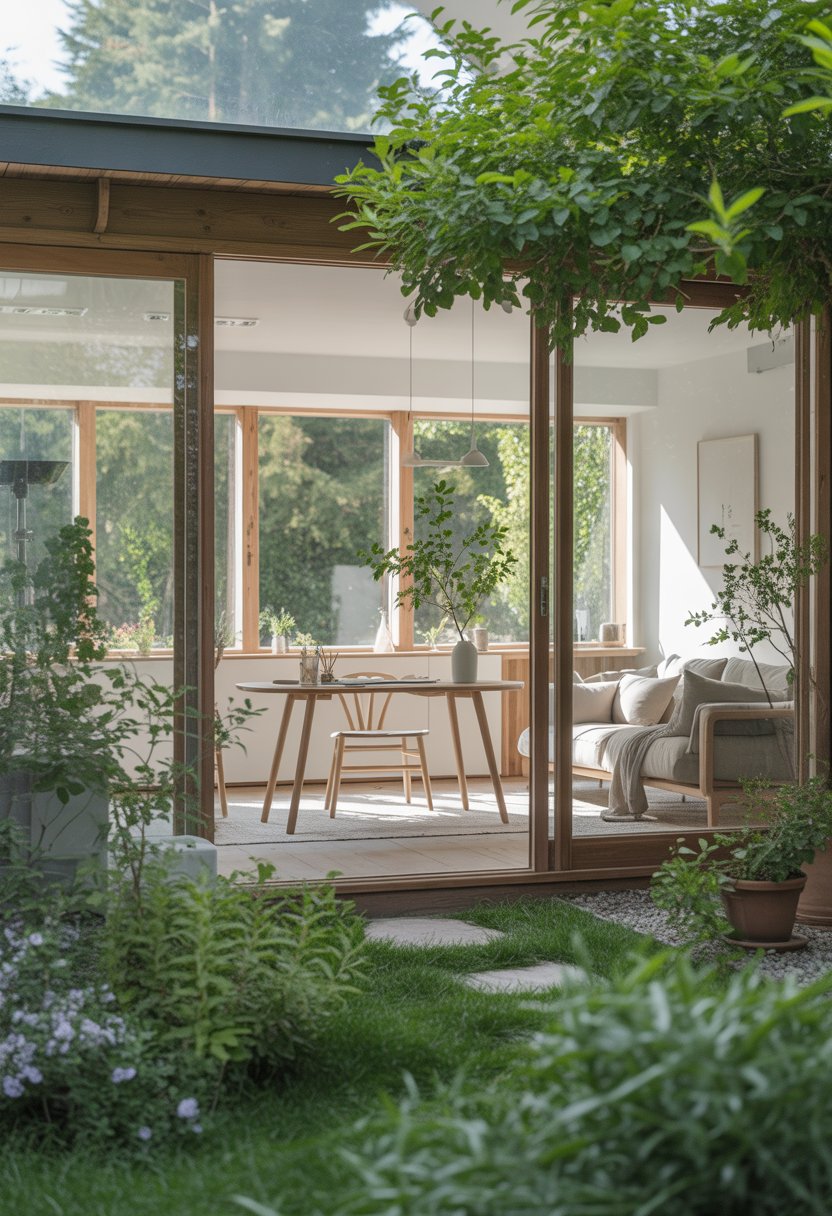
A Scandinavian garden studio focuses on functional, minimalist design. This style emphasizes simplicity and clean lines that create a calm workspace.
Large windows are essential for bringing in natural light. The color palette stays light with whites, soft grays, and natural wood tones like pine or birch.
For the exterior, you can use black or dark gray timber cladding. This creates the classic Scandinavian look that stands out in your garden.
Inside, keep furniture simple and practical. Add warmth with textured rugs and a few plants. Simple artwork on the walls helps personalize the space without cluttering it.
The key is balancing the minimalist approach with cozy touches. You want a space that feels inviting while staying organized and efficient.
This design works well if you need a dedicated workspace or a quiet retreat. The neutral colors and natural materials create a peaceful environment that helps you focus.
18. Children’s Play and Study Nook
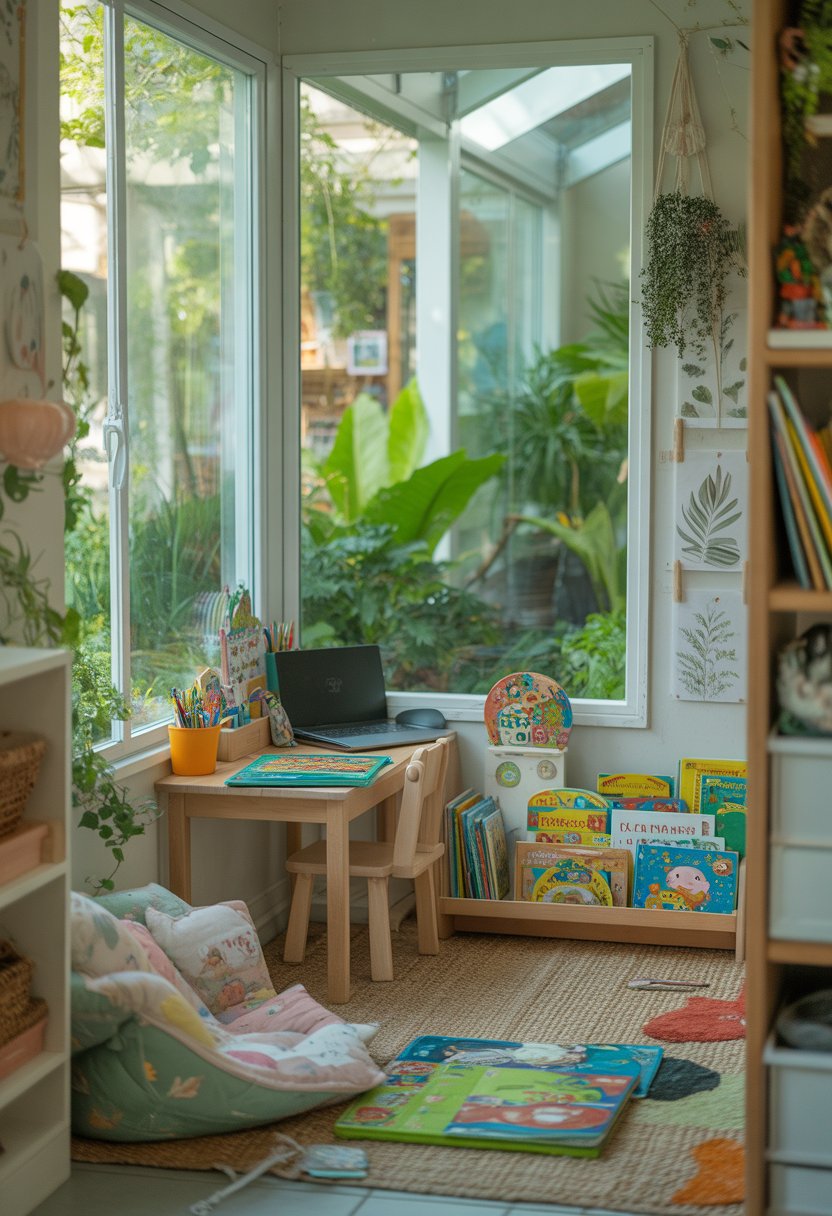
A garden studio can serve as the perfect dedicated space for your children to play and study away from the main house. This setup gives kids their own special area while keeping them close enough for easy supervision.
You can split the interior into two functional zones. Create a play area with storage bins for toys and games on one side. Set up a simple desk with good lighting and shelves for books on the other side.
Natural light from windows helps reduce eye strain during homework time. Add some colorful cushions or a small rug to make the space feel welcoming and comfortable.
Keep the design simple with easy-to-clean surfaces. Your children will need room to spread out their art supplies or building blocks without worrying about making a mess in the main house.
Install proper heating and cooling so the studio stays comfortable year-round. This makes the space usable for studying during all seasons. You can also add some plants or nature-themed decorations to help your kids feel connected to the outdoor environment while they work and play.
19. Industrial Metal Frame Studio
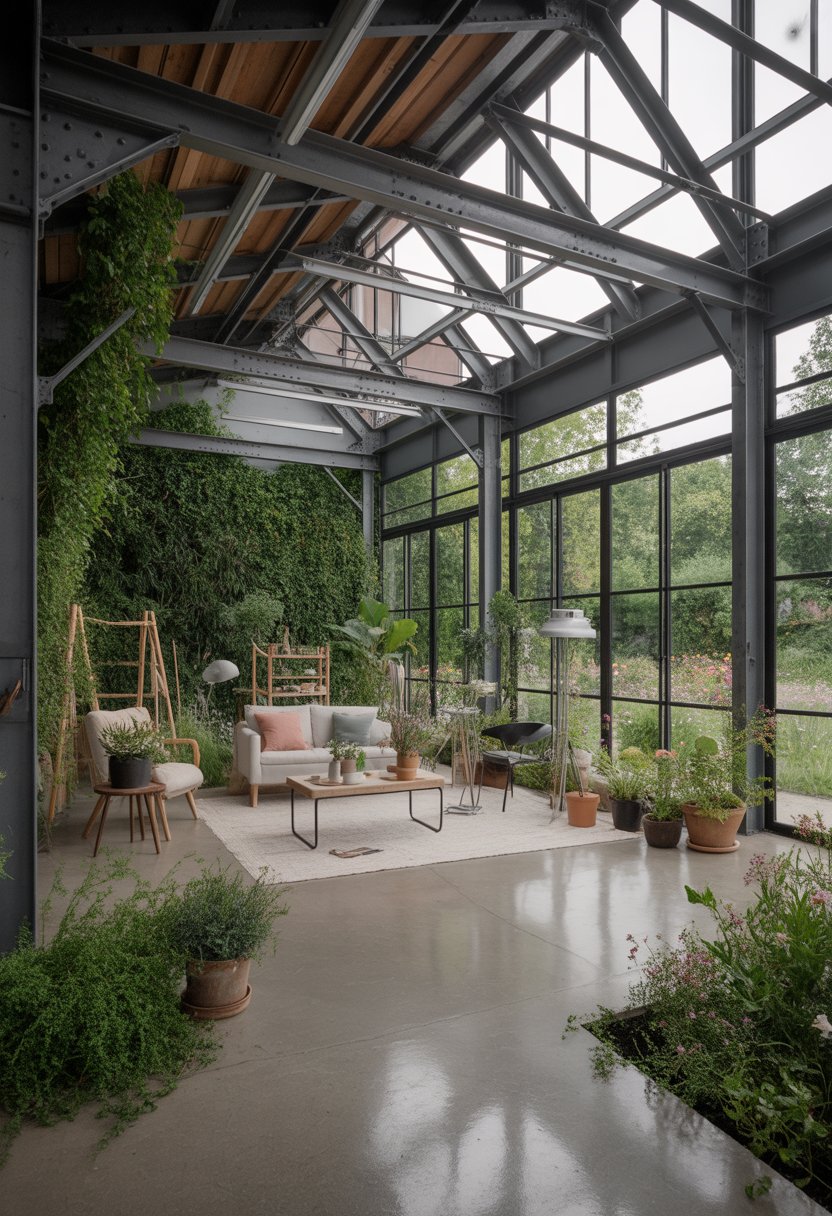
A metal frame studio brings a modern look to your garden. The steel construction creates clean lines and a contemporary feel that stands out in any backyard setting.
Metal frames offer excellent durability. They resist weather damage better than traditional wood structures and require less maintenance over time. You won’t need to worry about rot, termites, or warping.
The construction process is often simpler with metal frames. Many companies offer prefab kits that include everything you need to build the studio yourself. These kits typically feature steel frame walls with cladding options like Colorbond or cedarwood.
You can expect prices starting around $7,000 to $10,000 for basic DIY kits. The cost varies based on size and materials you choose. An 8 by 12 foot studio provides enough space for a home office or creative workspace.
Metal frame studios work well for various purposes. You can use them as art studios, home offices, or workshop spaces. The sturdy frame supports different interior layouts and equipment you might need for your specific use.
20. Sunroom Style Garden Workspace
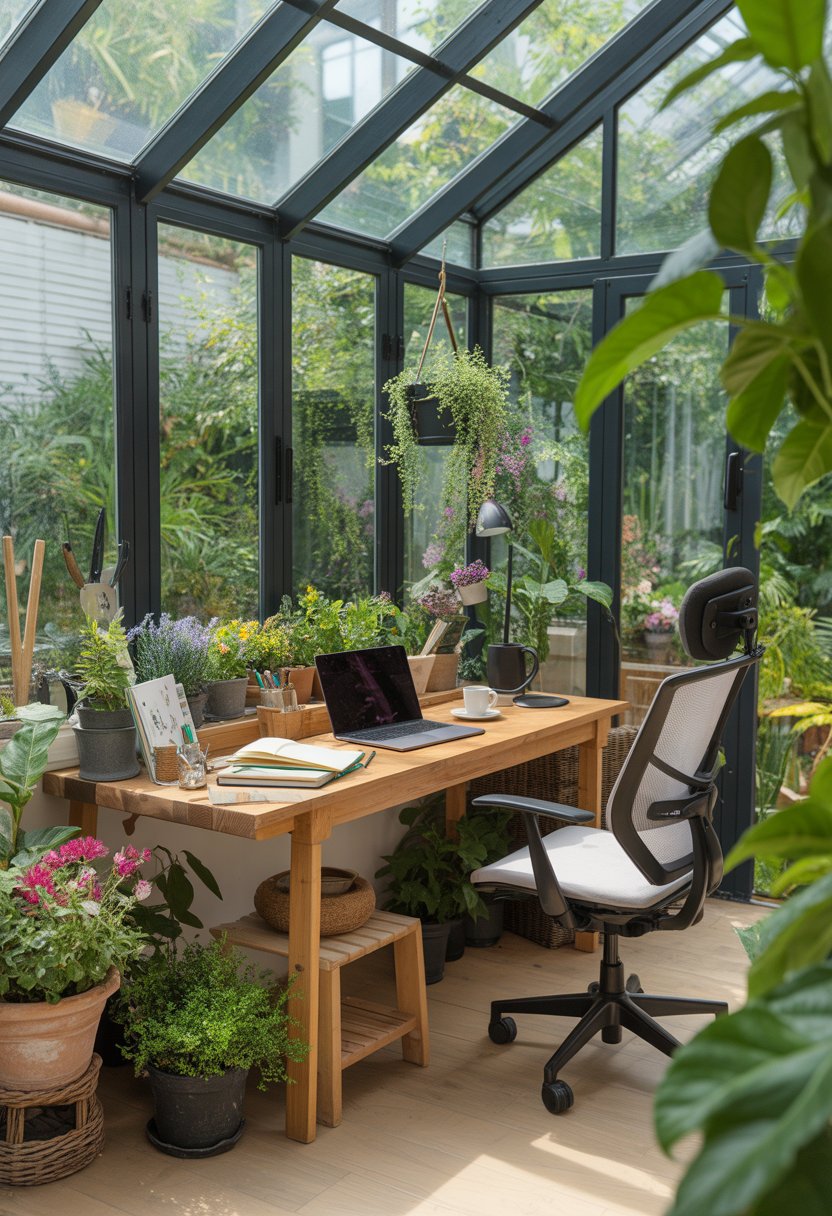
A sunroom-style garden studio brings natural light into your workspace through large windows or glass walls. This design creates a bright environment that connects you with your outdoor surroundings while keeping you protected from weather.
You can set up your sunroom workspace with a simple desk positioned to take advantage of the best views. The glass panels allow sunlight to fill the space throughout the day, reducing your need for artificial lighting.
Consider the temperature control in your sunroom studio. You’ll need proper ventilation for warm months and heating options for colder weather. Adding blinds or shades gives you control over light levels when you need to reduce glare on computer screens.
The floor material matters in a sunroom workspace. Wooden flooring adds warmth and comfort underfoot. Tile or concrete floors work well if you want easier maintenance.
You can include plants in your sunroom office to improve air quality and create a calm atmosphere. The abundant natural light supports plant growth without extra effort. This style works particularly well if you value a connection to nature while you work.
21. Glass Wall Nature Studio
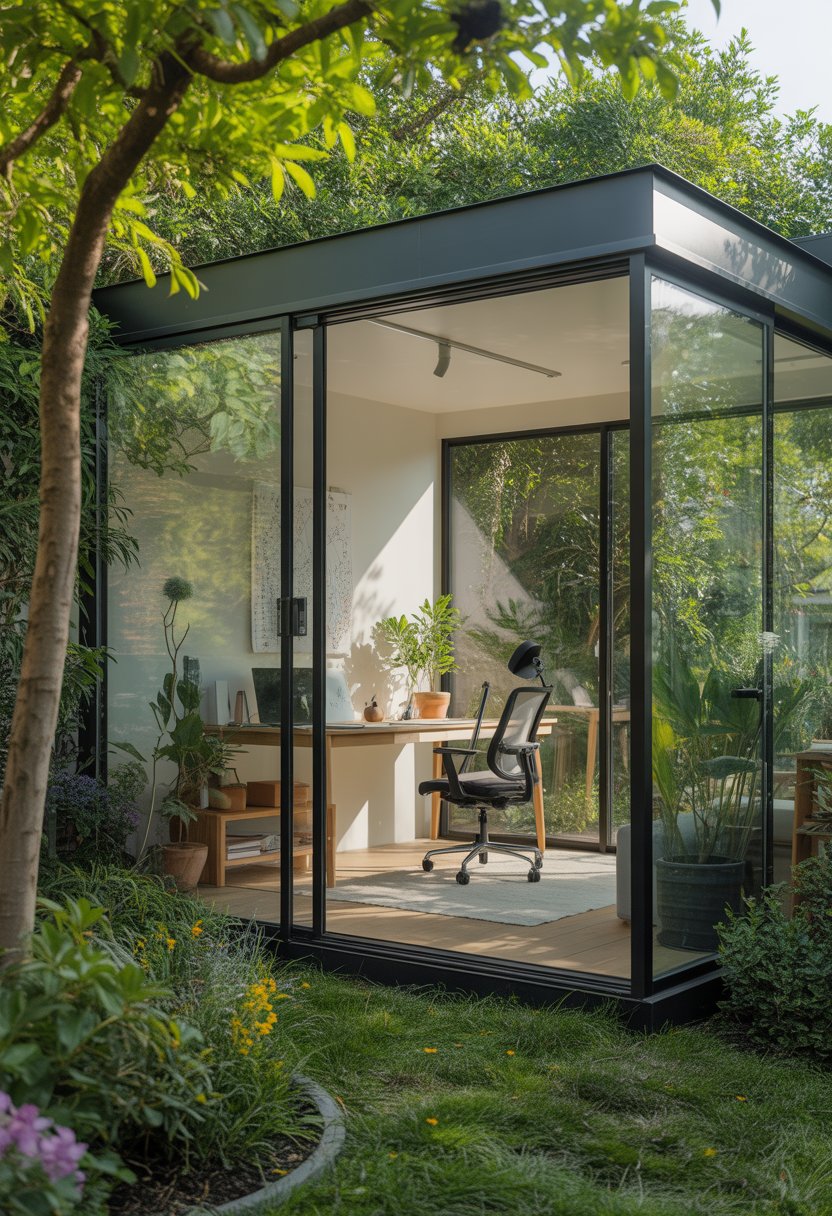
A glass wall studio brings the outdoors into your workspace. Floor-to-ceiling glass panels let natural light fill the room throughout the day. This creates a bright and open atmosphere that makes the space feel larger than it actually is.
The transparent walls connect your studio to the garden around it. You can watch the seasons change while you work or relax inside. Birds, trees, and plants become part of your daily view without leaving your comfortable indoor space.
This design works well for artists, writers, and anyone who finds inspiration in nature. The abundant sunlight reduces your need for artificial lighting during daytime hours. You can position your desk or easel to take advantage of the best views in your yard.
Glass walls require regular cleaning to maintain their clear appearance. You should also consider adding blinds or curtains for privacy and temperature control. The modern look of glass panels fits well with contemporary garden designs and adds value to your property.