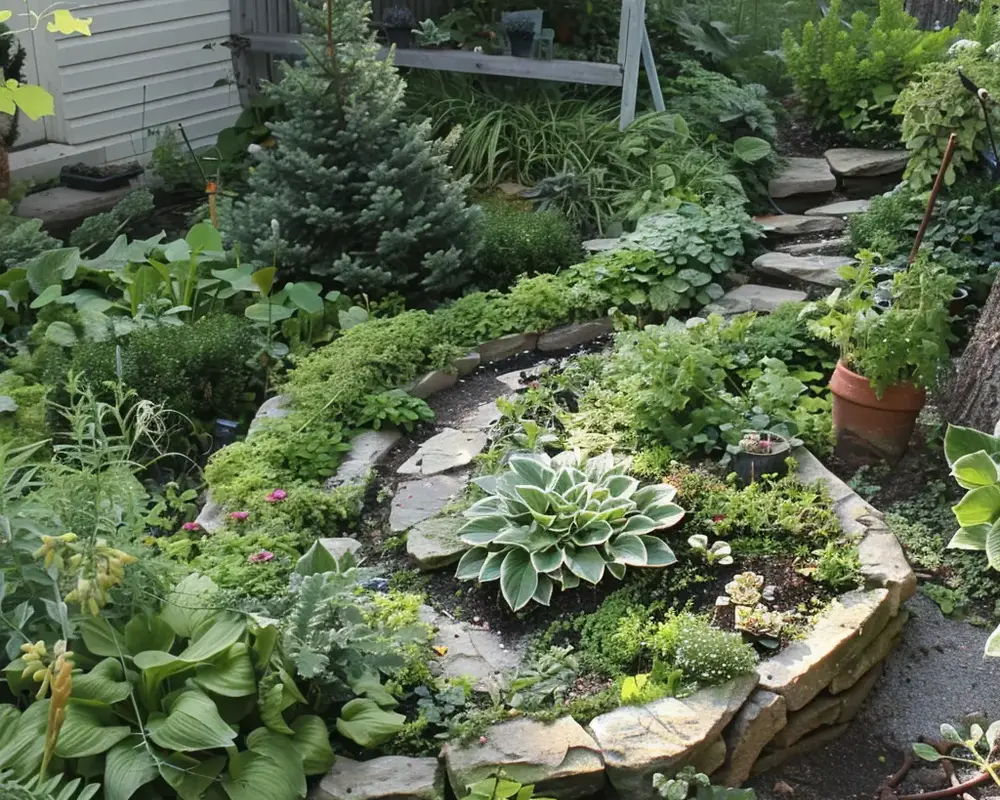
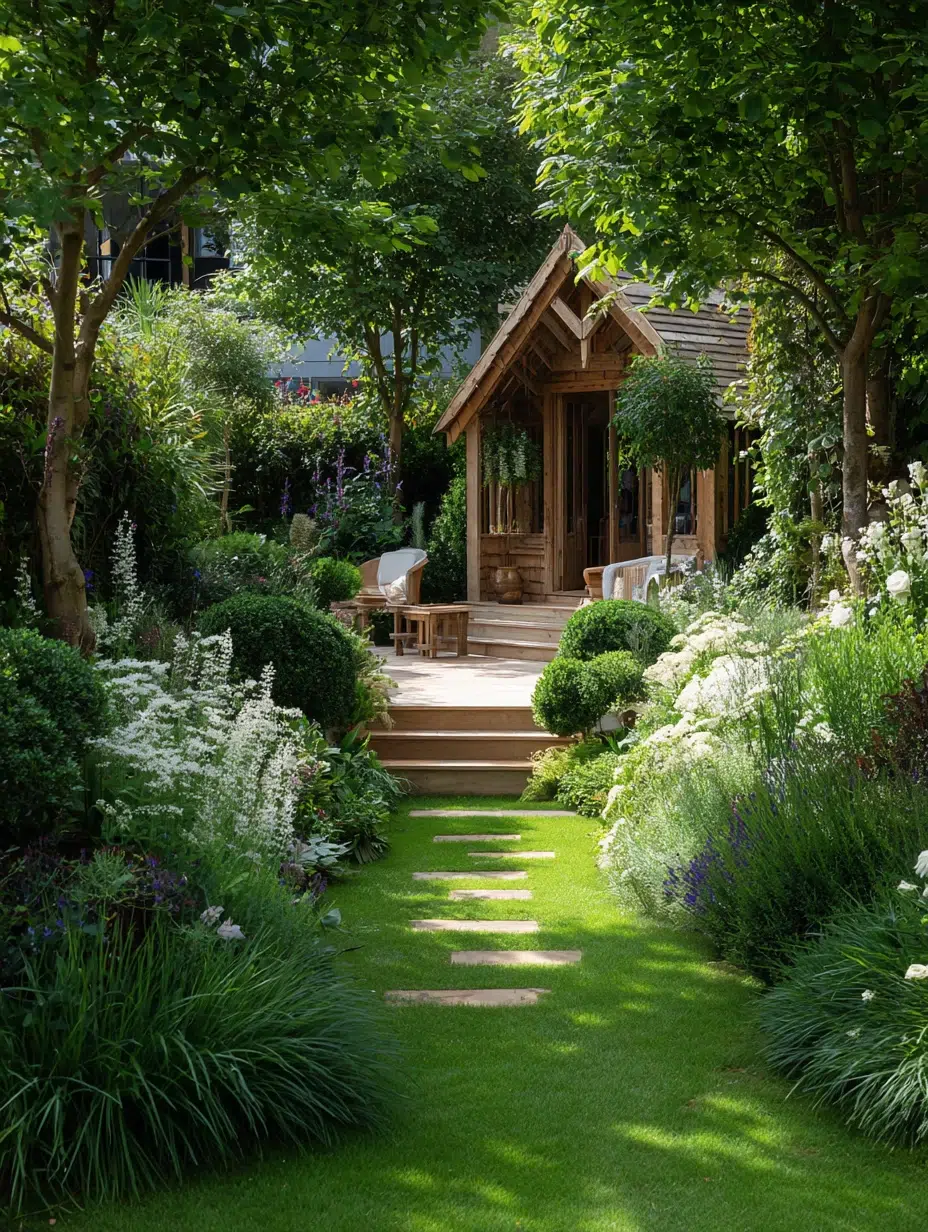
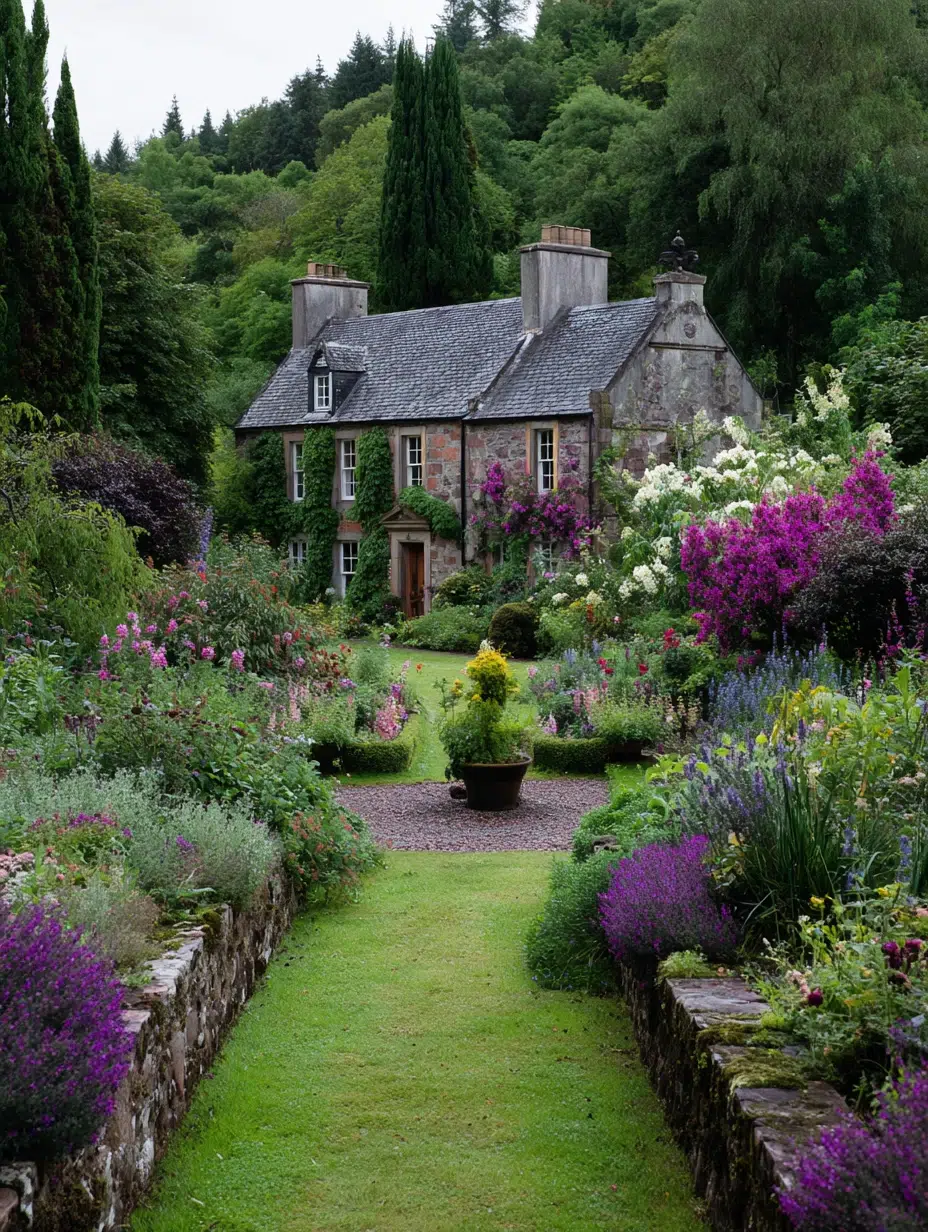
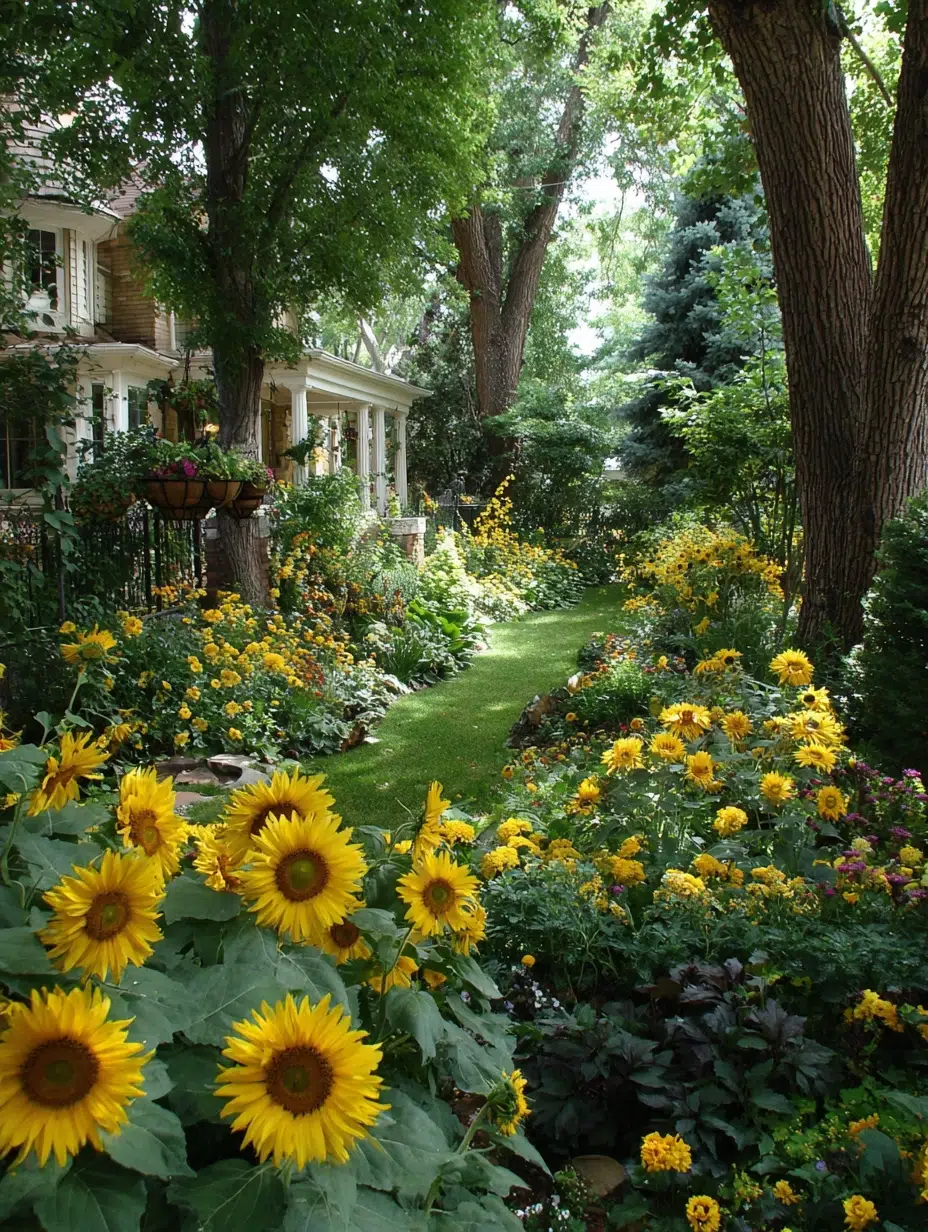
A tiered garden uses multiple levels to create planting areas that work with slopes or add visual interest to flat yards. This approach to landscaping helps you make the most of your outdoor space while solving common problems like drainage and erosion. You can build tiers using many different materials and styles to match your home and budget.
Tiered gardens give you more planting space, make yard maintenance easier, and turn problem areas into attractive features. Whether you’re working with a natural slope or want to add dimension to a flat lawn, creating layers in your garden opens up new possibilities. You can grow more plants, create separate garden zones, and make your yard more functional and beautiful at the same time.
This guide covers practical designs you can use in your own yard. You’ll find options ranging from simple raised beds to more complex layouts with built-in seating and irrigation systems. Each approach offers different benefits depending on your space, skill level, and gardening goals.
1. Terraced Raised Beds with Stone Retaining Walls
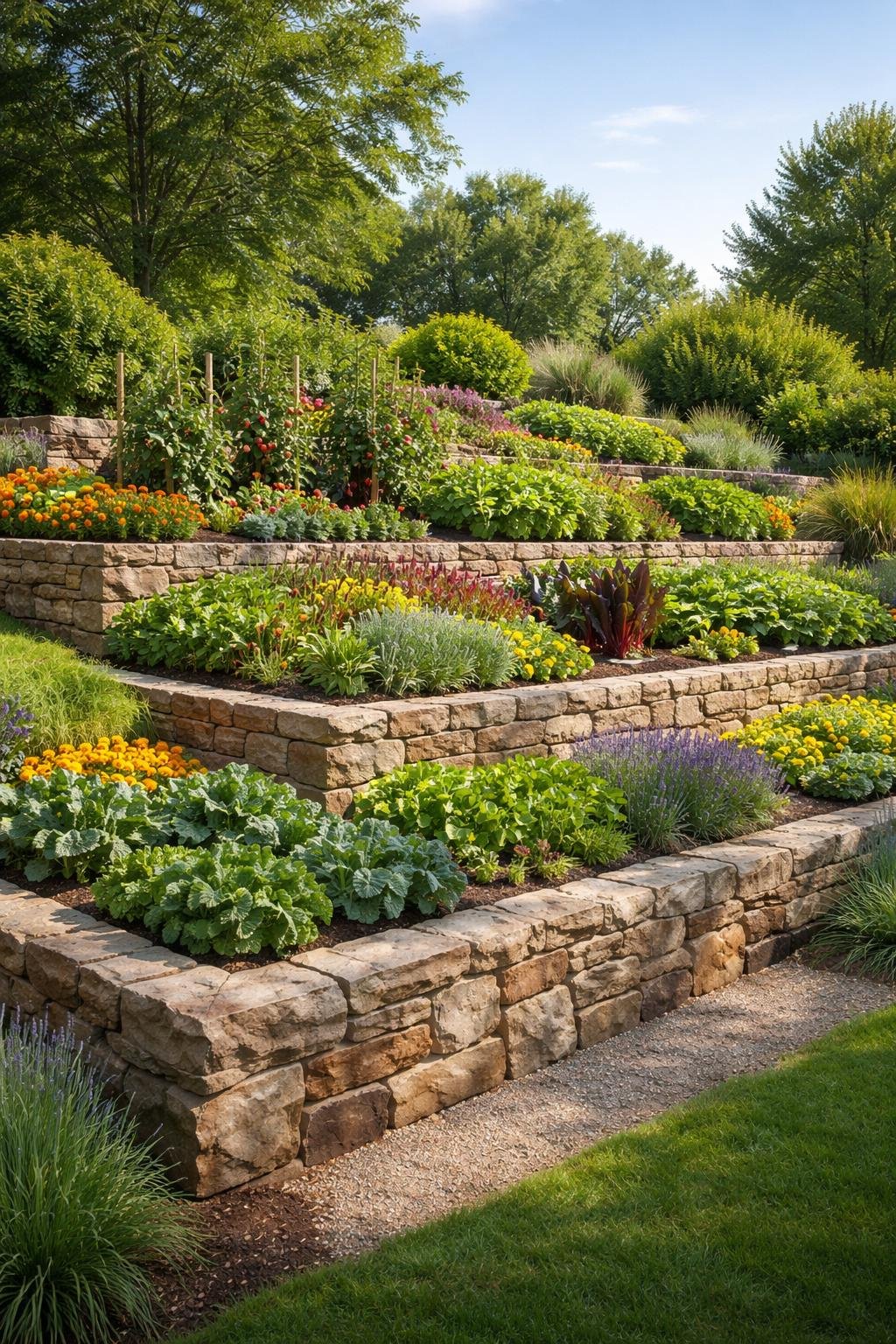
Stone retaining walls create stable, flat planting areas on sloped yards. You can build walls between 24 and 30 inches high to form multiple garden levels.
Natural stone offers both strength and visual appeal. The material blends well with outdoor landscapes and provides a timeless look that works with different garden styles.
These walls prevent soil erosion by holding back earth on steep slopes. They also improve drainage since water flows down through the levels instead of washing away topsoil.
You can choose from different stone types based on your budget and preferences. Flagstone, limestone, and fieldstone are common options that work well for terraced gardens.
The stepped design gives you more usable planting space than a regular slope. Each level becomes a separate growing area where you can plant flowers, vegetables, or herbs.
Building stone retaining walls requires proper planning. You need to consider wall height, drainage, and foundation stability before starting construction. Walls over three feet typically need professional installation for safety.
2. Stacked Wood Planter Boxes
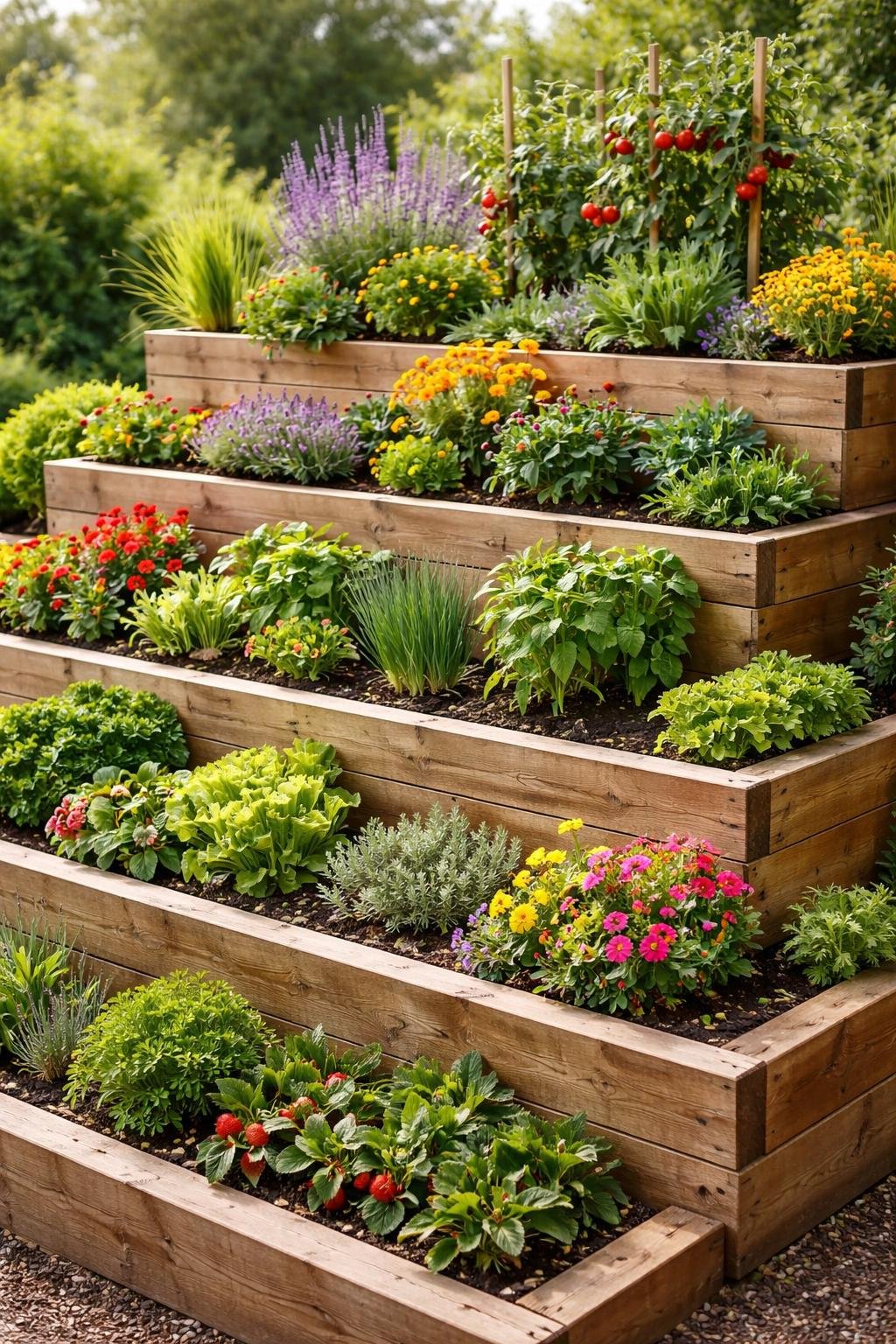
Stacked wood planter boxes create vertical growing space without taking up much ground area. You can build these planters by arranging wooden crates or boxes in a pyramid shape, with larger boxes at the bottom and smaller ones on top.
This design works well for growing herbs, flowers, and strawberries. The tiered setup keeps your plants at different heights, making them easier to reach and care for.
You can use new lumber or repurpose old wooden crates for this project. The boxes stack in a staggered pattern to create stability and visual interest. Each level holds soil and plants independently.
The natural wood look fits well in most garden styles. You can leave the wood untreated for a rustic appearance or paint it to match your outdoor space. Make sure to use weather-resistant wood or apply a protective finish to help the planters last longer.
These planters let you grow more plants in small yards or on patios. The vertical design also helps keep berries and vegetables clean by lifting them off the ground. You can arrange the boxes against a wall or fence, or create a freestanding display.
3. Multi-Level Brick Flower Beds
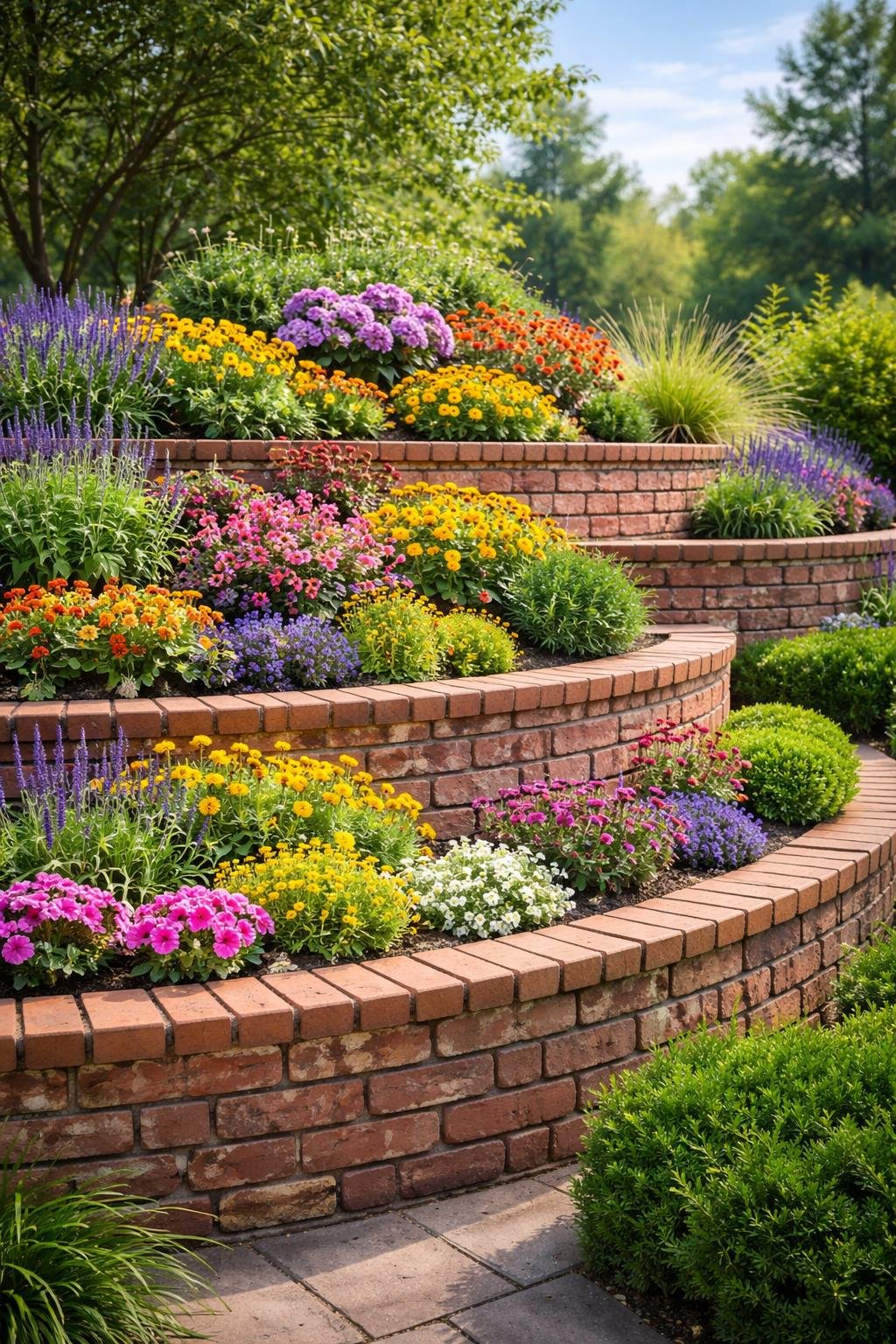
Brick flower beds offer a classic look that works in most yard styles. You can stack bricks to create multiple levels that give your garden more depth and interest.
Start by planning your layout on flat ground. You’ll want to decide how many tiers you need and how tall each one should be. Most brick tiered beds work best with two or three levels.
The bricks provide good drainage and hold heat, which helps certain plants grow better. You can arrange them in different patterns to match your style. Simple running bond patterns are easy to build and look clean.
Build each tier so it steps back from the one below it. This creates planting space on each level and makes your garden easier to maintain. You won’t need to reach as far to care for your plants.
Bricks last for years and need little upkeep. They also give your garden a structured appearance that stays consistent through all seasons. The natural red or tan colors blend well with most plants and outdoor settings.
4. Slope Stabilizing Tiered Garden
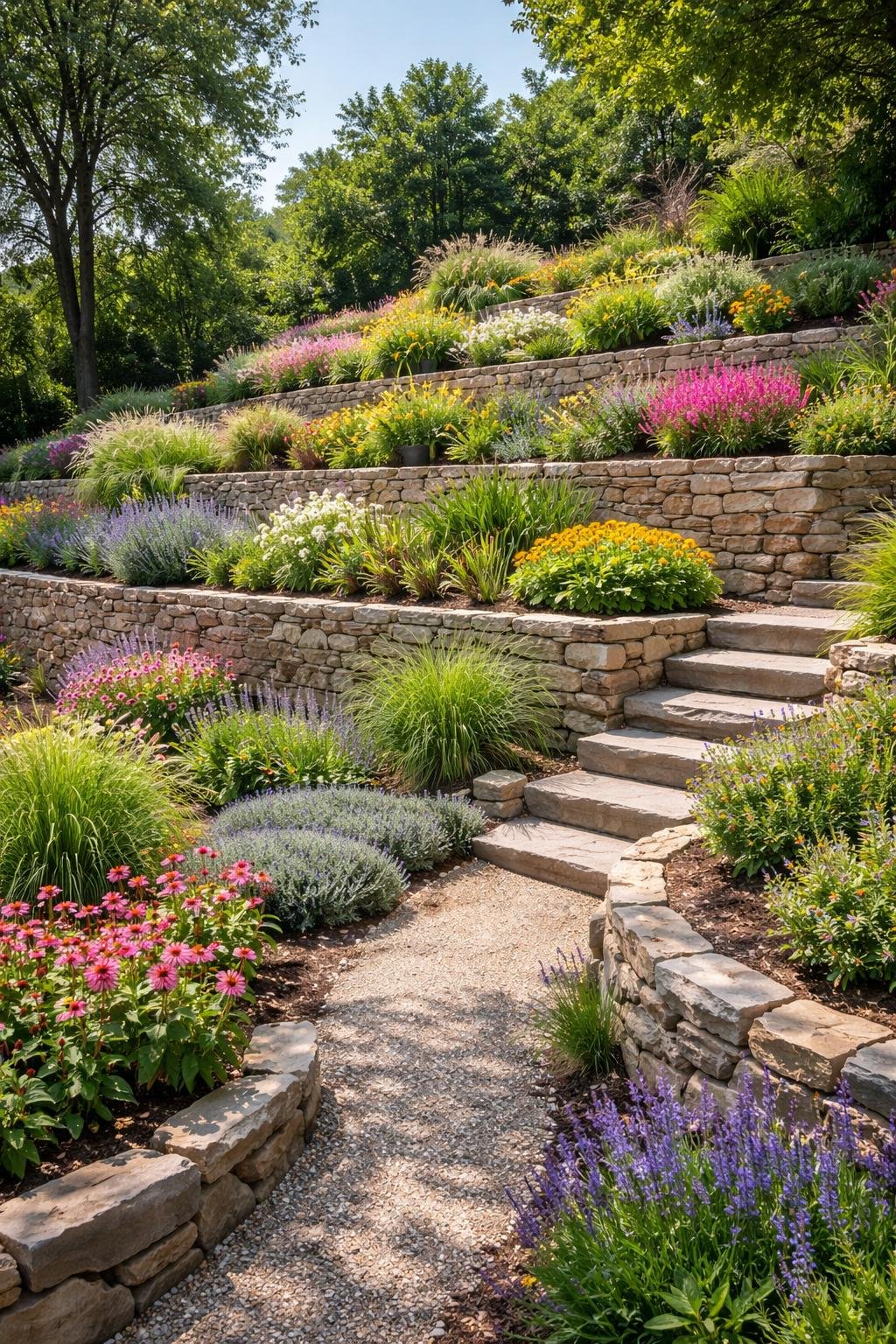
Slopes can cause serious erosion problems in your yard. A tiered garden design helps hold soil in place and prevents washout during heavy rain.
Build raised beds that measure 12 to 18 inches in height on your existing slope. This creates terraced planting zones that catch water and slow its movement down the hill. You can use timber, stone, or composite materials for the bed sides.
Each tier acts as a barrier that reduces water flow speed. The roots of plants you add will grip the soil and make it more stable over time.
Space your tiers evenly down the slope for the best results. Make sure each level is wide enough to maintain easily without straining. The elevated design also improves drainage, which keeps plant roots healthy.
Your tiered system provides both function and beauty. It solves erosion issues while giving you more usable planting space. The structured levels turn a problem slope into a garden asset that works with your landscape instead of against it.
5. Cascading Waterfall Tier
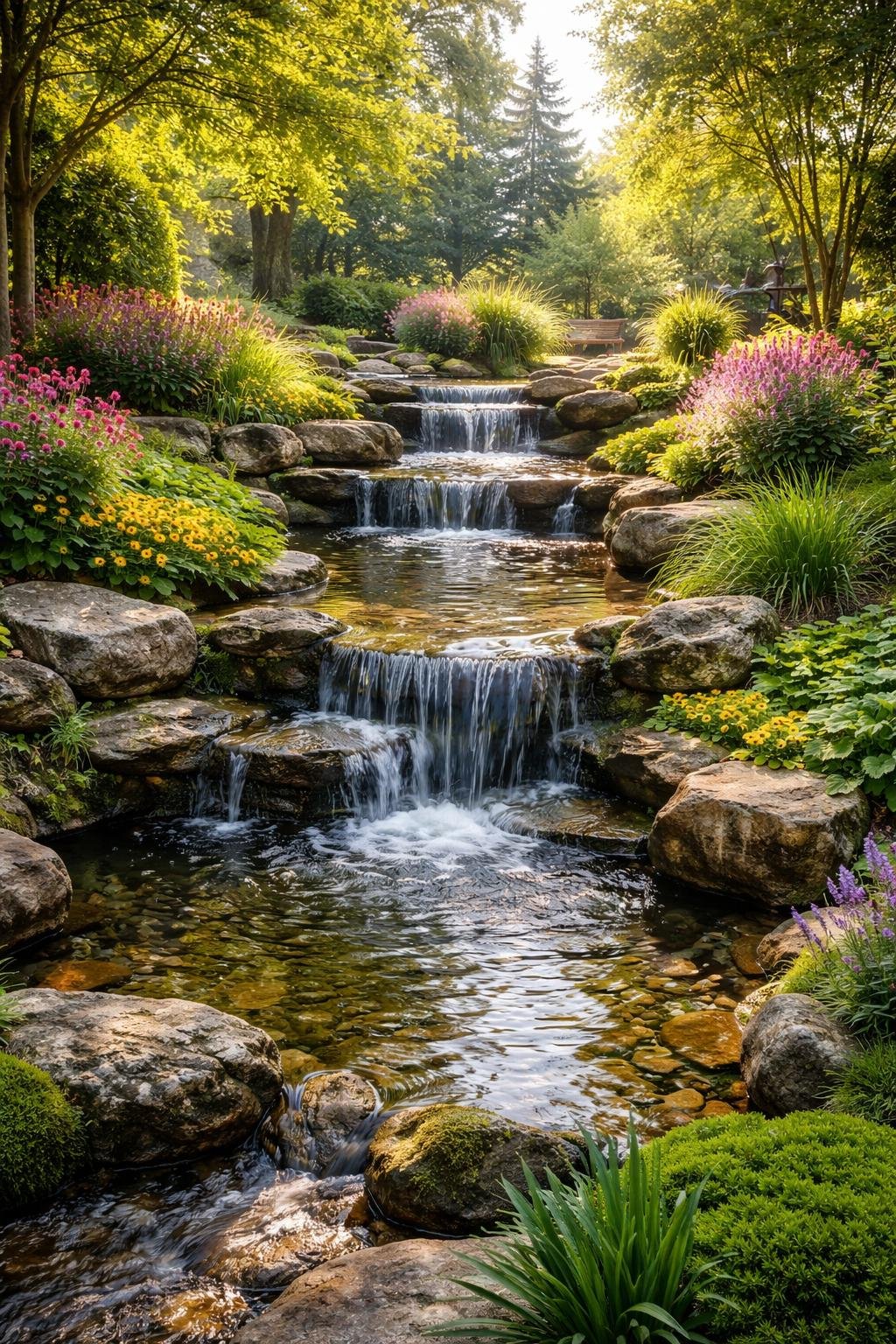
A cascading waterfall tier combines the beauty of a tiered garden with the calming sound of flowing water. You can create this feature by stacking flat stones or ledge-style boulders at different heights. Water flows from the top level down through each tier, creating natural-looking spillways.
The basic setup requires a water pump, pond liner, and rocks. You’ll build multiple levels where water can cascade from one tier to the next. Each level can include a small basin or simply let water flow over the edge.
This design works well on sloped yards where gravity helps water flow naturally. You can use fieldstone, cut slabs, or concrete to form the tiers. The spaces between levels let you add plants like ferns or moss for a natural look.
The sound of moving water creates a peaceful atmosphere in your outdoor space. You can adjust the water flow speed by changing your pump settings. Start with a simple two-tier design if you’re new to water features, then expand as you gain confidence.
6. Rustic Log-Tiered Planters
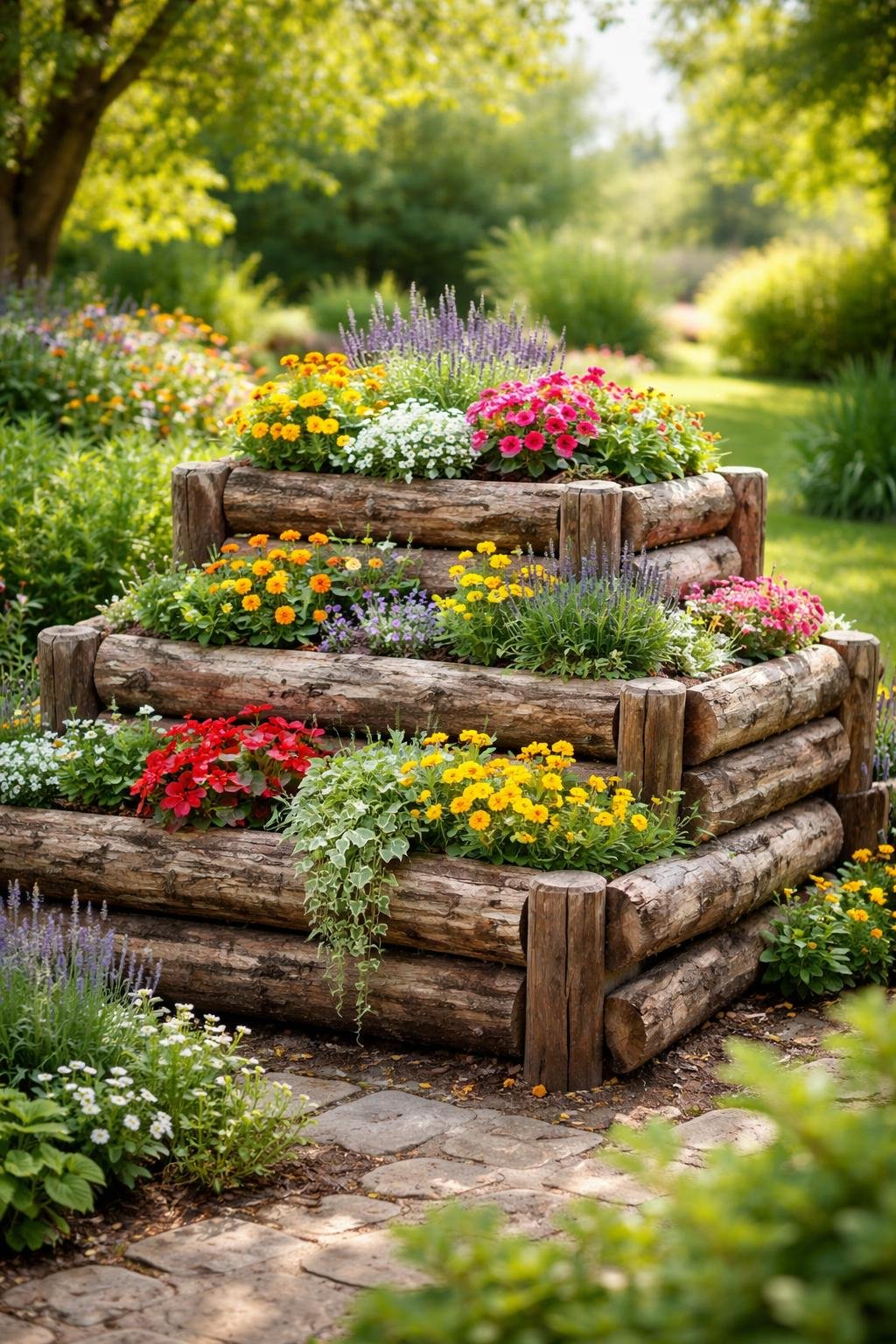
Log planters bring natural warmth to your tiered garden design. You can use reclaimed wood or fallen logs to create multiple levels of planting space while adding farmhouse charm to your outdoor area.
The natural wood texture creates visual interest against your lawn and plants. You can stack logs horizontally to form terraced beds at different heights. This works well for growing herbs, wildflowers, and vegetables.
Vertical log planters offer another option. You simply hollow out sections of a log and fill them with soil. This design saves space and creates a unique focal point in your garden.
Both styles fit into most garden aesthetics. The wood develops character over time as it weathers naturally. You can leave logs untreated for an authentic rustic look or seal them to extend their lifespan.
These planters work for any budget since you can often find suitable logs for free. Smaller log planters can even be moved indoors if you want rustic containers for houseplants. The natural material blends seamlessly with existing landscaping while adding depth and dimension to your garden space.
7. Colorful Cottage Garden Tiers
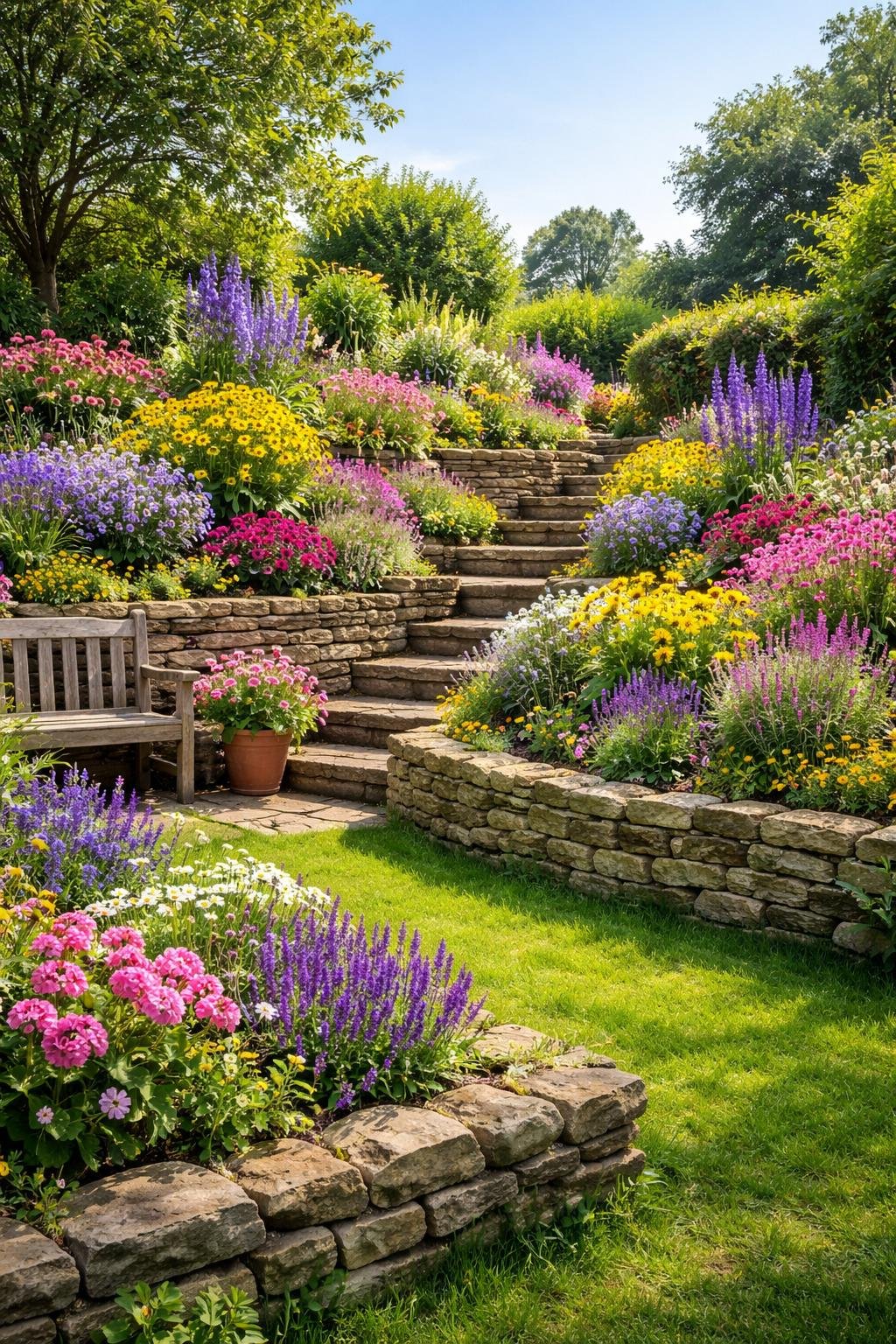
Cottage garden tiers bring together rustic charm and bright colors in a layered design. You can plant climbing roses, wildflowers, and mixed greenery across different levels to create a warm and inviting space.
The key is to arrange your plants so each tier shows off different colors and textures. Place shorter plants like ground cover flowers on the lower levels. Save the taller blooms for the upper tiers where they can stand out.
This approach works well in both large yards and small spaces. You can use natural materials like stone or wood to build your tiers and keep that classic cottage feel.
Mix perennials with annuals to get color throughout the growing season. Popular choices include lavender, daisies, foxgloves, and poppies. The informal, slightly wild look is part of the cottage garden style.
Your tiered cottage garden should feel relaxed rather than perfectly organized. Let some plants spill over the edges of each level. This creates that storybook look many gardeners want in their outdoor spaces.
8. Herb Spiral on Tiered Levels
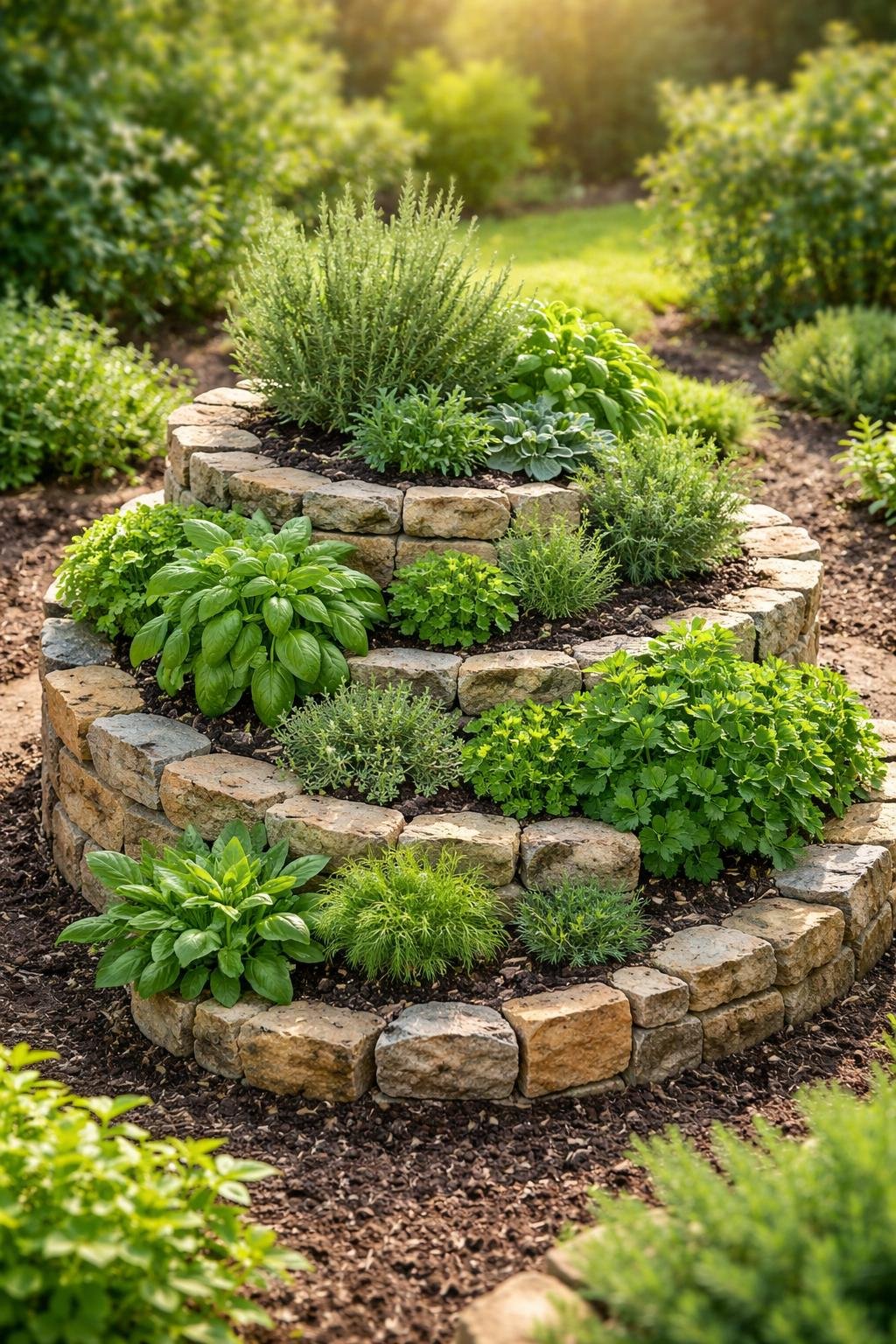
An herb spiral combines vertical growing space with smart design to fit more plants in a smaller area. The structure rises up in a spiral shape, usually 3 to 5 feet tall and 5 to 7 feet wide.
The spiral design creates different growing zones as it winds upward. The top stays drier and gets more sun, while the bottom holds more moisture. This lets you grow herbs with different needs in one compact structure.
You can build your herb spiral with stones, bricks, or concrete blocks. Stack your materials in a spiral pattern, making each level slightly higher than the last. The raised design also provides better drainage than flat gardens.
Plant herbs that like dry conditions at the top, like rosemary and thyme. Put moisture-loving herbs like mint and parsley near the bottom. The spiral shape gives you easy access to all your plants from any side.
This garden style works well in small yards or patios. You can place it near your kitchen door for quick access to fresh herbs while cooking.
9. Modern Geometric Metal Tiers
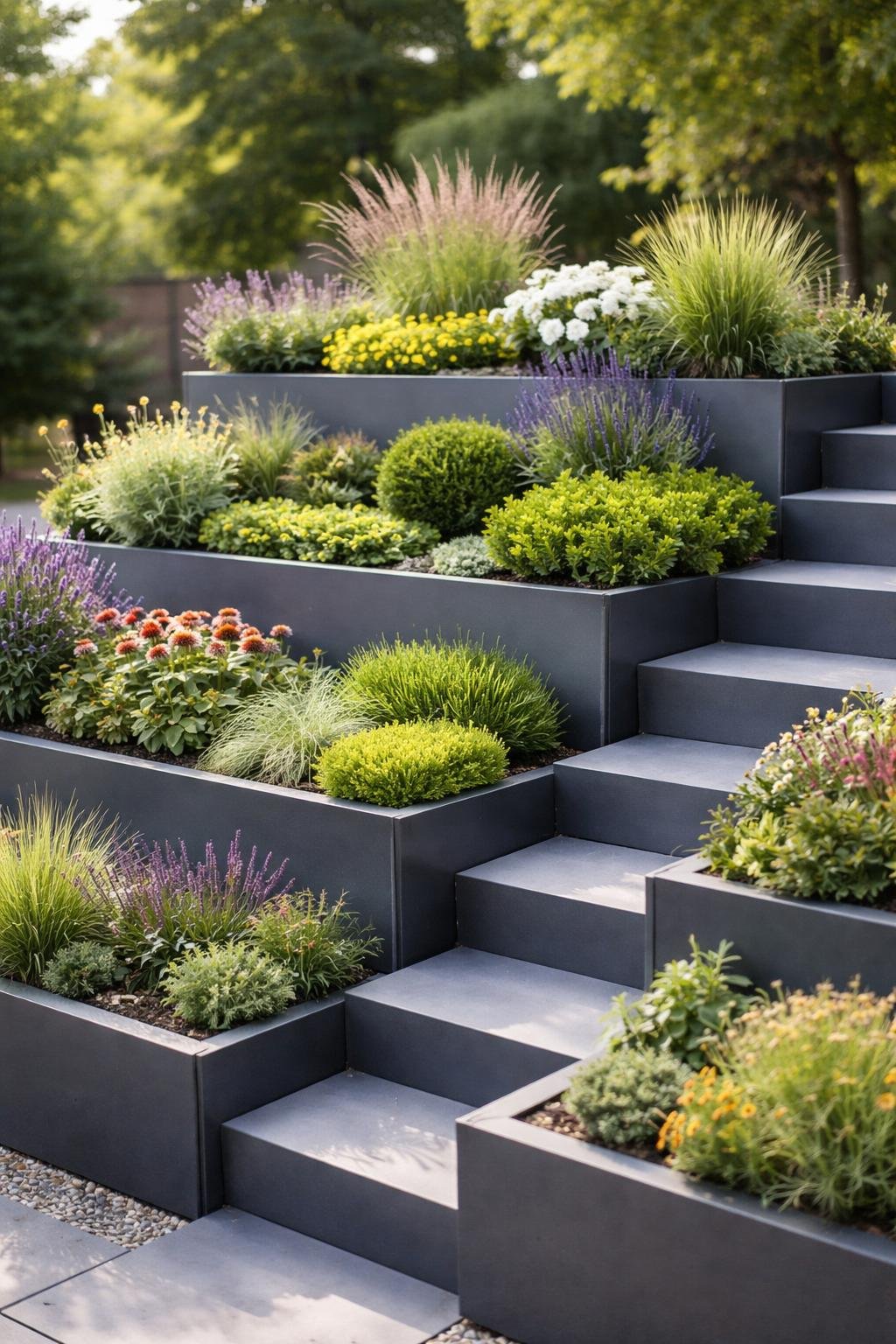
Metal frames bring a sleek and contemporary look to tiered gardens. You can choose between galvanized steel or powder-coated aluminum for long-lasting durability.
These materials resist rust naturally. They maintain their clean appearance for many years with almost no upkeep needed.
The geometric lines of metal tiers create precise, structured levels in your garden. This design works especially well in modern outdoor spaces where sharp angles and clean edges are desired.
Metal frames offer excellent stability for your plants and soil. The strong construction holds up well against weather and weight over time.
You can arrange metal tiers in various patterns to fit your space. Hexagonal, rectangular, or square shapes give you different design options.
The neutral tones of metal frames blend easily with most plant selections. They let your flowers and greenery stand out while providing a refined backdrop.
These tiers work well for both ground-level gardens and raised bed designs. You gain the practical benefit of organized planting areas while adding visual interest to your yard.
10. Vertical Pallet Planter Tiers
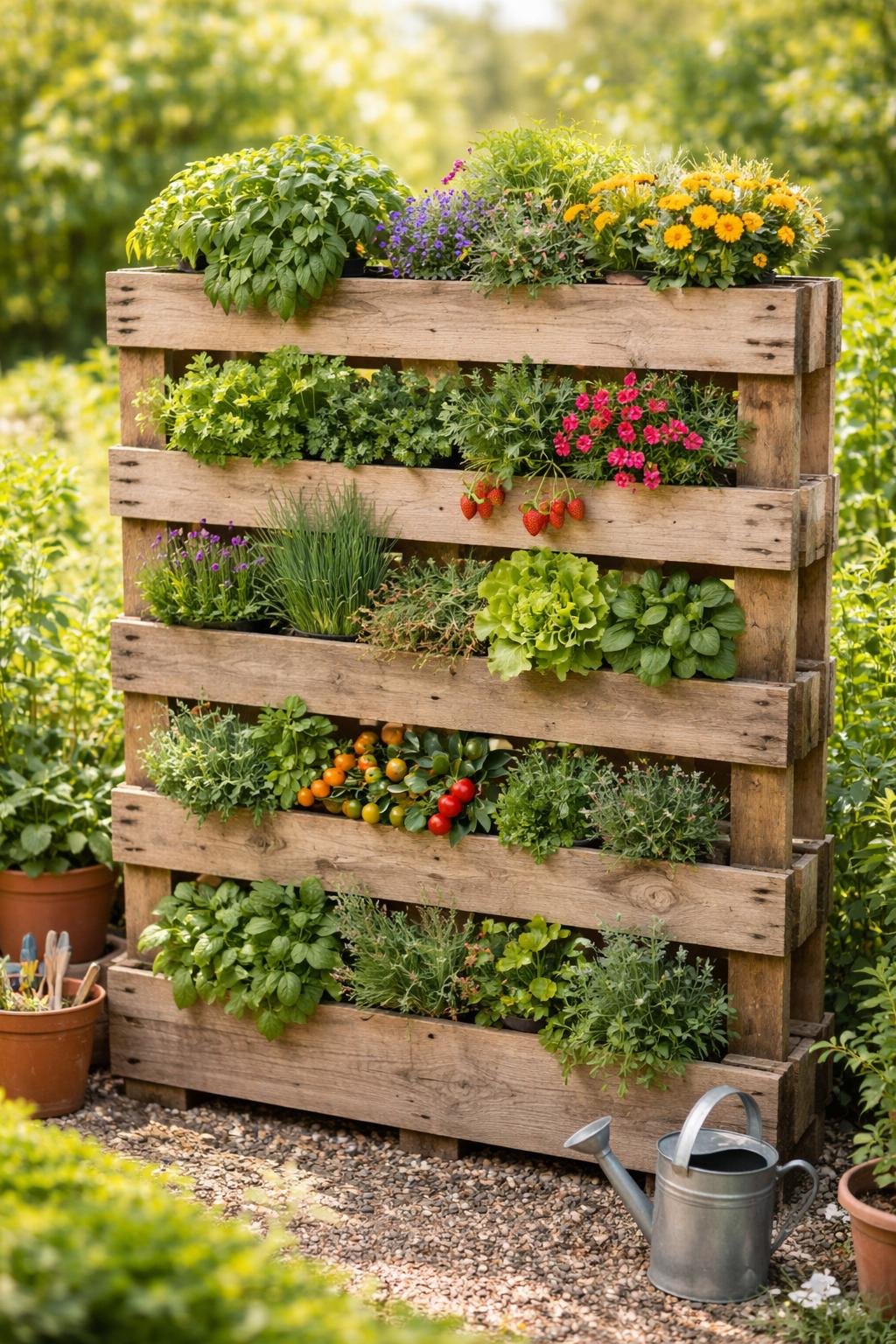
You can transform a simple wooden pallet into a practical vertical garden with minimal effort. Pallets work well because they already have built-in sections that create natural tiers for planting.
Start by standing a pallet upright against a wall or fence. You’ll need to line the back and bottom with landscape fabric to hold soil in place. This keeps your plants secure while allowing water to drain properly.
Fill each tier with potting soil and add your plants. Herbs, flowers, and greens all grow well in pallet planters. The vertical design saves ground space while giving you multiple planting areas.
Consider adding wheels to the base if you want to move your planter around. This lets you adjust the position based on sunlight or weather conditions. You can also paint the pallet to match your outdoor décor.
Make sure your pallet is stable before planting. Secure it firmly to prevent tipping, especially in windy conditions. Water each tier carefully since the upper levels will dry out faster than the lower ones.
11. Natural Rock-Ledge Tiers
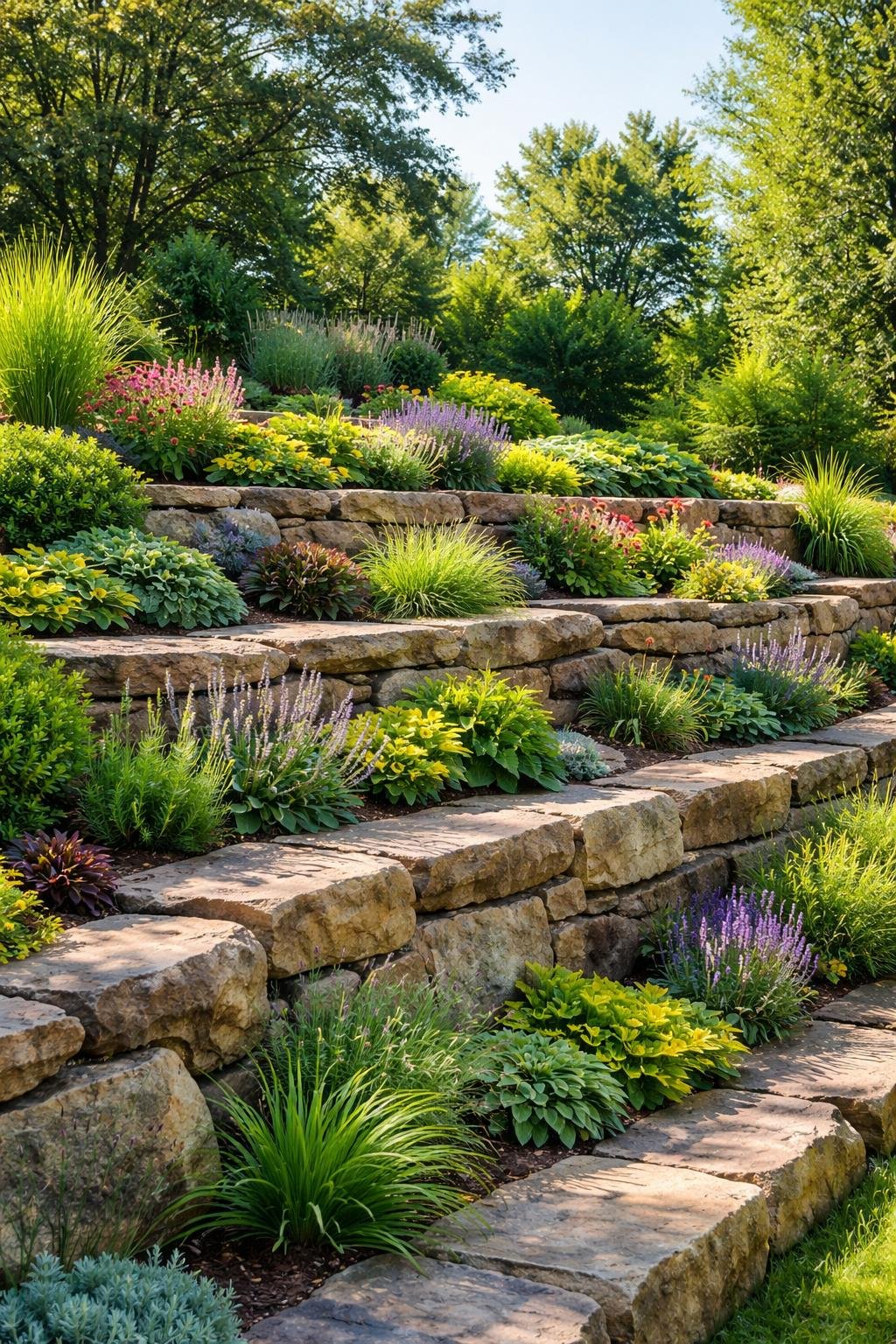
Natural rock-ledge tiers mimic the way rocks naturally layer in mountain landscapes. You can use large, flat stones to create horizontal shelves that form distinct planting levels. This approach works well if you want a garden that looks like it has always been part of the landscape.
The key is choosing rocks with flat surfaces that can stack securely. You’ll want to position them so they create stable ledges for soil and plants. Larger rocks provide better structure and require less maintenance over time.
This design offers excellent drainage since water naturally flows between the rock layers. You can plant drought-tolerant species and alpine plants in the crevices between rocks. Sedums, creeping thyme, and small ferns thrive in these conditions.
Natural rock-ledge tiers work particularly well on slopes where the rocks can follow the contour of your yard. The irregular spacing between ledges creates visual interest while providing different growing conditions for various plants. You don’t need to make every tier the same height or width, which adds to the natural appearance.
12. Stepped Wildflower Meadow
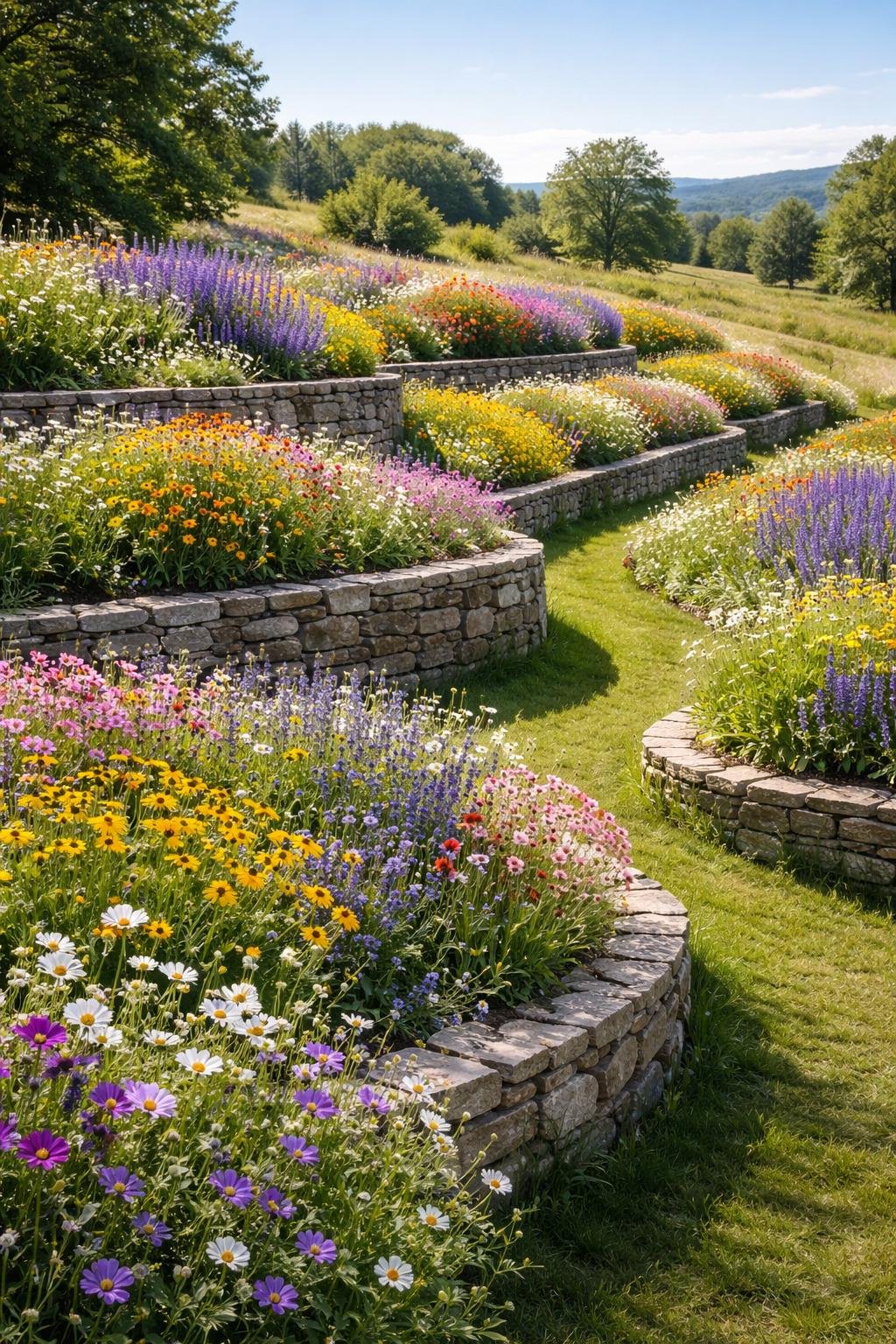
A stepped wildflower meadow combines the natural beauty of wildflowers with the structure of a tiered design. This approach works well on sloped yards where you want a relaxed, natural look.
You can create tiers using low retaining walls or natural stone edging. Each level becomes a separate planting area for different wildflower varieties. This setup makes maintenance easier than planting on a straight slope.
Choose native wildflowers that suit your climate and soil conditions. Mix different heights and bloom times to keep the garden interesting throughout the seasons. Taller varieties work well on upper tiers where they won’t block shorter plants.
The stepped design helps with water drainage and prevents soil erosion. It also creates clear walking paths between tiers for easy access. You can add gravel or mulch paths to define each level.
This style attracts pollinators like bees and butterflies to your garden. The varied heights give beneficial insects more places to visit and nest. Your stepped wildflower meadow becomes a low-maintenance habitat that supports local wildlife while adding color to your yard.
13. Sunny Succulent Terraces
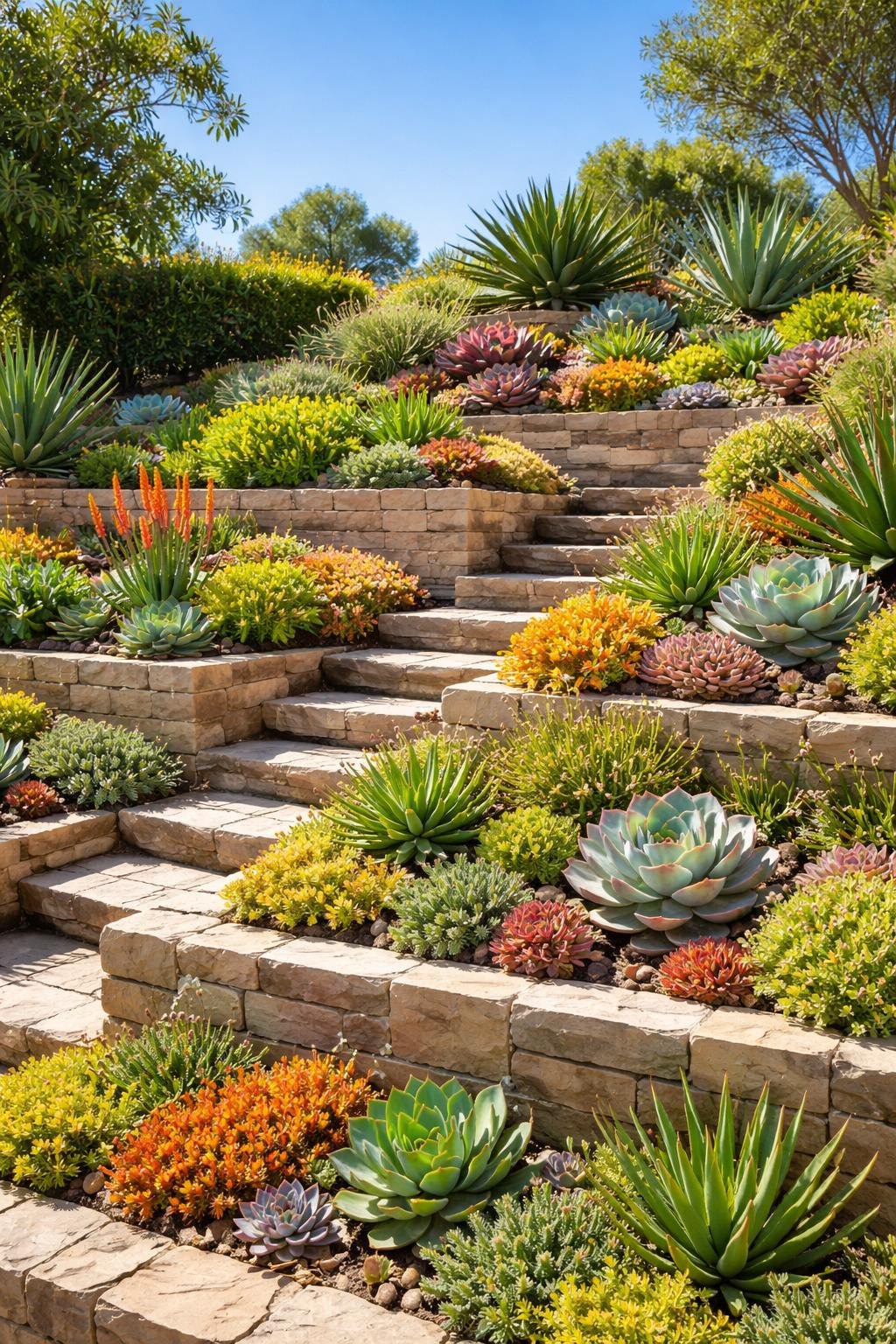
Succulent terraces work well in sunny spots where other plants might struggle. These drought-tolerant plants thrive in bright light and need minimal watering, making them perfect for tiered gardens.
You can arrange succulents on multiple levels to create visual interest. Start by placing larger varieties on lower tiers and smaller ones higher up. This setup lets each plant get enough sunlight while creating a balanced look.
Pick containers or build terraces with good drainage. Succulents don’t like sitting in wet soil, so make sure water can flow through easily. You can use terra cotta pots, wooden planters, or build simple stone terraces.
Mix different succulent types to add texture and color. Combine blue-green echeverias with reddish sedums or spiky aloes. The varied shapes and colors create natural beauty without much effort.
Your succulent terraces need very little care once established. Water them every few weeks during dry spells and leave them alone the rest of the time. This makes them ideal if you want an attractive garden without constant maintenance.
14. Shaded Fern and Moss Layers
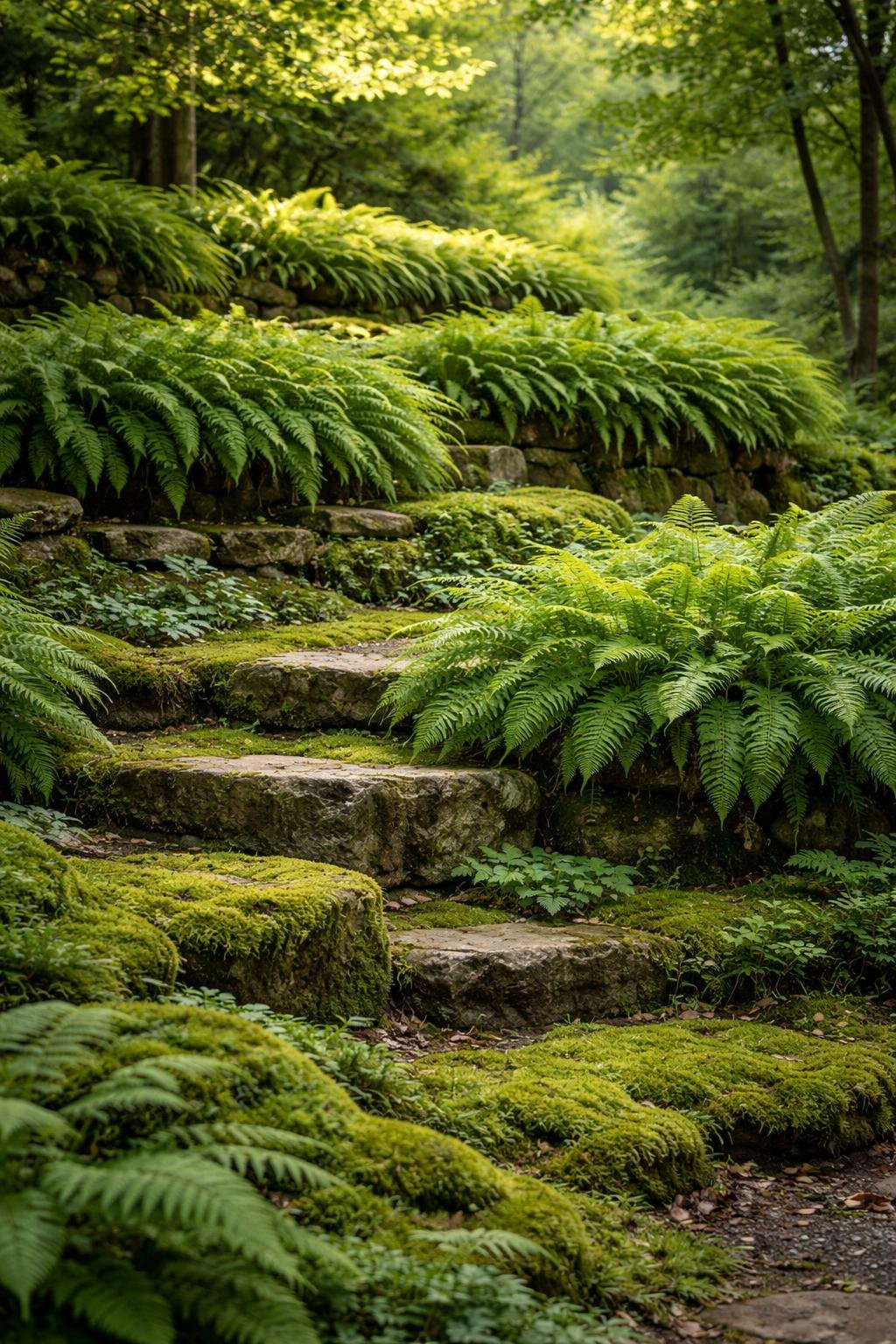
Shaded corners of your tiered garden are perfect spots for ferns and moss. These plants naturally thrive in low-light conditions where other plants struggle.
Start by placing larger ferns on your upper tiers to create height and visual interest. Boston ferns and maidenhair ferns work well for this purpose. Their soft fronds cascade downward and add movement to your garden.
Place moss on the lower levels of your tiered garden. Moss fills in gaps between stones or planters and creates a lush carpet effect. It needs very little maintenance once established.
You can mix different fern varieties together on one tier to add texture. Each type of fern has slightly different leaf shapes and shades of green. This variety keeps your garden from looking flat or boring.
Add moss between your tiers or on the edges of containers. This creates a natural woodland look that feels peaceful and secluded. Both moss and ferns need consistent moisture, so water them regularly but don’t let them sit in standing water.
This layered approach transforms empty shaded spaces into green sanctuaries that look intentional and well-planned.
15. Vegetable Patch on Raised Levels
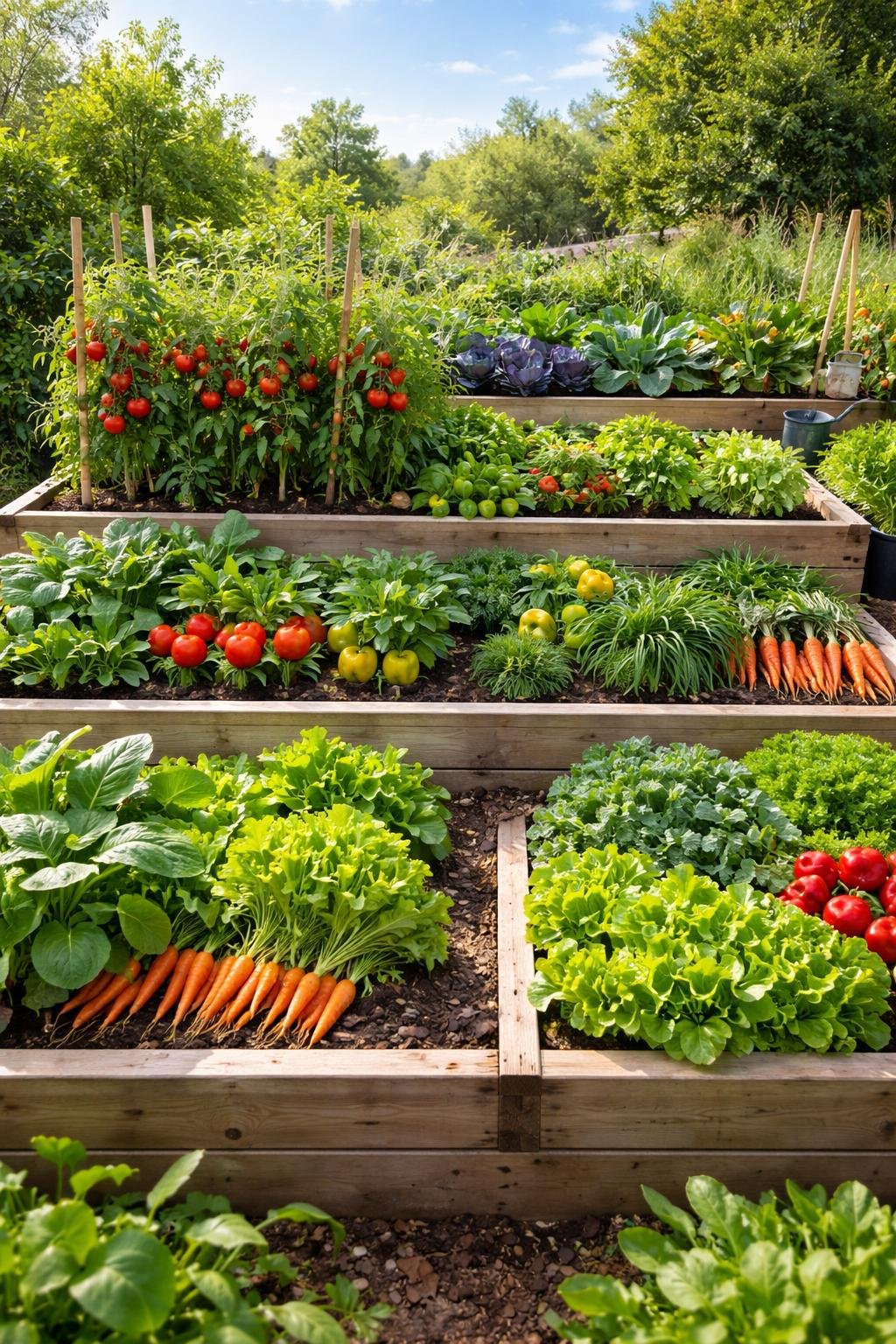
Growing vegetables on raised levels makes gardening easier and more productive. You can plant different crops on each tier based on their sunlight and water needs.
Raised vegetable patches improve drainage and warm up faster in spring. This lets you start planting earlier in the season. The elevated design also reduces bending and kneeling, which protects your back and knees during garden work.
You can organize your crops by height on different tiers. Place tall plants like tomatoes and peppers on the back level. Put medium-height crops like lettuce and herbs in the middle. Use the front tier for low-growing vegetables like radishes and carrots.
The tiered structure helps control erosion if you have sloped land. Each level catches water and soil, preventing runoff. This setup also maximizes your growing space in a compact area.
Build your tiers with wood, stone, or metal materials. Make sure each level is at least 6 to 12 inches deep for proper root growth. Space the tiers wide enough to reach all your plants comfortably.
16. Zen Garden Tiered Layout
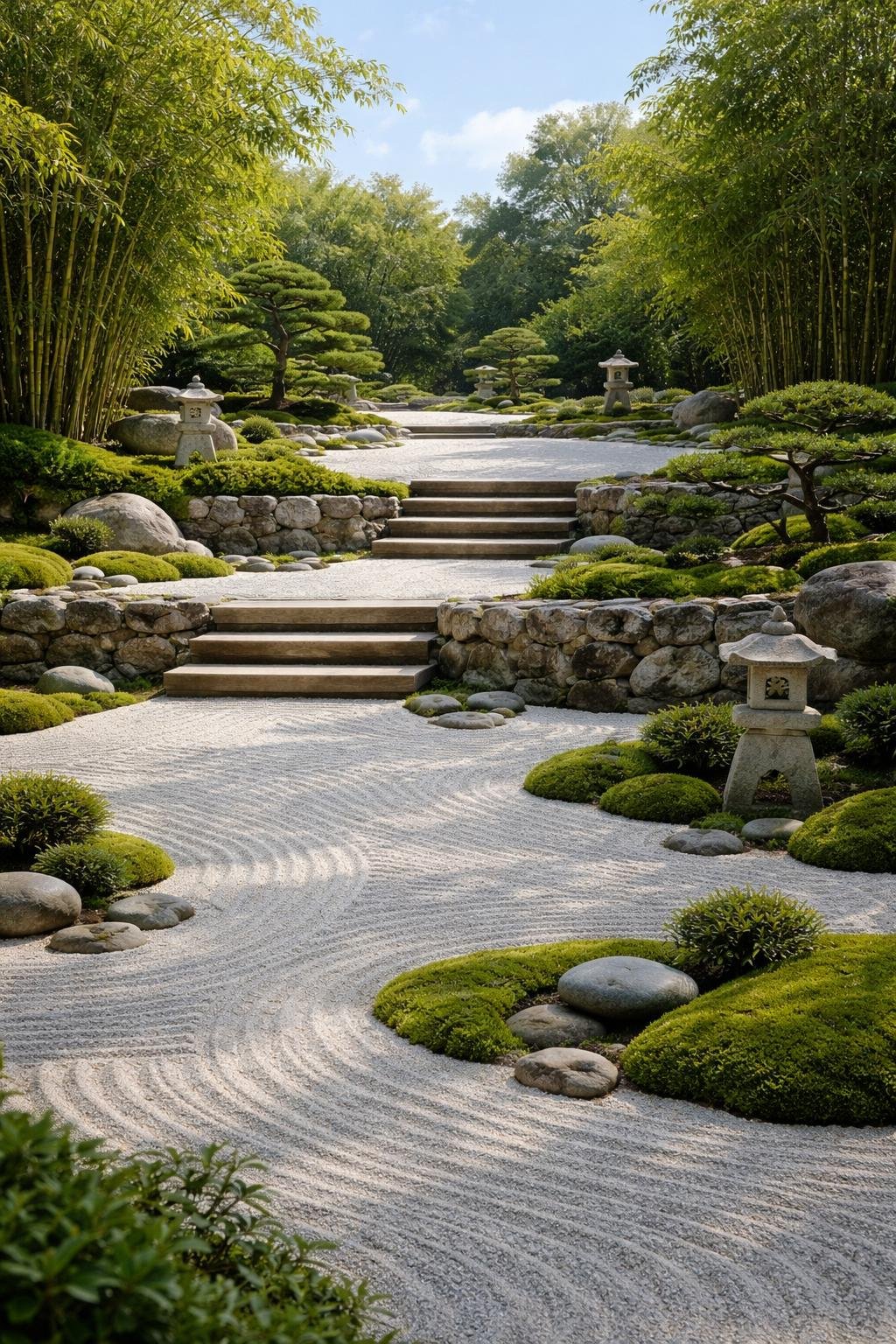
A tiered zen garden brings calm and balance to your outdoor space through careful design choices. You can create this peaceful retreat by arranging smooth stones, simple plants, and minimal decorative elements across multiple levels.
Start with clean lines and neutral colors for your tiers. Use gravel or sand on each level to establish the zen foundation. Add smooth river rocks in deliberate patterns to guide the eye from one tier to the next.
Choose plants sparingly. Bamboo, moss, and small evergreen shrubs work well in zen designs. Place them at different heights to create visual interest without overwhelming the space.
Water features add tranquility to tiered zen gardens. A small fountain or bamboo water spout on an upper tier creates gentle sounds as water flows down to lower levels.
Keep each tier simple and uncluttered. The goal is to create a space for reflection and peace. Use natural materials like wood and stone for retaining walls between levels. Avoid bright colors or busy patterns that distract from the calm atmosphere you want to build.
17. Tiered Garden with Integrated Seating
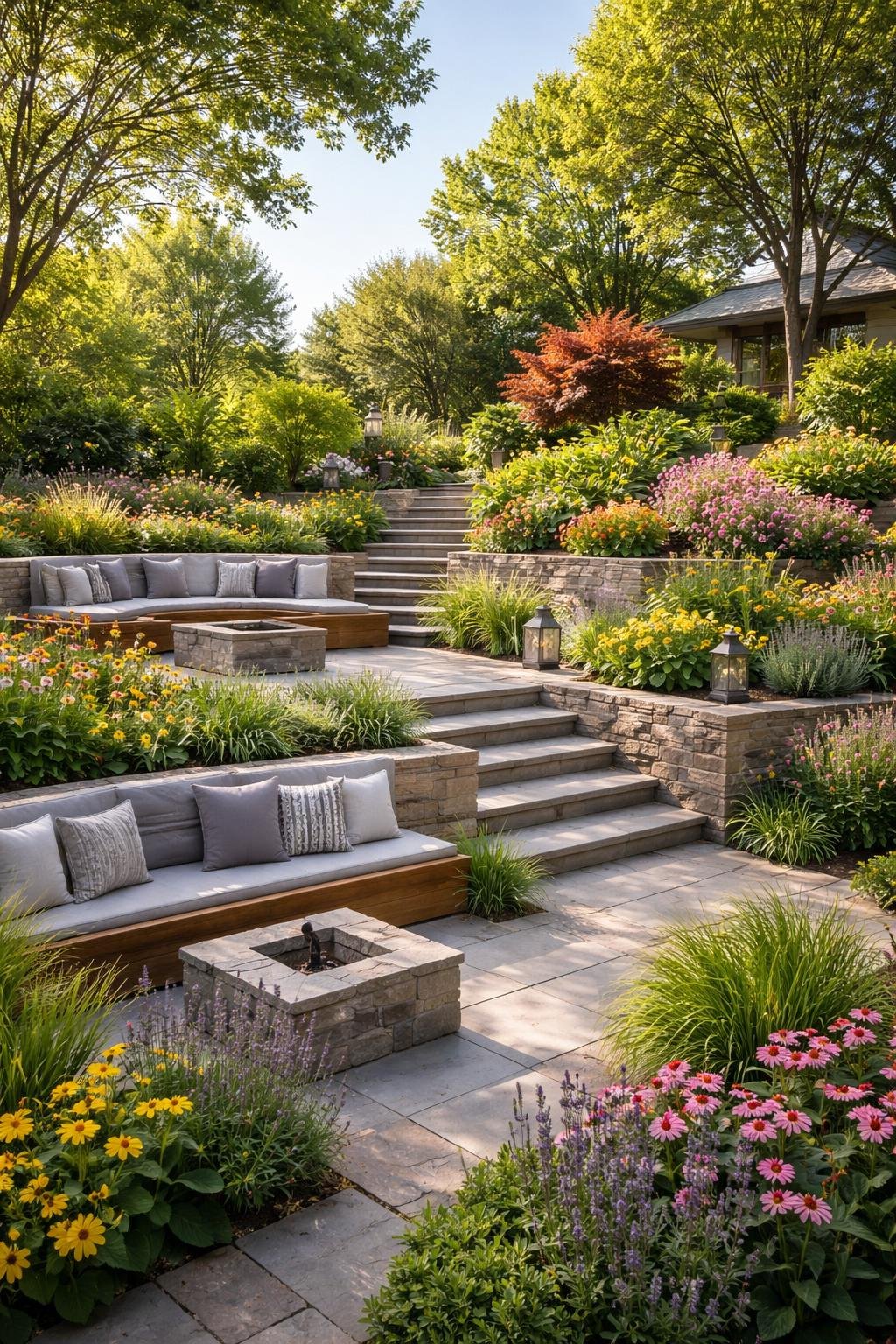
Building seating directly into your tiered garden creates a functional outdoor space. You can add benches between garden levels or create wide steps that double as seats. This design lets you enjoy your garden while saving space.
Built-in seating works well on retaining walls. You can top a low wall with a wooden bench or add cushions to make a comfortable spot. Stone or concrete walls can also serve as natural seating areas when built at the right height.
Place your seating where you’ll get the best views of your plants. A bench positioned on a middle tier gives you a good look at both upper and lower levels. Morning coffee or evening relaxation becomes more enjoyable when you’re surrounded by flowers and greenery.
Make sure your integrated seats are sturdy and weather-resistant. Treated wood, stone, and concrete all work well for outdoor seating. Add removable cushions for extra comfort during warmer months.
This approach makes your tiered garden more inviting. Instead of just looking at your garden from a distance, you become part of the space.
18. Corten Steel Raised Beds
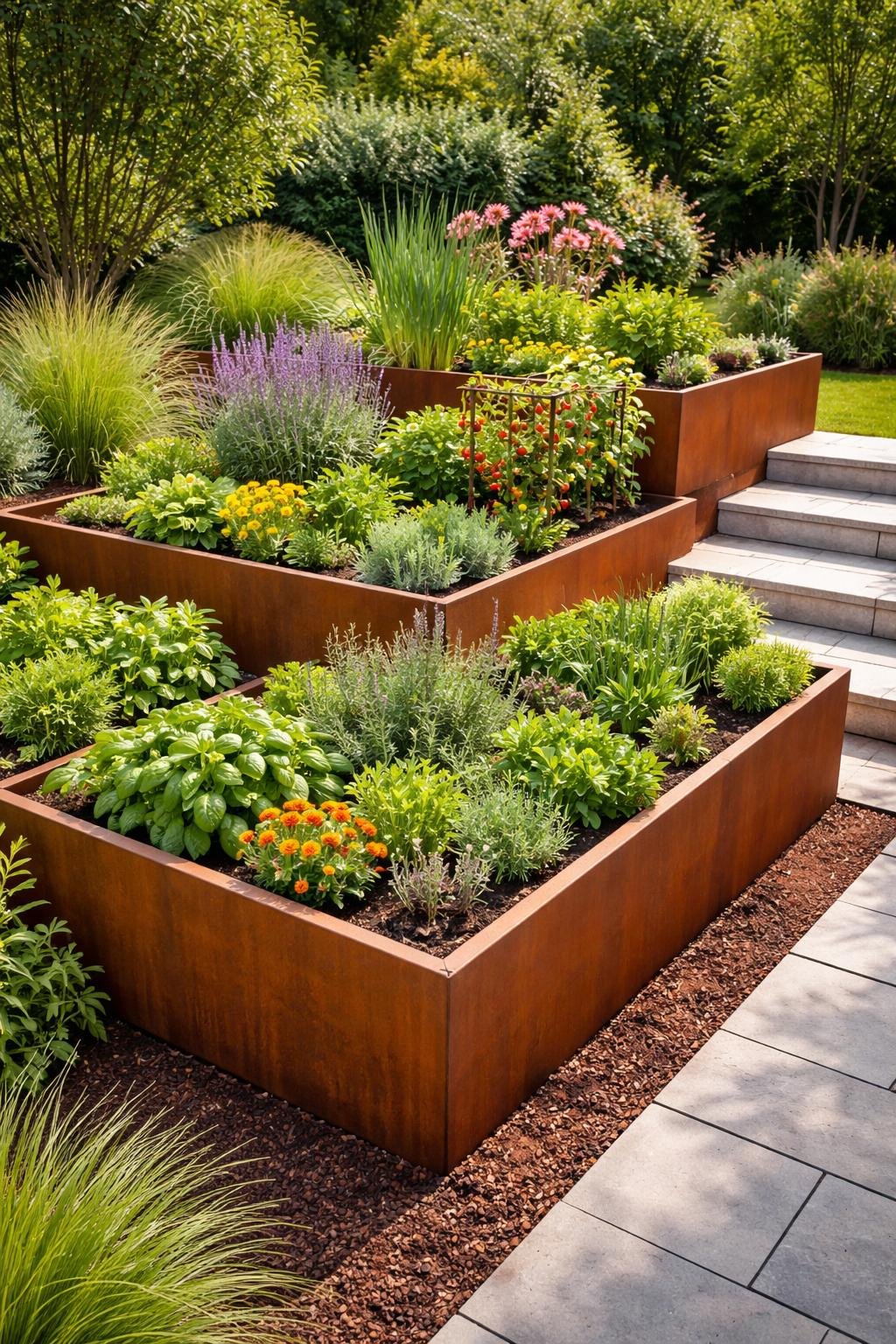
Corten steel raised beds bring an industrial look to tiered gardens. This weathering steel develops a rust-like protective layer over time that prevents further corrosion. The orange-brown patina gives your garden a modern architectural feel.
You can stack these beds at different heights to create dramatic level changes in your yard. The clean lines and sharp edges define each planting area clearly. This makes it easy to organize different types of plants on separate tiers.
These beds work well for both decorative and edible gardens. You can grow flowers on one level and vegetables on another. The steel construction holds up well in all weather conditions.
Corten steel beds require minimal maintenance once the patina forms. The material is strong enough to hold soil on slopes and uneven ground. You can find these planters in various sizes to fit your space.
The dark rust color provides strong contrast against green plants and colorful flowers. This makes each tier stand out visually in your garden design.
19. Tiered Garden with Built-in Irrigation
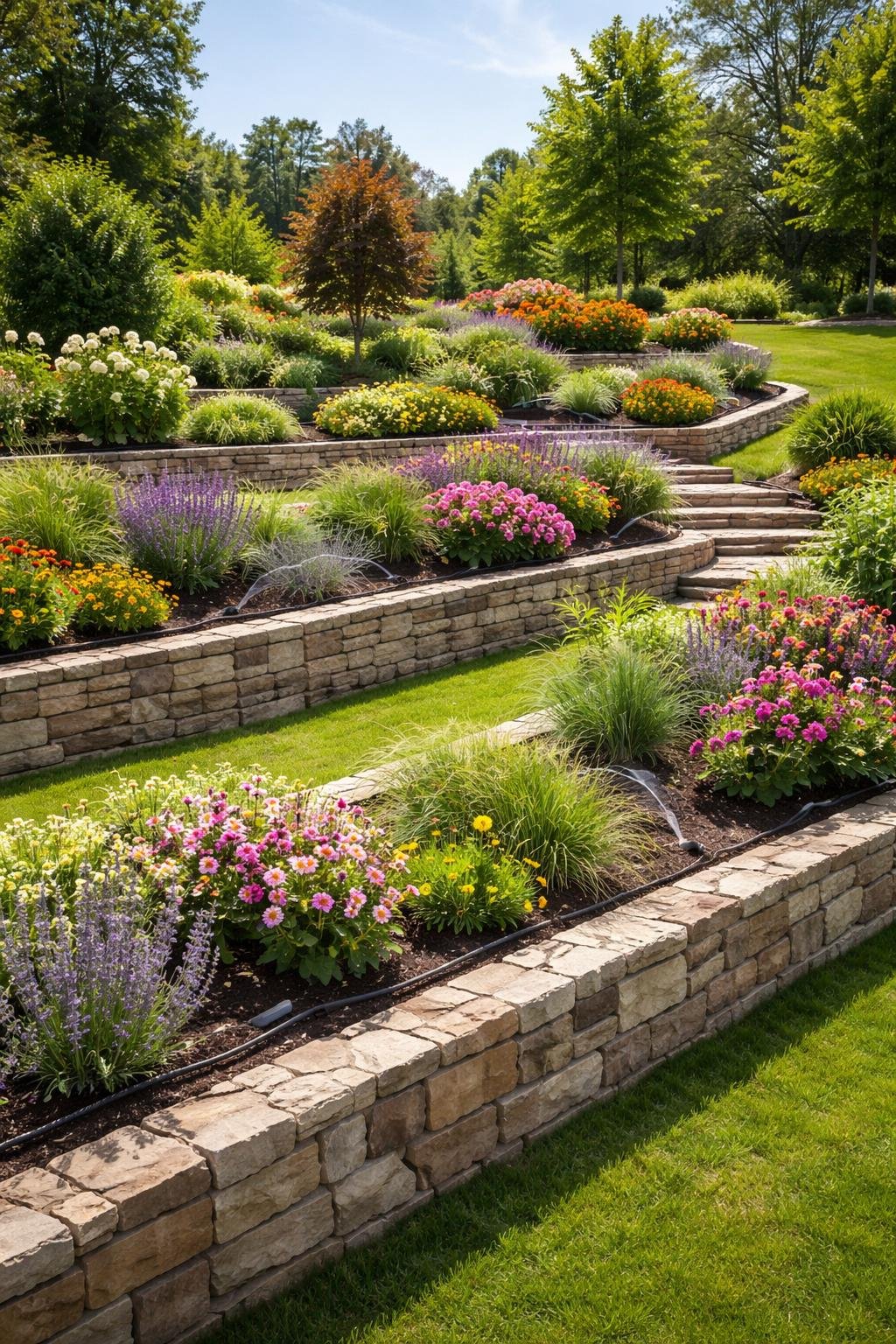
A tiered garden with built-in irrigation takes the guesswork out of watering. You can install drip lines or soaker hoses within each level to deliver water directly to plant roots. This system saves time and ensures every tier gets the right amount of moisture.
Built-in irrigation works well on slopes where water naturally runs off. The system controls water flow to each level, preventing erosion and water waste. You can connect the irrigation to a timer for automatic watering.
Installing the irrigation during construction is easier than adding it later. Bury the lines beneath mulch or soil to keep them out of sight. You’ll need to plan where water sources connect and how lines run between tiers.
This setup reduces maintenance since you won’t need to drag hoses up and down levels. Plants stay healthier with consistent watering, especially during hot weather. You can adjust water delivery based on what you grow in each tier, giving more water to thirsty plants and less to drought-tolerant ones.
20. Curved Terraces with Mixed Plantings
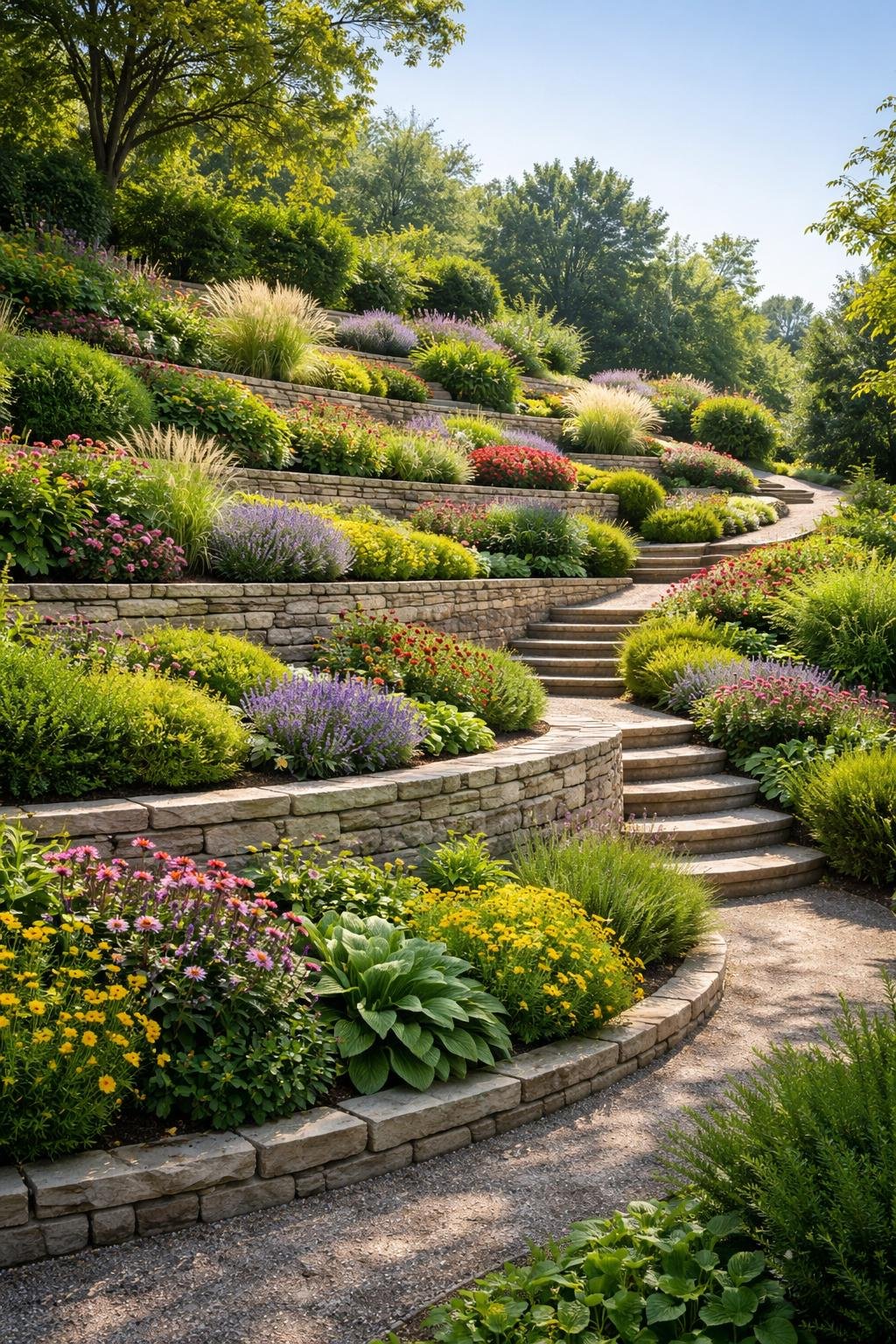
Curved terraces add visual softness to your sloped yard compared to straight retaining walls. The flowing lines create a natural look that guides your eye through the garden space.
You can build curved terraces using flexible materials like small stones, bricks, or landscape blocks. These materials bend easily to form the smooth arcs you want. Each curved level should measure 24 to 30 inches in height for stability and easy access.
Mixed plantings work well with curved designs because they emphasize the flowing shape. You can plant taller flowers and shrubs at the back of each terrace and shorter ones in front. This creates depth while keeping all your plants visible.
Consider mixing different plant types across your curved levels. Combine flowering perennials with ornamental grasses and ground covers. This variety adds color and texture throughout the growing season.
The curves also make your garden paths more interesting to walk through. You can follow the arc of each terrace with stepping stones or mulched trails. This design makes sloped areas easier to maintain since you can reach plants from multiple angles.
21. Minimalist Concrete Planter Tiers
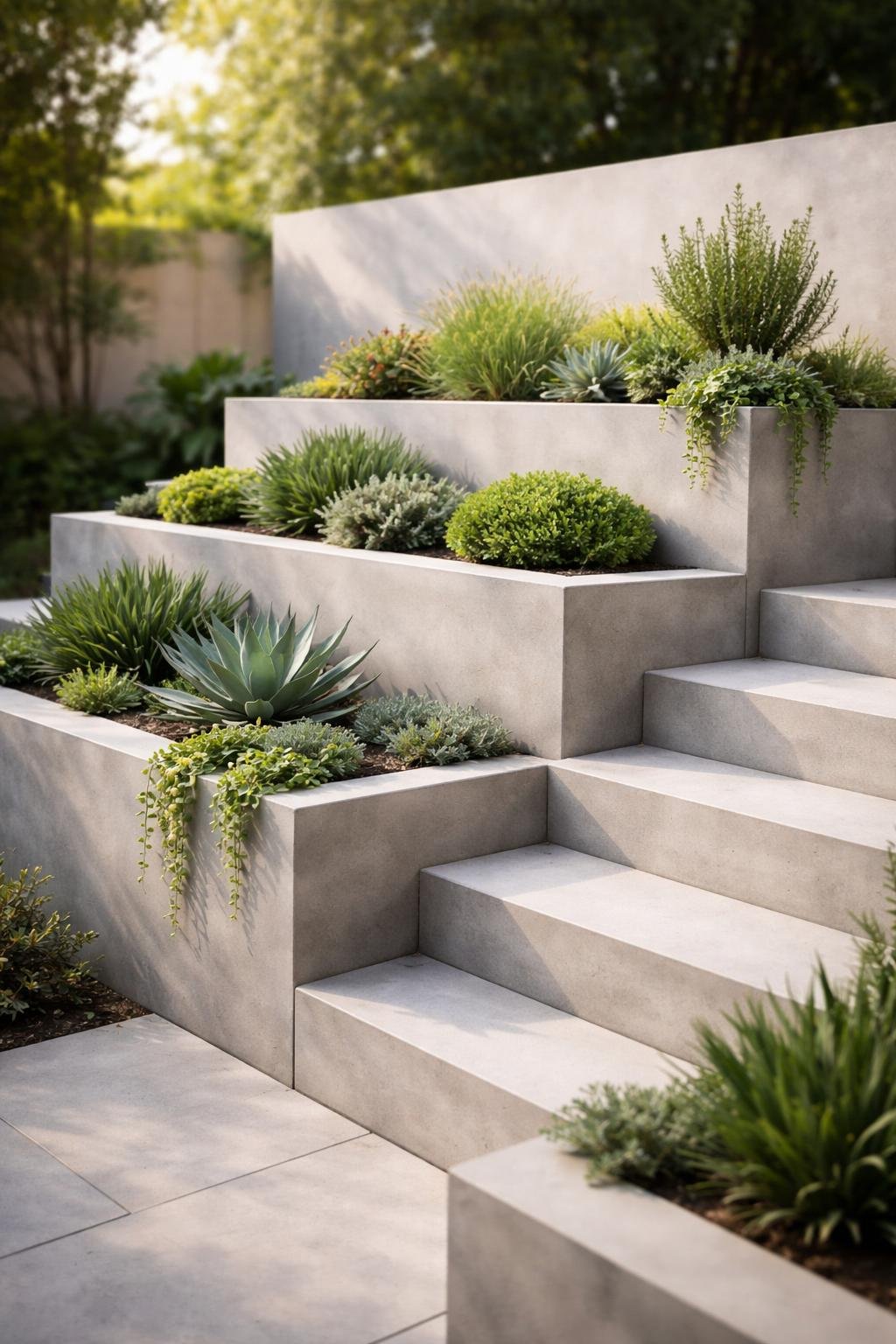
Concrete tiered planters bring a clean, modern look to your garden. The neutral gray color works well with any plant choice you make.
These planters use simple geometric shapes stacked at different heights. You can arrange concrete blocks or purpose-built planters to create levels that suit your space. The structured design gives you plenty of room for growing different plants while keeping a sleek appearance.
Concrete is a practical material for outdoor use. It holds up well in different weather conditions and requires little maintenance over time.
The minimalist style focuses on clean lines and simple forms. You won’t find decorative details or ornate patterns here. Instead, the beauty comes from the contrast between the smooth concrete surfaces and the natural textures of your plants.
This design works especially well in contemporary gardens and modern outdoor spaces. You can use these tiers for flowers, herbs, vegetables, or drought-tolerant plants. The neutral backdrop lets your plant choices stand out as the main visual feature.